What the BO5 bread pan is built to do
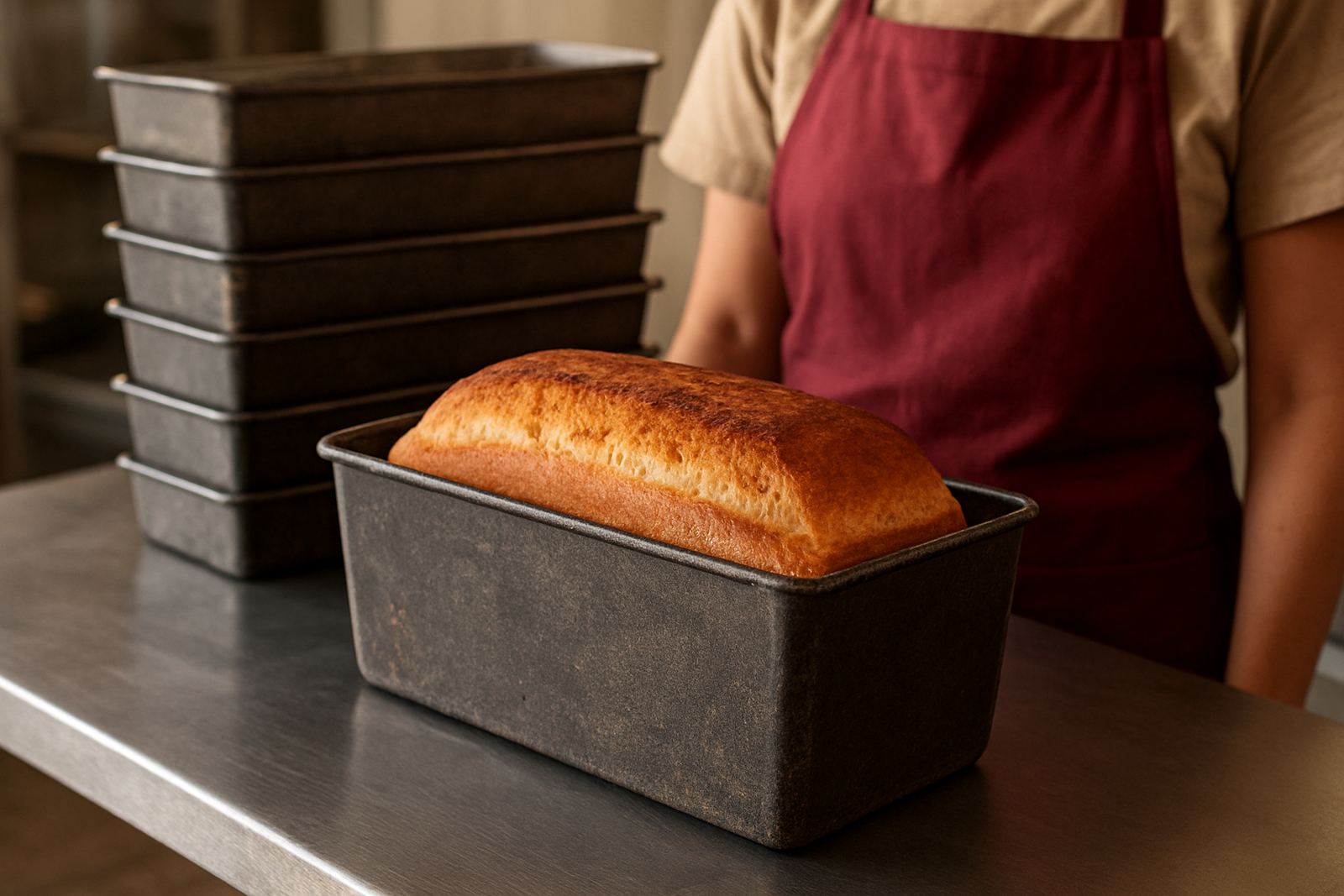
The BO5 bread pan is a standard large loaf pan used for bakery production where the same tin needs to perform day after day. It gives a defined loaf shape, supports even rise and helps keep the finished loaf uniform from the first bake to the last.
For bakeries in Johannesburg South, Germiston, Boksburg and Soweto, that consistency matters when you are baking for retail shelves, school feeding programmes, wholesalers or local food outlets. A proper BO5 pan helps reduce side collapse and gives better control over crust colour, crumb structure and batch planning.
We manufacture these pans for practical use in South African bake rooms, where heat, cleaning routines and repeated handling all take a toll. The pan is made to cope with daily production and can be supplied in mild steel or other material options on request, depending on the type of baking line and the finish you need.
BO5 sizes, dimensions and finish options
BO5 pans are used where a larger loaf profile is needed, but exact dimensions can vary slightly depending on the mould profile and whether the pan is supplied with a matching lid. If you are replacing old pans, we recommend matching against an existing sample or sending through a measured drawing so the new pans sit correctly on your trays, racks or tin trolleys.
Typical BO5 pans are supplied in mild steel for good heat transfer and reliable form retention. Where the bakery works near the coast or stores equipment in humid conditions, a coated or treated finish can help extend service life. For businesses in areas like Alberton and Midrand, this can make a real difference if the pans are washed and stacked every shift.
- BO5 loaf size for larger standard bread production
- Single pans or matched sets for batch output
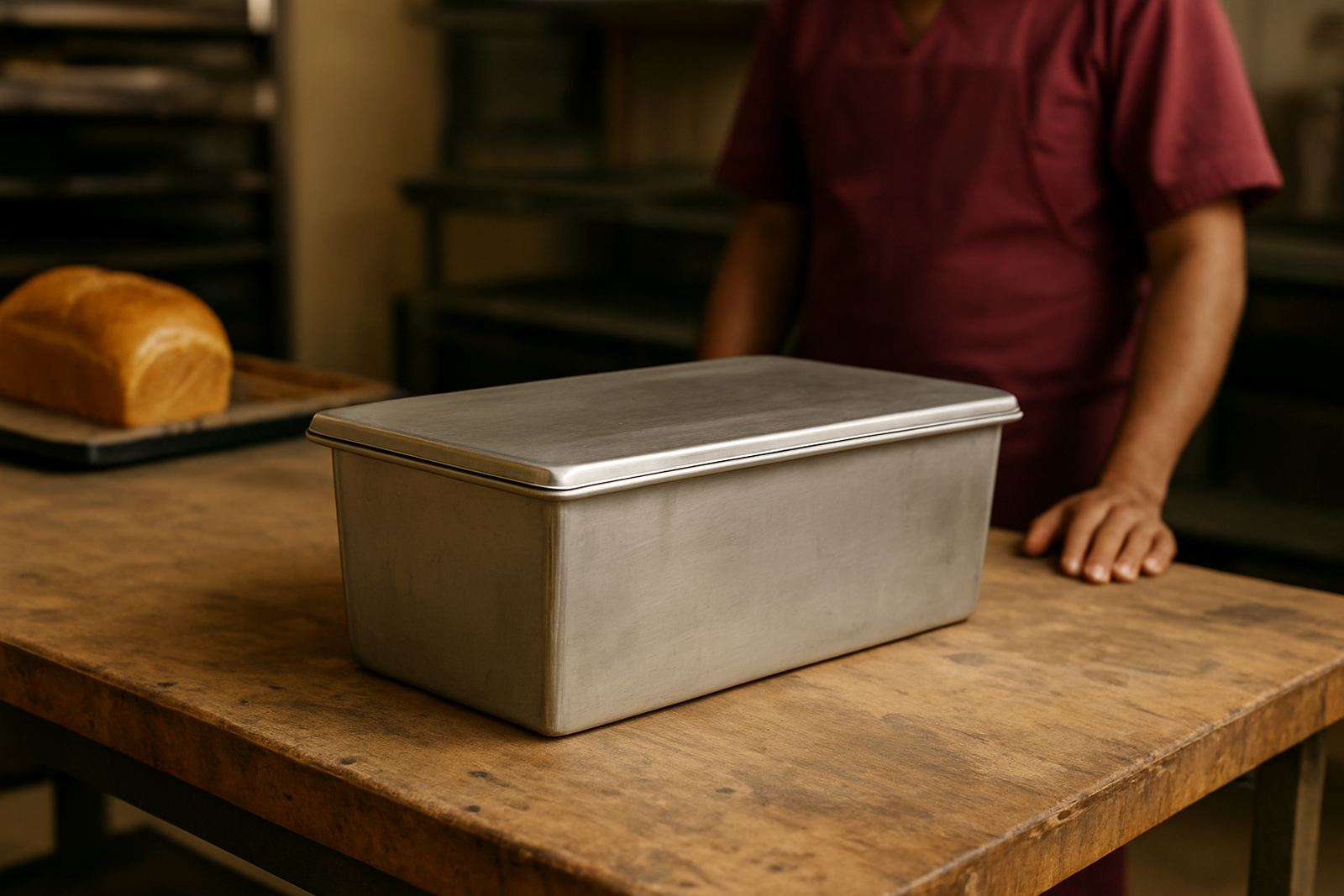
- Optional lids for controlled top shape and crust finish
- Heavy gauge builds available for high use environments
- Perforation is not standard on bread pans, but can be discussed for special applications
If you need a direct replacement, we can do size matching from your current pan, and where required we can copy an existing sample so the new pan keeps the same footprint, depth and end profile.
Where a BO5 pan fits into production
This pan suits bakeries that need a fuller loaf for sliced bread, counter sales or distribution packs. It is commonly used in production lines that run on fixed batch cycles, where the pan must load cleanly, bake evenly and release without wasting time at the bench. In busy rooms, that saves labour and keeps the oven schedule moving.
The BO5 bread pan is also practical for contract baking work, where one customer may want a particular loaf shape every week and another may need a slightly different finish. The pan gives a dependable base for repeat orders, and with the right dough weight and proofing, the result stays consistent from batch to batch.
- Retail bakeries producing sliced bread
- Wholesale bread lines supplying shops and cafés
- School, canteen and institutional kitchens
- Production lines with rack ovens or deck ovens
- Bakery test runs for new loaf recipes
We supply to businesses across Gauteng, including Alrode, Germiston, Boksburg, Midrand and surrounding areas. For customers working with load-shedding, the pan itself does not need power or gas, but it does need the right oven recovery, proofing control and batch timing so the loaf structure stays even when the bake schedule changes.
Installation, oven fit and bakery handling
A BO5 bread pan does not require installation in the electrical or gas sense, but it does need to fit your handling system properly. Check that the pan clears your oven rails, rack spacing, loading trolleys and cooling frames. If the pan is too tight in the oven or stacked too close on return trolleys, you can end up with bent rims and uneven wear.
For bakeries using deck ovens, rack ovens or rotating systems, the main point is compatibility with tray carriers and the way your team loads pans during peak shifts. If you are in a high-volume site in Johannesburg South, you want a pan that nests well for storage but still separates easily when rushed. It sounds simple, but it saves time every day.
We also help with factory consultations when a bakery is setting up a new line or changing pan sizes. That can include lid fitting, divider inserts and checking whether your current racks and cooling space can handle the new output without bottlenecks.
Care, cleaning and servicing between batches
Good care keeps the BO5 pan in service longer and helps the bread release properly. After each shift, remove crumbs and flour build-up before washing. Use warm water, a suitable bakery detergent and a non-abrasive brush or cloth. Harsh scouring can damage the surface and shorten the life of the pan.
If the pans are used in a humid area or near the coast, dry them properly before stacking. Even inland in Gauteng, a damp pan left overnight can start to show corrosion over time. In busy plants, this is often where wear begins, not from the baking itself but from storage and poor drying. A small amount of care goes a long way.
- Do not leave pans soaking for long periods
- Dry fully before stacking or storing
- Inspect rims and corners for dents or twisting
- Keep a batch rotation so the same pan is not overused
- Ask about repair or replacement if the shape starts to drift
If your bakery runs daily, it helps to keep spare pans on hand so a damaged tin does not stop production. Batch reorders are available for customers who need the same size supplied again later.
What to check before placing an order
Before ordering, check the loaf weight, desired finish and whether the pan must match an existing mould. If you are copying an old pan, send measurements for length, width, depth and rim style. If the loaf is sticking or the sides are expanding too much, the issue may be the pan depth or the dough weight, not only the recipe.
You should also confirm whether you need plain pans, fitted lids or a heavier gauge build. A heavier pan is often better for repeated use, especially where shifts are long and equipment is handled quickly. If you are baking in a plant with strong daily throughput, that extra thickness can help the pan keep its form for longer.
- Loaf size and target dough weight
- Internal and external dimensions
- Need for lids, divider inserts or special shaping
- Material choice and gauge thickness
- Order quantity and repeat schedule
- Delivery point in Gauteng or other provinces
For quotes and supply, contact our team in Alrode, Johannesburg South. We work with bakeries across Alberton, Germiston, Boksburg, Midrand and Soweto, and can help with size matching, prototype runs and batch reorders for the same BO5 bread pan spec.
Key facts
| Product | BO5 Bread Pan |
|---|---|
| Use | Large loaf bread production |
| Material | Mild steel, other options on request |
| Finish | Plain or treated finish depending on application |
| Options | Lids, heavy gauge builds, batch reorders |
| Supply area | Johannesburg South, Gauteng and nationwide |