Why standard sizes matter in a teaching kitchen
In a college kitchen, the first lesson is often not the recipe, it is consistency. Students need pans and trays that are the same size every time so they can weigh dough, divide batches and compare results properly. When the equipment changes from one practical to the next, marks become harder to give and the class spends too much time asking if the tin is correct. Standard bread pans, lids and trays solve that problem.
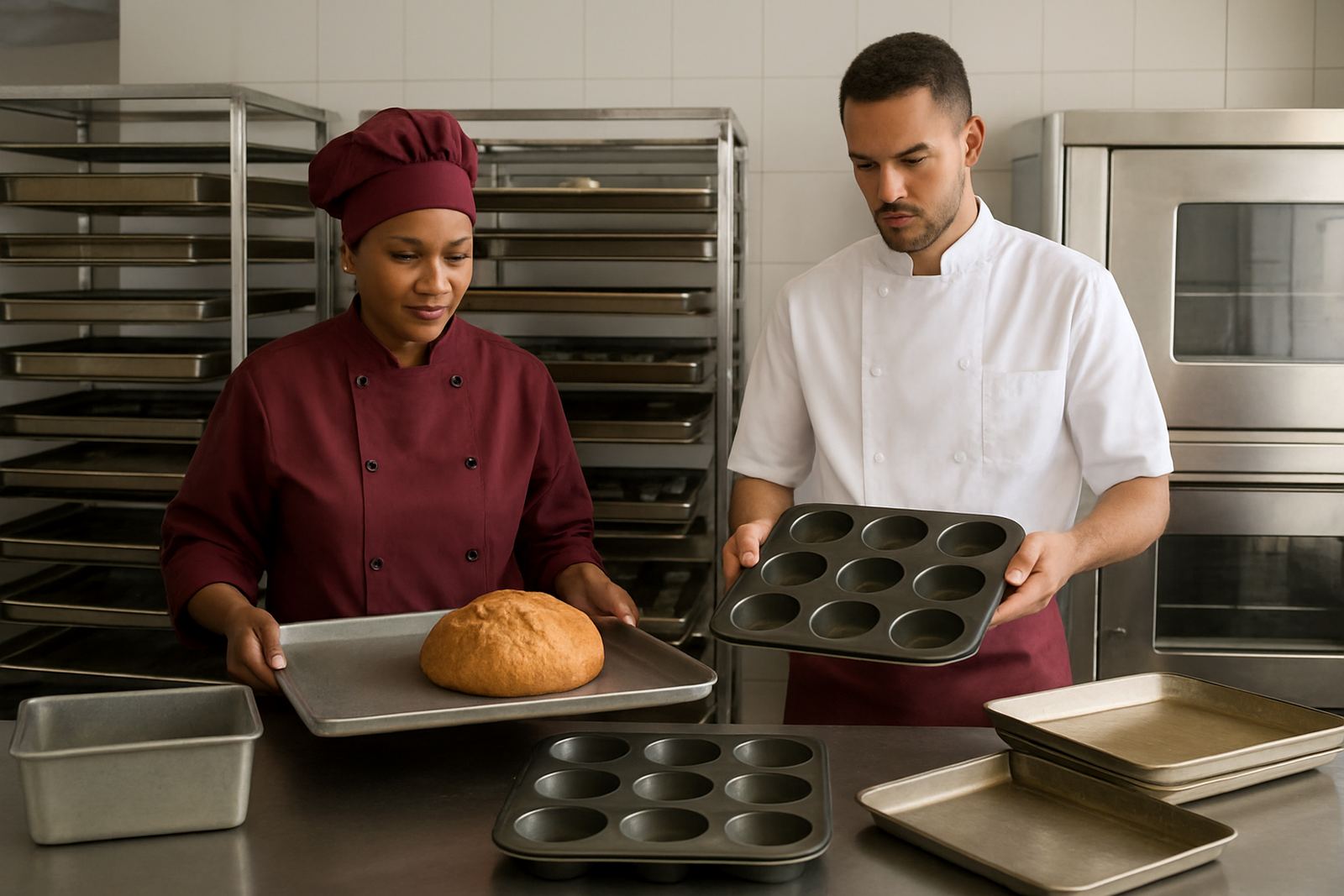
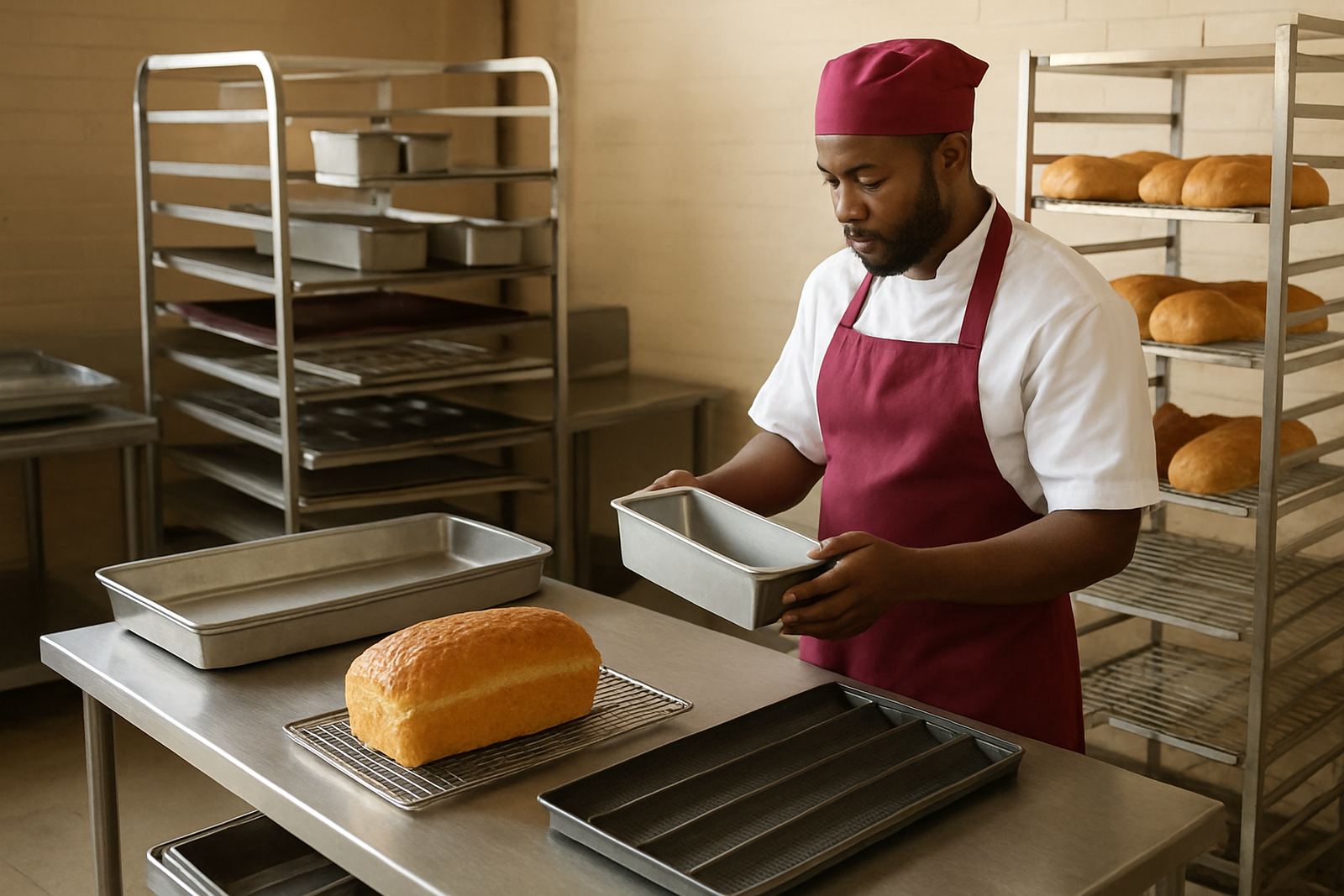
For most training rooms, we start with the sizes used in everyday bakeries so the learner is not trained on special equipment that will never be seen in the workplace. That includes BO3, BO4 and BO5 bread pans, matching lids where required, perforated trays for airflow, and baguette trays for shaping and scoring practice. If the college teaches mixed levels, a set of standard sizes also makes stock control simpler because replacements can be reordered without measuring every old pan again.
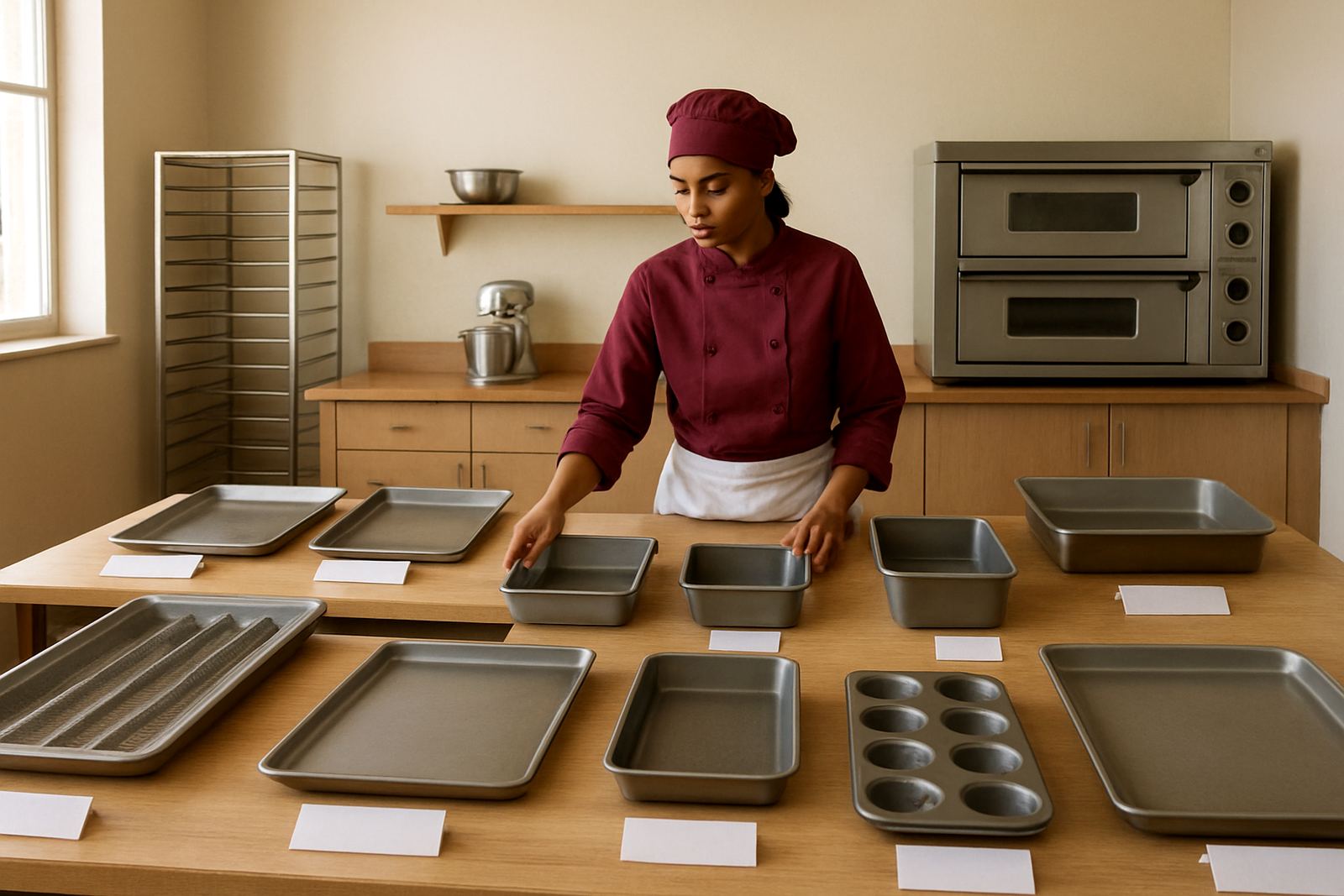
Typical bakeware sets for colleges and academies
A small training kitchen may only need a few matching sets for bread and rolls, while a larger campus in Gauteng may need full class loads with spare pieces for breakages. We often help colleges in Alrode, Alberton, Boksburg and Soweto set up repeatable sets that work for 12 to 30 students at a time. The aim is to keep the kit practical, not over complicated.
- BO3, BO4 and BO5 bread pans for standard loaf teaching
- Matching lids for dough control and lid fitting exercises
- Perforated trays for crust development and airflow lessons
- Baguette trays for shaping, scoring and proofing practice
- Divider inserts for portion control and product separation
- Heavy gauge trays for repeated college use and less warping
For pastry and catering modules, we can also match tray sizes to oven racks so learners are not juggling odd clearances. A tray that sits properly saves time during loading and unloading, especially when classes are run back to back and the ovens are already warm.
How to plan a layout that keeps classes moving
College kitchens usually have one of two problems: too little bench space or too little oven space. The safest way to plan is to map the full route from weighing to proofing to baking to cooling before buying the equipment. Measure the oven racks, trolley shelves and any storage cage first, then match the pans to those dimensions rather than guessing. It saves alot of frustration later.
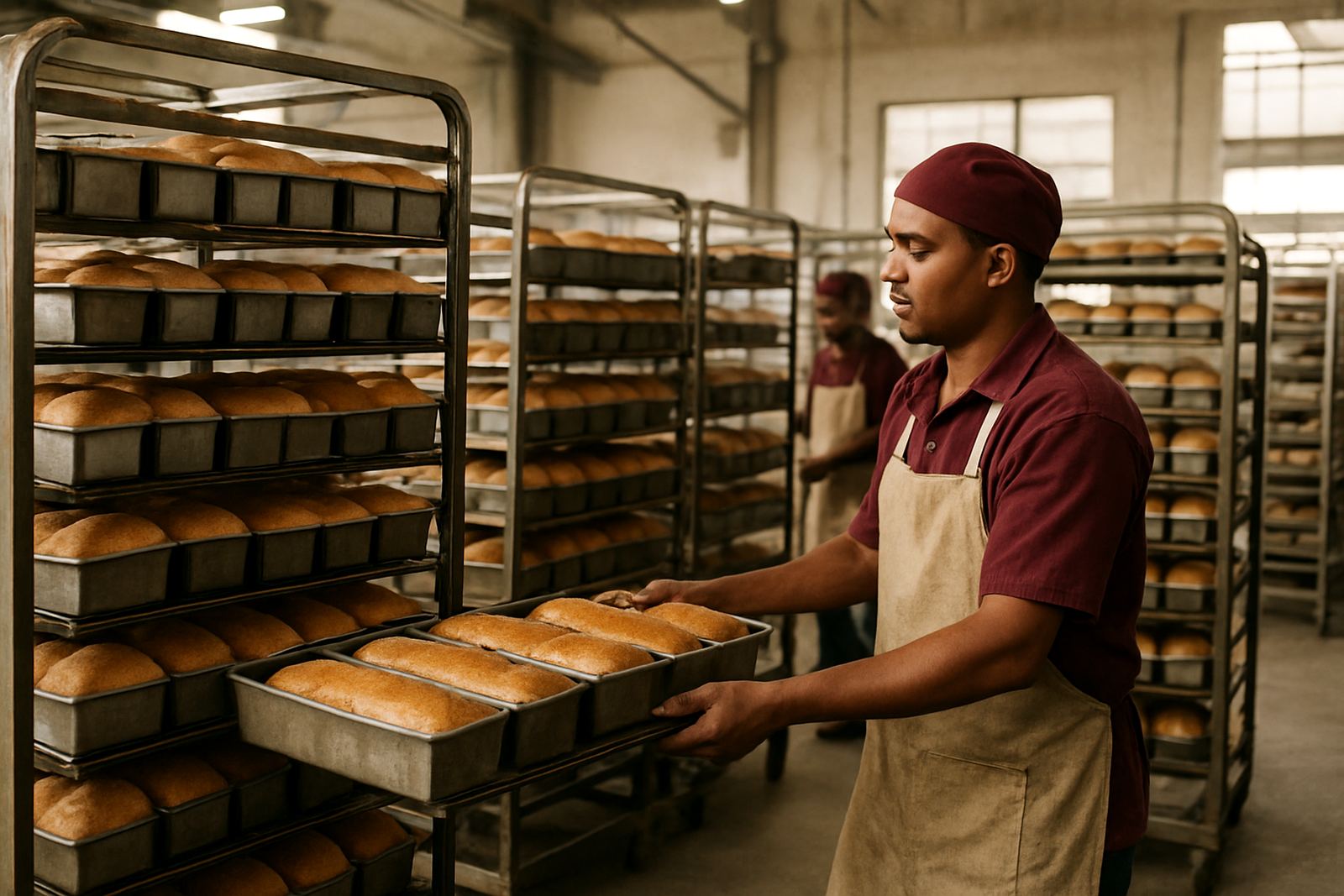
For load-shedding prone areas, it helps to keep the batch size realistic so proofing and baking can continue when power returns. In Durban-style humidity or in warm summer kitchens around Johannesburg South, dough can move quickly, so you need trays and pans that allow the lecturer to keep an eye on rise and colour. Colleges that teach early morning and afternoon groups should also leave enough space between benches for students to carry trays without bumping hot tins.
- Measure oven interiors before placing the order
- Allow storage for clean and dirty trays separately
- Keep identical pans in one class set for easier counting
- Plan trolley width around corridor and door clearances
- Leave space for cooling racks and marking stations
Common mistakes colleges make when buying bakeware
The biggest mistake is buying mixed tins from different sources and expecting them to behave the same in class. One tray may be deeper, another slightly wider, and suddenly the loaf browns too fast or the students cannot compare results. Another common issue is choosing very light sheet metal that bends after a few terms. In a training environment, that usually means a false economy.
We also see colleges order only enough equipment for one class, then find there is nothing spare when a pan is bent or a lid goes missing. It is better to keep a small buffer for batch reorders. A second mistake is ignoring lid fit. If the lid is loose, students think the dough has failed when the real issue is the pan and lid combination. Size matching and pan copying are useful here because they let us replicate a working piece instead of starting from scratch every time.
Budget ranges for teaching kitchens
Budget depends on quantity, gauge and whether the order includes special forming or perforation. For a starter set for a small college kitchen, a practical range is often from R8,000 to R18,000 for mixed bread pans and trays. A fuller training room with matched loaf pans, lids, perforated trays and baguette trays can run from about R20,000 to R55,000, depending on batch size and finish.
If the college needs heavy gauge builds for daily use, or if it wants copies made from an existing pan, the price rises because more material and labour are involved. Prototype runs are useful when a lecturer wants to test one format first before placing a larger order. We normally suggest getting the teaching set right once, then holding a small reorder budget for breakages and end of term replacement. That keeps the kitchen ready without tying up too much cash.
- Starter class set: about R8,000 to R18,000
- Mixed training room set: about R20,000 to R55,000
- Custom copy or heavy gauge work: quoted after sample check
- Batch reorders: cheaper when the sizes are already confirmed
Working with the right supplier for repeat intake
Training colleges need a supplier that can hold the spec steady from intake to intake. A class in February should use the same pan size as a class in October, and a replacement order must match the original run. That is why colleges benefit from suppliers who can keep records of size, fit and gauge, then repeat the same order without guesswork.
At our base in Alrode, Johannesburg South, we work with colleges, academies and kitchen departments across Gauteng and surrounding areas. We handle size matching, pan copying, lid fitting, tray perforating, baguette forming, divider inserts, heavy gauge builds, batch reorders, prototype runs and factory consultations. If your campus needs something checked against an old pan or an imported sample, send the details through and we can advise on the nearest practical match. For planning purposes, it is easier to talk before term starts than to scramble mid semester.
What to ask before you place the order
A good college order starts with simple questions. How many students will use the pans at once, what oven size is available, and will the kit be washed daily or only after practicals? If the college is near the coast, corrosion resistance may matter more than in a dry inland kitchen. If the department expects frequent use, a heavier build is usually the better choice.
Send us the measurements, photos and any old sample tins so we can guide the set properly. If there is a municipal rule about storage, waste or kitchen safety on campus, we can work around the layout and the cleaning routine. The goal is straight forward: equipment that fits, teaches well and lasts through repeated classes without fuss.