What a home industry bakery usually starts with
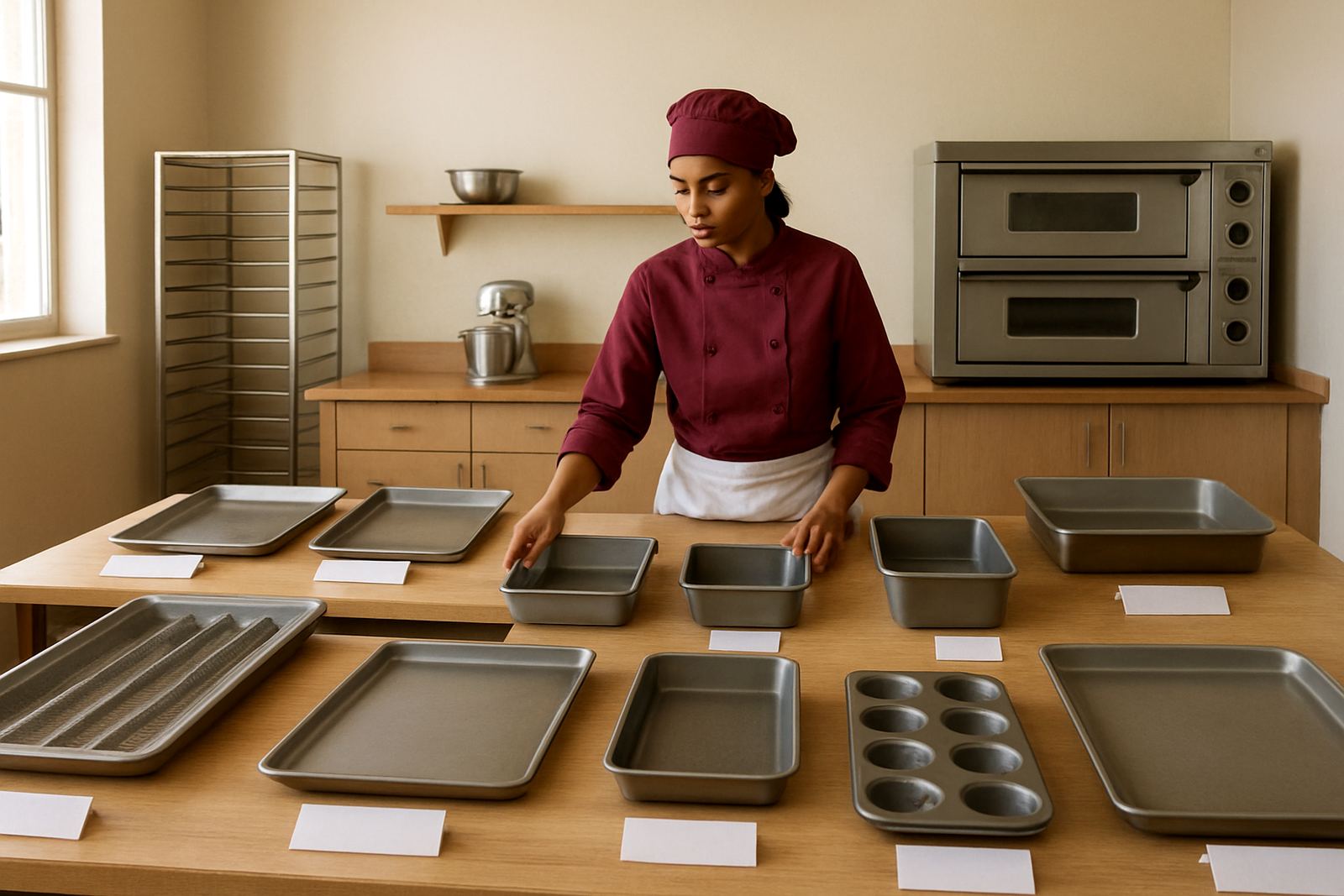
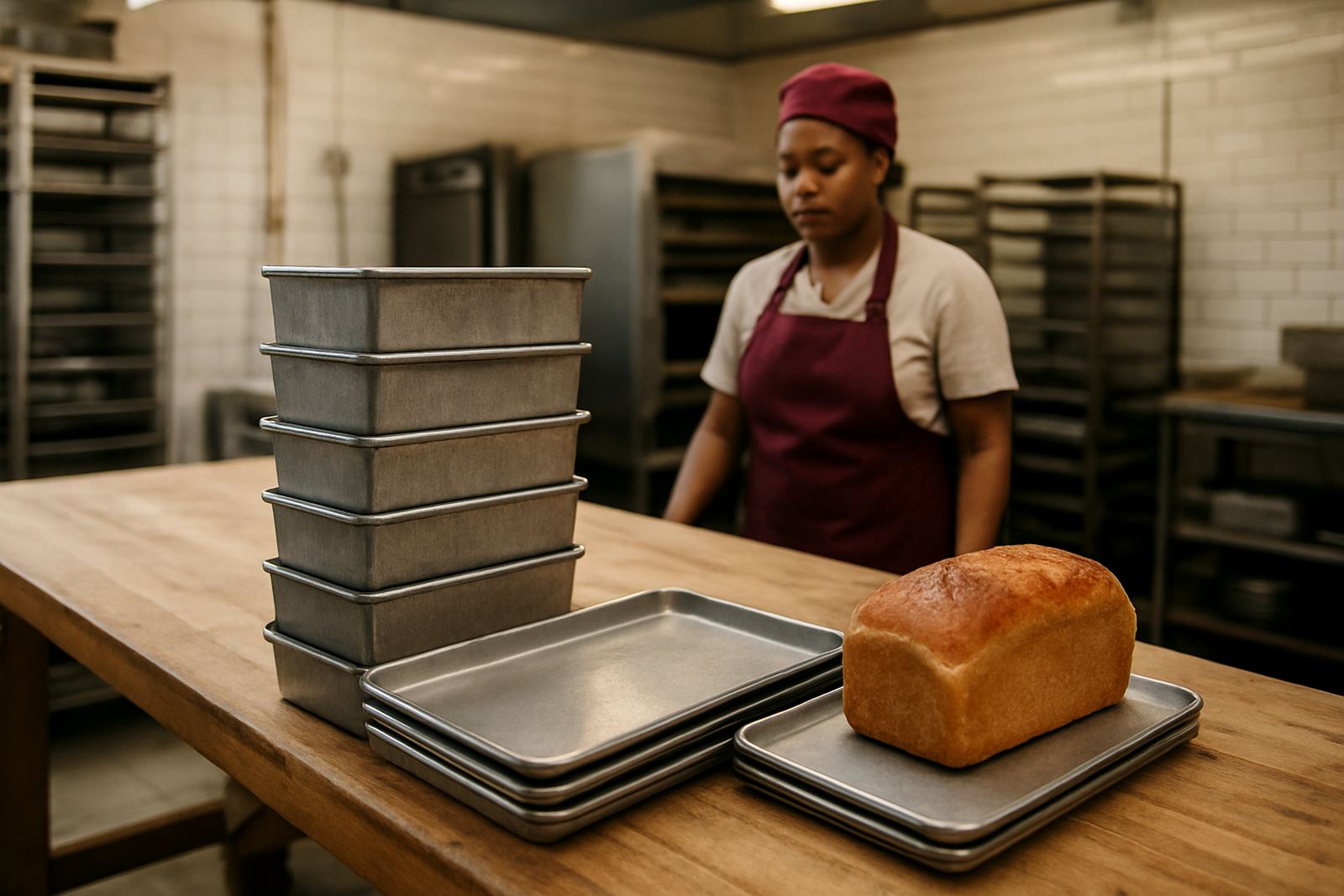
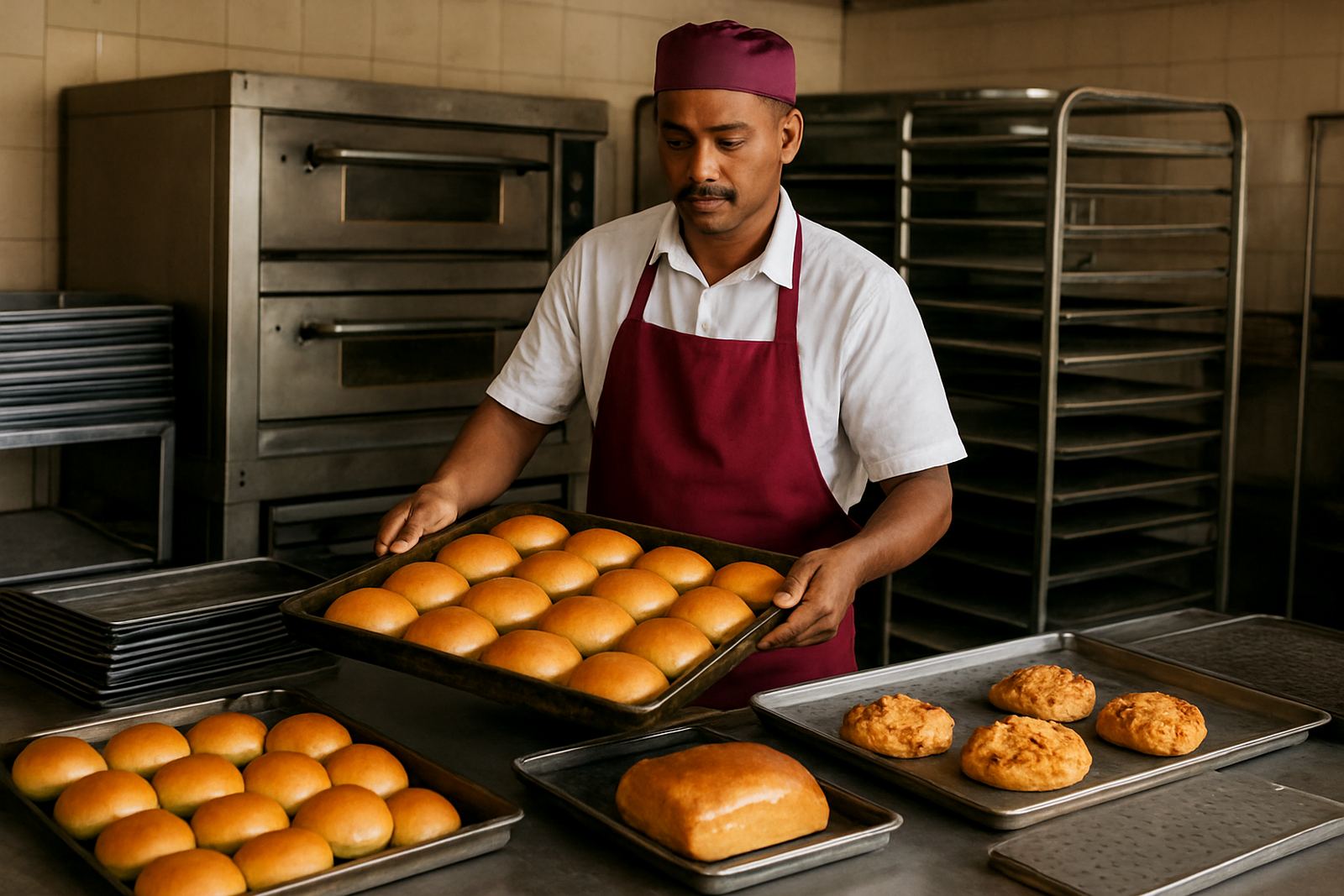
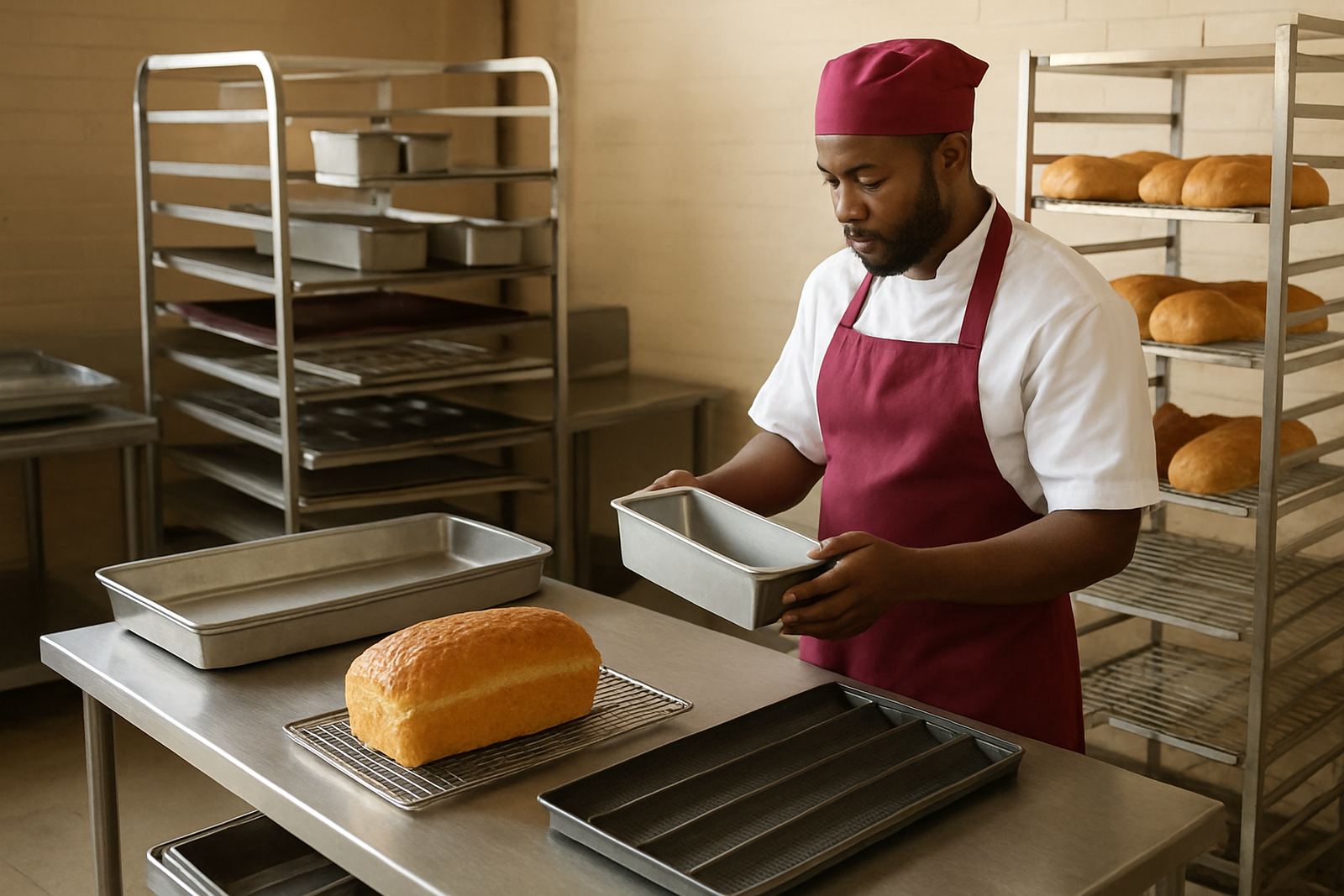
Most small producers begin with a few trusted products that move quickly through local shops, spaza outlets, coffee counters and weekend markets. The first orders are often standard bread pans, matching lids, and a mix of flat baking trays and perforated trays for rolls, buns and savoury items.
For a home industry setup, the priority is simple: get consistent loaf size, easy release, and pans that hold up to repeat use. Mild-steel bakeware is still the common choice for many start-ups because it gives even baking and is easier to replace in batches when demand grows.
- Standard loaf pans for white, brown and sandwich loaves
- Lids for closed-top breads and tin loaves
- Flat trays for rolls, rusks and pastry work
- Perforated trays for better airflow under smaller items
- Baguette trays when you want longer shaped loaves
Choosing the right set for your oven and output
The right set depends on the oven type, the number of loaves per batch and how much space you have for cooling and packing. A home industry in Soweto will often need a different mix from a small wholesale kitchen in Germiston, especially where power cuts affect baking windows and backup equipment is limited.
We usually start by matching the pan to the oven cavity and the product weight. If a loaf browns too quickly on top, a lid can help. If the base stays pale, a perforated tray or a different gauge may be better. It is better to test one pan size first than to order a full set and find the fit is wrong.
- Small ovens often suit shorter loaf pans and narrower trays
- Gas and electric ovens may heat differently, so trial runs matter
- Heavier gauge builds help when pans are used daily and stacked wet
- Coastal humidity can affect storage, so dry packing space is important
Planning the baking area around the pans
A good layout saves time every day. The baking table should be close to the oven, with cooling racks or clean trays nearby so hot pans are not carried across a crowded room. If the team is small, even a few extra steps between the oven and packing bench can slow production and make the kitchen untidy.
In many home industry spaces, the biggest issue is not the oven but the flow of work. Raw mix, filled pans, hot tins, cooling and packing should each have their own spot. That matters in a garage kitchen in Alberton or a back room in Boksburg just as much as in a larger unit in Midrand.
- Keep a clear route from mixing area to oven and then to cooling
- Store clean pans off the floor and away from water splashes
- Leave room for lids and trays to dry before stacking
- Use labels or marks so copied pans and matching lids stay together
Common mistakes when ordering starter bakeware
One common mistake is buying pans only by length and forgetting the depth, lip style or lid fit. A second problem is ordering too many sizes at once, which makes stock control harder and can leave slow movers sitting on a shelf. Another issue is choosing a light build for a product that will be used hard every day.
We often see clients who want to recieve a quote based on a photo alone, but a sample or clear measurement is always better. If an old pan is being copied, the lip, seam and base measurement all need to be checked. Small differences can affect the loaf shape and how the lid sits.
- Do not assume all 1 kg pans fit the same oven space
- Do not ignore tray perforation spacing for airflow and crumb texture
- Do not stack wet pans in humid storage areas
- Do not mix copied pans with old stock unless the fit has been tested
Budget ranges for a small commercial start
Starter budgets vary depending on size, gauge and whether you need lids, inserts or custom copies. For a small home industry with basic bread production, a practical starting range is often around R2 500 to R8 000 for a simple first batch of pans and trays. If you need heavier builds, matching lids and several prototype runs, the budget can move into the R10 000 to R25 000 range.
That spend usually gives a stronger return than buying cheap, light pans that warp after a few weeks. For a business that sells into local shops or supplies steady repeat customers, the right bakeware is part of the production cost, not just a once-off purchase.
- Basic starter order: R2 500 to R8 000
- Mixed set with lids and perforated trays: R8 000 to R15 000
- Custom sizing, copying and heavier gauge work: R15 000 to R25 000 plus
Why local manufacturing helps small bakers grow
Local production makes it easier to speak about the exact pan size, the finish you need, and the way the tray should behave in your oven. It also helps when a bakery in Gauteng wants a quick reorder after a busy month or needs a small change to suit a new recipe. With a base in Alrode, Johannesburg South, we work with bakeries in Alberton, Germiston, Boksburg, Soweto and Midrand on the practical details that keep a small operation moving.
For a home industry, the goal is not fancy equipment. It is bakeware that fits the kitchen, the budget and the customer demand. When the first set is right, production becomes simpler and the whole business is easier to run.