Three formed channels for steadier baguette shape
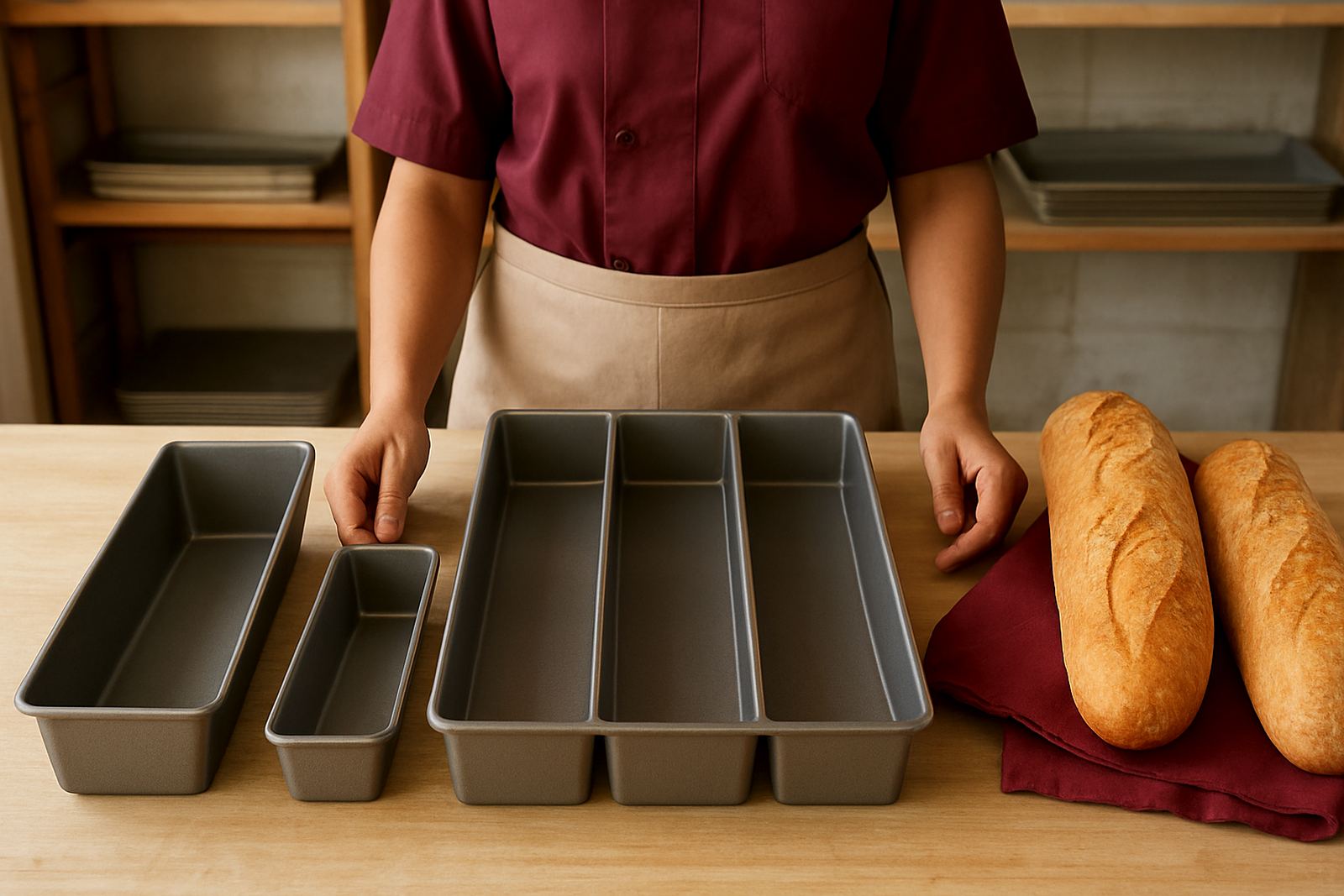
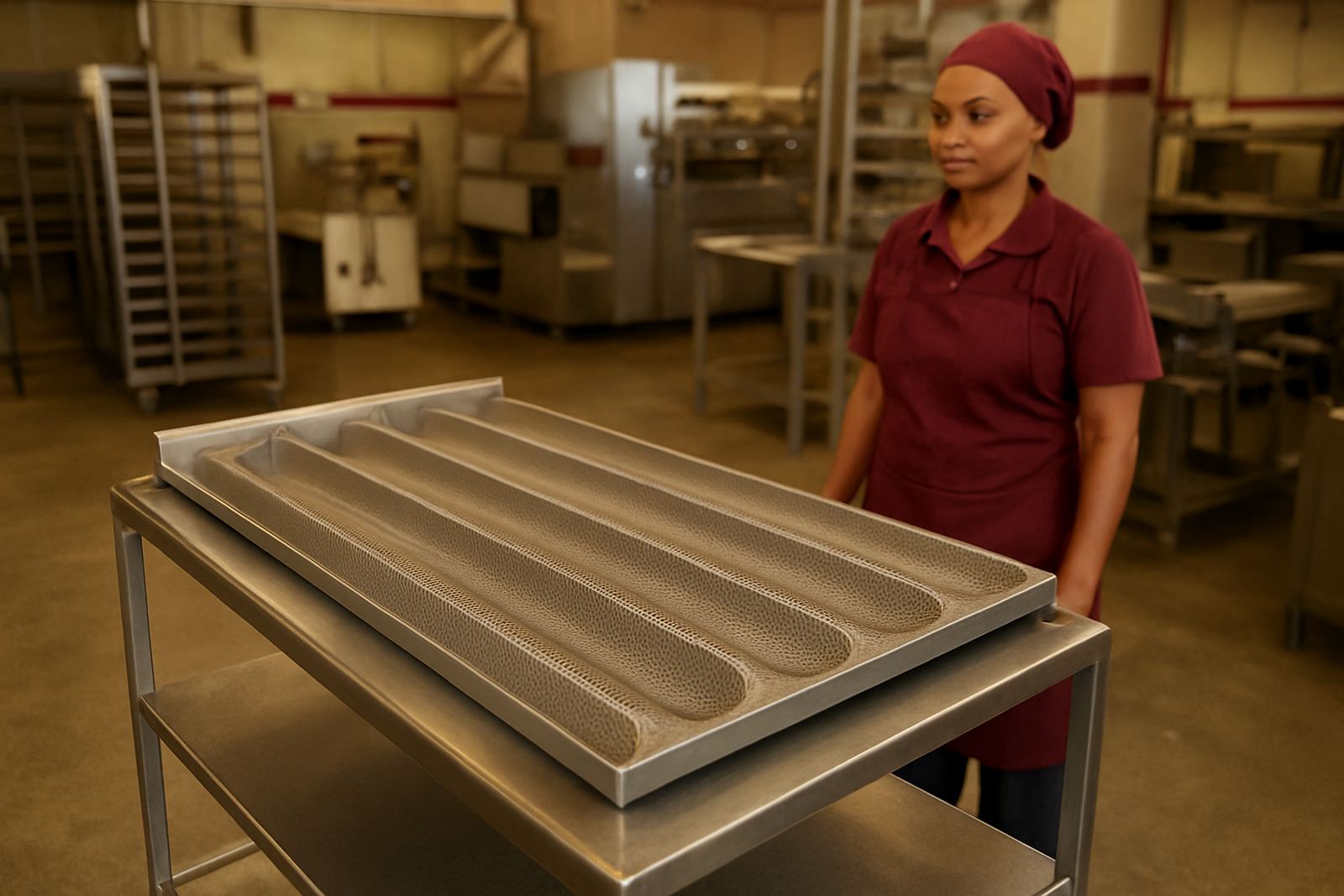
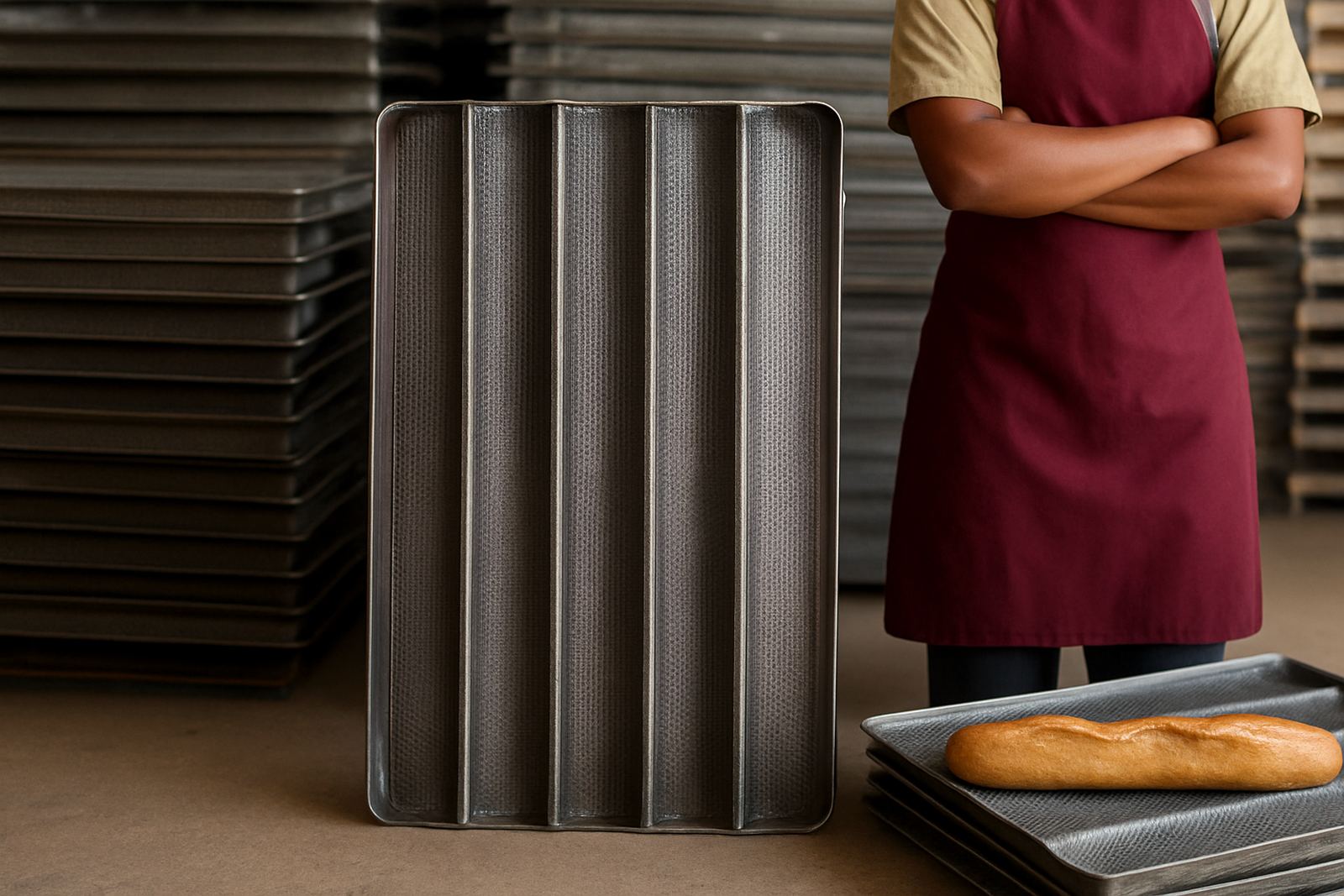
The 3 Channel Baguette Tray is built with three shaped sections so each baguette sits in its own channel and holds its form while proving and baking. This helps reduce rolling, spreading and uneven sides, which is useful when you want a neater crust and more even handling at the oven mouth.
We manufacture these trays in mild-steel bakery grade material, with the option to match your loaf size and oven footprint. The tray is practical for daily bakery work where staff need trays that stack, move and load without fuss, especially during early morning production when time is tight.
- Three separate channels for orderly dough placement
- Suitable for standard baguette and slim French loaf formats
- Can be supplied to match existing tray runners or oven shelves
- Useful for batch work where consistency matters across every load
Sizes and build options for local bakery lines
We make the tray to suit the size you are baking, whether you need a shorter test run tray or a full production size for regular baking. Channel depth, width and spacing can be adjusted so the dough gets proper support without flattening or sticking to the sides.
Typical options include single thickness or heavier gauge builds, depending on how often the tray is used and how rough the handling is in your bakery. If your bakery runs hot ovens, repeated shifts or long transport to outlets, a heavier build gives better service life and less warping. That said, the right size has to start with your actual loaf measurements, not guess work.
- Custom length and width to suit your oven and racks
- Channel profile matched to your dough weight and finished size
- Heavy gauge option for higher use bakeries
- Batch reorders available for growing production lines
Where the 3 Channel tray suits best
This tray suits bakeries producing baguettes for retail counters, school supply, restaurants, hotels and food service kitchens. It is also a good choice for businesses that need a tidy product presentation and easier tray handling when products are moved between prep, proofing and baking areas.
In Gauteng, many bakeries use these trays for early shift production in areas like Alrode, Alberton, Germiston, Boksburg, Soweto and Midrand, where oven space and turnaround time need to be used well. The tray also works where product consistency matters for chain orders, sandwich production or packaged bake-off supply. If your team is packing by hand, the channels help keep loaves aligned and reduce damage.
- Bakeries supplying shops, cafés and catering kitchens
- Retail production lines with a need for tidy presentation
- Food service operations needing steady shape and faster handling
- Plants working with batch baking and repeat orders
Oven loading, fitting and day to day use
The tray does not need power or gas, but it must match your oven shelves, rack width and loading method. Before ordering, check the clear inside width of the oven runner or rack and confirm the tray length so it slides in freely without catching. If your team loads trays by hand, the side edges and weight matter, because a tray that is too heavy becomes awkward during a busy shift.
For fitting, make sure the tray sits level on the shelf and does not twist when loaded with dough. A level tray bakes better and helps the channels keep a even shape. If you are using peel boards, proofer racks or trolley systems, we can match the tray to the way your bakery actually works, not only to a catalogue size.
- No electrical connection or gas connection required
- Check oven clearances, runner spacing and trolley fit before ordering
- Confirm whether loading is by hand, peel or rack transfer
- Allow for heat expansion in long, high temperature bake cycles
Care, cleaning and tray life
Mild-steel bakery trays last longer when they are cleaned properly and dried after washing, especially in coastal humidity or damp pack rooms. Water left on steel can lead to rust marks, and the best way to avoid that is simple, quick drying after cleaning. If the trays are used daily, a regular inspection for bent edges, worn corners and surface damage will help prevent handling problems later on.
Do not leave trays soaking in water or stacked wet for long periods. If you use release spray or dusting flour, clean off build-up before it hardens on the tray surface. In busy bakeries, a simple cleaning routine is often better than waiting for a deep clean once the damage has already started.
- Wash and dry after use to limit rust and surface marking
- Store in a dry area away from wash bays and open damp floors
- Check for warping, cracked welds or rough edges
- Ask for servicing advice if you need repeat tray repair or copy work
What to check when ordering your tray
To order the correct 3 Channel Baguette Tray, send us the finished loaf size, dough weight, oven type and the tray dimensions you can accommodate. If you already use another tray, we can work from a sample or measurement so the new tray copies the usable parts correctly. This is especially useful when your bakery wants to keep the same loading pattern but improve the tray condition or build strength.
It also helps to confirm whether you need divider inserts, perforation, heavier steel or a special lip for easier handling. Some bakeries want a simple working tray, others need a version that fits a specific trolley or oven rack. The more exact the order details, the quicker the tray can be matched to your production line, and fewer adjustments are needed after delivery.
- Finished baguette length and diameter
- Dough weight per piece and number of pieces per tray
- Tray length, width and required channel spacing
- Whether you need perforation, heavier gauge or copy work from a sample
Key facts
| Product | 3 Channel Baguette Tray |
|---|---|
| Material | Mild-steel bakery tray construction |
| Channels | 3 formed baking channels |
| Use | Baguette shaping, support and orderly oven loading |
| Options | Custom sizes, heavy gauge build, perforation, divider inserts |
| Area | Made in Alrode, Johannesburg South for Gauteng bakeries |