Matching the bakeware to your bread range
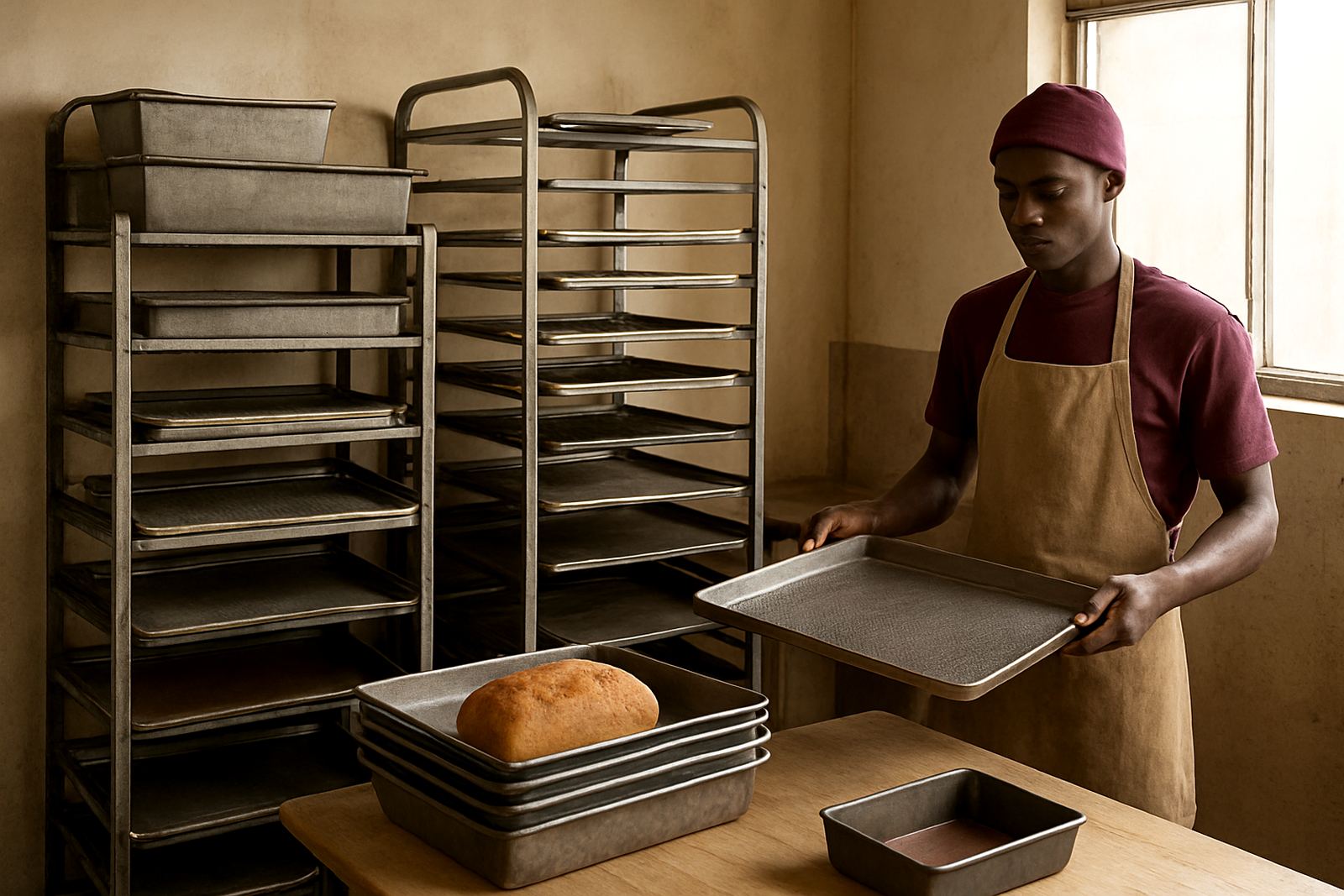
Artisan bread shops often start with a short list of products and then grow into a mixed basket of loaves, rolls and filled breads. The bakeware has to keep up with that mix. A shop baking sourdough, farmhouse loaves, rye tins and baguettes usually needs a combination of standard bread pans, lids for defined loaf shape, and perforated trays for airflow under the crust. If the pan size is off by even a small amount, the dough can spread too far, bake unevenly or stick at the corners.
We work with bakeries that want size matching rather than a one-size-fits-all order. That can mean copying an existing pan, checking the footprint against your oven rack spacing, or building a heavier gauge version if you are running long shifts in a busy bakery. For shops in Johannesburg South, Alberton and Germiston, this is often the simplest way to keep production moving without changing the recipe or the moulding method.
- Standard bread pans for sandwich loaves and shaped country breads
- Lids for square, closed-top loaves and repeatable slice shape
- Perforated trays for artisan crust development and even heat flow
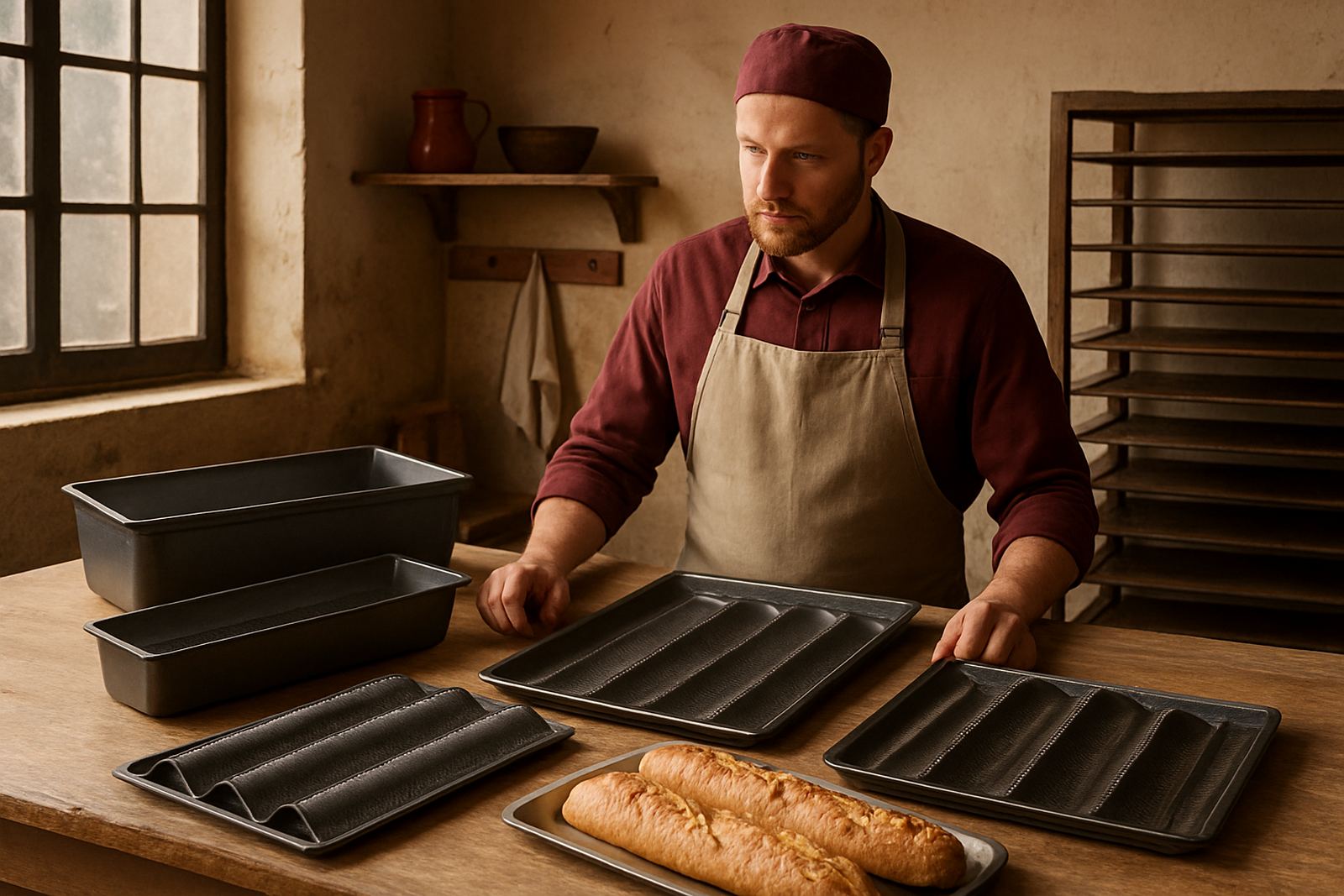
- Baguette trays for long loaves, sub rolls and split crust profiles
Typical equipment set for a small artisan bakery
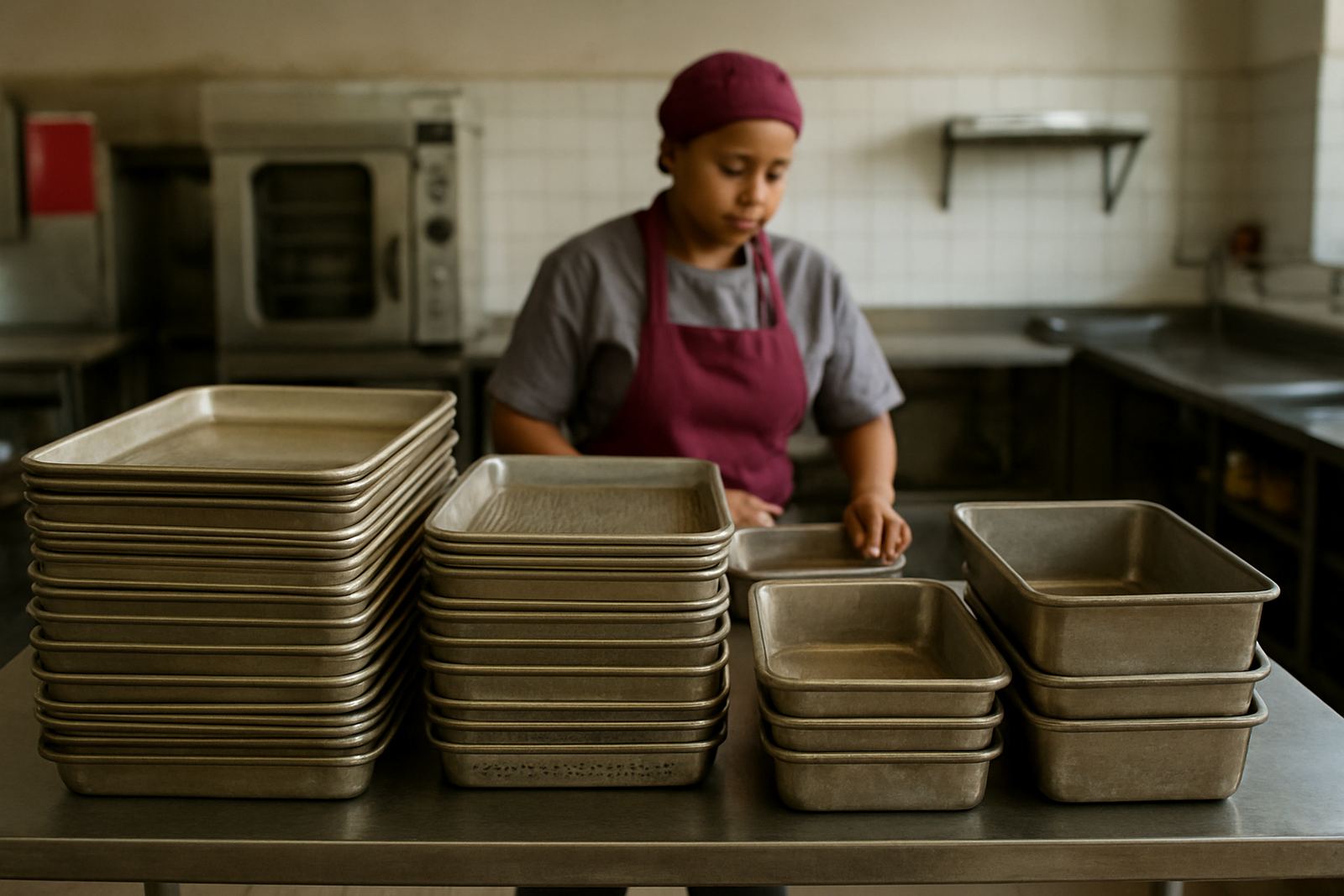
A compact artisan shop does not need a huge range of bakeware on day one. Most start with a core set that covers daily bread, weekend specials and order-led production. The right mix depends on whether you proof in tins, bake directly on trays, or move dough through a divider and benching line before final shaping. In a tight production room, the layout matters as much as the pans themselves.
A sensible starter set often includes standard pans for your main loaf, a few lids for uniform top finish, and perforated trays for loaves that need a drier base and better crust colour. Where the bakery also sells baguettes or seeded sticks, baguette trays keep shape and improve handling on the way to the oven. In humid coastal areas the airflow from perforation can help, while in hotter inland bakeries the main concern is keeping the bake consistent from first tray to last.
- Main loaf pans in the size your moulders and slicers already suit
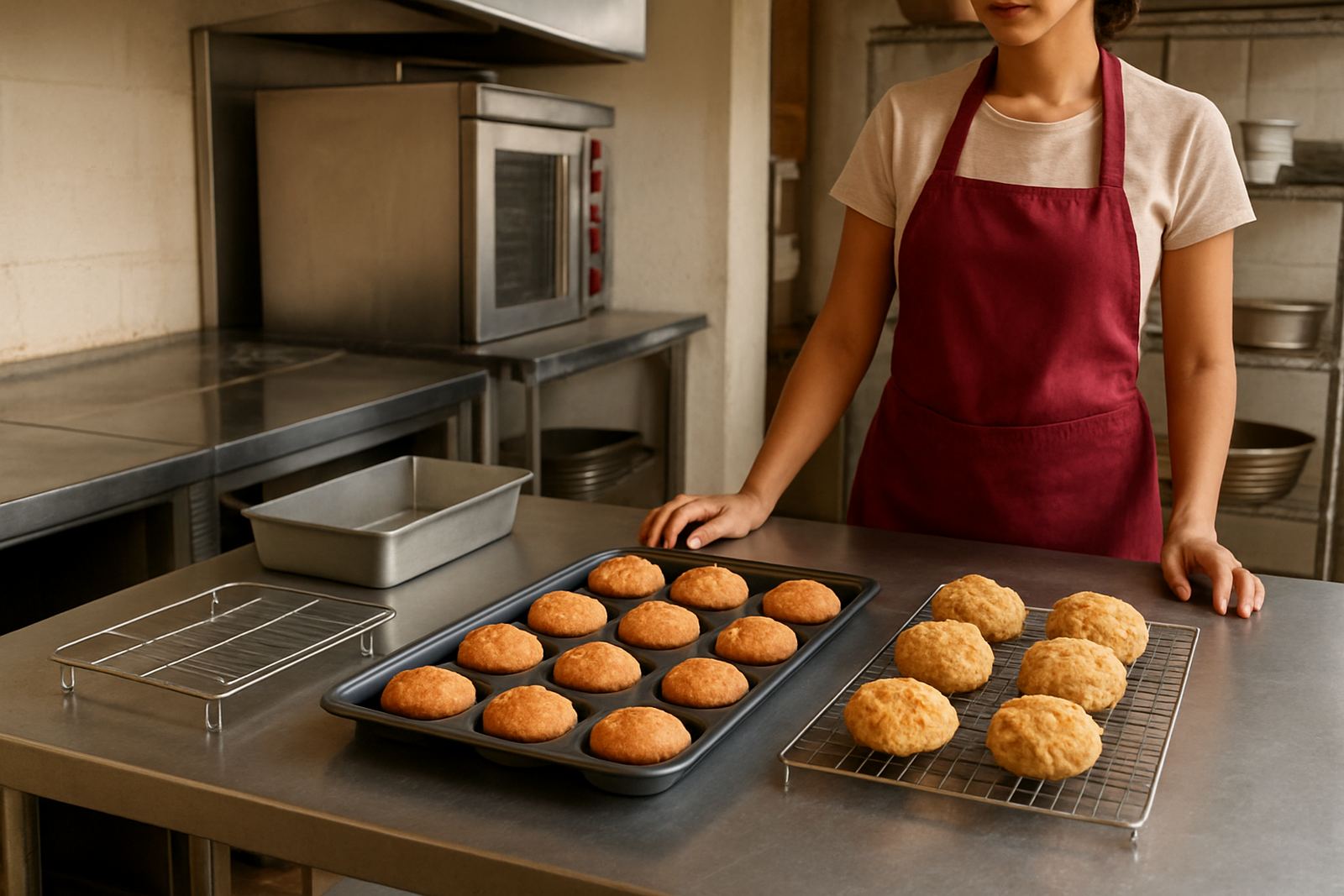
- Perforated trays for batards, specialty loaves and tray-baked breads
- Baguette trays for 2 or 4 loaves per tray, depending on oven width
- Divider inserts where smaller batch control is needed
Planning the bakery floor and oven flow
Good planning saves time every single shift. Before ordering new bakeware, check the clearances from bench to oven, oven to cooling racks, and rack to dispatch. A pan that fits the oven may still be awkward if it will not slide cleanly on the trolley. We often advise shops to measure in millimetres and to bring one sample pan or tray when asking for a copy. That avoids guesswork and cuts down on delays later.
For artisan bread shops in Soweto, Midrand or Boksburg, the practical issues are often the same: limited prep space, more than one product line, and people moving quickly during peak hours. If you are running batch reorders, it helps to keep the same pan type across repeated runs so the loaves stay uniform. It also makes stock control easier. A little planning now can stop a costly mismatch, especially when you are fitting new equipment around existing ovens.
- Measure oven deck, rack width and shelf spacing before placing an order
- Leave room for heat movement so trays do not bind on the sides
- Keep proofing, baking and cooling in one straight path where possible
- Check that lids, handles and tray edges will not catch on the trolley rails
Common mistakes we see with artisan bread orders
One common mistake is ordering pans from a recipe description instead of from the real loaf size. Another is choosing light material for a high-output bakery, then finding the sides warp after a few months of hard use. In busy shops the corners take a beating, and cheap replacements often cost more in the end. If the bakery runs through load-shedding with generators or staggered baking, heavier gauge pans tend to hold shape better under repeated heating and cooling.
Another issue is tray style. Some bakeries want a closed base for soft crust loaves but order a perforated tray, then wonder why the finish changes. Others buy baguette trays that are too narrow for the dough weight and end up with split sides. A small mistake in fitting can affect the whole batch, so it is worth checking the recipe, proofing method and intended bake before you commit. We also see rush orders where the customer forgot about lid fitting, which can cause delays for the full line.
Budget ranges for bread pans and baguette trays
Budget depends on size, gauge, quantity and whether you need copying or a prototype run first. For an artisan shop, a small starter order of standard pans and a few trays may sit in the lower thousands of Rand, while a fuller set for daily baking can move into the mid tens of thousands, especially if lids and heavier gauge builds are included. Custom copy work and batch repeats are usually easier to price once we have the sample and the quantity.
As a general guide, many small bakeries begin with a practical opening order around R5,000 to R15,000. A growing shop with mixed loaf types, baguette production and spare stock for busy weekends may budget R15,000 to R40,000. Larger wholesale artisan producers, or bakeries replacing worn sets across several racks, can easily go beyond that. We can also plan phased buying so you do not have to replace the full set at once.
Working with our Alrode factory for repeat supply
Our base in Alrode, Johannesburg South makes it straightforward to support bakeries across Gauteng, from Alberton and Germiston through to Boksburg, Soweto and Midrand. Artisan shops usually need quick answers, clear sizing and repeat orders that arrive the same way each time. That is where pan copying, size matching and batch reorders make a difference. If the original pan is worn or bent, we can work from the sample and confirm the critical dimensions before production.
For bakeries that are still growing, we can help with prototype runs and factory consultations so the bakeware fits the oven plan before you commit to a large batch. If you are opening a new bread shop or adding a specialist loaf line, send the measurements, photos and any sample pans to orders@bakerycateringequipment.co.za. It keeps the process simple, and it helps avoid the sort of mismatch that slows down morning production.