School canteen kitchens need repeatable trays, not guesswork
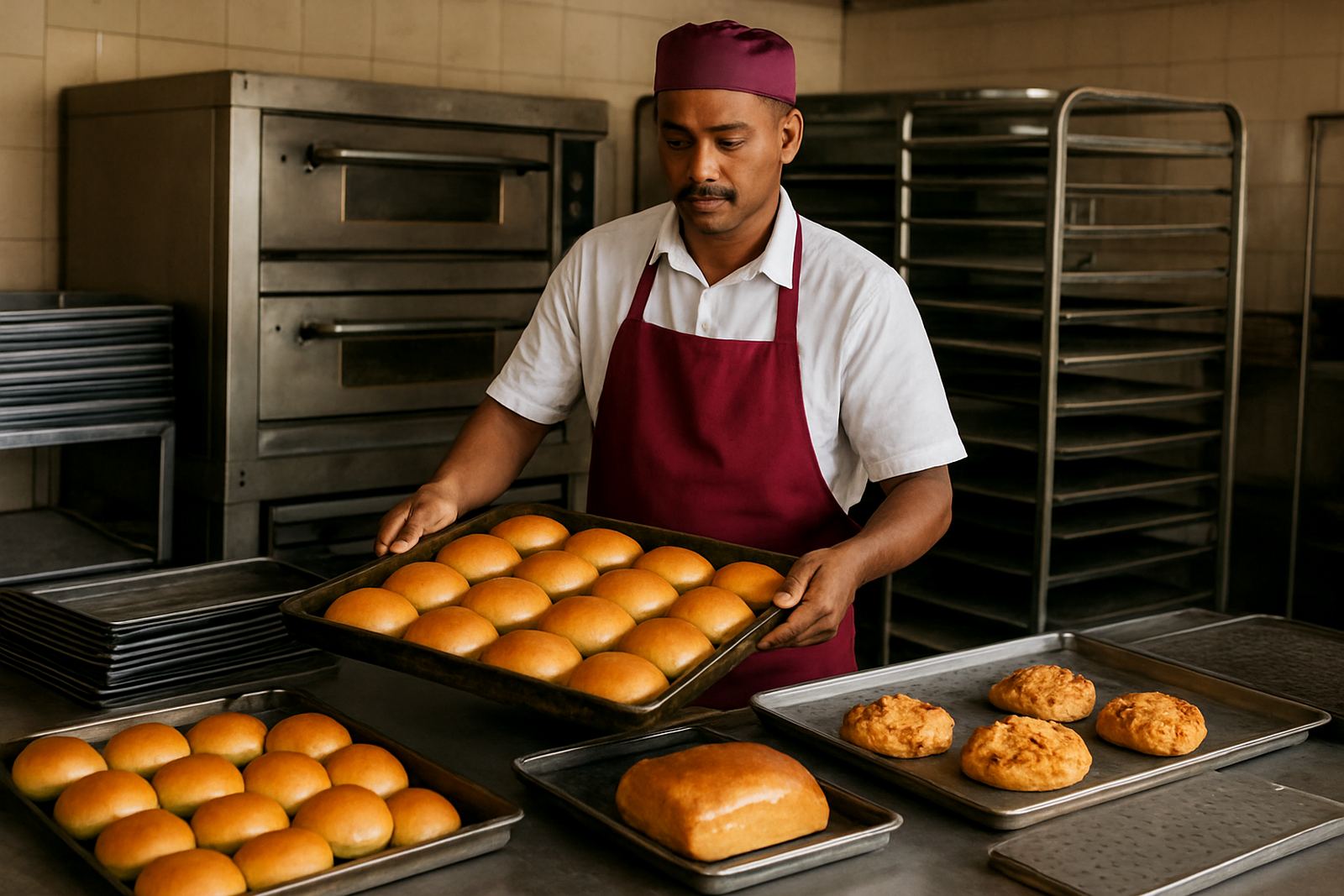
In a school canteen, the same tray may be used for rolls, savoury squares, muffins, snack loaves or sliced breads, often more than once a day. The equipment has to work with a small prep team, fixed serving times and limited storage. If a tray bends in the oven or a lid does not sit properly, the whole service slows down.
Most school kitchens in Johannesburg South, Alberton, Germiston, Boksburg and surrounding areas want simple, tough bakeware that stacks well, cleans fast and holds its shape. For that reason we usually start by looking at the menu, oven type and the number of learners served per shift. A tray that suits a 300 portion lunch service in Midrand may not suit a smaller rural kitchen with one convection oven and a hand wash station.
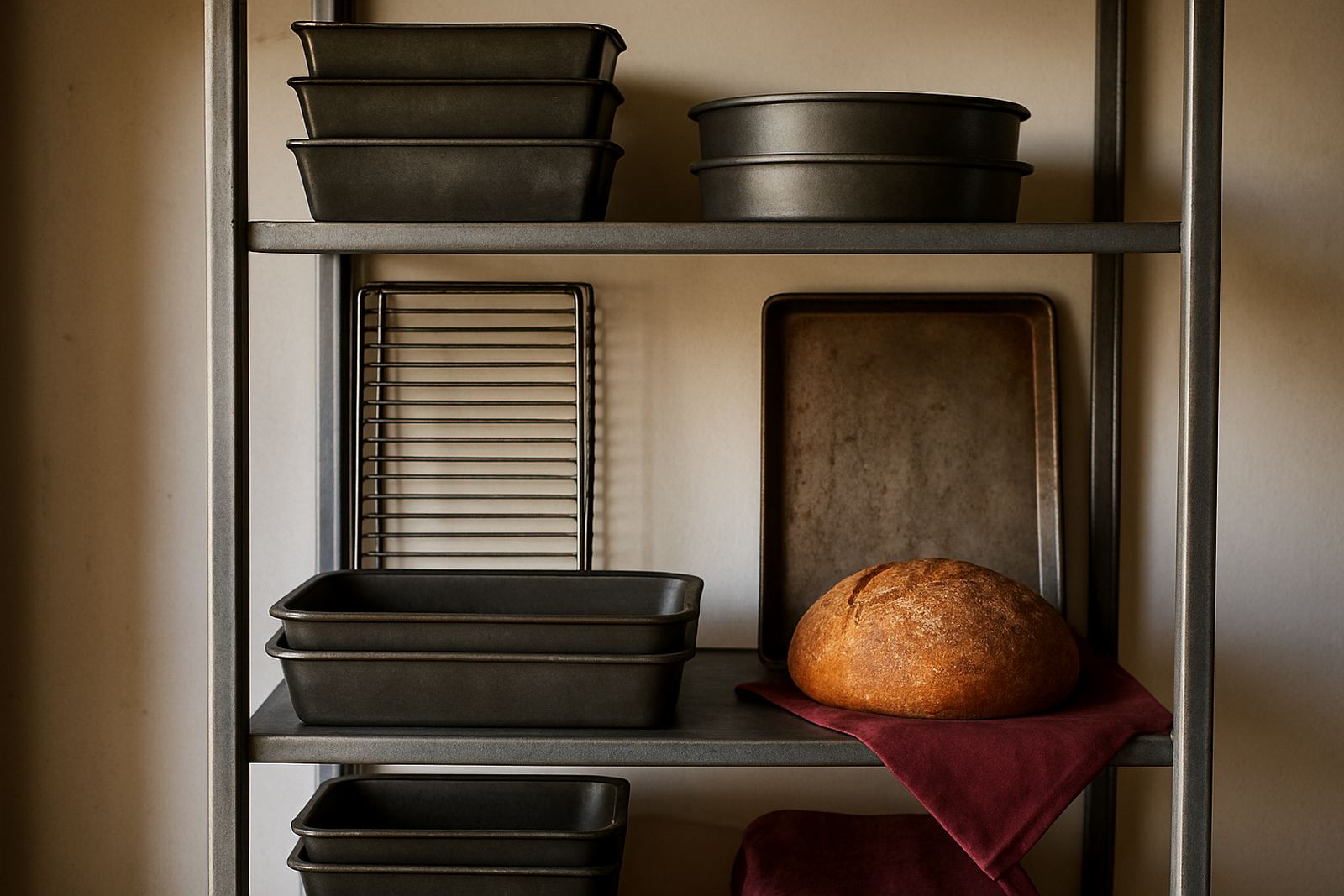
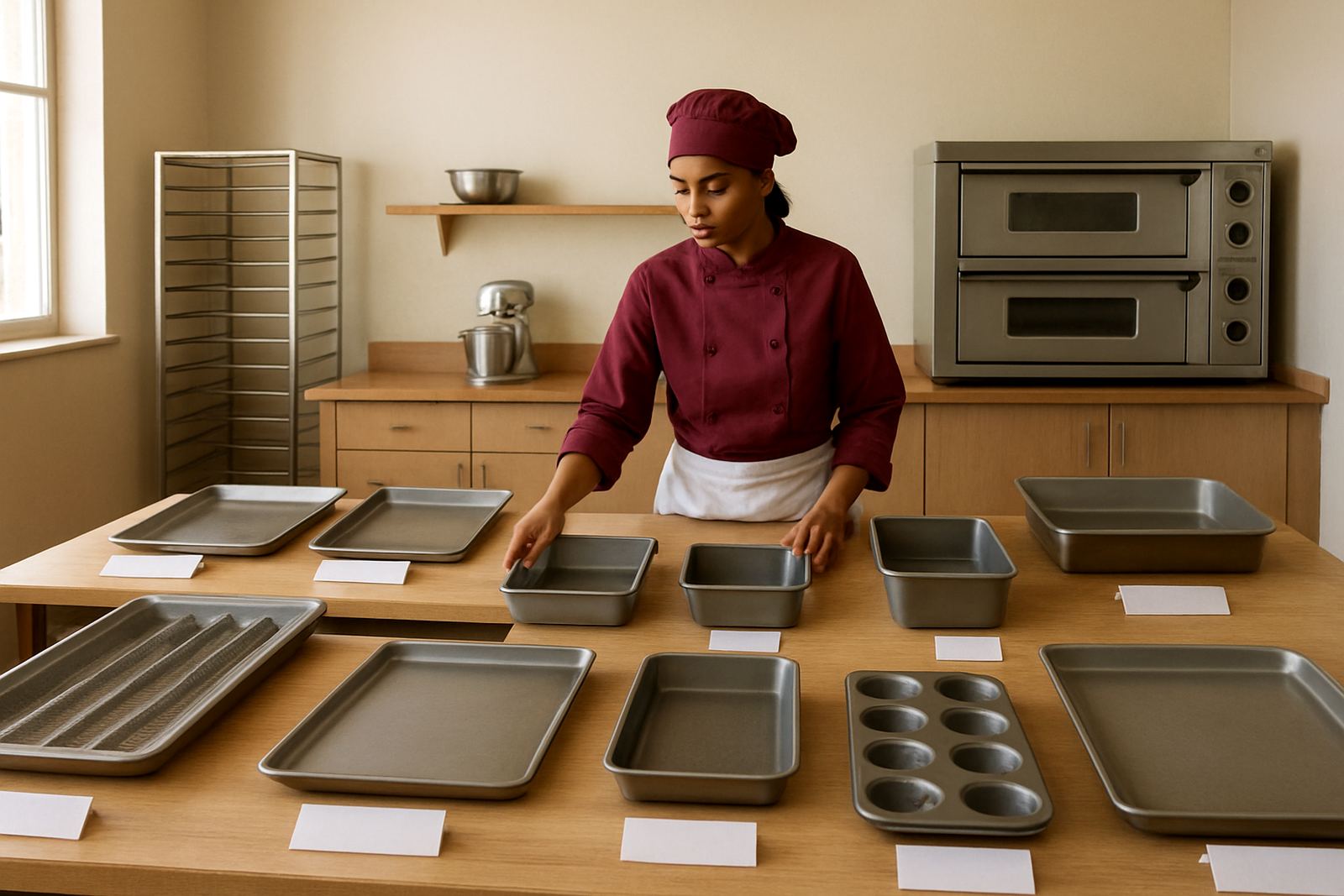
Our standard school canteen orders often include bread pans, flat baking trays, perforated trays for better heat flow, and lids for covering product after baking or during transport. Where a kitchen is planning around load-shedding or gas back-up, it helps to choose sizes that work across more than one oven bay so the team can batch bake without wasting space.
Typical equipment set for daily canteen baking
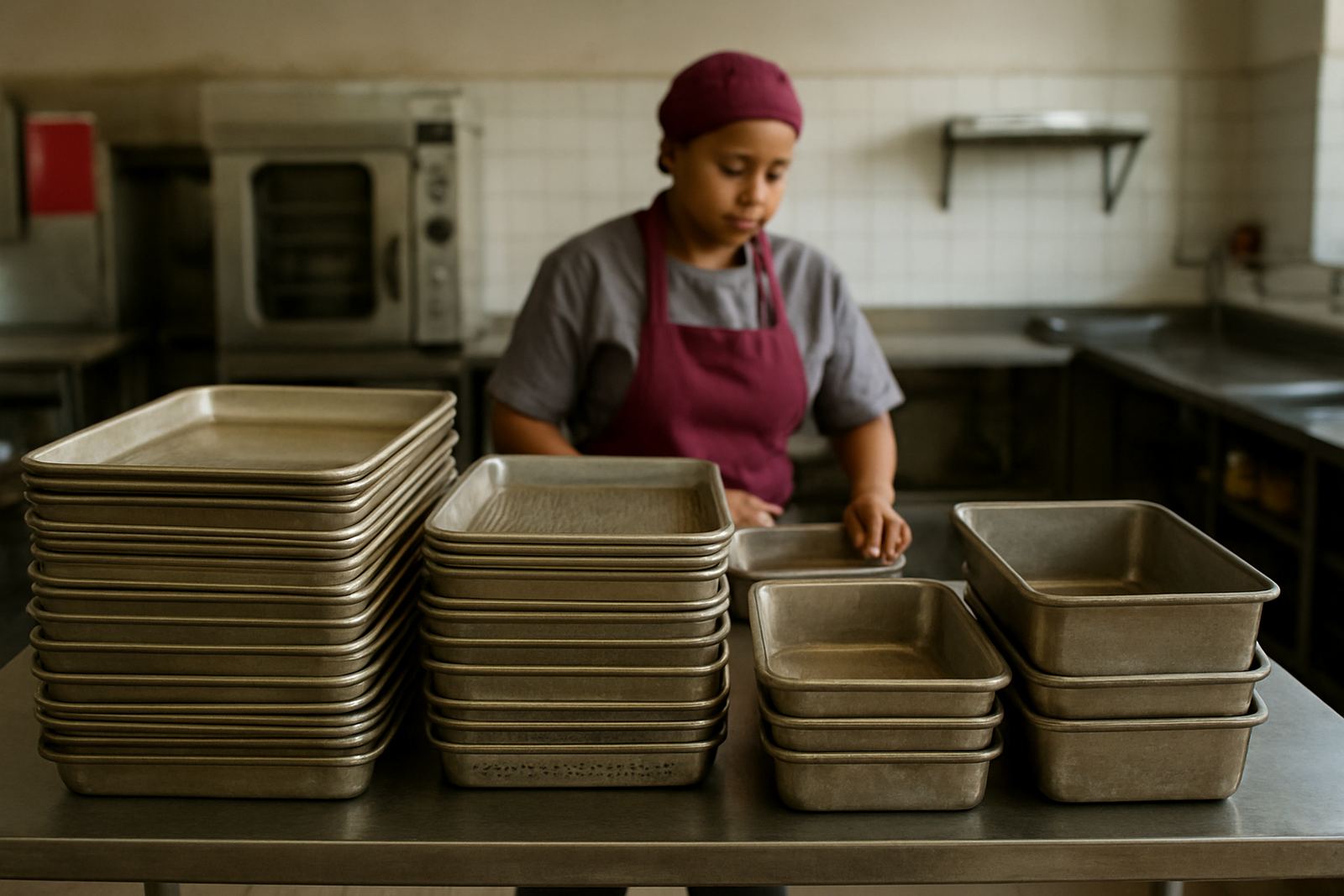
A practical canteen setup keeps to a few proven items rather than many odd sizes. This makes stock control easier and helps the kitchen team train new staff faster. We can manufacture to existing patterns or work from a sample pan if the school already has a shape that fits its oven and shelving.
The most common set-up for school kitchens includes bread pans for sandwich loaves, shallow trays for baked snacks, and perforated trays where quicker browning is needed. In some kitchens, baguette-style trays are used for long rolls or finger sandwiches. Lids are useful for proofing, for covering baked product on trolley runs, and for keeping baked goods cleaner during holding.
- Standard bread pans for sliced loaves and tea-time breads
- Flat trays for scones, muffins, sausage rolls and savoury pastry
- Perforated trays for faster colour and more even heat movement
- Baguette trays for rolls, filled breads and longer snack items
- Lids for stacking, storage and cleaner movement between kitchen and serving area
If the school bakes in bulk on Mondays and Thursdays, batch reorders are worth planning early. That way all pans in the kitchen stay matched and the team is not forced to work with a mix of worn and new tray sizes.
Planning the tray layout around ovens, trolleys and storage
The best layouts are built around the real path a tray takes in the kitchen. It starts at prep, moves to proofing if needed, then into the oven, onto cooling racks and finally to storage or the serving counter. If any part of that route is awkward, staff lose time and hot trays get bumped or dropped.
Check oven internal measurements, rack spacing, trolley shelf gaps and the height of any pass-through area before placing an order. Many schools make the mistake of measuring only the outer oven size. That can lead to trays that fit the oven opening but cannot slide past the side rails or stack neatly once baked goods are cooled.
- Leave enough hand space around hot trays for gloves and quick turns
- Match tray height to the oven rack spacing, not only the door opening
- Allow space for cooling racks near the prep area to reduce walking distance
- Use stackable lids where storage is tight or cupboards are shallow
- Keep one tray size for general baking and one for special items, rather than too many sizes
In coastal areas or where kitchens sit close to humid washing areas, mild steel needs proper drying after cleaning. If trays are left wet or stacked while damp, rust can start on the corners first. A simple drying routine saves replacement cost later and keeps the kitchen running better through the term.
Common mistakes schools make when ordering bakeware
The most common error is buying by price alone and ending up with trays that warp after a few months. Thin material may look fine on day one, but in a busy school kitchen the repeated heating and cooling cycle shows up quickly. Another mistake is choosing one tray size for every task. That often slows production because the kitchen is forcing one pan to do too much.
We also see school teams forget about handling and cleaning. A tray that is too deep may be difficult to wash in a busy sink area. A lid that fits too tightly can be hard to remove in a rushed service period. For canteens that bake early and serve later, the better choice is usually a simple, practical fit rather than a very tight or very decorative design.
Ask for a sample check if the school is changing menus or replacing old pans. Size matching and pan copying help avoid mistakes when the existing equipment is already working and only needs duplication. For schools in Soweto or Germiston with older ovens, this is often the safest way to keep the kitchen consistent from one term to the next.
Budget ranges for school canteen orders in Rand
Budgets depend on the number of pans, the steel thickness, whether perforation is needed and whether lids or divider inserts are included. For a small school kitchen, a starter order may cover a few dozen items across two or three sizes. For a larger feeding scheme, the order often includes multiples of the same tray so the kitchen can work in batches without waiting for pans to cool.
As a practical guide, smaller school canteen orders can start from about R2 500 to R6 000 for basic bakeware. Mid-size orders for regular institutional use often sit between R7 000 and R18 000. Larger fitted runs, especially where there are many matching pans, lids and custom sizes, can move beyond R20 000 depending on the specification.
It is usually better to spend once on the correct thickness than replace light trays every term. The saving comes through longer service life, fewer warped trays and less wasted product. Schools in Alrode, Boksburg and Midrand often find that the right set-up pays back through fewer delays at breakfast and lunch service.
What school kitchens need from a supplier on the ground
School kitchens need clear answers, decent lead times and equipment that matches the real work on site. That includes checking oven type, bake quantity, staff handling and where the trays will be stored after washing. A factory consultation helps when a kitchen is planning a new feeding line or changing from bought-in bread to baked-on-site items.
We manufacture from Alrode and supply across Johannesburg South and Gauteng, including Alberton, Germiston, Boksburg, Soweto and Midrand. For schools with seasonal top-ups, we can assist with batch reorders so the kitchen keeps the same sizes through the year. If a new tray needs to match an older one, we can work from the sample and keep the fit consistent.
For canteens serving daily breakfasts and lunch packs, the best outcome is not a fancy tray, but one that keeps its shape, stacks properly and survives a busy term. That is what school kitchens need most, especially when staff changes or power interruptions put extra pressure on the shift.