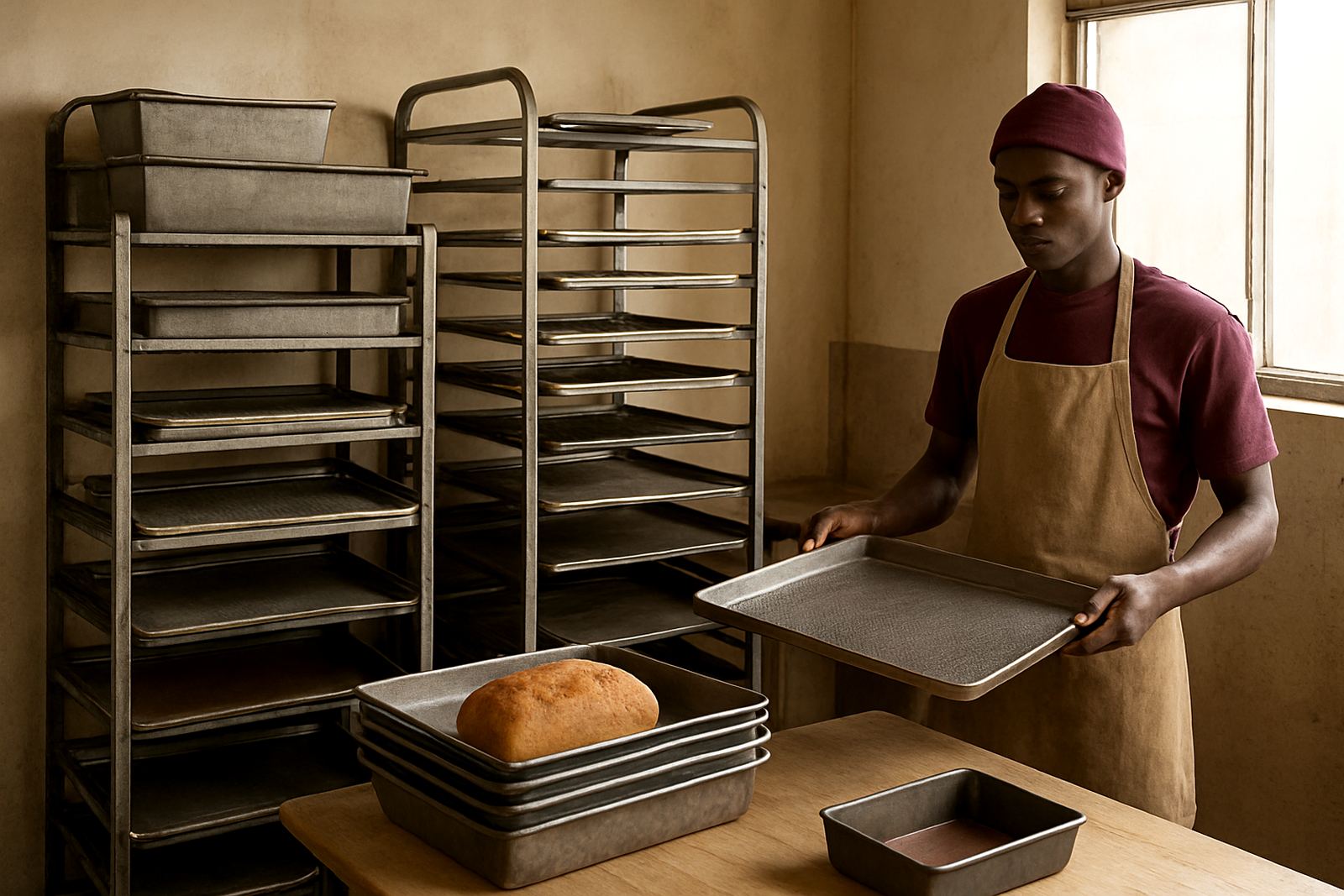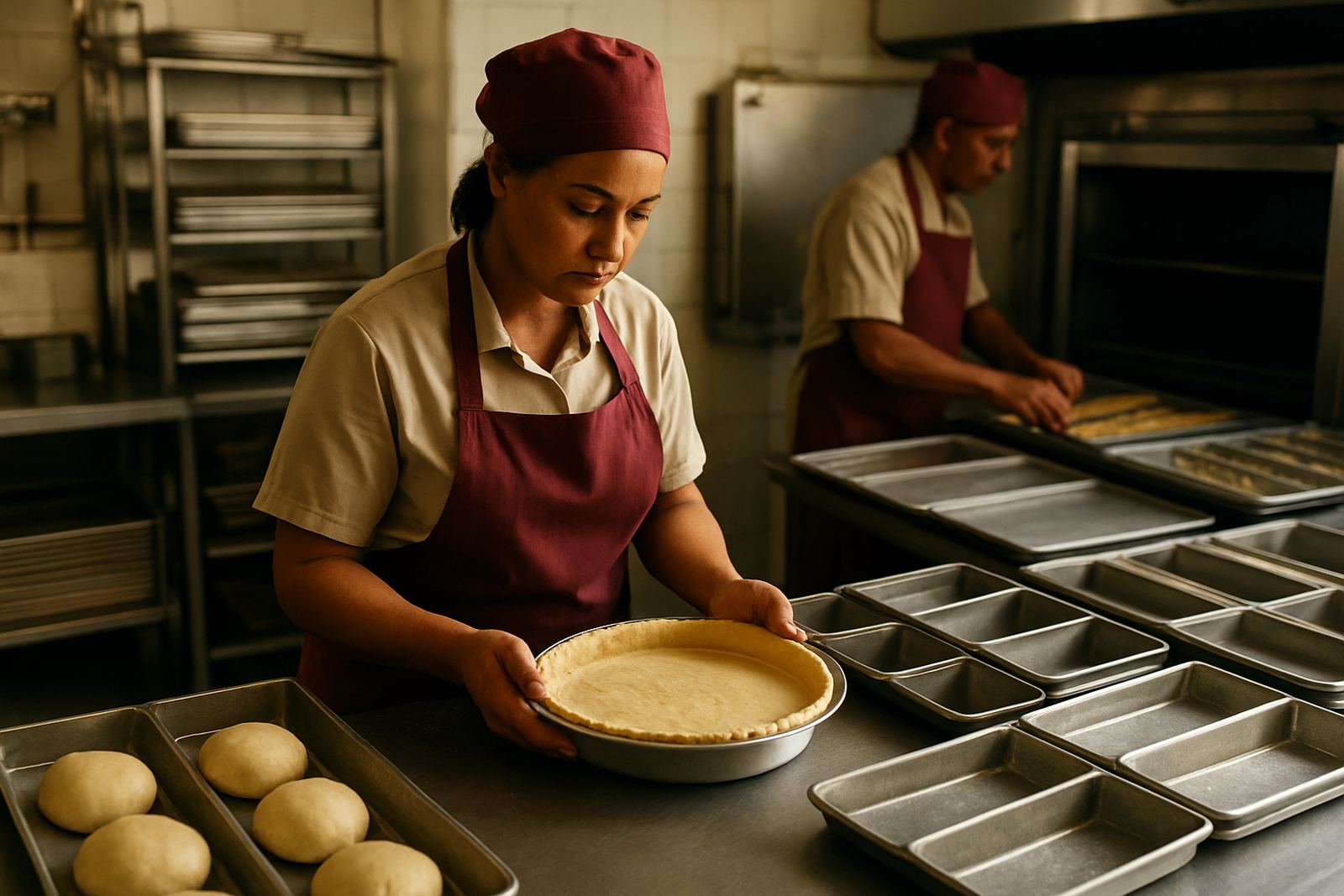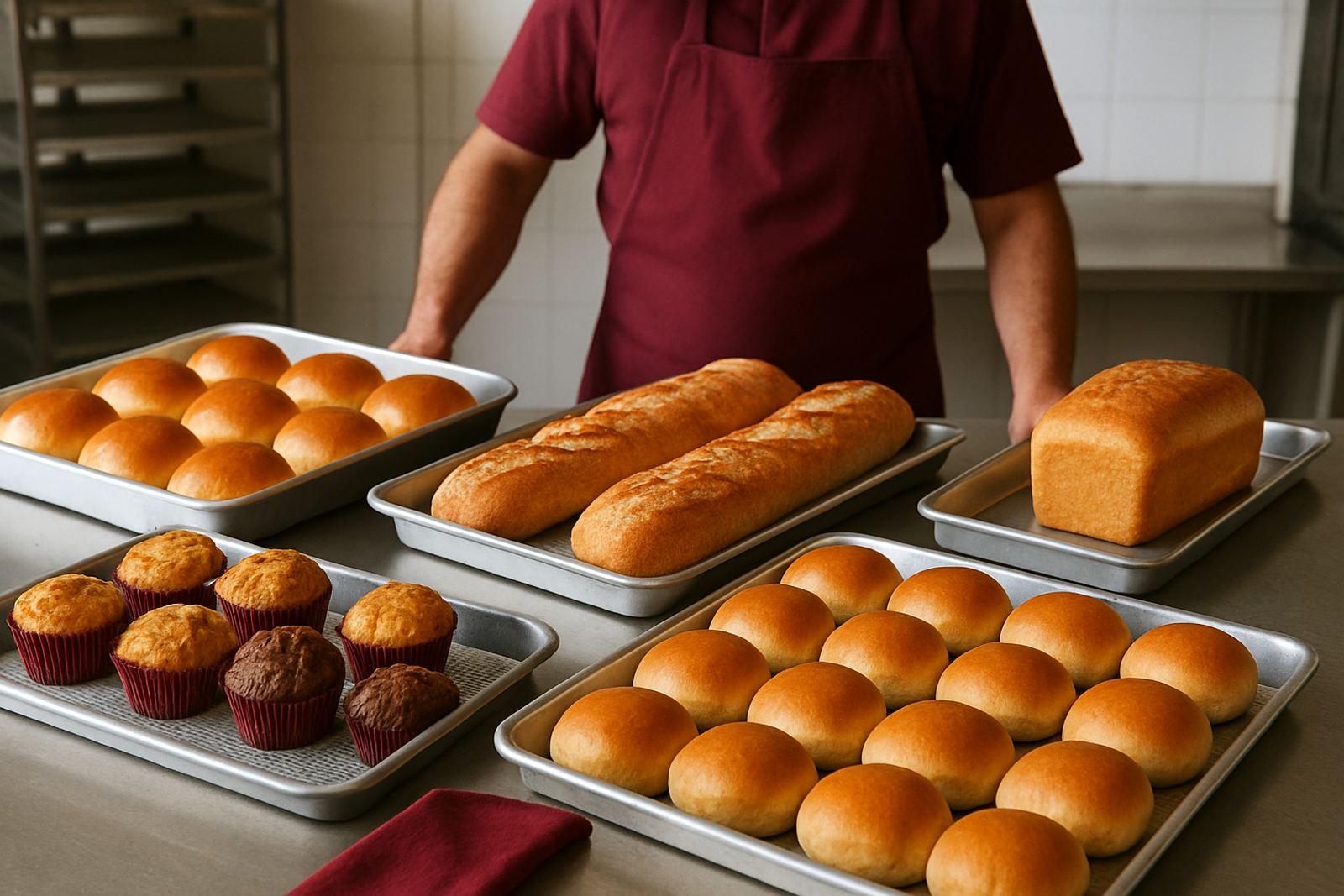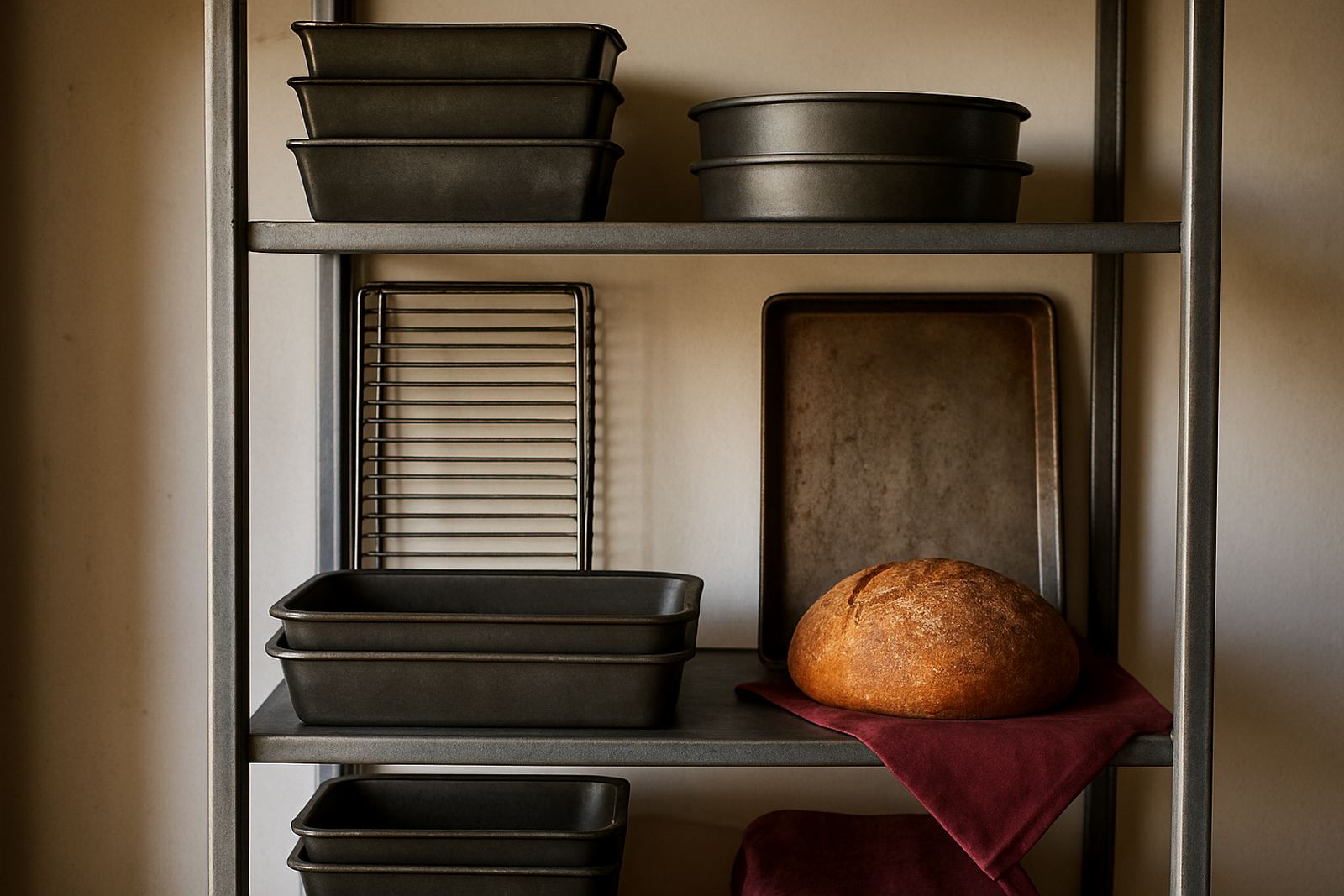
What a guesthouse baking setup usually needs
Most guesthouses are baking for breakfast service, tea time or a small number of in house guests, so the equipment list must stay practical. A full commercial bakery set is usually too much. What works better is a compact mix of bread pans, lids where needed, perforated trays for better crust colour, and a few baguette trays if the menu includes fresh rolls or sliced bread for sandwiches.
In places like Alberton, Germiston and Midrand, many guesthouses run a single convection or deck oven with limited prep space. That means the bakeware has to stack neatly, handle frequent use and clean quickly between batches. Mild-steel pans are still the common choice for value and heat transfer, while heavier gauge builds help where trays are used daily and handled by different staff.
Typical equipment set for smaller hospitality programmes
A guesthouse does not need every tray under the sun. Start with the items that match the breakfast menu and the oven size, then add extras once the volumes are clear. A sensible set is often built around standard bread pans and one or two tray sizes that can serve more than one purpose. If you serve fresh loaves, sliced toast bread or small rolls, the same set can cover most of the week.
- BO3, BO4 or BO5 bread pans for daily loaves
- Lids for tin bread or sandwich loaves where a level top is needed
- Perforated trays for crusty rolls and improved air flow
- Baguette trays for slim loaves and breakfast service
- Divider inserts for smaller portions, useful when waste must be kept low
For guesthouses near the coast, especially if stock is moved between storage and a humid kitchen, it helps to plan cleaning and drying properly so trays are not left wet after washing. A simple storage rack or shelf with airflow can make a real difference.
How to plan around oven size and kitchen flow
The biggest mistake is ordering trays before checking the oven chamber, shelf spacing and door opening. A tray that works on paper may not slide in easily once a rack is loaded. Measure the usable baking area in millimetres, not by eye, and allow for heat circulation around the sides. If the oven sits in a tight corner, check the handle clearance too.
Guesthouse kitchens often work with one person on breakfast and one helper on busy mornings, so the layout should keep movement simple. Store empty pans close to the prep table, keep lids and inserts together, and use one cleaning point so staff are not walking back and forth. This matters even more during load shedding when timing shifts and the team needs to recover quickly once power returns.
- Check oven tray runners before placing an order
- Allow space for cooling racks and dried pans
- Keep the most used pans at waist height for easy access
- Plan for overnight drying if dishes are washed late
Common mistakes guesthouses make with bakeware
A common error is buying too many small items and not enough of the main pan size. That creates storage pressure and slows down service. Another issue is choosing very thin trays for daily use, which can warp with repeated heating and cooling. Once a tray starts twisting, baking becomes uneven and the bakery staff spend time fighting the equipment instead of using it.
Some guesthouses also forget that different recipes need different surfaces. A bread pan for soft loaves is not the same as a perforated tray for rolls. Mixing the wrong tray type can lead to pale bottoms or loaves that stick. If the kitchen changes menu often, it is better to start with a small, well matched set and expand later rather than over-ordering at once.
Budget ranges in Rand for guesthouse bakeware
Budget depends on size, gauge, finish and whether the order is a straight repeat or a custom fit. For a small guesthouse, entry level planning often starts around R2 500 to R6 000 for a basic set of standard pans and trays. A more practical mid-range order for regular breakfast baking may sit between R6 000 and R15 000, especially if lids, perforated trays and a few custom sizes are included.
Where a guesthouse wants heavier gauge builds, batch reorders or matching to an existing pan pattern, the quote can move higher. That said, matching the right bakeware to the oven usually saves money over time because staff waste less batter, fewer trays need replacing and the kitchen can bake more consistently. For smaller hospitality sites in Johannesburg South, Boksburg or Soweto, a phased order is often the easiest way to stay within budget.
How we support guesthouses with smaller orders
We work from Alrode in Johannesburg South and supply guesthouses across Gauteng with bread pans, lids, trays and custom bakeware support. If you already have a sample pan, we can assist with size matching or pan copying. If the oven is the limiting factor, we can help with tray dimensions, lid fitting and divider inserts so the final set actually works in your kitchen.
For guesthouses, the goal is simple: enough bakeware to cover breakfast and light hospitality service without tying up space or cash. That usually means a clean set of repeatable sizes, practical storage and a clear reorder plan. When the first batch is right, the rest of the programme becomes much easier.
- Size matching for existing pans and trays
- Prototype runs for new breakfast items
- Batch reorders when guest numbers grow
- Factory consultations for new kitchens or menu changes