What supermarket bakeries need from bakeware
Supermarket bakeries work differently from stand-alone shops. You are baking for display, packing and top-up sales at the same time, so every pan, lid and tray must be easy to stack, easy to clean and simple to count during a busy shift. The goal is not just a good loaf, it is getting the same loaf again tomorrow with less waste and less handover confusion.
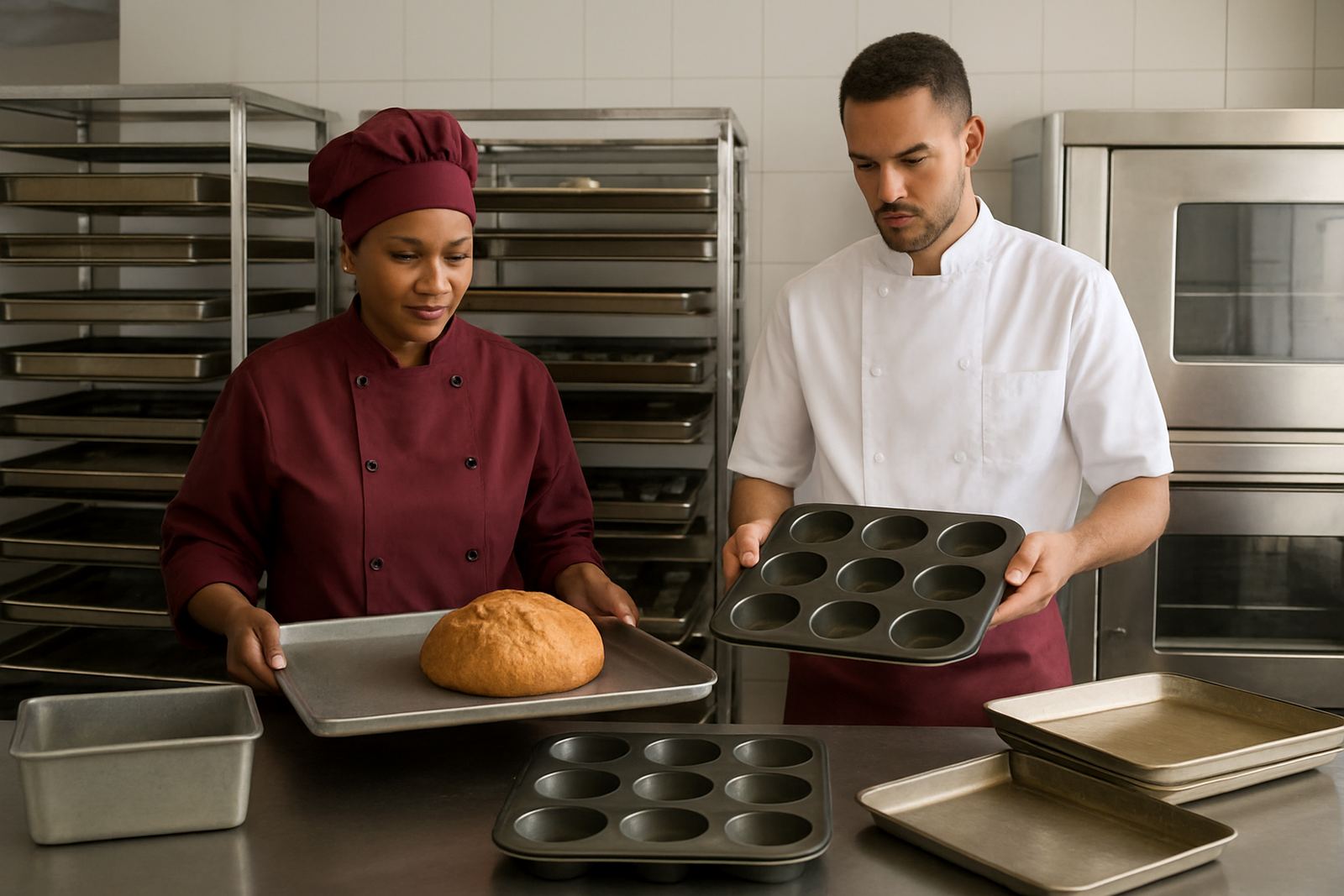
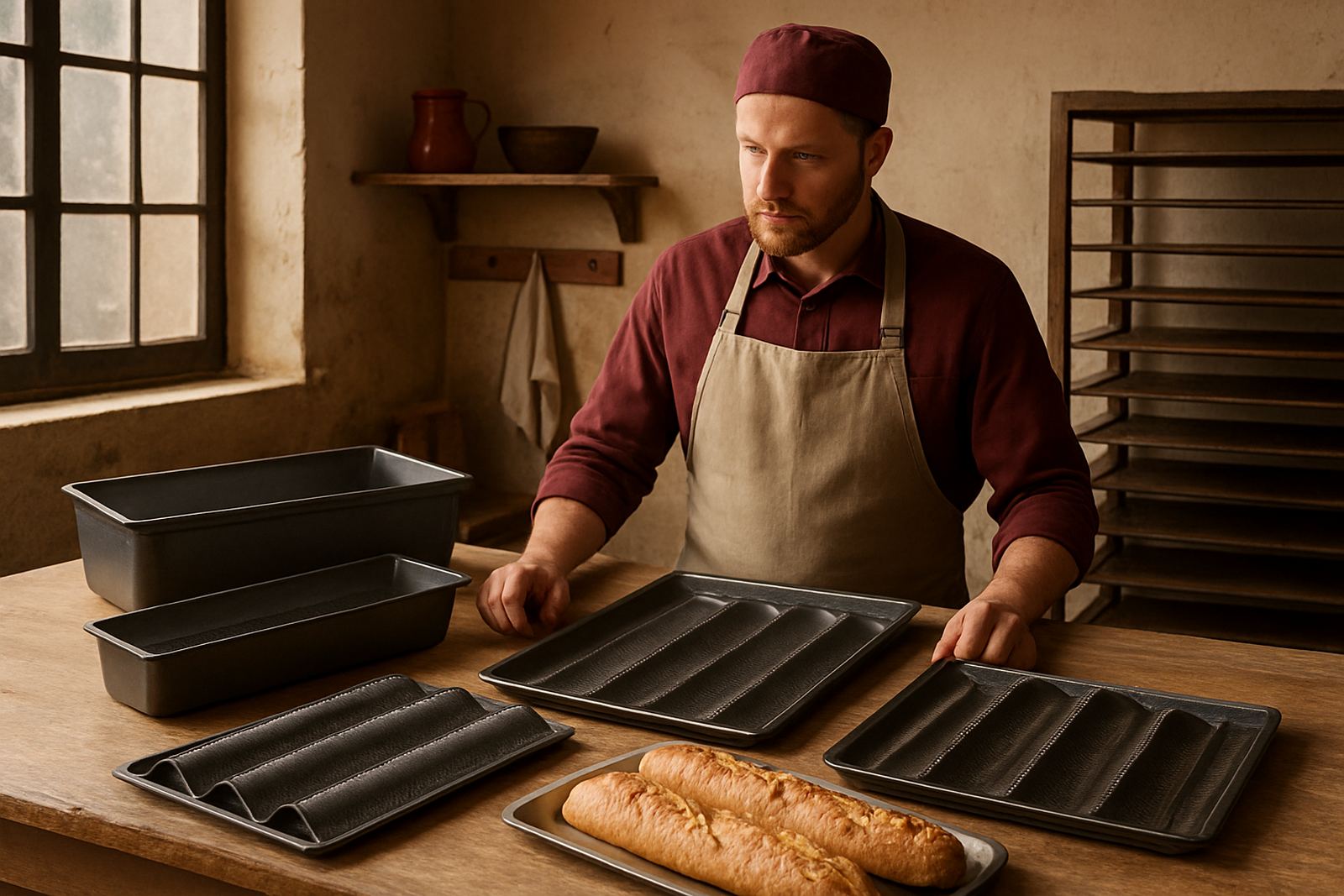
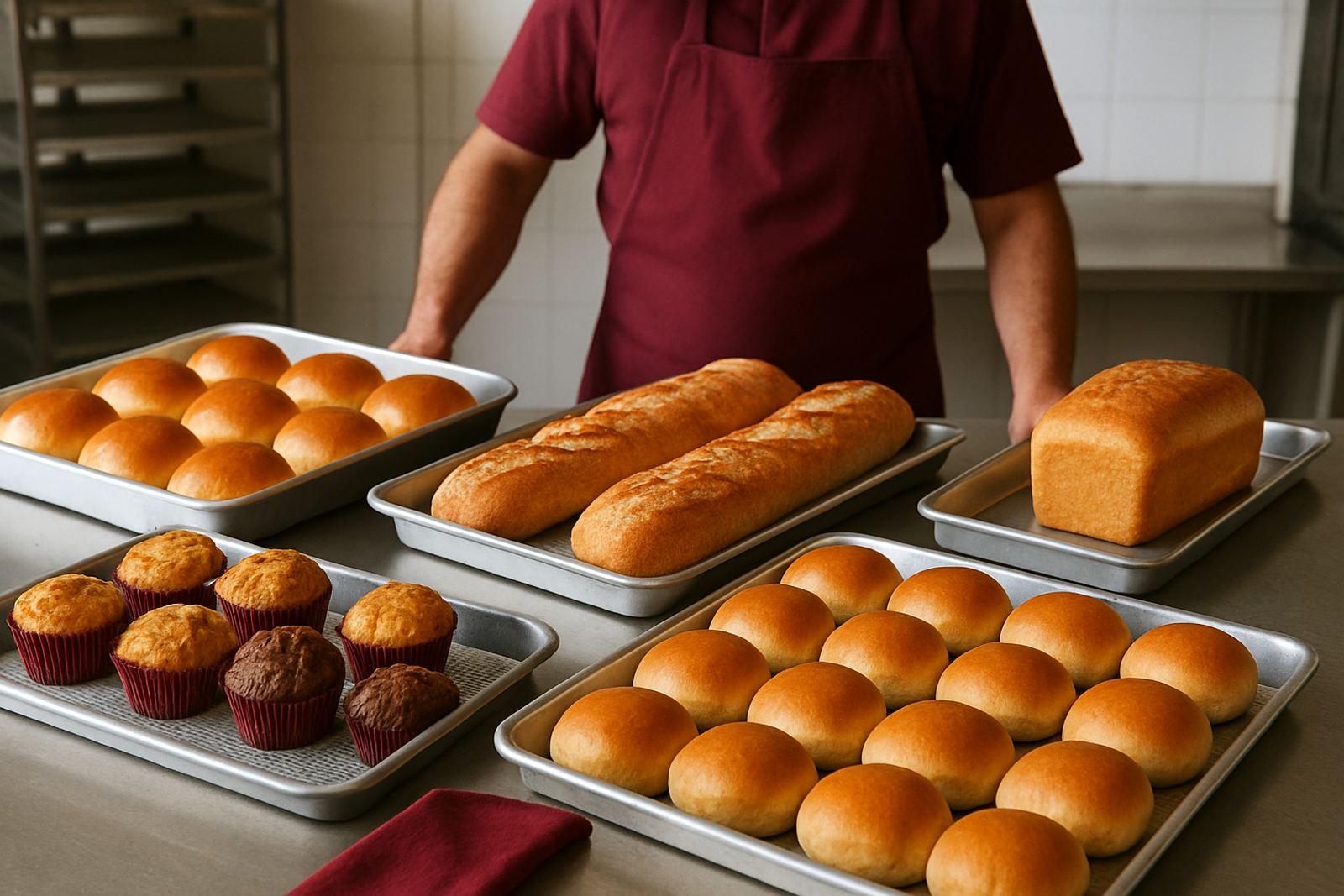
For this use case, we usually supply standard bread pans in BO3, BO4 and BO5 sizes, plus lids for close control on loaf shape. Perforated trays suit rolls, soft rolls and items that need airflow, while baguette trays help keep longer loaves straight on the rack and in the oven. Where a store has a wide range, the key is to keep the tray system standard so the bakery team can move fast without mixing product types.
Typical equipment set for in-store baking
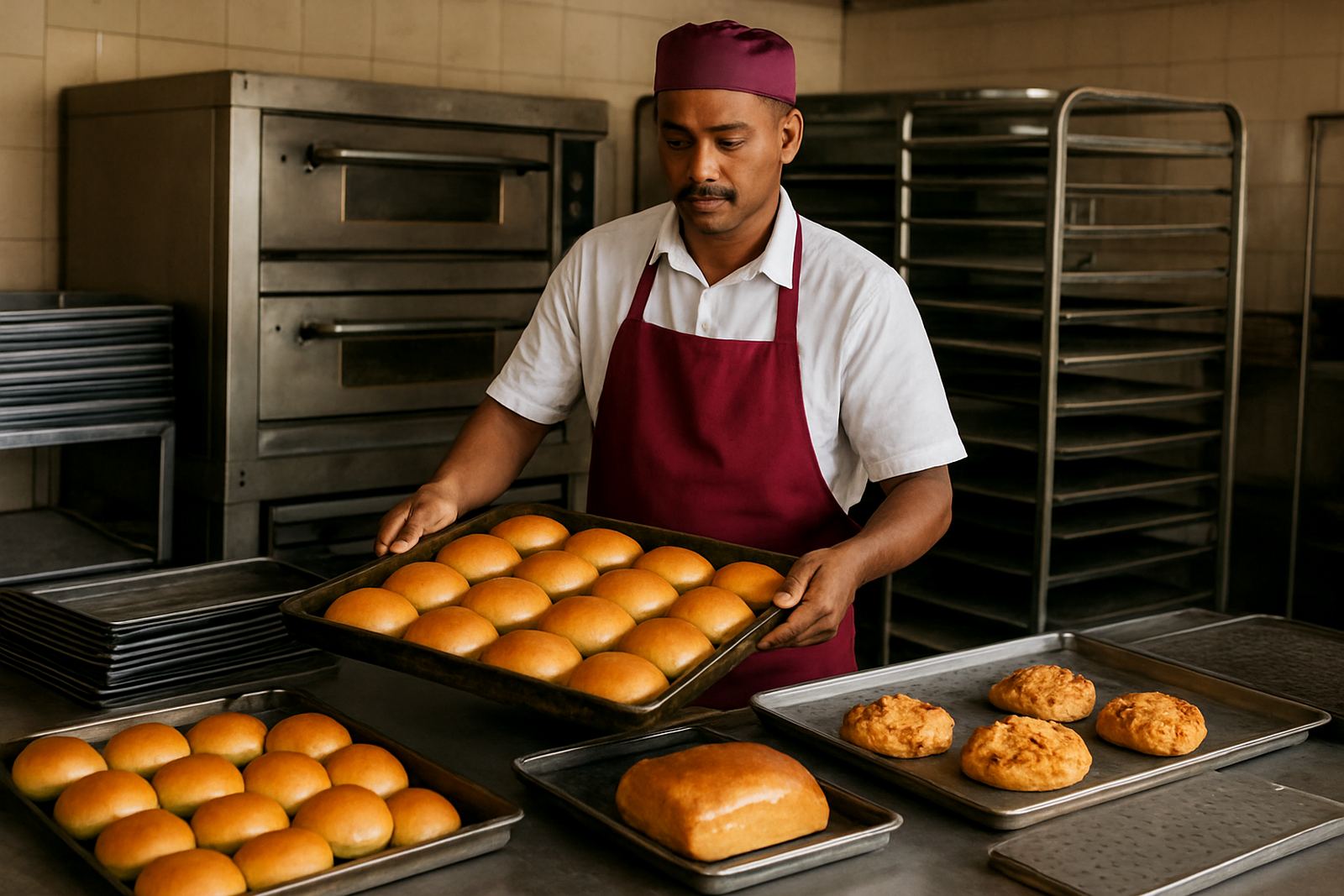
A supermarket bakery often needs a practical mix rather than a long list of special items. We look at the product range, oven size and how often the store restocks through the day. If the branch bakes before opening and again for the lunch trade, the bakeware must be built for frequent handling and quick turnaround.
- Standard bread pans in BO3, BO4 and BO5 sizes
- Lids for controlled loaf height and neater slicing
- Perforated trays for rolls, small breads and items that need better heat flow
- Baguette trays for longer loaves and shaped breads
- Divider inserts for multi-product trays where spacing must stay even
- Heavy gauge builds for stores with high daily usage
In high-volume stores, a few extra sets help with peak periods and breakdowns. If one rack is out for wash-up and another is in the oven, the store does not stop because there is always another set ready. That small buffer matters in towns like Alberton, Boksburg and Soweto where foot traffic can rise sharply on pay days and weekends.
Layout and planning for back-of-house efficiency
In a supermarket bakery, space is usually tight. The bake area must fit ovens, proofing, cooling, wash-up and dispatch without people crossing each other too often. Start with the flow of trays from prep to oven to cooling, then from cooling to packaging and display. If the route is too long, staff waste time carrying hot trays across the room and it slows the whole shift.
We normally recommend matching tray sizes to your rack depth and oven carriage first, then checking how the trays stack when empty. A tray that nests neatly saves shelf space and reduces damage during transport from our factory in Alrode to branches in Germiston or Midrand. It also helps when the store is dealing with load-shedding, because baking windows can shrink and every minute counts.
If your bakery has a small prep room, ask for a factory consultation before ordering. A short measurement check can prevent trays that are too wide for the oven door or pans that leave too much dead space on the rack. It is a small step but it avoids repeat orders later on.
Common mistakes supermarket bakeries make
The most common mistake is buying bakeware only for today’s range and not for the next six months. Stores add new breads, rolls and seasonal products all the time, and then the original tray set no longer suits the mix. Another issue is choosing light pans for heavy use, which can lead to warping, poor release and uneven colour across the loaf.
Other problems we see are easy to avoid:
- Ordering before checking the oven door clearances
- Mixing tray sizes that do not stack properly on one rack
- Using perforated trays where a closed base is needed for softer products
- Ignoring lid fit and ending up with loaves that rise too high or spread too much
- Under-ordering, then losing time during peak trading when the store needs backup sets
Coastal stores also need to think about humidity and cleaning routines. If trays are washed and left wet, or stored in a damp area, weaker material will show it quickly. A proper finish and correct storage space make a real difference over time.
Budget ranges for supermarket bakery rollouts
Budget depends on tray count, gauge, sizing and whether the branch needs standard stock or custom matching. For a small supermarket bakery setting up a basic range of bread pans, lids and a few trays, a starter order can begin around R8,500 to R18,000. That usually covers the core items needed for everyday baking and display top-ups.
For medium stores with a broader product mix and multiple racks, budgets often sit between R18,000 and R45,000. Larger branches, or groups ordering for several stores at once, may work on R45,000 and upwards depending on the specification. Heavy gauge builds, prototype runs and custom divider inserts will add to the cost, but they also reduce replacement pressure later on.
We can also help with batch reorders so a chain keeps the same sizes across several branches. That matters when one store in Alrode and another in Germiston need the same pan line, because the bakery manager should not have to re-train staff on different tray behaviour for each site.
Ordering process for branches and store groups
For supermarket bakeries, the best order process starts with a sample or an exact size check. Send the current pan, tray or lid details to orders@bakerycateringequipment.co.za and we can work through size matching, pan copying or lid fitting as needed. If you already know the rack and oven measurements, that speeds things up even more.
Our team handles production from Alrode, Johannesburg South, with regular supply into Gauteng areas such as Alberton, Boksburg, Midrand, Soweto and Germiston. When the branch network is spread out, a single standard spec saves time on dispatch and keeps stock control cleaner for the buyer.
For supermarkets, consistency is the real win. When the same tray, the same pan and the same lid go into each branch, the bakery gets fewer surprises and the store floor gets steadier replenishment.