What a cooling tray does on a bakery floor
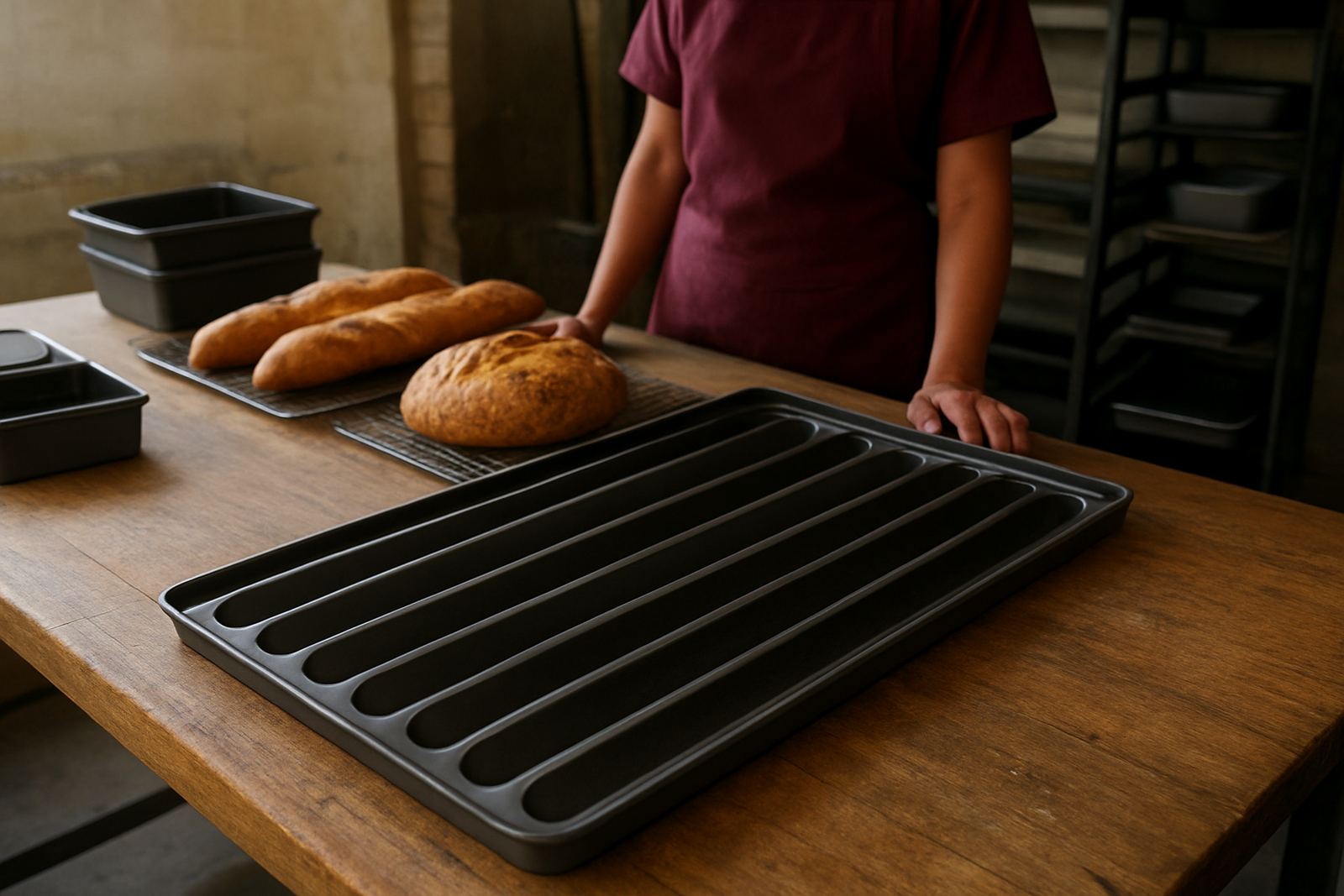
A cooling tray is used straight after baking when bread, rolls, buns or pastries need to cool before packing, slicing or glazing. The tray keeps the product off wet cloths and crowded counters, and the open format helps steam escape so the crust holds better. In busy bakeries around Alrode, Germiston and Boksburg, that matters when the next batch is already coming out of the oven.
These trays are usually made in mild steel with a food-safe finish suitable for repeated daily use. We build them for handling, transfer and resting, not for baking in the oven. If the product is still very soft at discharge, the tray must hold shape without sagging and should not trap heat under the loaf or roll.
Sizes, openings and build options we supply
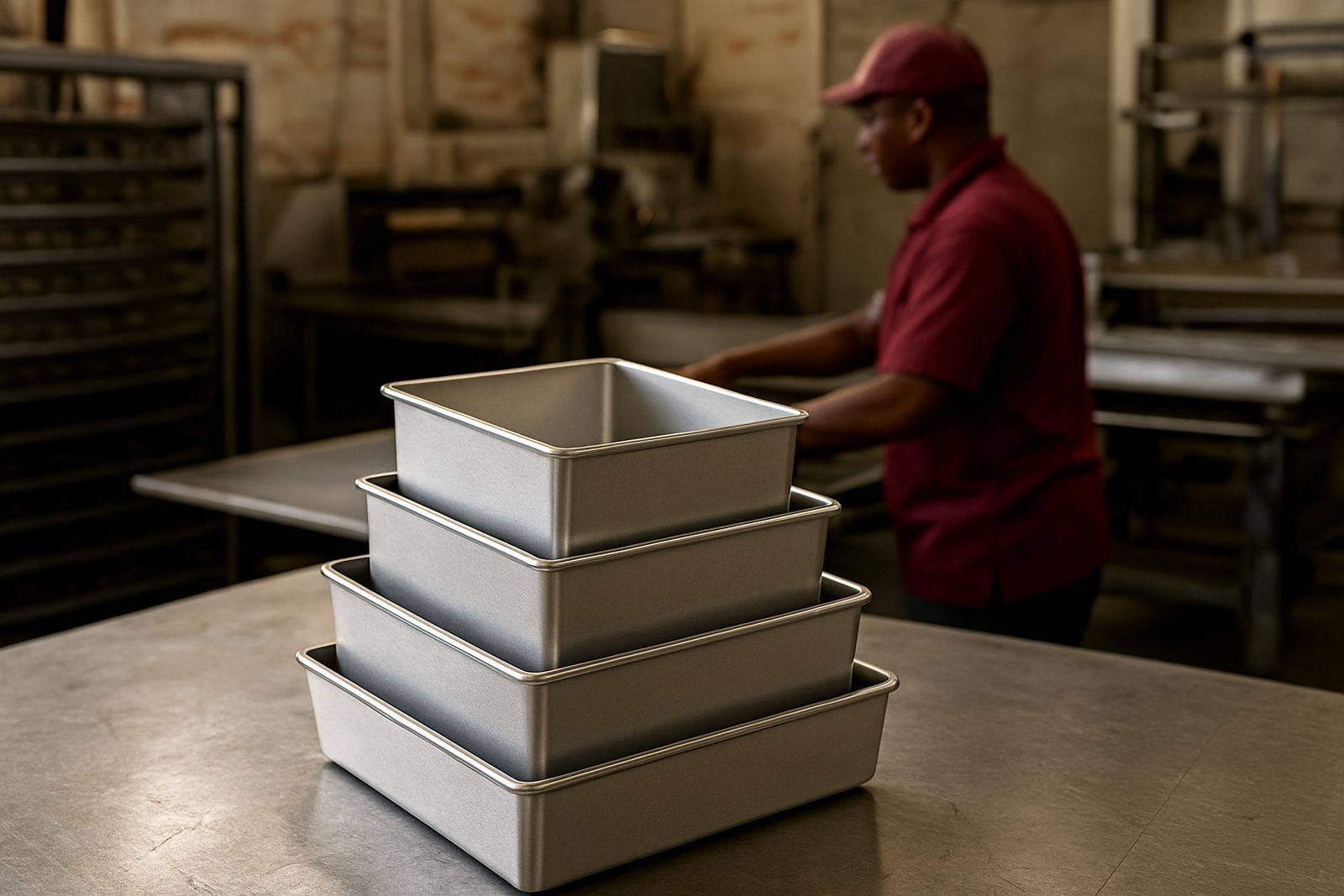
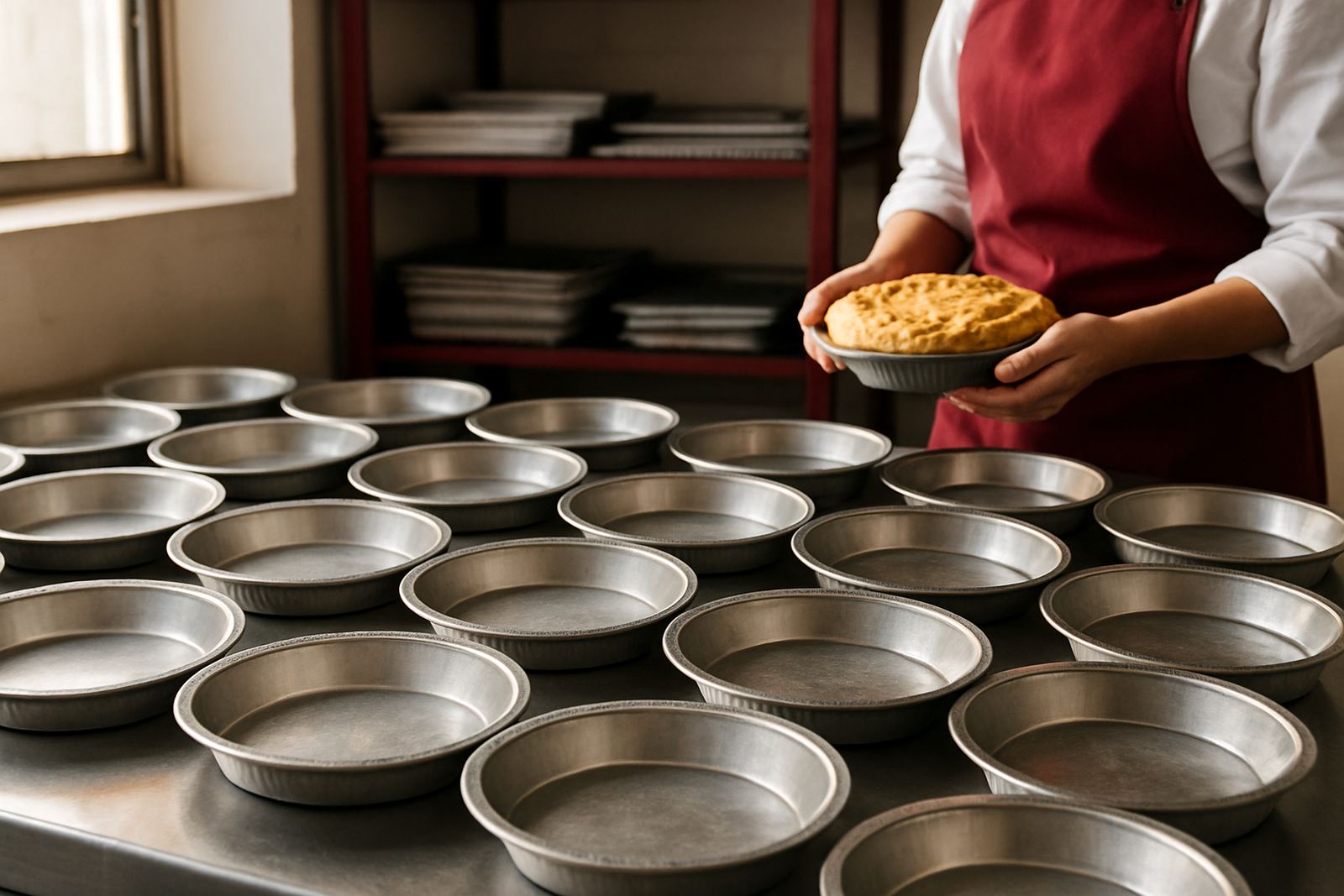
Cooling trays are made to suit the product and the way your team works. Some bakeries want a full tray for a batch of rolls, while others need narrower trays that fit trolleys, racks or prep tables. We can copy an existing tray, match a size from a sample, or build to a new drawing if you are changing production.
- Standard tray sizes from small single-row formats to larger batch trays
- Plain or perforated base for quicker air movement
- Raised sides for product control during movement
- Heavy gauge options for frequent handling and stacked storage
- Custom length and width to fit your racks or trolley frames
- Divider inserts for separating product types on the same tray
For bakeries in Gauteng with high daily output, a slightly heavier tray often lasts longer than a light one, especially where trays are moved many times between oven, cooling area and packing bench. If the bakery is near the coast, extra attention to finish and cleaning is worth the effort because damp air can shorten service life.
Where a cooling tray works best in the process
This tray suits bread lines, roll plants, pastry rooms and catering kitchens that need a practical resting stage after heat treatment. It is useful where products must cool before bagging, where the crust should stay open, or where the floor plan does not allow products to be left loose on counters. In Soweto and Midrand, where bakeries often work to tight turnaround times, a good cooling tray helps keep batches organised.
Cooling trays are also handy for test batches and prototype runs. If you are trialling a new loaf size or changing a moulded product, the tray can be matched to the new format before you commit to full production. That reduces waste and helps you check how the product behaves once it leaves the oven.
- Bakery cooling and staging areas
- Roll and bun production lines
- Pastry and catering prep rooms
- Prototype runs and recipe trials
- Back-of-house packing stations
Installation, handling and utility requirements
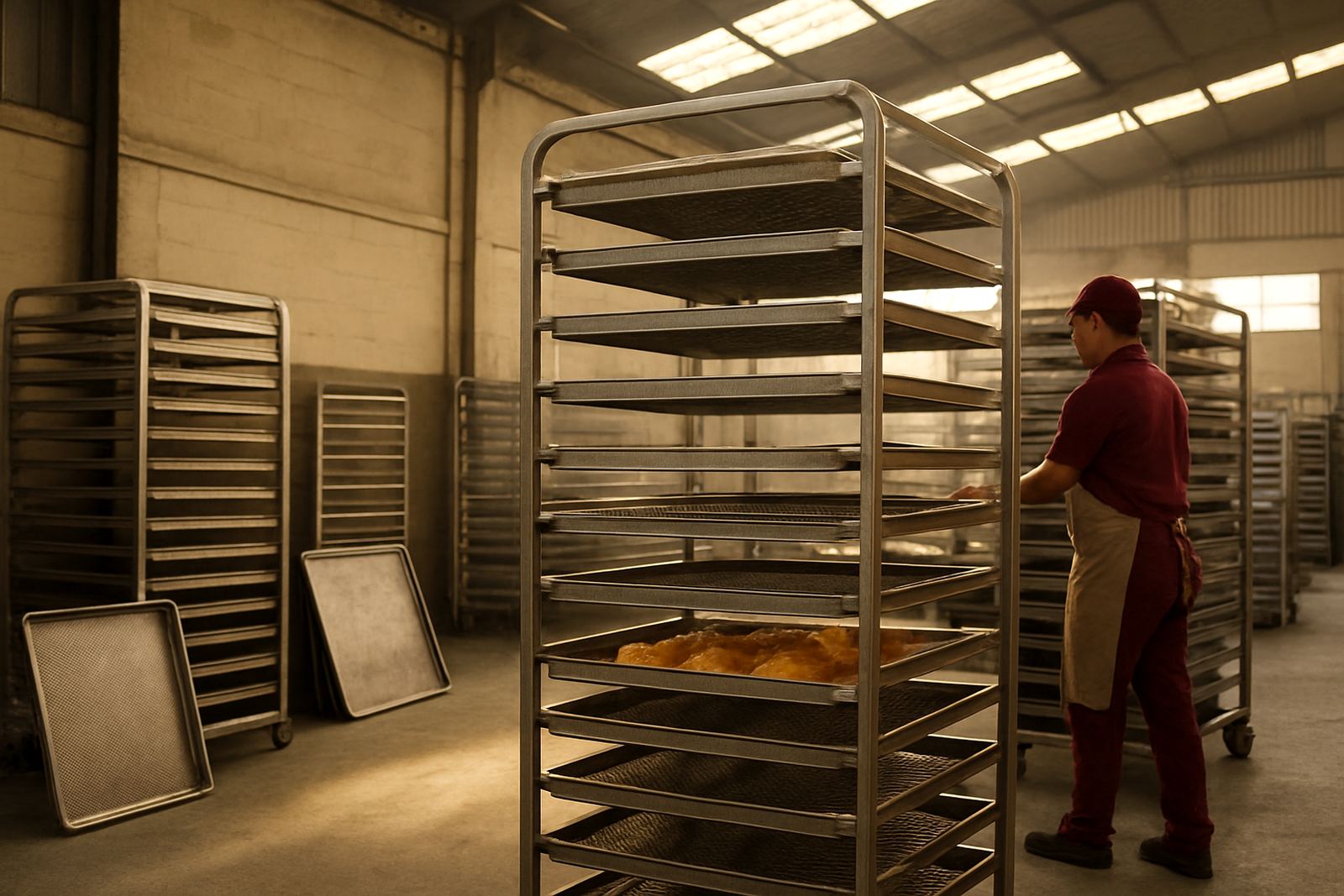
A cooling tray itself does not need power or gas. It is a manual handling item, so the main requirement is that it fits the rack, trolley or table it is meant to sit on. Check the pathway from oven to cooling area too, because a tray that fits the process on paper can still be awkward if it catches door frames or turns badly through narrow passages.
If the trays are used on mobile racks, make sure the wheels, brakes and frame can carry the loaded weight. In a bakery with load-shedding, this is useful because product often has to move quickly when schedules shift and backup equipment changes the timing of the bake. A well-sized tray should be easy to lift, stable when stacked and safe for staff wearing oven gloves.
- Confirm trolley or rack dimensions before ordering
- Check stack height for your storage area
- Allow enough clearance for oven discharge and transfer
- Make sure the tray edge is comfortable to grip
- Plan the cooling route so hot product is not squeezed
Care, cleaning and servicing on site
Cooling trays need regular cleaning because crumbs, flour dust and oil film build up quickly. Wash them with a suitable bakery cleaner, rinse well and dry before stacking. If trays are left wet, mild steel will show wear sooner and the finish can be affected, especially in humid storage rooms or coastal deliveries.
Inspect the tray edge, welds and base after heavy use. If a tray starts to twist, drop product or sit unevenly on the rack, it is worth repairing or replacing before it starts slowing the line. Our production team can help with batch reorders, replacement copies and heavier gauge rebuilds when your original tray is no longer holding up.
What to confirm before you place an order
To make sure the tray suits your bakery first time, check the product size, batch size and the cooling time you need. If the tray is too deep, heat can sit under the product. If it is too shallow, the batch can shift when staff move it through the bakery. The best order is the one matched to the way your team actually works, not just the sample on the counter.
Send us the measurements, a sample if available, and any notes on the rack or trolley it must fit. We can then assist with size matching, pan copying, lid fitting where needed, tray perforating and heavier builds for repeat use. For bakeries in Alberton, Germiston, Boksburg and across Johannesburg South, that saves time and cuts down on trial and error.
- Product type and batch count per tray
- Required tray length, width and depth
- Plain or perforated base preference
- Rack, trolley or shelf dimensions
- Finish and cleaning method used in your bakery
- Whether you need sample matching or a new build
Key facts
| Product type | Cooling tray for bakery discharge and resting |
|---|---|
| Material | Mild steel, with heavy gauge options |
| Tray formats | Plain, perforated, divided or custom formed |
| Typical use | Bread, rolls, buns, pastries and catering batches |
| Made to size | Yes, with copy and matching service |
| Area served | Alrode, Alberton, Germiston, Boksburg, Soweto, Midrand and Gauteng |