What a hotdog roll pan does in daily baking
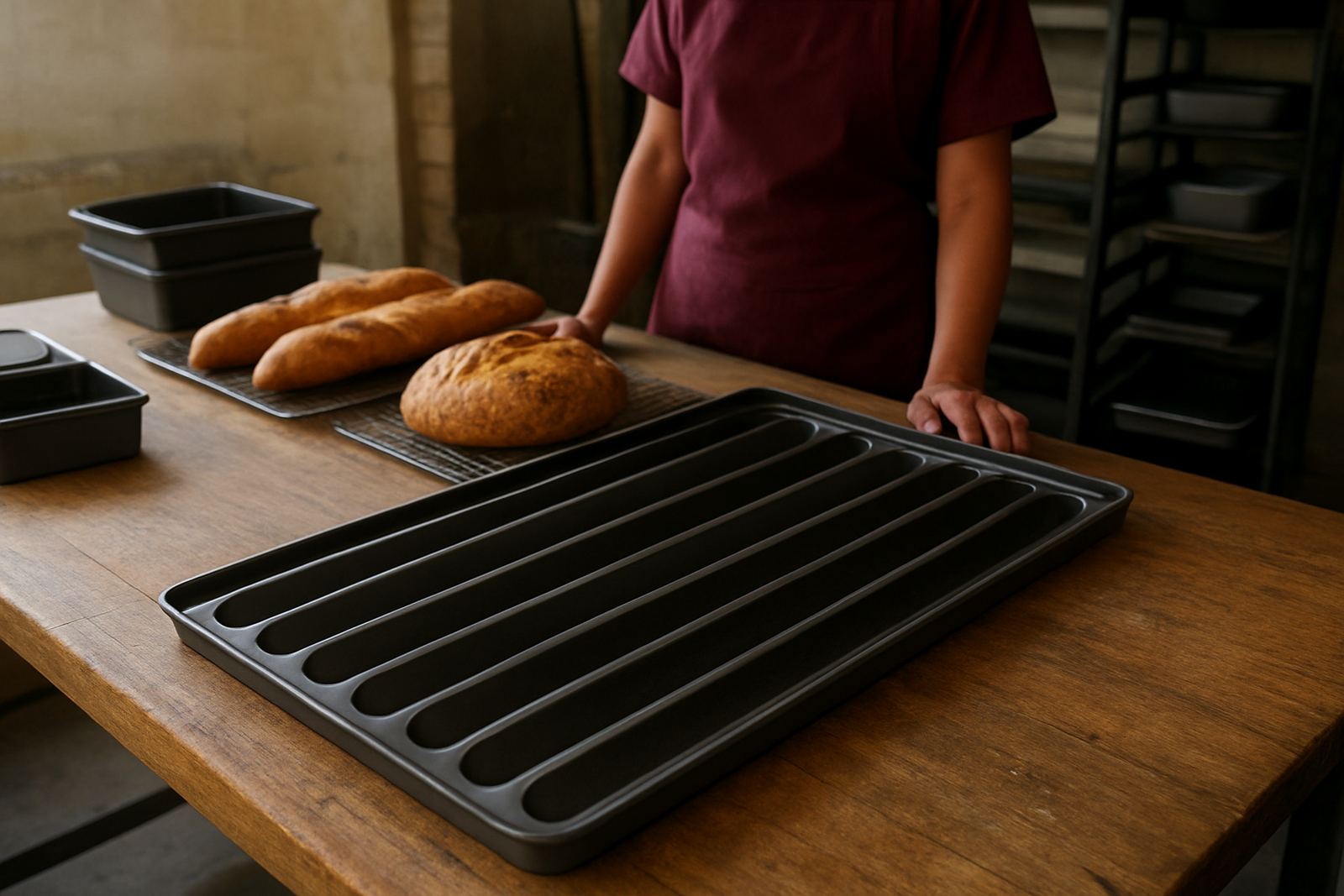
A hotdog roll pan is a shaped baking tray made to hold long roll portions in a fixed layout. The form keeps each piece separated during proving and baking, which helps you get a neater finish and more even colour across the tray. It is used for hotdog rolls, finger rolls, lunch rolls and similar products where length and spacing matter more than a round loaf shape.
For busy production, the main advantage is repeatability. Once your dough weight and tray layout are set, the pan gives the same spacing from batch to batch, which helps with loading, proofing and counting. That matters in bakeries supplying tuck shops, cafés, school kitchens and food service counters where portion control and presentation need to stay consistent.
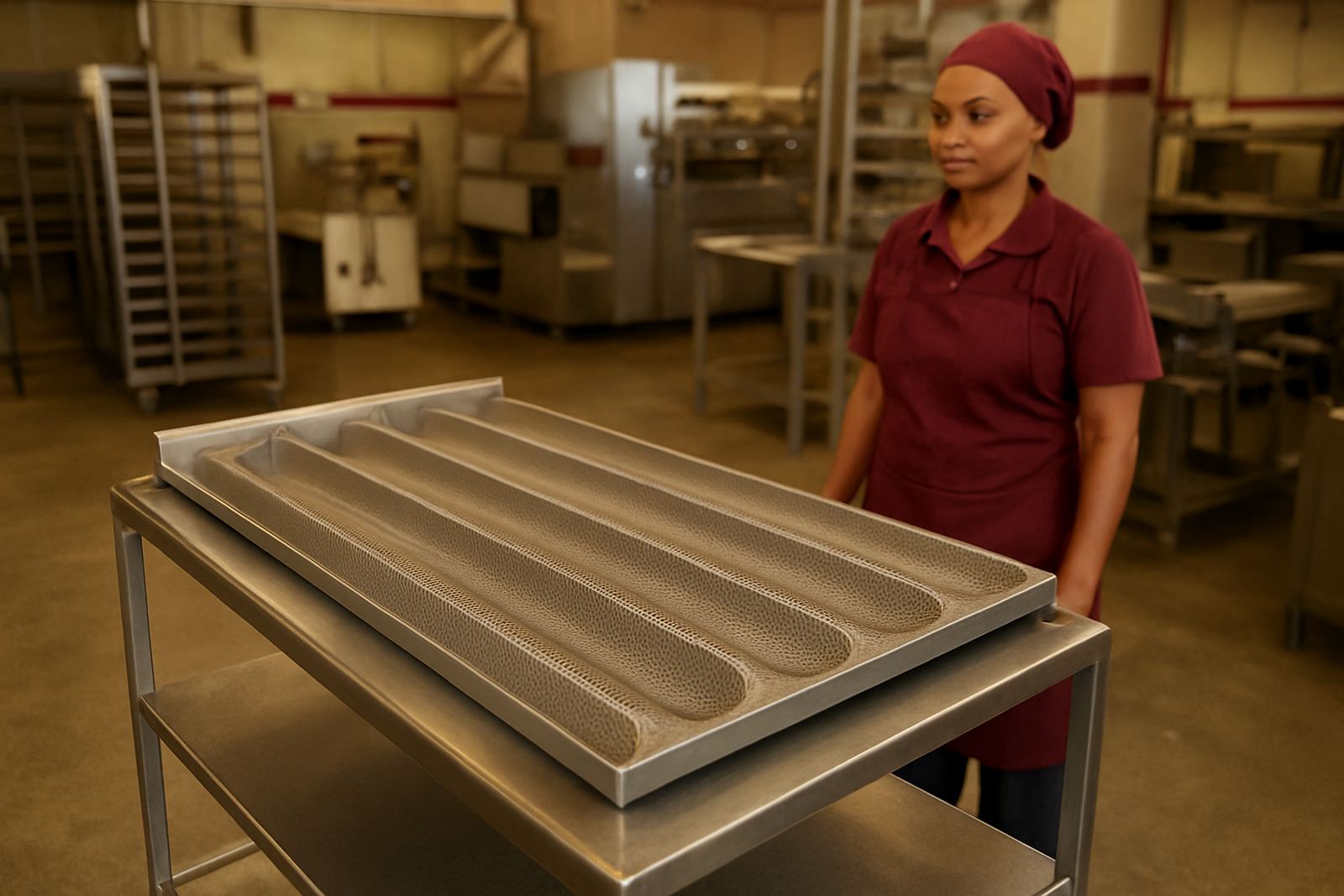
Because these pans are made for regular oven work, they can be supplied in mild steel for general use, or with a perforated base where faster heat movement and better bottom drying is wanted. The right choice depends on your oven type, dough hydration and how much crust colour you want on the base.
Sizes, tray counts and build options
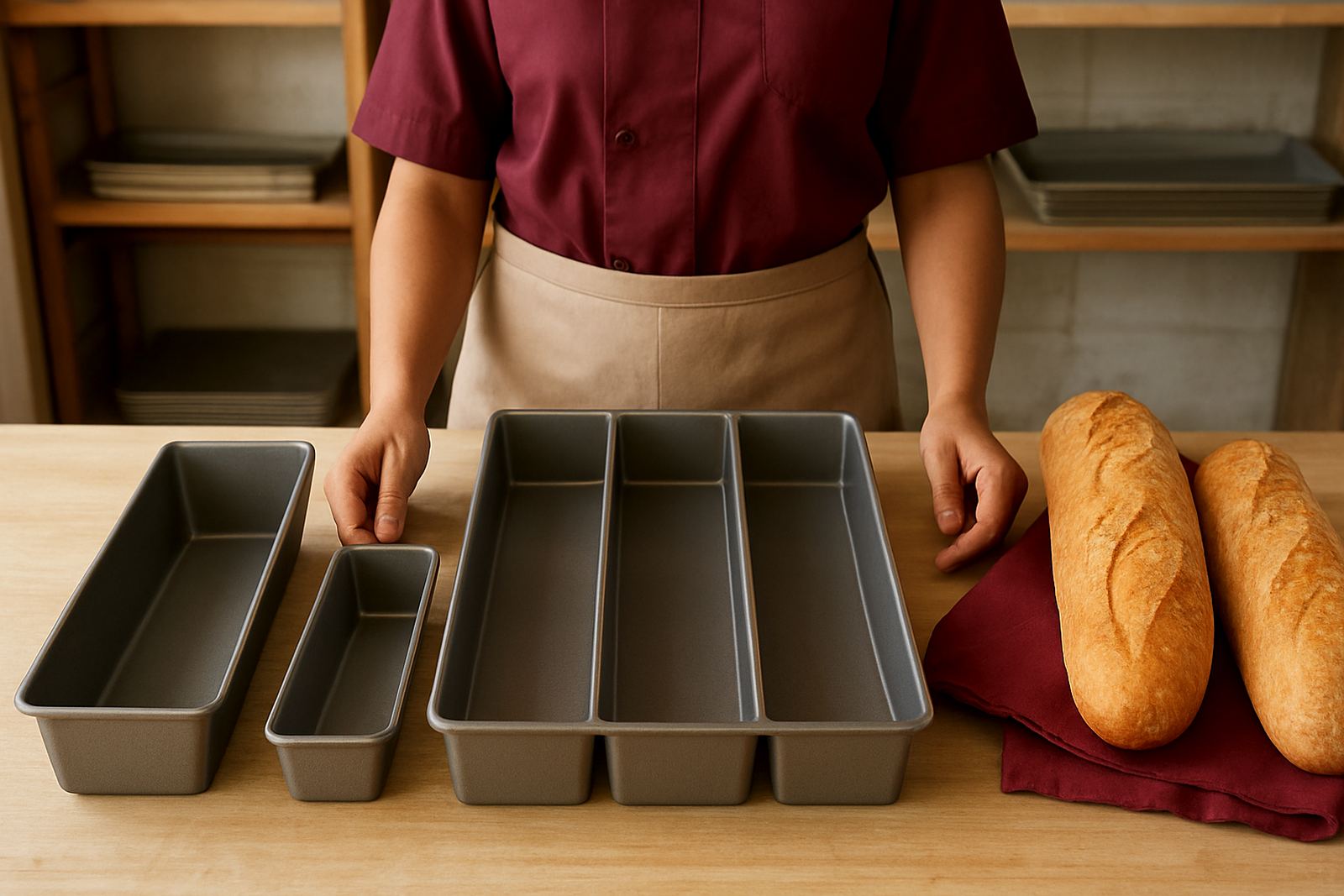
We make hotdog roll pans to match your production needs, from smaller batch trays to higher count layouts for regular bakery runs. Common builds are set around standard roll lengths and practical spacing for proofed dough, with the option to match an existing tray if you are replacing old stock or adding to a line.
- Standard mild-steel construction for everyday bakery use
- Perforated tray option for improved airflow and faster base drying
- Single or multiple row layouts depending on oven width
- Custom length, width and pitch to suit your dough weight
- Heavy gauge material available for frequent handling and longer service life
In many Gauteng bakeries, tray size is also linked to oven rack spacing and how quickly staff can load and unload during peak periods. If you are working with a deck oven in Johannesburg South, a fan oven in Germiston or a production kitchen in Midrand, we can size the tray to fit the way your team already works. A well matched tray cuts down on waste and helps keep the proofed rolls from touching before they set.
Where this pan suits best
This tray suits bakeries that bake rolls in volume, but it is also useful in catering kitchens, cafés, commissary kitchens and retail bakehouses. It performs well where product shape must stay neat for packaging or counter display, and where the same item is baked many times a day.
It is a good fit for operators supplying sandwich rolls, hotdog rolls, breakfast rolls and other long shaped doughs to schools, takeaways and small chain outlets. In areas like Alberton, Alrode, Boksburg and Soweto, where orders often need to be ready early and then top up again before lunch, the pan helps keep a steady flow without constant rework.
- Bakeries making consistent roll packs for retail sale
- Food service kitchens supplying breakfast or lunch rolls
- Contract caterers needing repeatable sizing for events
- Businesses replacing bent or mismatched imported trays
If your operation works through load-shedding, it helps to have trays that move quickly from proofing area to oven and back without sticking or warping. That is where a properly made pan is worth more than a light tray that twists after a few heats.
Oven use, proofing and power or gas needs
The hotdog roll pan itself does not need power or gas. It is a passive baking tray, so the only requirements are a suitable oven, a proofing space and handling equipment such as racks or trolleys. It can be used in gas ovens, electric ovens and deck ovens, provided the tray dimensions suit the chamber and the heat is balanced for the product.
For bakeries using gas during outages or electric ovens on municipal supply, tray choice affects recovery time. A heavier gauge pan stays flatter under repeated heat cycles, while a perforated base may help reduce soggy bottoms in humid coastal conditions or where dough is proved for longer. In Gauteng winters and in more humid months on the coast, that difference can show up in the final crust.
If you are fitting trays into an existing production line, check your rack spacing, oven shelf depth and the clearance needed for safe loading. A tray that is too long or too wide can slow the whole shift. If you are unsure, send the current tray measurements and we can match the layout so there is no guesswork.
Care, cleaning and servicing between batches
Good care starts with letting the tray cool before cleaning. Knock out loose crumbs, brush off flour and wash only when needed with mild detergent and warm water. Dry the pan fully before stacking, because trapped moisture can lead to surface rust on mild-steel trays. A light food-safe oil wipe can help when trays are stored for longer periods, especially in damp rooms or near wash-up areas.
Avoid harsh scouring pads that can scratch the surface and make cleaning harder next time. If you use liners or release spray, keep the application even so residue does not build up in the roll spaces. For bakeries that run several batches a day, a simple rotation system helps extend service life and keeps the pan stack tidy.
- Cool before washing to prevent warping
- Dry straight after cleaning and before stacking
- Store in a dry area away from steam
- Check edges and welds for wear during weekly service
We also help with batch reorders and replacement work, so if one tray has been damaged or a set needs matching to older stock, send the dimensions and we can advise on the closest build. That saves time when your production line is already under pressure.
What to check before you order
Before placing an order, confirm the roll length, the number of cavities or positions, and the tray size that your oven can handle. It also helps to know the dough weight per roll, the proofing method and whether you want open base, perforated base or solid base construction. If you are copying an existing tray, a clear sample or accurate measurements make the process quicker.
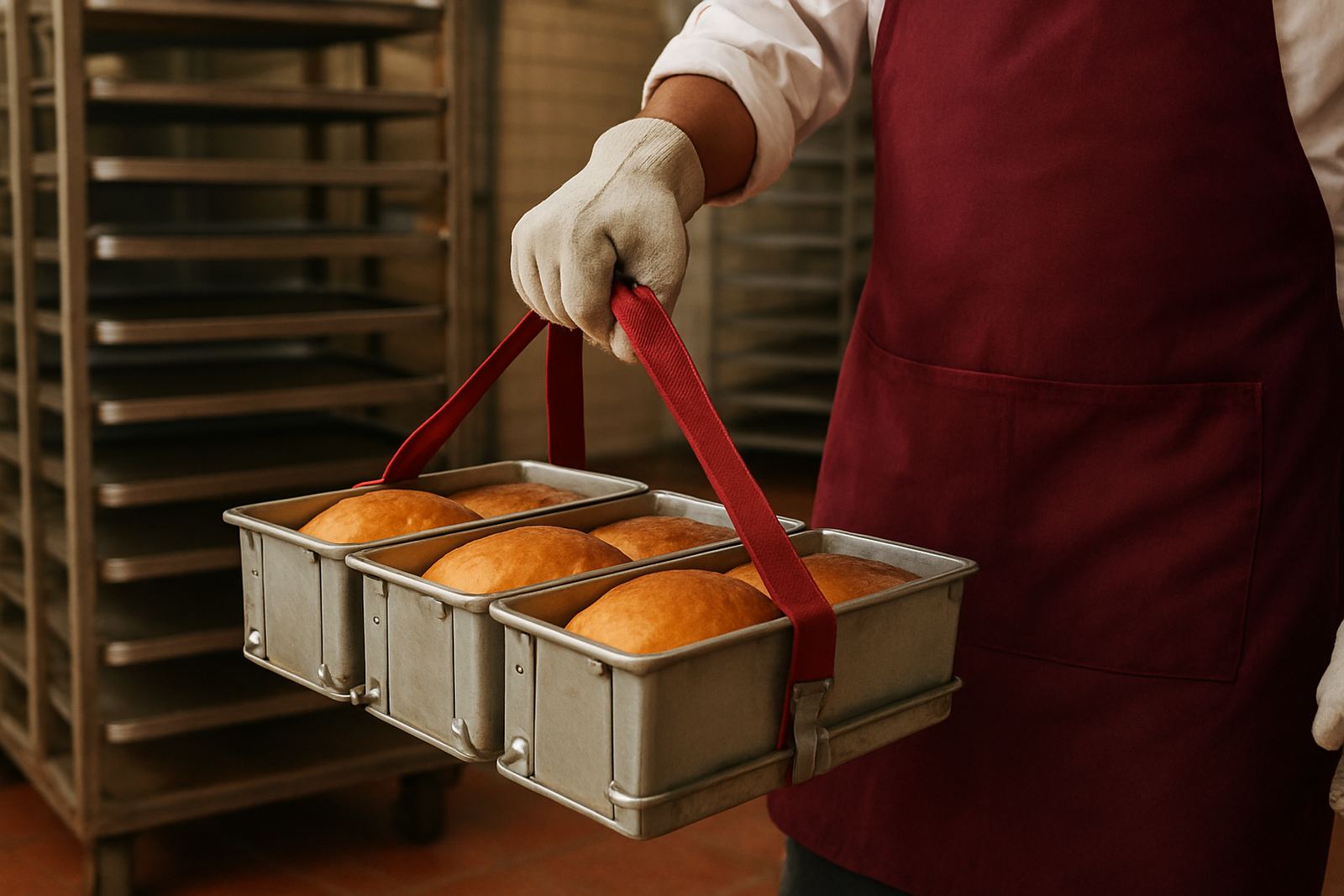
You should also check how the tray will be moved through your bakery. If staff are using trolleys, make sure the width works with your racks and doorways. If the pan is for a high output site, ask about heavy gauge builds and whether a prototype run is needed before committing to a full batch. That can prevent wasted time if the fit is not quite right the first time.
When you are ready, send your tray size, product type and quantity needed to orders@bakerycateringequipment.co.za. We work from Alrode, Johannesburg South and supply bakeries and kitchens in Alberton, Germiston, Boksburg, Soweto and Midrand. The more detail you give upfront, the easier it is to match the pan to your operation, no need for back and forth later.
Key facts
| Product type | Hotdog roll baking pan for long uniform rolls |
|---|---|
| Construction | Mild steel, with heavy gauge and perforated options |
| Use | Bakery ovens, gas ovens, electric ovens and deck ovens |
| Layout | Custom roll spacing, row count and tray dimensions |
| Finish | Suitable for regular washing, drying and stacking |
| Supply area | Alrode, Johannesburg South, Gauteng and nearby trade routes |