What a flat baking tray does in daily bakery work
A flat baking tray gives you a level surface for products that need even heat and easy loading into the oven. It is used for biscuit lines, pastry bakes, proving then baking, tray-baked snacks and general production where you want a simple open pan rather than a shaped mould.
In a busy bakery, the value of a flat tray is consistency. The tray must sit straight on the rack, take repeated heating without warping too badly and clean up without wasting labour. For bakeries in Johannesburg South, Germiston and Boksburg, that matters during long shifts, load-shedding recoveries and overnight production runs when equipment gets used hard.
Our flat trays are made for practical bakery use, with options to suit light-duty biscuit work or heavier daily handling. If you are replacing old trays, we can copy an existing pattern or make a batch to match your rack size, oven spacing and production volume.
Tray sizes, gauges and finish options
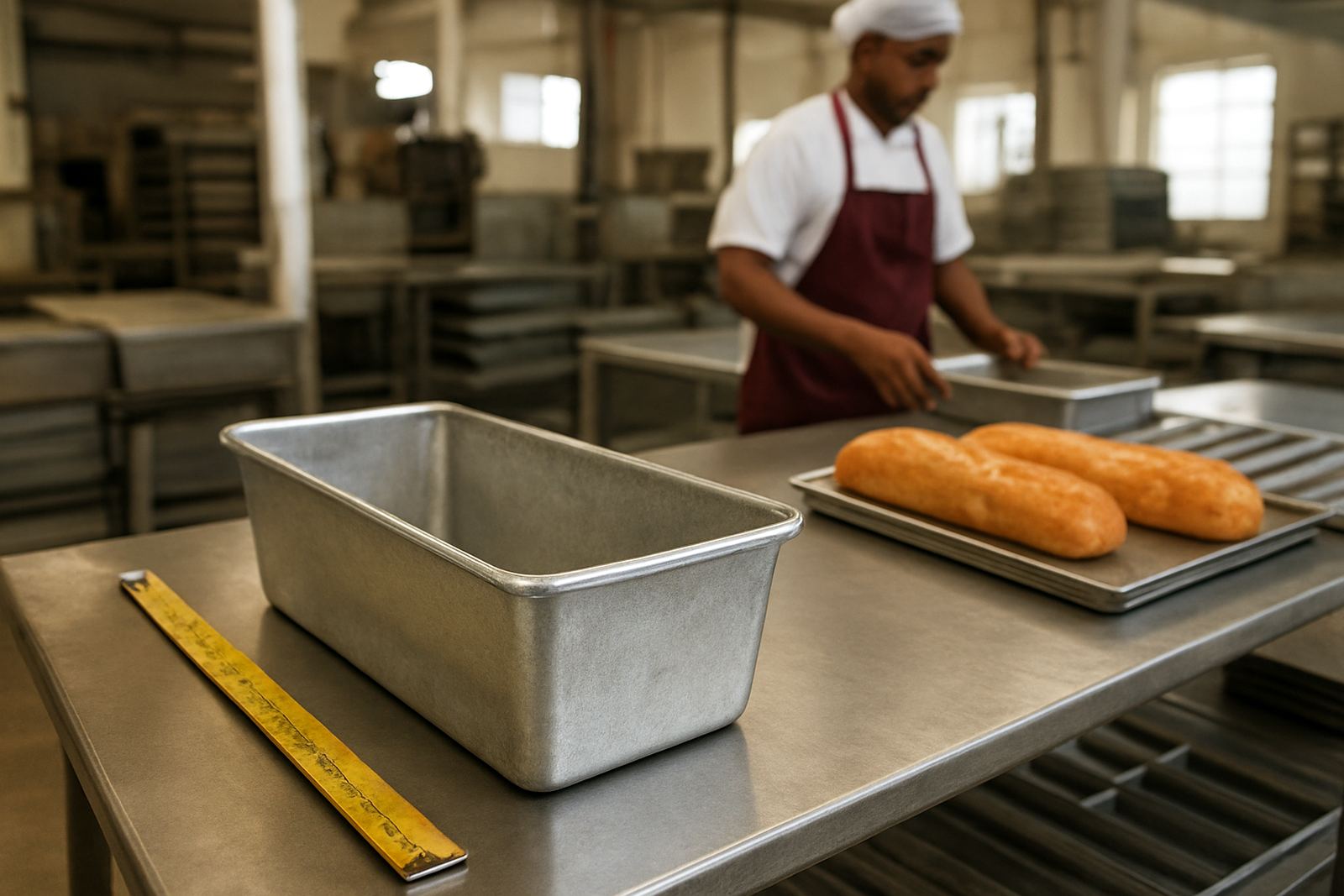
Flat trays are usually ordered to suit the oven and rack system already in the bakery. Common requirements are around 600 x 400 mm, 450 x 350 mm, and other custom sizes used on bakery trolleys or deck oven racks. We can also match special dimensions if you need a close fit for imported ovens or older local plant.
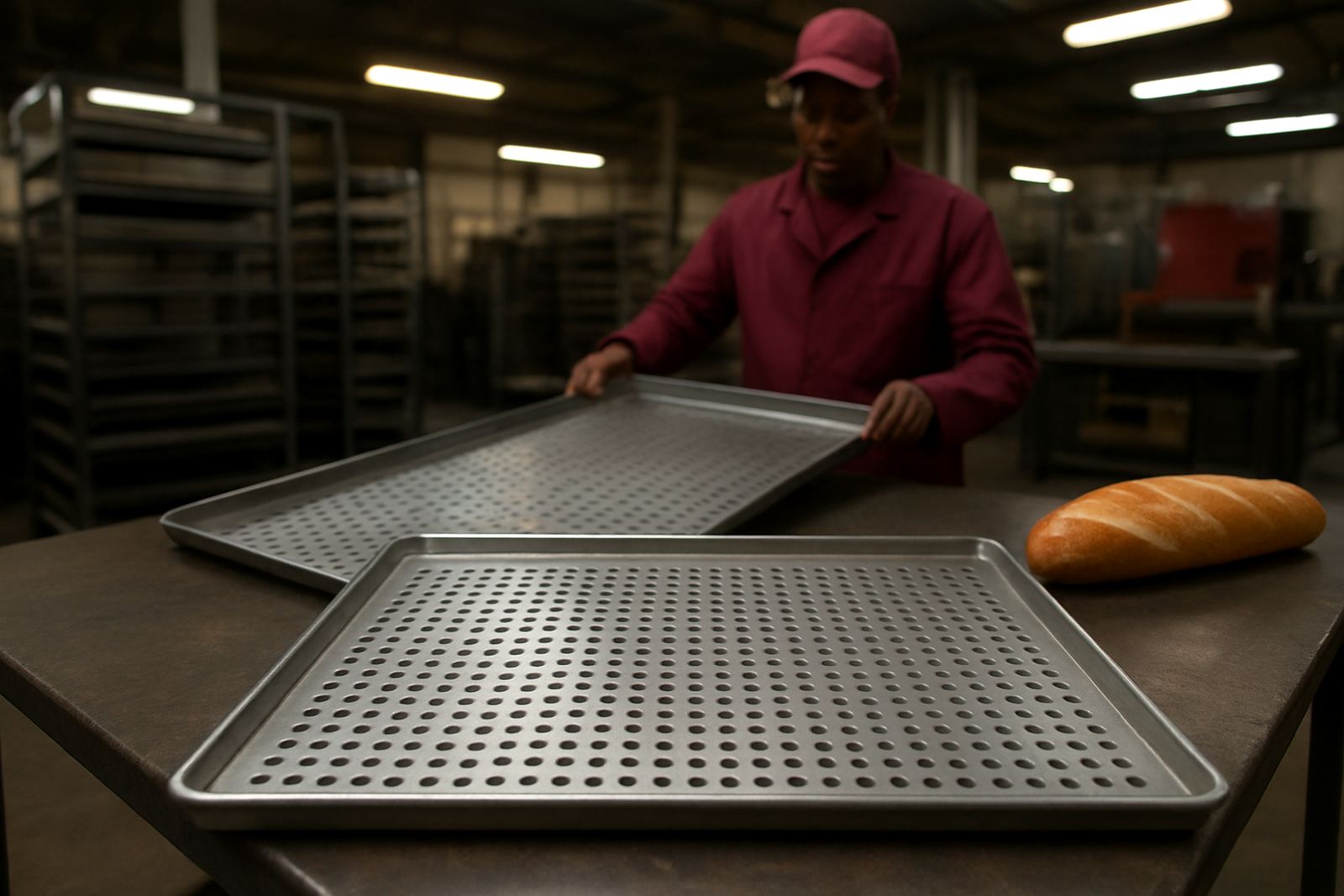
Material choice depends on how hard the tray will be used. Lighter trays are easier to handle for pastries and biscuits, while heavier gauge builds last longer in production where trays are dropped, stacked tight or moved fast between prep and baking. Where a customer needs more airflow underneath the product, we can advise on a perforated option instead, but a plain flat tray is still preferred for many general bakery jobs.
- Custom lengths and widths to suit your oven racks
- Light, medium or heavy gauge builds
- Plain flat surface for biscuit and pastry baking
- Optional reinforced edges for better handling
- Batch reorders for repeat production
Where flat trays work best
Flat trays suit bakeries that produce a mix of goods and need one tray type that can do many jobs. They are a common fit for biscuit baking, small pastries, savoury items, pre-shaped dough pieces and general oven staging. They also work well in catering kitchens, school kitchens and food production areas where the same tray may be used for prep, baking and cooling.
In coastal areas like Durban or Richards Bay, trays need regular cleaning and drying to deal with humidity and surface rust. In Gauteng, dust and daily handling are often the bigger issue. For either case, a simple flat tray is easy to inspect and service because you can see wear quickly, especially on bent corners, damaged rims or hotspots from uneven oven heat.
If your bakery runs multiple products at different temperatures, flat trays are useful because they move easily from one line to another. They suit daily baking where you need reliable spacing in the oven and quick turnaround between batches.
Oven fit, handling and power or gas requirements
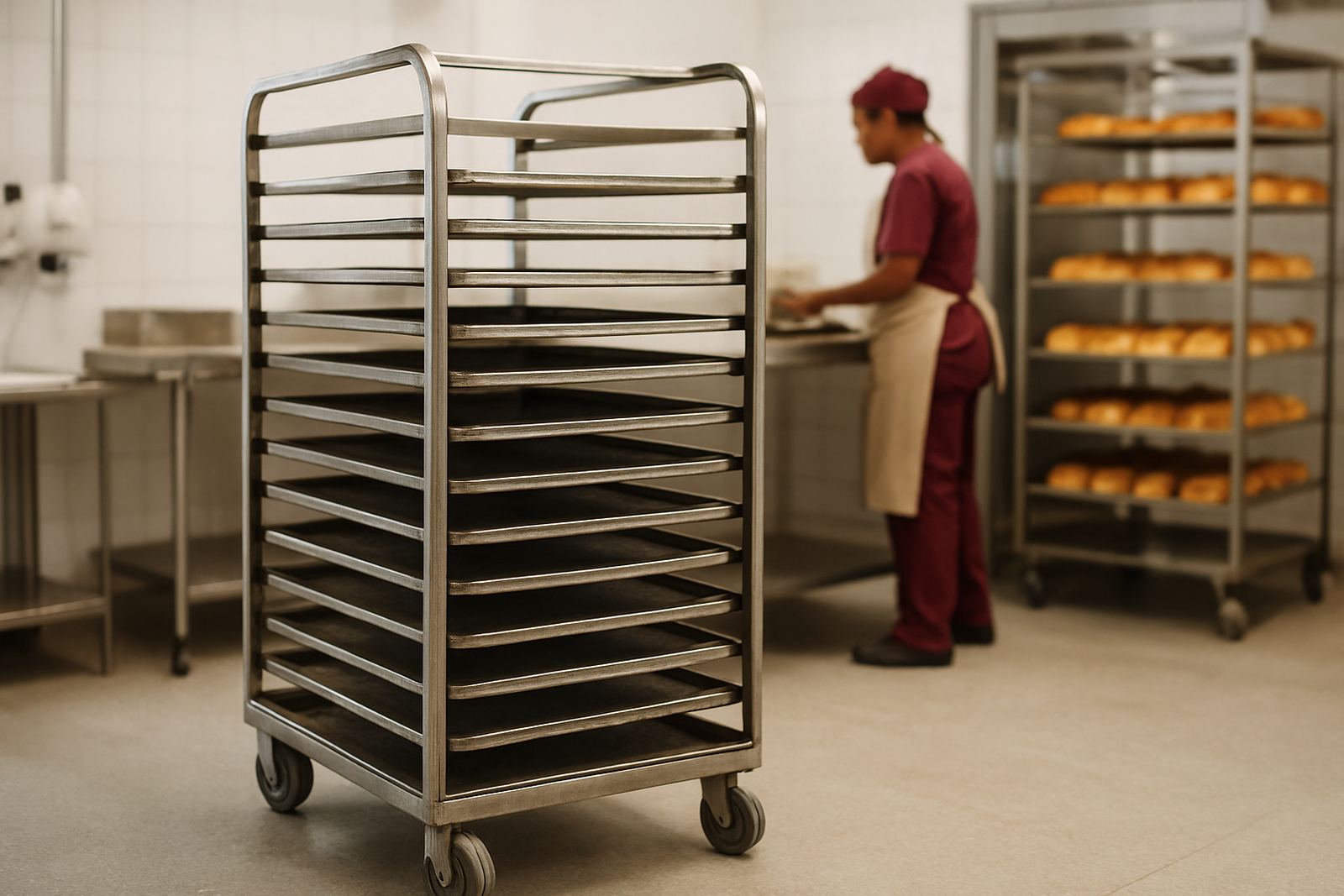
A flat baking tray does not need electrical power or gas on its own, but it must suit the oven system it is used in. Before ordering, check the internal oven size, shelf spacing, trolley width and whether your team loads trays by hand or on a rack. A tray that is too wide will slow production and can damage oven rails, while one that is too small wastes oven space.
For gas ovens, deck ovens and electric bakery ovens, the tray should allow good air movement around the product and should not sit so close to the side walls that it picks up uneven heat. If the oven has hot spots, we can suggest tray sizing that helps with more even baking. In some bakeries, the issue is not the oven itself but the way trays are stacked, so getting the rim height right also matters.
- Check oven internal dimensions before ordering
- Allow for rack clearance and side rail movement
- Confirm whether trays are loaded by hand or by trolley
- Use the same size across the bakery where possible
Care, cleaning and servicing between batches
Flat trays need regular cleaning to prevent build-up of oil, sugar and burnt crumbs. That build-up affects heat transfer and can leave marks on biscuits or pastries. Wipe trays after use, wash them with suitable detergent and dry them well before stacking. Leaving trays wet in a humid store room is one of the quickest ways to get surface corrosion.
For bakeries working through power interruptions, it helps to keep trays stored in sets so production can restart quickly when the ovens come back on line. A clean, dry tray set reduces downtime and keeps staff moving. If a tray bends, it can often be straightened or replaced depending on the gauge and the condition of the rim. We can also advise on batch reorder planning so you do not run short during busy periods.
If you have older trays and are not sure whether they are worth keeping, we can inspect a sample and advise on repair or replacement. That saves money where only a few trays are damaged but the rest still perform well.
What to check before placing an order
Before you order flat baking trays, gather a few key details so we can match the tray properly. If you are in Alrode, Alberton, Soweto, Midrand or Germiston, you can send measurements by email and we will confirm what will fit your line.
- Exact length and width needed
- Required gauge or expected daily use
- Whether a rim edge is needed or a plain edge is fine
- How many trays are needed per batch or per day
- Whether the tray must match existing racks or trolleys
- Any issue with warping, rust or uneven oven heat on old trays
We also offer tray copying when you have an existing sample. That is useful if your bakery has a tried and trusted size already in use and you simply want more of the same. For repeat orders, batch consistency matters because staff know how the tray handles, how it stacks and how it moves through the oven room. If there is a detail that affects production, say it upfront, even if it seems small.
Local manufacture and supply from Alrode
Our flat baking trays are manufactured in Alrode, Johannesburg South for bakeries and caterers that need practical supply and proper follow-through. We work with standard production runs and custom jobs, from a few sample trays to larger batch reorders for bakeries expanding output. Because we are local, it is easier to handle size matching, consultation and dispatch without long delays.
For new bakery fit-outs or replacement tray programmes, we can discuss the oven room layout, the way staff move trays and whether the business needs heavier builds for rough handling. A good tray should not become a daily complaint. It should fit, carry the product properly and last long enough to justify the spend.
Email orders@bakerycateringequipment.co.za for a quotation or to send a sample size. We serve clients across Gauteng and nearby areas, and we can assist with practical tray specifications that suit South African bakery conditions.
Key facts
| Product type | Flat baking tray for biscuits, pastries and general bakery use |
|---|---|
| Common sizes | Custom made to suit rack and oven sizes, including 600 x 400 mm and other required dimensions |
| Material | Mild-steel bakeware construction |
| Gauge options | Light, medium and heavy gauge builds available |
| Custom work | Size matching, tray copying and batch reorders available |
| Use environment | Suitable for bakery ovens, catering kitchens and food production rooms |