What a perforated tray does in the oven
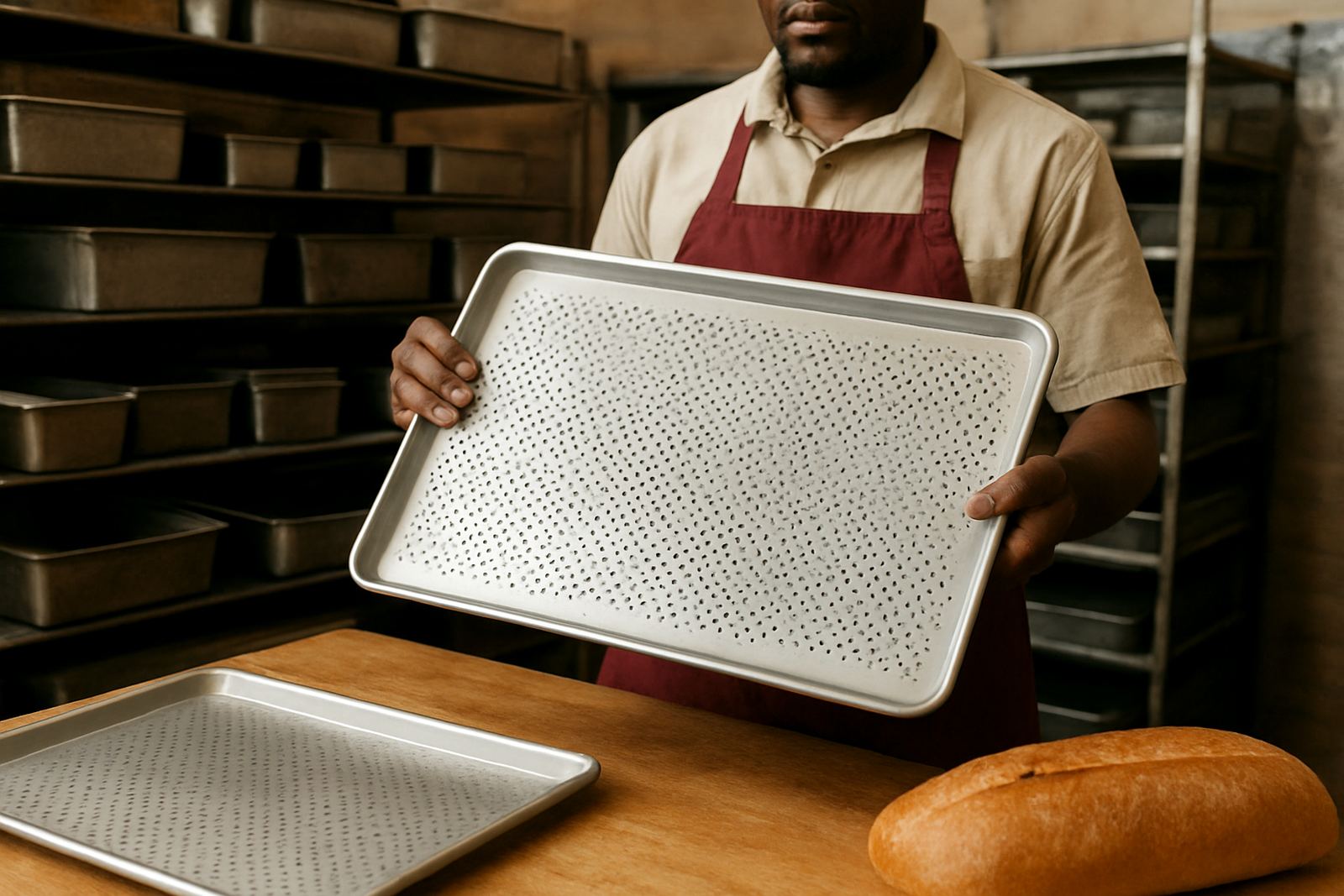
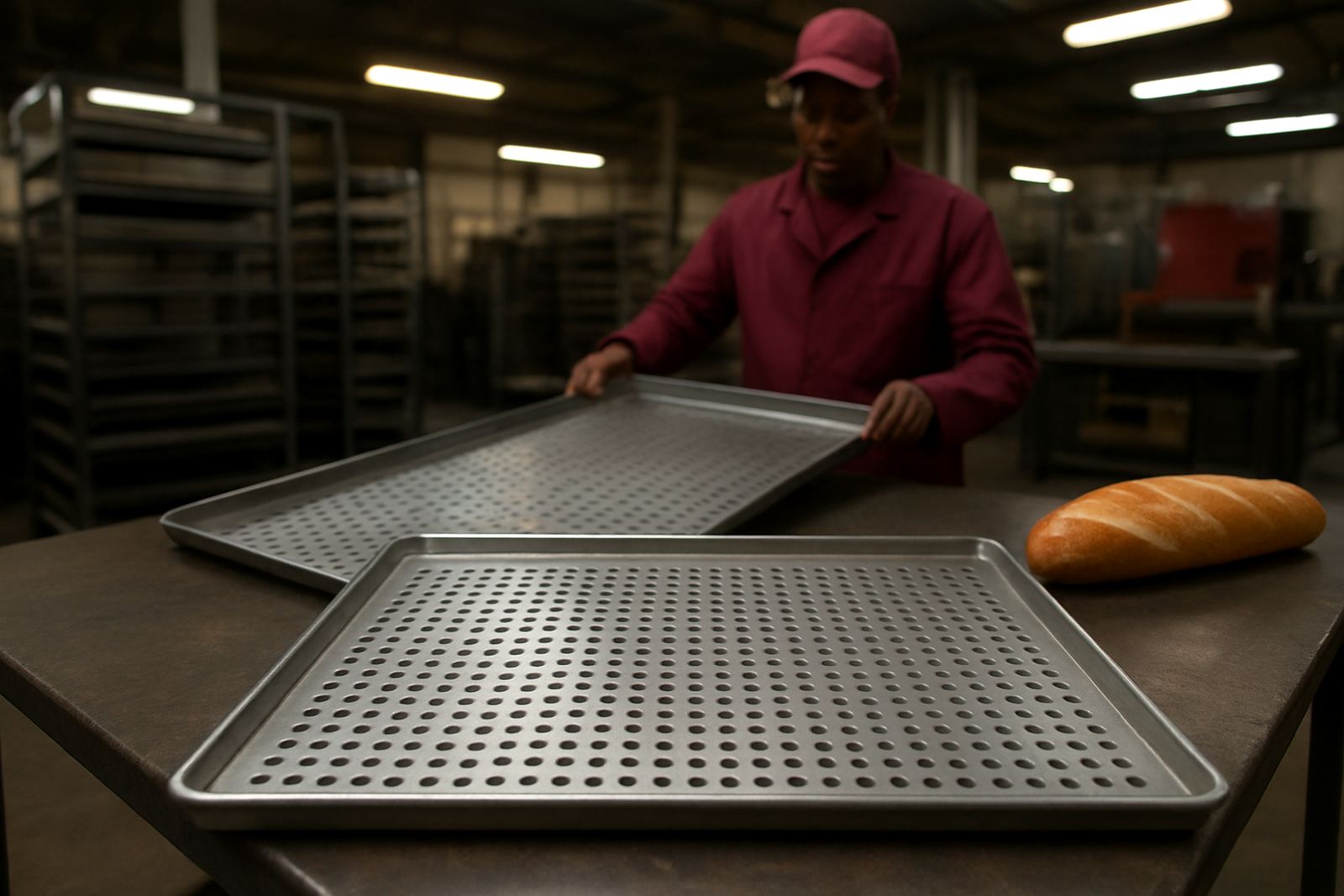
A perforated tray is a metal baking tray with evenly spaced holes across the base, and sometimes the sides, so hot air can reach the product from below. That extra circulation helps reduce soggy bottoms on pastries, pizza bases, rolls, shortcrust items and certain breads. It is a practical choice where you need cleaner release, faster drying and a firmer underside.
For bakeries running deck ovens, convection ovens or proof and bake lines, the tray can make daily handling easier. Products lift off cleaner, cooling is quicker, and you get less trapped steam on the base. In humid coastal areas this matters even more, but Gauteng bakeries also use perforated trays when they want a crisp finish and more even colour.
Sizes, gauge and hole patterns we make
We manufacture perforated trays to suit common bakery workflows, from standard half-size and full-size formats through to custom dimensions for particular oven shelves and trolley systems. If you are replacing old trays, we can copy the size, flange depth and hole spacing so the new tray fits where the old one sat. That saves time during batch changes and helps staff keep loading consistent.
Typical options include mild-steel or heavier gauge builds for repeat daily use. Hole size and pitch can be set for different products, because fine holes give better support for smaller items while larger perforations increase airflow for crusty breads and pastries. We also make trays with reinforced edges to reduce flex when trays are moved hot from the oven.
- Common tray sizes available on request
- Custom length, width and lip height to match your racks
- Light, medium or heavy gauge sheet options
- Perforation patterns for bread, pastry or mixed baking
Best uses in bakeries, shops and catering kitchens
Perforated trays suit bakeries that need dry, clean bottoms on products that would otherwise soften on solid pans. They are also useful in supermarket bakeries, hotel kitchens, school feeding operations and takeaway production where ovens work in batches and tray turnover needs to stay quick.
These trays are often used for:
- Bread rolls, finger rolls and soft lunch buns
- Pizza bases and flatbreads
- Pastry shells, savoury pies and savoury snacks
- Baguette style products that need air under the base
- Par-baked items that must finish evenly without excess moisture
If your product needs a soft underside, a solid tray may be better. If you need the base to dry out and brown, perforation usually gives a better result. We can advise on the right opening pattern if you are not sure, especially for mixed product ranges in the same oven.
Installation, oven fit and supply requirements
There is no electrical or gas connection needed for the tray itself. The important part is fitment to your existing oven shelves, trolley slots and cooling racks. Measure the clear internal width and depth of the oven, then check the space needed for the lip or rim so the tray slides properly without scraping. On busy lines, a tray that is even a few millimetres too wide can slow loading and cause bent edges.
For best results, confirm the oven type, tray count per shelf and whether you use direct flame, deck heat or forced air. In some Johannesburg and Ekurhuleni bakeries, power interruptions mean production is shifted into shorter batches, so tray strength matters because trays are handled more often when timing changes. If you work near the coast, ask about finishes and storage too, since moisture can affect untreated steel left standing overnight.
- Measure shelf opening, not just outside oven size
- Check trolley wheel clearance if trays stack for dispatch
- Confirm whether the tray must sit flat or inside a frame
- Ask for a trial size if you are changing product format
How to care for perforated trays so they last
Good tray care starts with cleaning while the tray is still warm, not scorching hot. Tap out crumbs, remove baked residue with a soft scraper and wash with mild detergent if your process allows it. Avoid harsh abrasives that can open the metal surface more than necessary, because that can lead to faster wear and staining.
Dry the trays fully before stacking. This is important in humid weather and after washdowns, because trapped moisture can lead to surface rust on mild-steel trays. If a tray is heavily used for oily products, build up may collect around the perforations over time, so a regular cleaning cycle keeps airflow consistent. Check edges and corners for distortion as part of weekly maintenance, especially on high-volume lines with lots of repeat loading.
What to check before you place an order
Before ordering, it helps to have the exact tray size, the product type and the oven arrangement. We can work from samples, drawings or an existing tray. If you are copying an old tray, send clear measurements for overall size, lip depth, perforation area and any reinforcement strips. If you need a batch reorder, keep the previous job details close so we can match the build the same way.
Useful details to confirm include:
- Outer length, width and lip height
- Sheet gauge or the strength you need for daily use
- Hole diameter and hole spacing
- Whether the tray must be stackable
- Whether the tray will carry wet dough, proofed dough or fully baked goods
- Any special finish needed for a warmer or wetter storage area
If your bakery operates in Alrode, Alberton, Germiston, Boksburg, Soweto or Midrand, we can help with size matching and factory consultations so the tray suits the way your team loads, bakes and cools product. It saves time later, and avoids repeated replacements when the fit is wrong.
Made for repeat bakery use in Gauteng
Our perforated trays are made for ordinary bakery conditions, meaning repeated heating, cooling, cleaning and handling over long shifts. The aim is simple, a tray that supports airflow without flexing too much or wearing out too fast. That matters when product counts are high and each minute on the line counts.
For quotations, batch sizes or a tray copied from an existing sample, send your measurements to orders@bakerycateringequipment.co.za. We work from Alrode in Johannesburg South and supply nearby areas across Gauteng.
Key facts
| Product type | Perforated baking tray |
|---|---|
| Material | Mild-steel or heavier gauge sheet |
| Typical use | Bread rolls, pastry, flatbreads and crisp-base products |
| Fitment | Custom or matched to existing oven shelves and racks |
| Perforation options | Hole size and spacing to suit product and airflow needs |
| Service area | Alrode, Johannesburg South, Gauteng and surrounding areas |