Round pizza pans made for steady, even baking
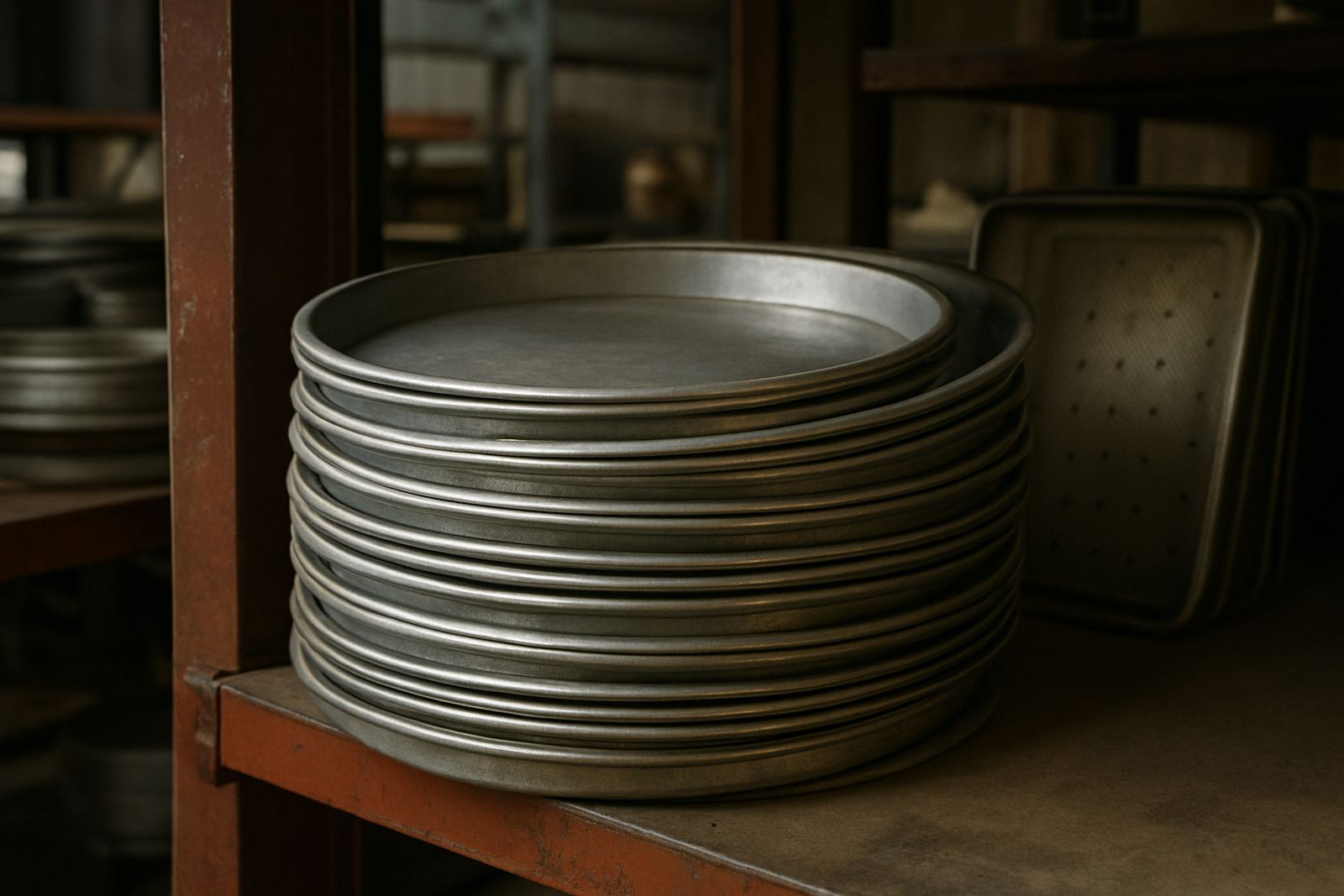
A round pizza pan gives a clean, repeatable shape for pizza bases, catering platters and other circular bakery products. It is a simple item, but the size, gauge and finish make a big difference to how the base bakes and how long the pan lasts in daily use.
Our pans are manufactured for bakery work, not light domestic use. That means firmer sides, better handling at tray loaders, and a form that keeps its shape when it moves from the prep bench to a hot oven. For bakeries in Alrode, Germiston and Boksburg, that matters when you are running batch orders and need the same result every shift.
Sizes, gauges and finish options to match your line
Round pizza pans are usually supplied in common bakery diameters such as 200 mm, 230 mm, 250 mm, 300 mm and 350 mm, with custom sizes available for specific products. Gauge choice affects how the pan handles heat and how well it stands up to repeated use. Lighter gauge pans are easier to handle, while heavier gauge pans keep shape better under frequent loading.
- Diameter options for small, medium and family size bases
- Straight or slightly raised rim profiles
- Plain mild-steel finish or a treated finish on request
- Custom copying from an existing sample pan
- Batch matching for multi branch production
If you are replacing an older tray range, send the sample through for measurement. We can size match from an existing pan, which helps when the oven rack spacing is fixed and you cannot afford trial and error. A small misfit can waste space and slow the oven down.
Where the pan fits in bakery and catering production
Round pizza pans suit bakeries, takeaways, school kitchens, canteens, church kitchens and contract caterers who need a consistent circular base. They also work well for savoury tarts, cookie bases, flattish cake layers and other products where you want a neat edge and controlled spread.
In busy kitchens, the pan helps with portion control because dough spread stays within a predictable diameter. That makes proofing, topping and bake timing easier to plan. For businesses near coastal areas or high humidity stores, the pan is still a practical choice, but it should be dried properly after washing so surface moisture does not sit on the steel.
- Pizza bases
- Flatbreads and savoury rounds
- Prepared catering items
- Tray-baked bakery specials
Oven use, power and gas requirements
The pan itself does not need electricity or gas. It is used inside your existing oven, whether that is electric, gas or wood-fired. What matters is oven clearance, rack spacing and how many pans you can load per cycle. If your oven has uneven heat, a heavier gauge pan can help the base hold shape better during the bake.
For bakeries in South Africa dealing with load shedding, many operators shift production to gas or batch bake windows when generator time is limited. A round pizza pan is still the same simple tool in each case, but it should suit the oven floor or rack system you already use. Check that the oven door opening allows safe handling with gloves, because tight access can slow production and cause burns.
Care, cleaning and servicing for longer pan life
Clean the pans after use, dry them fully and store them flat or stacked so they do not twist. If you are using a mild-steel pan, a light oiling or seasoning routine may help keep the surface in better condition depending on your process. Avoid harsh scouring that can rough up the surface more than needed.
For regular bakery operations, a small inspection routine goes a long way. Check for warping, bent rims, cracked corners on formed versions and any build-up that affects release. If a pan starts to drag in and out of the oven or the base is baking unevenly, it may be time for replacement. We can also assist with batch reorders, which is useful when one section of the kitchen has worn stock quicker than the rest.
- Wash and dry after each shift
- Store where air can move around the stack
- Keep an eye on warping and rim damage
- Replace matched sets together where possible
What to confirm before placing an order
Before ordering, check the finished diameter, depth if any, gauge, rim style and the quantity you need per bake cycle. If you are running a new recipe, also confirm dough weight and expected spread, because that decides whether the pan should be slightly larger than the final baked size. Do not guess this part, it saves trouble later.
It also helps to confirm whether you need a standard size or a copy from an existing pan. If your business works from a fixed rack or conveyor, send the measurements with the order. We can handle factory consultations, prototype runs and repeat production for bakeries in Johannesburg South, Midrand, Soweto and surrounding areas. If a lid or matching tray is needed in the same order, say so up front so the full set is made to suit.
- Finished diameter
- Gauge or metal thickness
- Rim shape and depth
- Quantity per batch and repeat order needs
- Whether you need copying, matching or a new pattern
Key facts
| Product type | Round pizza pan for bakery and catering use |
|---|---|
| Material | Mild-steel bakeware |
| Common sizes | 200 mm, 230 mm, 250 mm, 300 mm, 350 mm and custom |
| Typical use | Pizza bases, flatbreads, savoury rounds and catering bakes |
| Power or gas needed | None, used inside an existing oven |
| Origin | Manufactured in Johannesburg South, Gauteng |