Keeping your bakeware consistent from one order to the next
Batch reorders are for bakeries that have already settled on a pan, lid or tray spec and need more of the same. Instead of starting from scratch each time, we work from the approved pattern, measurements or sample unit so the next batch matches the last one as closely as possible. That matters when loaf height, tin fit and oven loading all affect product quality.
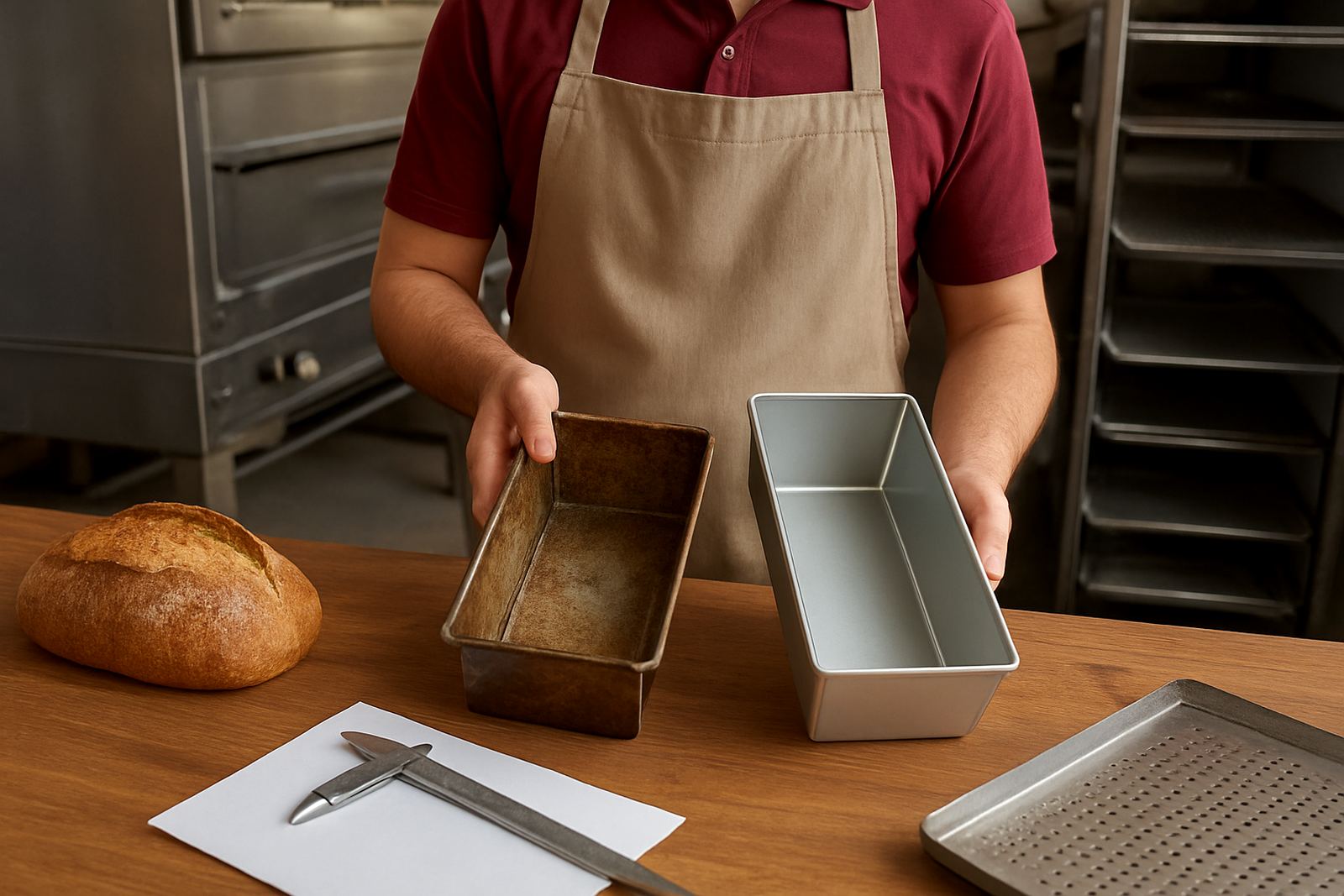
For bakeries in Johannesburg South, Germiston, Boksburg, Soweto and Midrand, repeat manufacturing also helps when stock needs to be topped up after a growth spurt, a new retail contract or normal wear and tear. If your tins are getting thin at the corners, lids are loosening or tray holes are clogging and distorting, a reorder keeps production moving without changing your bake result.
- Standard repeat sizes for bread pans and lids
- Custom repeat runs from an existing sample or drawing
- Compatible with perforated trays, baguette trays and divider inserts
- Options for mild steel and heavier gauge builds where the workload is higher
What is included in a batch reorder
A batch reorder starts with your existing specification and ends with packaged units ready for dispatch or collection from Alrode. We check the size, wall height, lip detail, corner finish and any special features such as perforation pattern, folding, reinforcing or lid fit. If the previous run worked well, we aim to keep those same details in the next batch.
This service is useful for standard BO3, BO4 and BO5 bread pans, lids and other bakeware used in daily bakery production. We can also reproduce tray formats for long loaves, rolls and baguette lines. If the original items have changed over time, we will flag it during the check so the new batch does not create fitting problems in the oven or on proving racks.
- Repeat manufacture from approved sample, measurements or order history
- Matching of gauge, size and form where possible
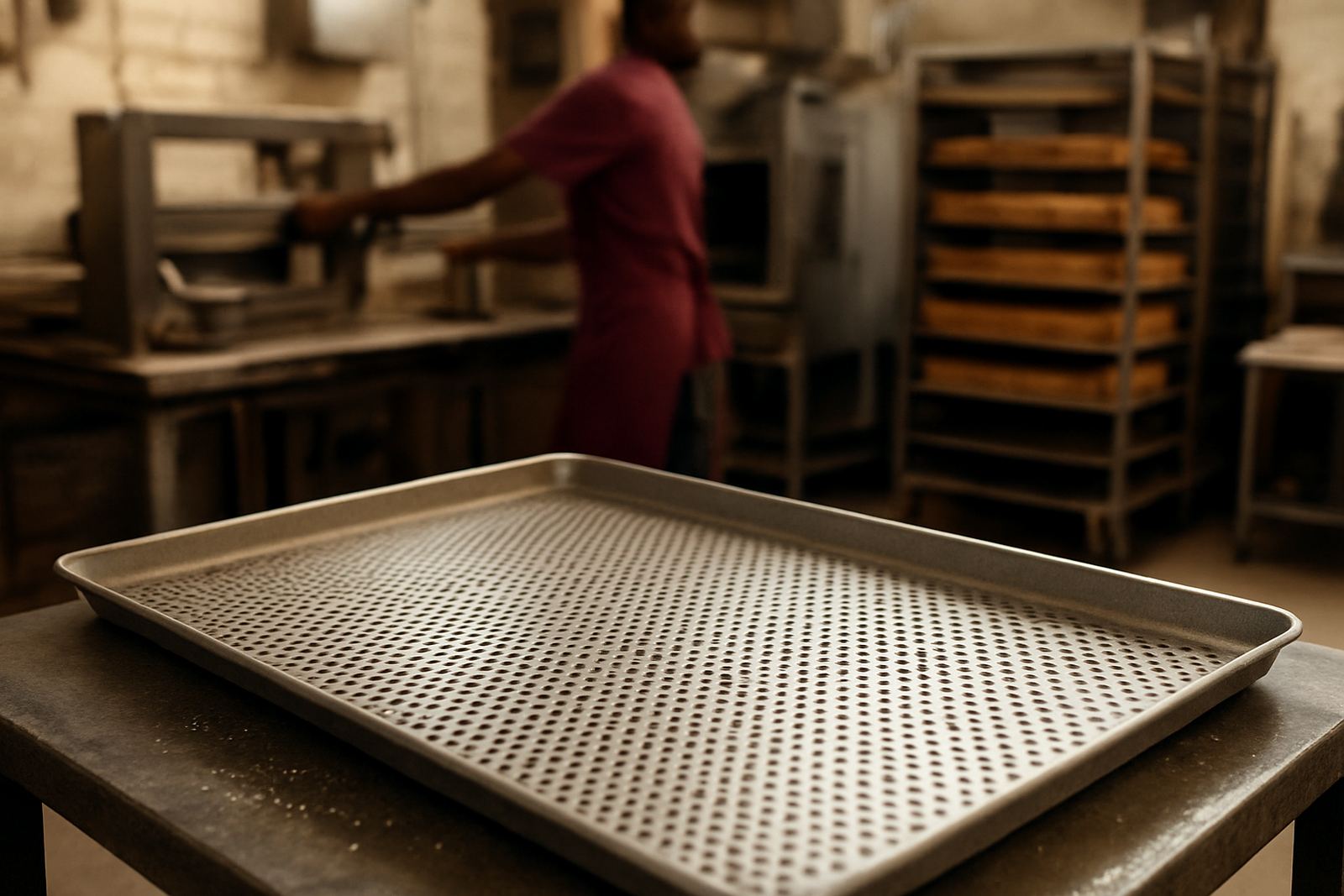
- Perforation patterns for airflow and cleaner baking
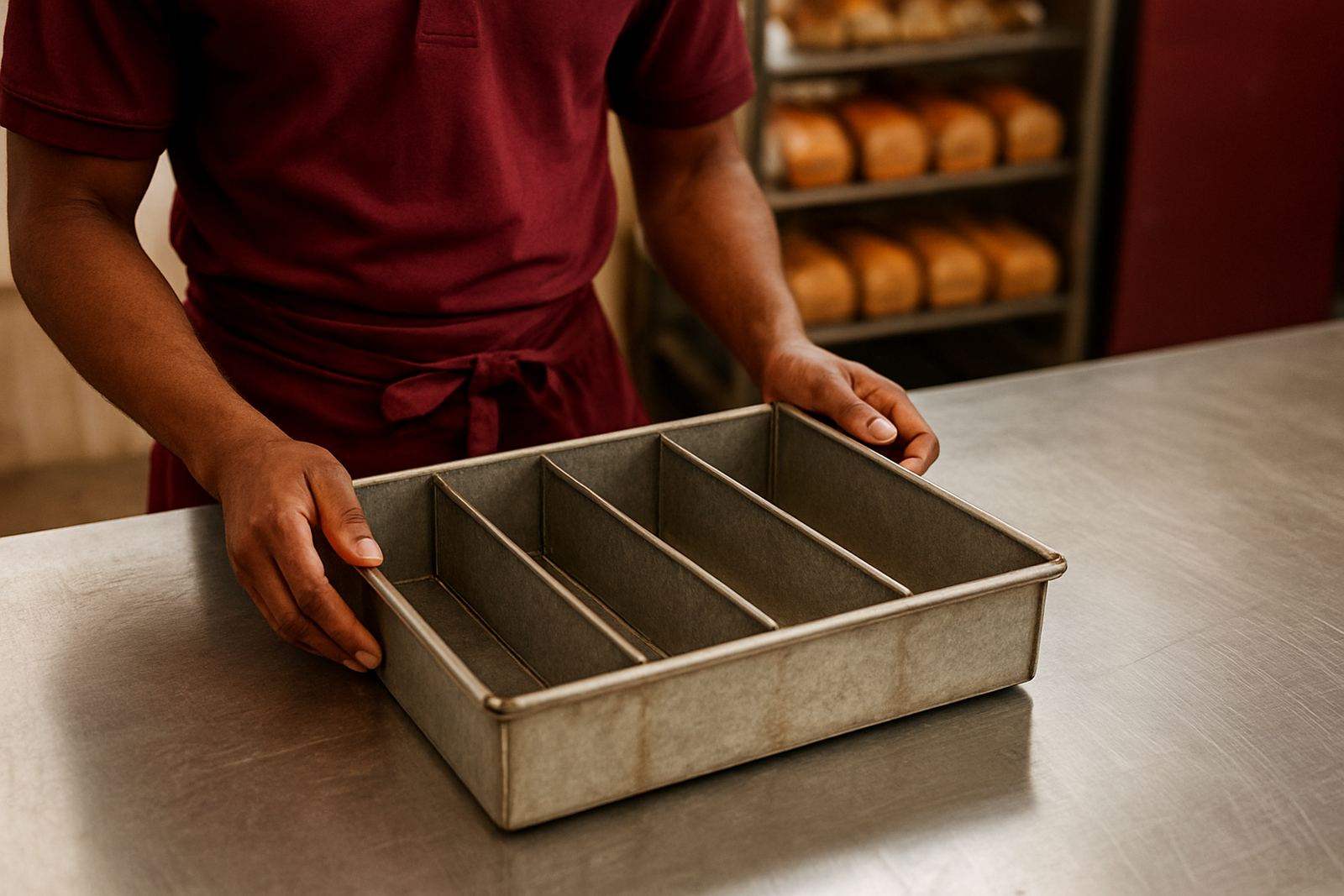
- Divider inserts and tray forming for specific product lines
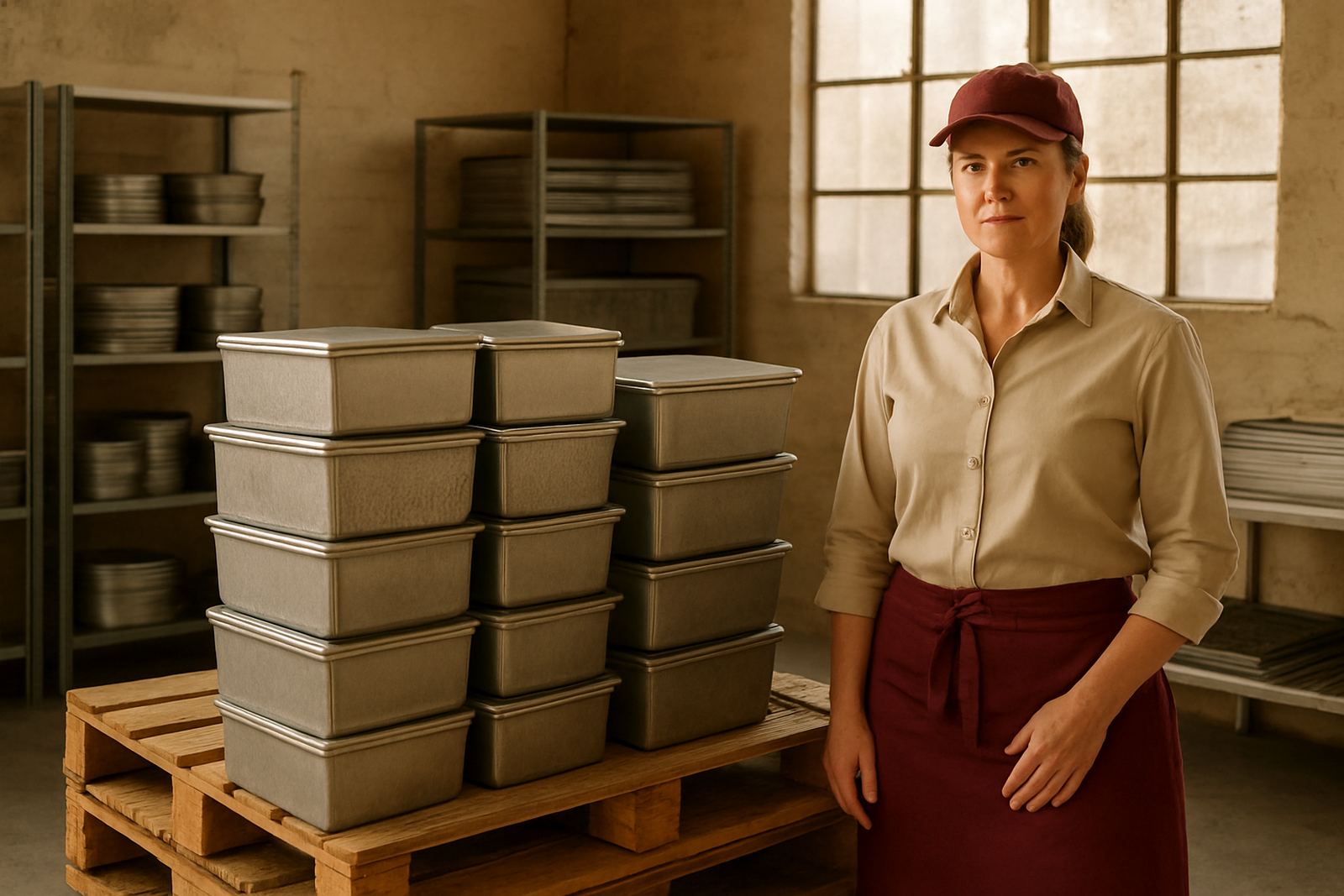
- Batch packing for easier store handling and dispatch
Our process from sample check to production
The process is practical and direct. First we confirm the previous spec, sample unit or dimensions. Then we check whether the item is a straight repeat or whether small changes are needed because of wear, oven clearance or a revised bake programme. Once the spec is signed off, production is slotted into the schedule and the batch is formed, cut, folded or perforated as required.
If you are sending a sample from a branch in Alberton, Germiston or Boksburg, we will look at the item for fit and finish before starting. If you want a factory consultation, our team can go through the current trays and pans on site and note what should be copied exactly and what should be improved. It saves time later, especially when the bakery is busy and there is no room for guesswork.
- Step 1: confirm the repeat order spec
- Step 2: inspect sample or drawing for fit and wear
- Step 3: approve gauge, finish and quantity
- Step 4: manufacture the batch and check each run
- Step 5: pack for collection or delivery
Turnaround for repeat orders in Gauteng
Turnaround depends on quantity, gauge, whether perforation is needed and how much forming is involved. Smaller repeat runs can move faster when the spec is already on file, while heavier trays and large quantity reorders need a proper slot in the production line. If your bakery needs a partial top-up to cover peak trading or school holiday demand, we can plan the order around that.
For local deliveries in Alrode, Alberton, Johannesburg South and nearby industrial areas, planning ahead is still the best way to avoid gaps in production. We also take load-shedding into account because oven schedules and packing times often change on short notice. If your stock is running tight, let us know early so we can work with you before the last tins are out of the rack.
- Best for planned reorders and stock replenishment
- Lead time affected by quantity and complexity
- Repeat specs move quicker than new prototype work
- Useful for bakeries managing seasonal peaks and maintenance stoppages
Pricing based on size, gauge and quantity
Batch reorder pricing is based on the item type, material thickness, quantity and the amount of cutting, folding or perforating needed. A standard repeat bread pan is priced differently from a heavy gauge tray or a custom baguette tray with detailed forming. Larger batch quantities usually improve the unit rate, especially when the same setup can run across the full order.
We quote on the real manufacturing requirements, not on a one-size-fits-all formula. That keeps the price fair for small repeat runs and more efficient for bigger bakery groups. If you already have a previous order number or an old sample, it helps us price faster and more accurately. Sometimes a slight spec change can save material, other times it increases the cost, so we will explain that clearly before the order is released.
- Pricing reflects gauge, size and batch quantity
- Custom features such as perforation or divider inserts affect cost
- Heavy duty builds are priced for longer service life
- Repeat orders can reduce setup time and improve value per unit
Maintenance intervals and when to reorder again
Most bakeries do not wait until every tin is finished before planning the next batch. A good approach is to review pans and trays during routine cleaning and stock checks, then reorder before the line starts running short. In busy production, minor dents, warped edges and loose lids can begin affecting bake quality long before a pan looks completely worn out.
As a guide, we suggest checking standard bread pans and lids every few months, and more often in high-output sites or coastal conditions where humidity can speed up surface wear. Perforated and baguette trays should be inspected for blocked holes, bending and edge fatigue. If you see repeated sticking, uneven colouring or poor stacking, that is usually the time to plan the next batch rather than waiting for failure.
- Review stock during regular cleaning cycles
- Check for warping, dents, loose fits and surface wear
- Coastal humidity may mean earlier replacement planning
- High-volume bakeries often need scheduled top-ups
Why bakeries keep batch reorders on file
Once the spec is saved, repeat manufacturing becomes simpler for everyone. Your team does not have to measure every time, and our workshop does not have to reinterpret the same pan again and again. That means fewer errors, steadier supply and less disruption when you are balancing deliveries, staff shifts and oven time.
Many bakeries in Alrode, Soweto, Midrand and the surrounding industrial areas use batch reorders as part of normal planning. It is a practical way to protect the product you already sell. If a unit works well in the oven, fits the rack and stacks properly in store, the next batch should do the same, with no surprises.
- Fewer repeat measurements and less admin
- Better consistency across production runs
- Helpful for planned stockholding and phased replacements
- Suited to bakeries with fixed product lines and regular demand
Key facts
| Service | Batch reorders for bread pans, lids and trays |
|---|---|
| Common patterns | BO3, BO4 and BO5 bread pans and lids |
| Materials | Mild steel and heavier gauge builds |
| Tray options | Perforated trays, baguette trays, divider inserts |
| Area served | Alrode, Alberton, Germiston, Boksburg, Soweto, Midrand |
| Base | Alrode, Johannesburg South |