When pan copying makes sense
Pan copying is the right choice when you already have a pan that bakes well and you need more of the same. It is common in bakeries that have mixed older and newer ovens, or sites that run the same loaf size across several production lines. If the pan sits correctly on your trolleys, works with your lid or cover, and gives the crust and loaf shape you want, we can copy it instead of starting over.
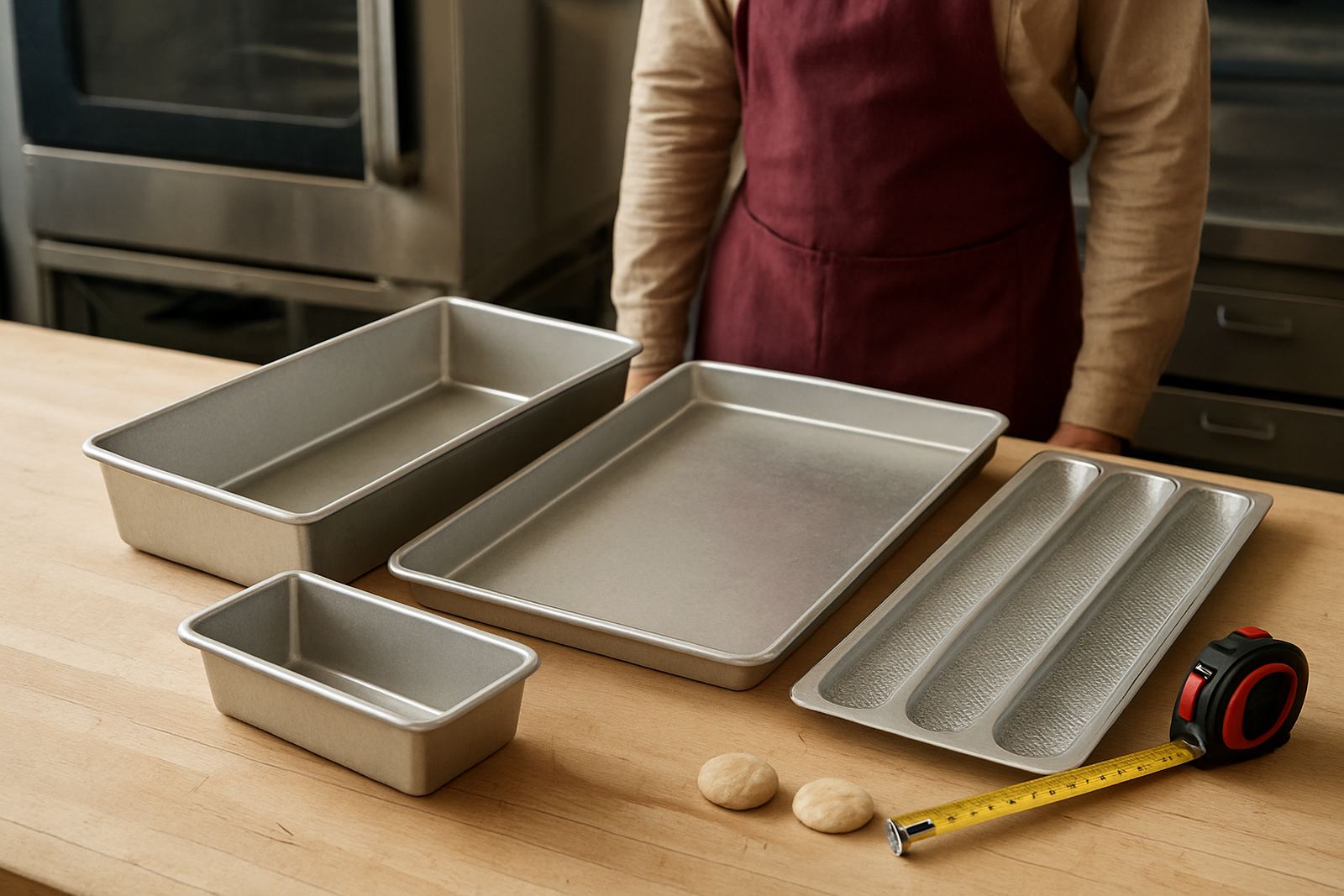
This service suits standard bread pans, lidded pans, perforated trays, baguette trays and other bakeware used in daily production. We work from a sample pan, a set of measurements, or both. The aim is to keep the inside dimensions, wall height, corner radius, fold detail and mounting points consistent so your product stays consistent too.
What we check before we start
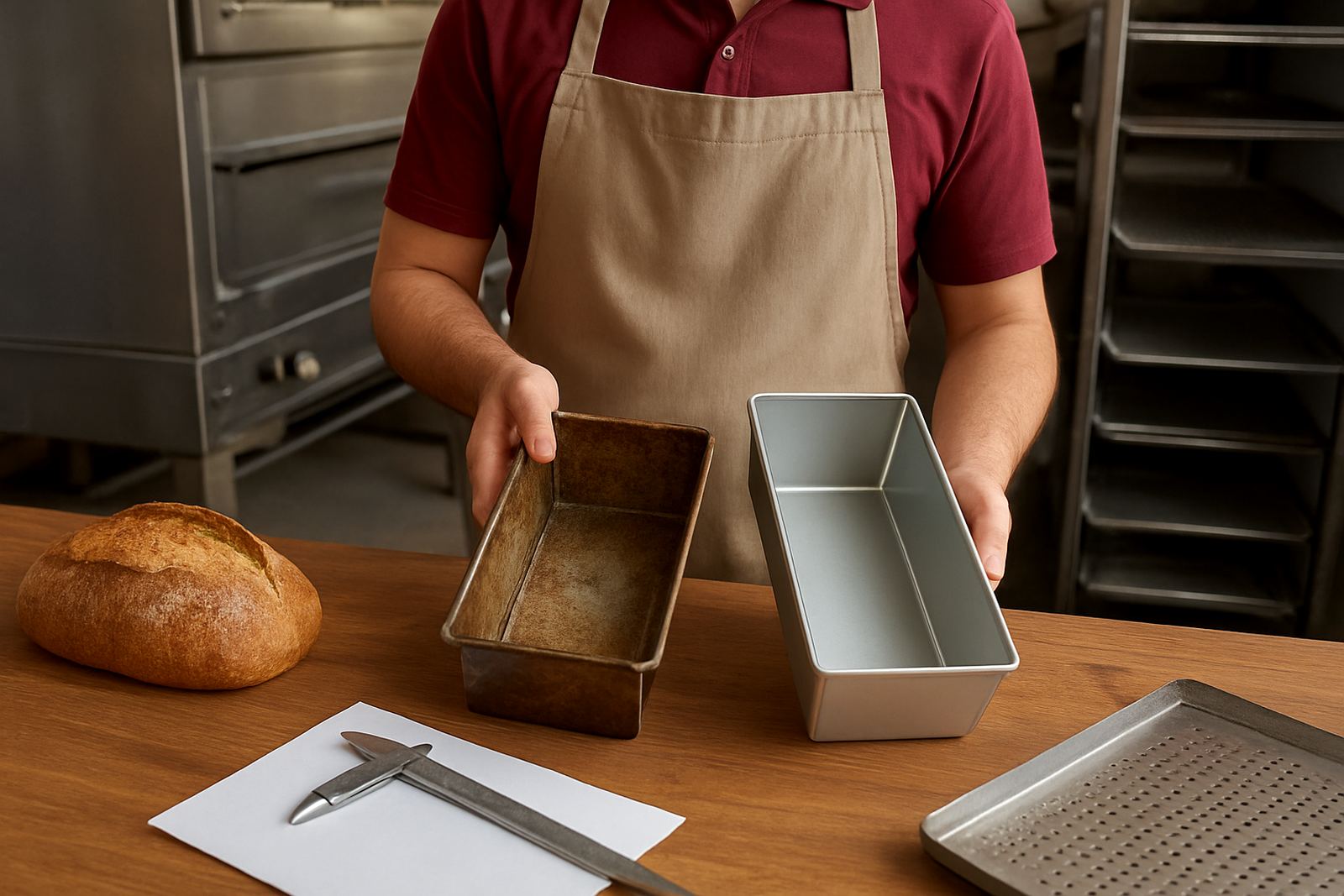
We do not guess on pan copying. The sample is checked for size, wear and any distortion caused by heat, handling or years of use. A pan that has bowed, opened at the seams or lost its shape can still be copied, but we measure carefully so the new version follows the original working form, not the damage.
- Overall length, width and depth in millimetres
- Wall angle, corner radius and base profile
- Material thickness and gauge
- Return folds, rolled edges and stiffening lines
- Lid fit, hinge points and clip positions where needed
- Tray spacing, hole pattern or baguette channel layout
If the pan is part of a larger production set, we also check how it loads into racks, ovens and prover trolleys. That matters in busy plants in Alrode, Germiston and Boksburg where a few millimetres can slow dispatch or cause fit problems during a full shift.
How the copying process works
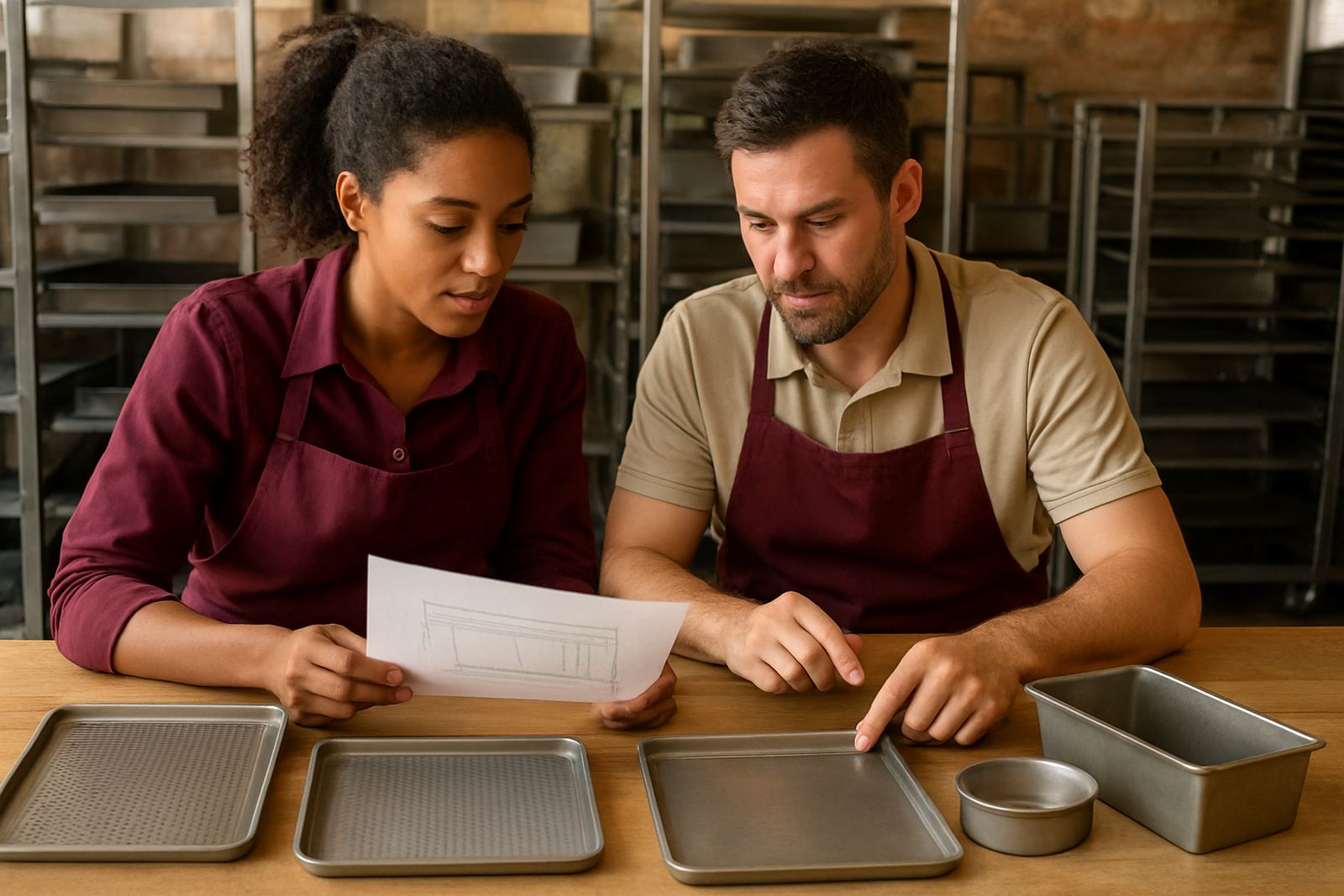
The process starts with a sample pan or tray brought to our Alrode base, or collected by arrangement where practical. We record the dimensions and form the working drawing from that reference. If a lid is included, we measure the lid depth, overlap and closing pressure so it sits properly without forcing the pan open.
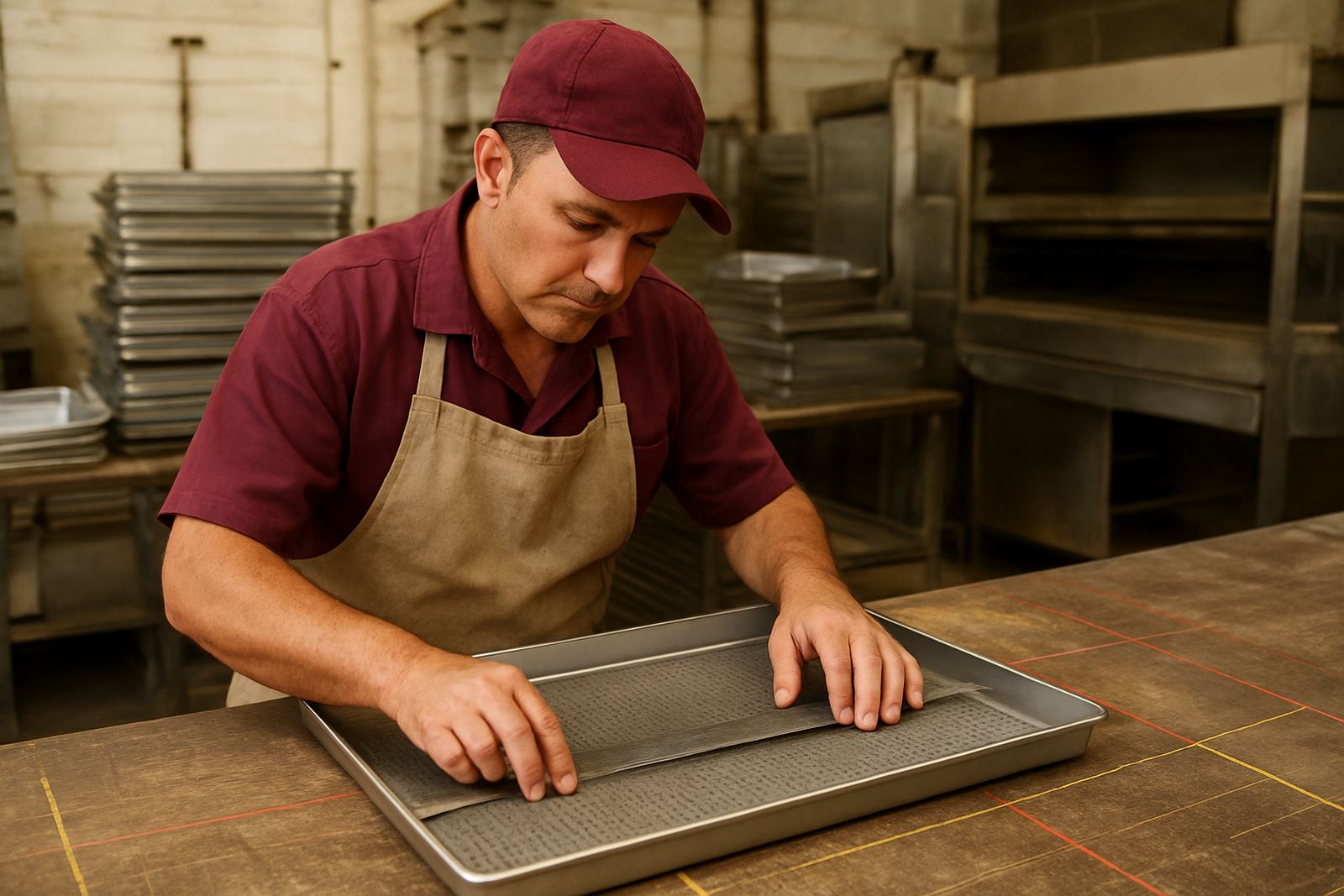
From there, the pattern is prepared for cutting, bending and forming. If the job calls for perforation, we place the hole pattern to suit the dough release and baking requirement. If the pan needs divider inserts or a heavier build for repeated handling, that is built into the copy before fabrication begins.
- Sample review and measurement
- Pattern and forming preparation
- Cutting, bending and welding or folding where required
- Fit check against the original sample
- Final adjustment before batch production
For bakeries in Soweto, Midrand and surrounding Gauteng sites, we keep communication practical and direct. If a copied pan must work with an existing lid or tray stack, we test the fit before release so you are not dealing with corrections on site.
Typical specs we copy
We copy both standard and non-standard pans, as long as the sample can be measured cleanly. Bread pans are often copied in BO3, BO4 and BO5 sizes, but we also handle custom lengths and deeper or lighter versions depending on the dough weight and oven setup. Perforated trays and baguette trays can be matched to the hole size, slot spacing and channel depth already in use at your plant.
Material choice depends on the job. Mild-steel is common for general bakery use, while heavier gauge builds are preferred where pans are handled often or need a longer service life. In coastal humidity or in wash-down areas, finish and storage practice matter as much as the metal choice, so we can advise on that during the copy stage.
- Standard loaf pans and lidded pans
- Perforated baking trays
- Baguette trays with fixed channels
- Custom widths, depths and corner forms
- Heavy gauge options for repeated industrial use
If the original pan has special handling needs, such as a snug lid fit or a reinforced rim for lifting, we copy that detail too. The point is not just to make something that looks right, but something that works on the line every day.
Turnaround and pricing approach
Turnaround depends on the complexity of the sample, the size of the batch and whether tooling changes are needed. A straightforward copy with clear measurements can move quickly, while a pan with lid fitting, perforation or divider work will need more time. We will give a realistic lead time before production starts so you can plan around batch runs and supplier deliveries.
Pricing is based on size, material thickness, forming difficulty and quantity. Single copies are priced differently from batch reorders, because setup time is spread across more units in a repeat run. If you need the same pan copied in stages, we can quote in a way that helps with cash flow and stock planning.
There are no vague add-ons hidden in the process. If the sample needs repair, if the design must be adjusted for stronger use, or if a trial run is needed before the full batch, that is discussed upfront. That keeps the order practical for production managers and bakery owners who need clear numbers from the start.
Keeping copied pans in good condition
Once your copied pans are in use, maintenance intervals depend on the baking temperature, wash routine and how often the pans are stacked or handled. In busy bakeries, we recommend checking fit and wear at regular intervals, especially where pans are exposed to steam, detergent or repeated loading through the day. Small changes in shape can show up before the pan fails completely.
For most operations, a simple inspection every few months is sensible, with closer checks for high-volume plants. Look for open seams, warped bases, loose lids and worn edges. If the same loaf size must remain consistent, replace or copy the pan before the damage starts affecting bake uniformity.
- Check lid fit and latch pressure regularly
- Keep pans dry after washing to reduce rusting
- Store flat where possible to avoid twisting
- Remove damaged pans before they affect output
If you already have a trusted pan that is nearing the end of its life, copy it before it becomes too worn. That gives you a spare set ready when the old one is retired, which helps reduce stoppages during load-shedding, peak orders or weekend production.
Key facts
| Standard copied sizes | BO3, BO4 and BO5 bread pans, plus custom dimensions |
|---|---|
| Material options | Mild-steel and heavier gauge builds |
| Profile types | Plain, lidded, perforated and baguette forms |
| Measurement basis | Sample pan, dimensional check or both |
| Production use | Single replacements, batch reorders and line continuity |
| Base location | Alrode, Johannesburg South, Gauteng |