Long service in a Benoni production room
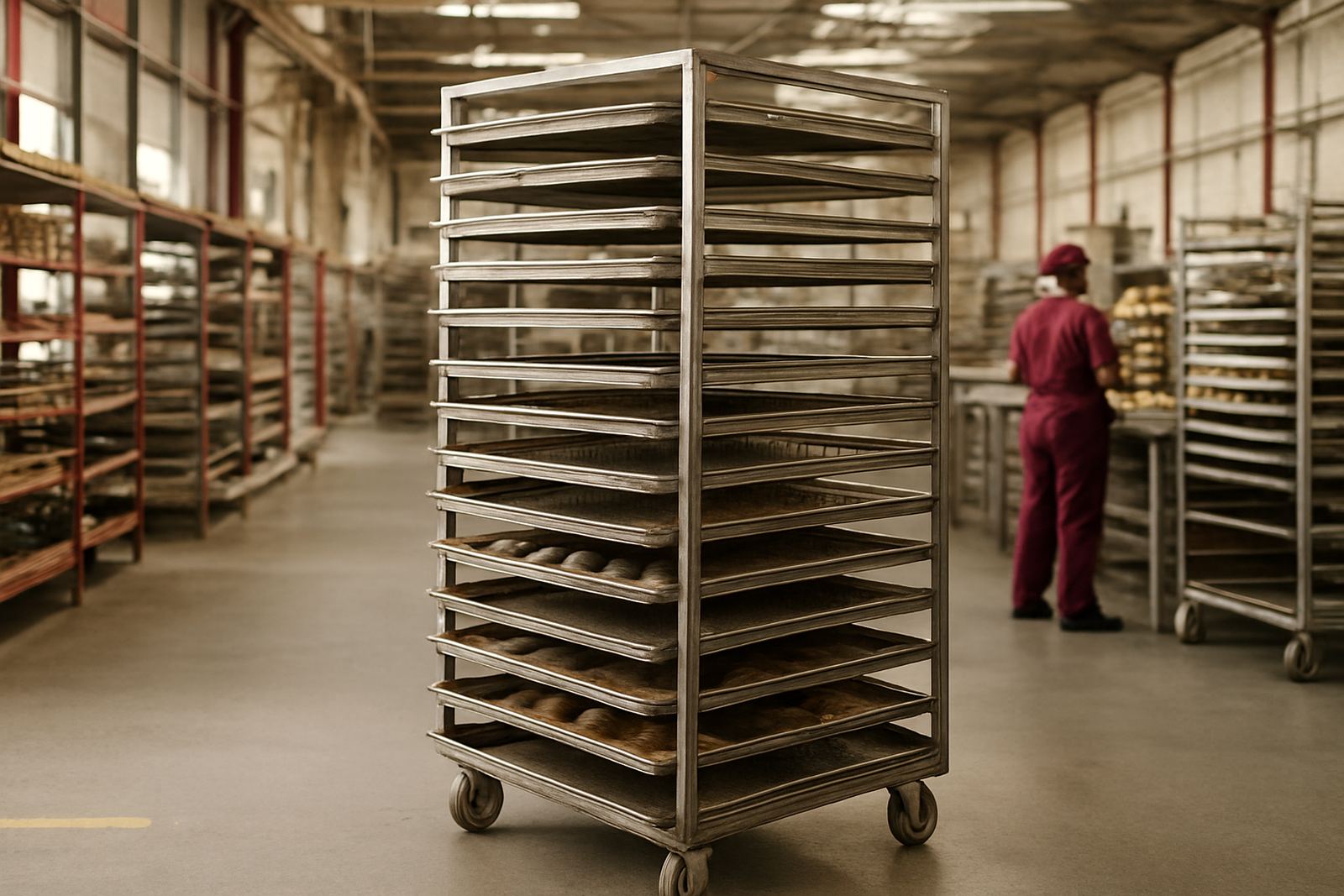
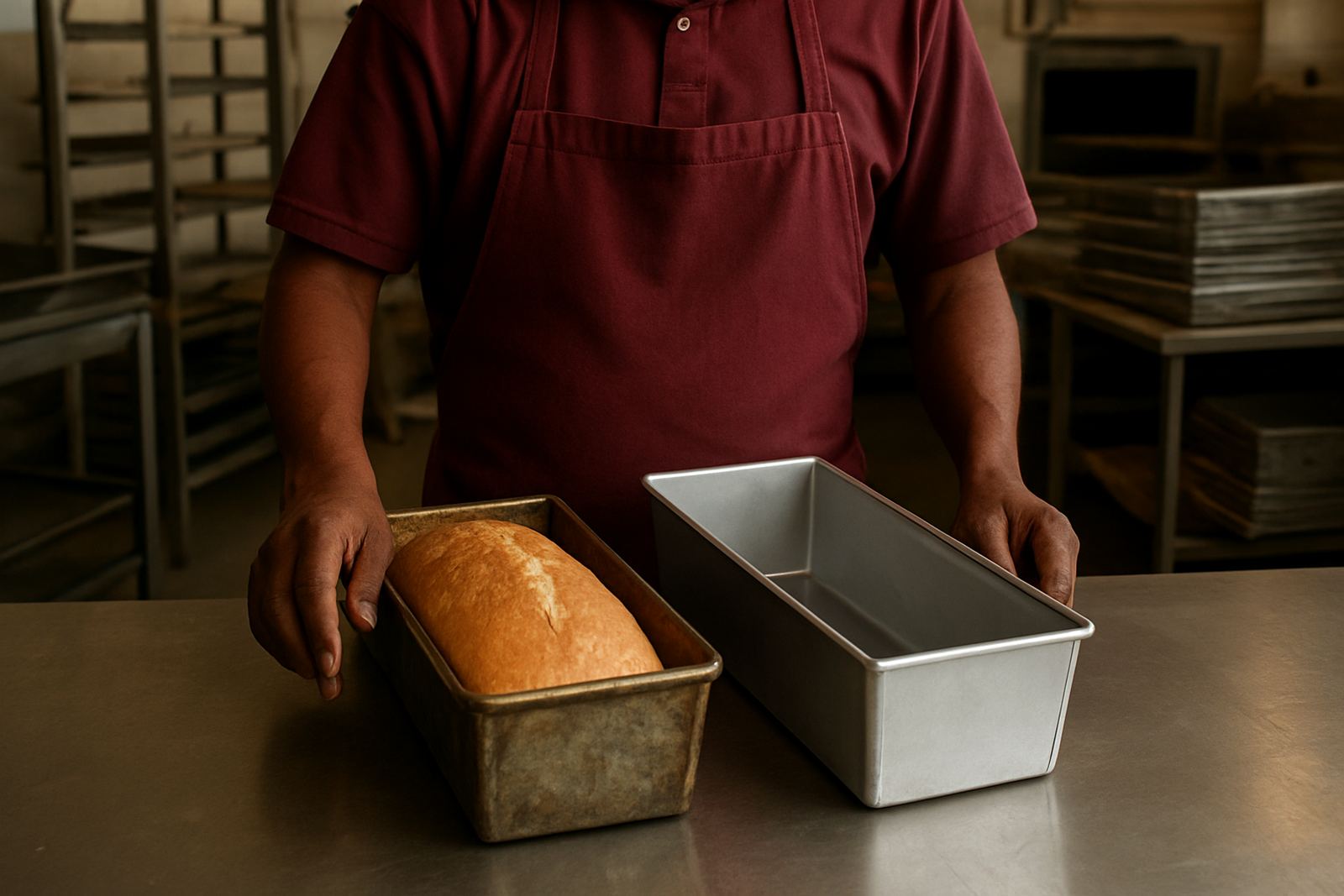
This job came from a bakery in Benoni that had been running the same loaf lines for years. Their pans had reached the point where the sides were thinning, the corners were lifting and some lids no longer sat true, so the team was getting variation from one batch to the next. On a floor that runs early starts, public holidays and the odd load-shedding interruption, that kind of wear shows up quickly in the oven and again at packing.
The brief was straightforward but very specific: replace the worn bread pan sets without changing the loaf size, the pan stack height or the handling on the line. The client wanted repeat supply, not a once-off fix, because the line serves the same product every week and the pan count has to stay balanced across the racks. We also had to work around storage space and make sure the new stock could be identified easily for future reorders.
What the bakery needed from the new pans
The original equipment was a standard loaf format, used on a high-volume line with mixed shifts. The pans had seen years of heat cycling, washing and rough handling at changeover, so the replacement had to fit the existing trays and oven handling without any rework on site. The client also wanted enough strength for daily use, but not so much extra weight that staff would struggle with loading and unloading.
- Matched bread pan size to the existing loaf cavities and rack spacing
- Supplied with lids fitted to the same profile as the worn originals
- Built for repeated baking cycles in a commercial oven room
- Suitable for standard bread production, with consistent rise and shape
- Made for quick cleaning and regular rotation through the wash area
We checked the current pans against the line layout, measured the working dimensions and confirmed the lip detail that matters when a pan has to drop into an existing carrier cleanly. Small differences in a bakery can cause delays, especially if the pans catch on the guide rails or if the lid edge does not seat properly. In this case, matching the old setup was more important than changing it.
Pan copying, lid fitting and sample confirmation
To keep the line moving, we followed our size matching and pan copying process. The first step was confirming the worn sample units from the bakery, then checking the body depth, flange width, corner shape and lid fit. Once the sample pattern was set, we prepared a trial set before moving to the full order. That allowed the client to test the pans in real baking conditions rather than guessing from a drawing.
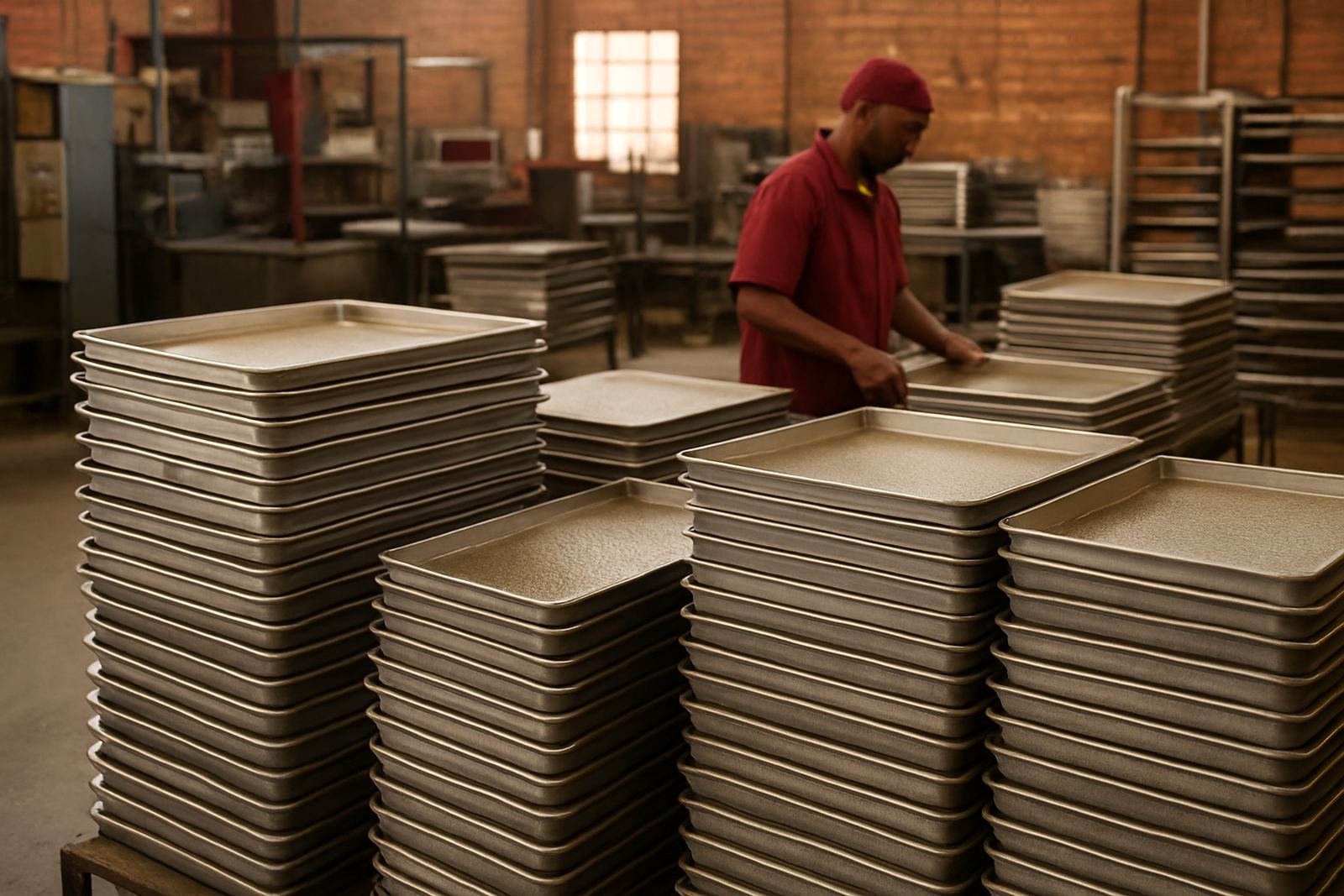
The pans were formed from mild steel for practical handling and repeat use. For this project, the customer needed standard bread pans and lids with a clean fit and no unnecessary extras. We also checked the stacking behaviour, because a set that nests badly can slow the cleaners and create small dents before the week is out. The factory team kept the profile true and we kept the finish serviceable for daily production.
- Trial set checked on site before batch continuation
- Existing lid fit matched to the pan lip and side walls
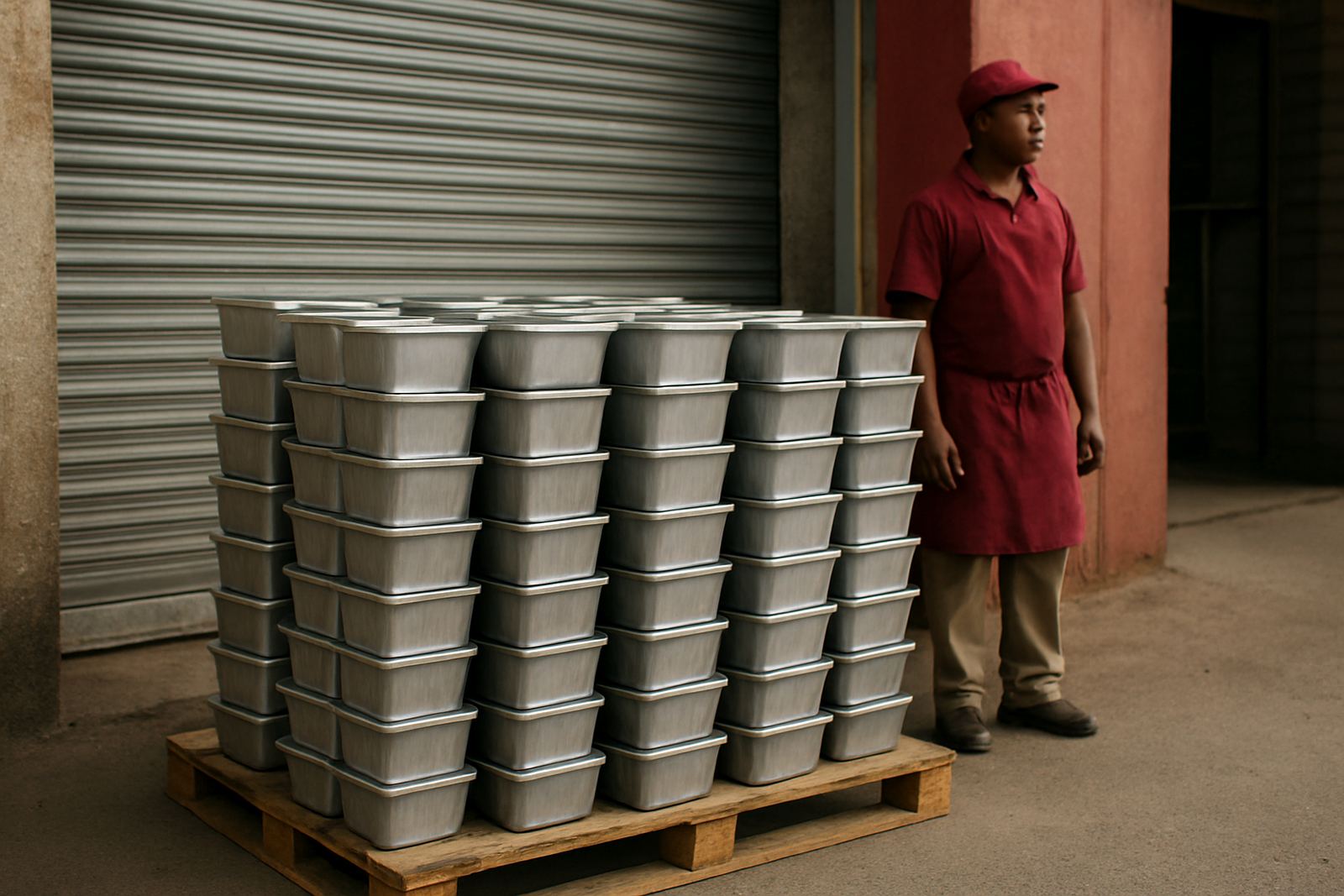
- Stacking and nesting checked for storage and dispatch
- Repeat order codes recorded for future batch reorders
Timeline from enquiry to delivery
The full job ran over three weeks from first call to dispatch, which suited the bakery because it allowed them to keep a controlled changeover instead of replacing all their pans at once. Week one covered measurements, sample confirmation and production planning. Week two was the fabrication and fit check stage. Week three covered final review, packing and delivery to Benoni.
The client was working around ordinary production pressures, including early morning shifts and the need to keep the ovens loaded while maintenance was happening elsewhere on site. We scheduled the supply so that the team could swap pans in stages. That kept the old sets in service while the new sets were introduced, and it reduced pressure on the packers and mixers who already had enough to manage.
- Week 1: sample inspection and dimensions confirmed
- Week 2: production, fitting and line checks
- Week 3: packing, dispatch and delivery to site
What changed once the new sets were running
Once the replacement pans were in use, the bakery reported more even loaf release and less time spent sorting out damaged or distorted sets. The team could load the racks faster because the pans sat properly and the lids stayed aligned. That saved time at the oven end and helped the packing area too, since loaves came off with a more regular shape and less waste from rejects.
For a long-running production floor, the real result is not just a neater pan. It is fewer stoppages, less hand correction and more confidence that tomorrow’s batch will look like today’s batch. The client also now has a repeatable supply route for the same pan set, which matters when a bakery is not far from the edge of a busy month-end and cannot wait for emergency replacements.
What we would do again for similar bakeries
For a job like this, we would follow the same process again. Start with the worn sample, confirm the working size, test the lid fit and keep the production batch tied to the actual line layout. That approach works well for bakeries in Benoni, Alberton, Germiston and the wider Gauteng belt where a pan needs to fit existing equipment, not the other way round.
If a bakery is running older loaf lines, we would also recommend keeping a small reserve of matched pans on hand so the team can rotate stock before wear becomes a problem. It is a simple way to protect output, especially where shifts are busy and cleaning, drying and handling all happen in the same space. For repeat supply, we keep the patterns on file so reorders can be matched without starting from scratch every time.
- Keep one sample pan and lid from the approved set
- Order spare units before wear becomes visible at the corners
- Confirm storage, wash and stacking conditions before each batch reorder
- Use the same size reference for future production runs
Key facts
| Project location | Benoni, Gauteng |
|---|---|
| Client type | Long-running commercial bakery production floor |
| Product supplied | Standard bread pan sets with lids |
| Material | Mild steel |
| Timeline | 3 weeks from enquiry to delivery |
| Services used | Size matching, pan copying, lid fitting, batch reorder support |