Why tray stacks go wrong in busy bakeries
Most tray problems start in the same way. Trays come back from the floor warm, a bit oily and stacked wherever there is space. By the time the next run starts, one stack has bakery trays, another has perforated trays and somebody is still looking for the matching lids or support pieces. In a bakery or catering kitchen that runs early mornings, that kind of mix-up costs time before the first loaf is even in the oven.
In Alrode and the surrounding industrial areas, many bakeries work in tight prep spaces with shared loading bays. If trays are left at different stations, staff start borrowing from the nearest pile. Then count sheets do not match stock on hand and reorders happen too late. A clear storage habit solves more than just tidiness, it helps with stock control and daily planning.
- Keep one place for each tray type.
- Return trays to storage as soon as they cool.
- Use a count sheet for every stack.
Set one home for each tray size and type
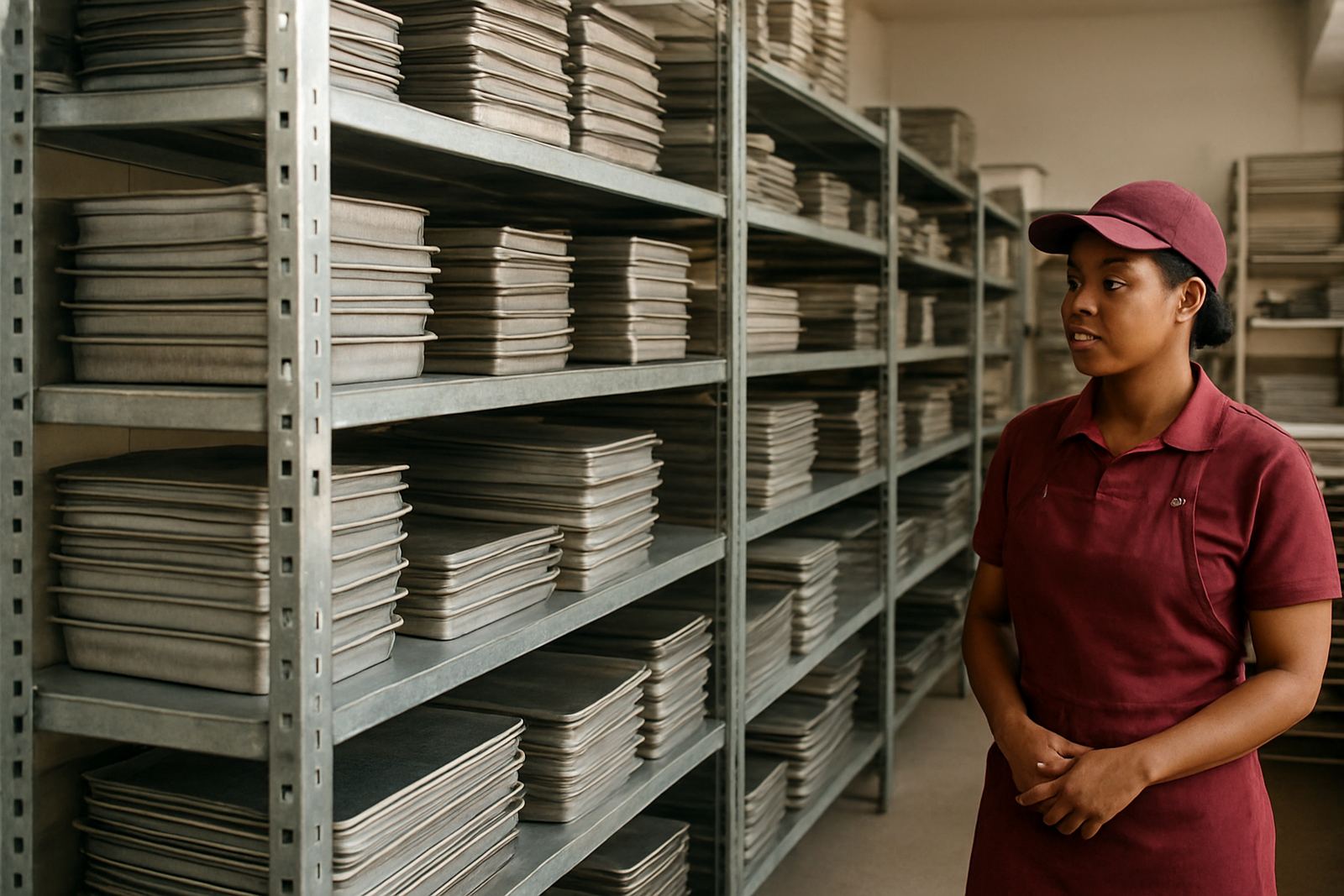
The easiest system is also the one staff will follow. Give every tray size and style a fixed home. Standard bread pans, perforated trays, baguette trays and odd jobs like prototype pieces should not all share the same rack. If the team can see where each item belongs, stacks stay organised and count checks take less time.
Try grouping by use rather than by whatever fits on the shelf. For example, keep daily bread production trays together, then separate speciality trays used for rolls or baguettes. In bakeries around Germiston and Boksburg, that small change often cuts down on searching during peak time. It also helps if you have different gauge builds, because heavier trays should not sit on top of lighter ones and bend them.
- Mark shelves or rack levels by tray type.
- Store heavier trays on lower levels.
- Keep spare lids and inserts in a separate section.
Stack height matters more than most people think
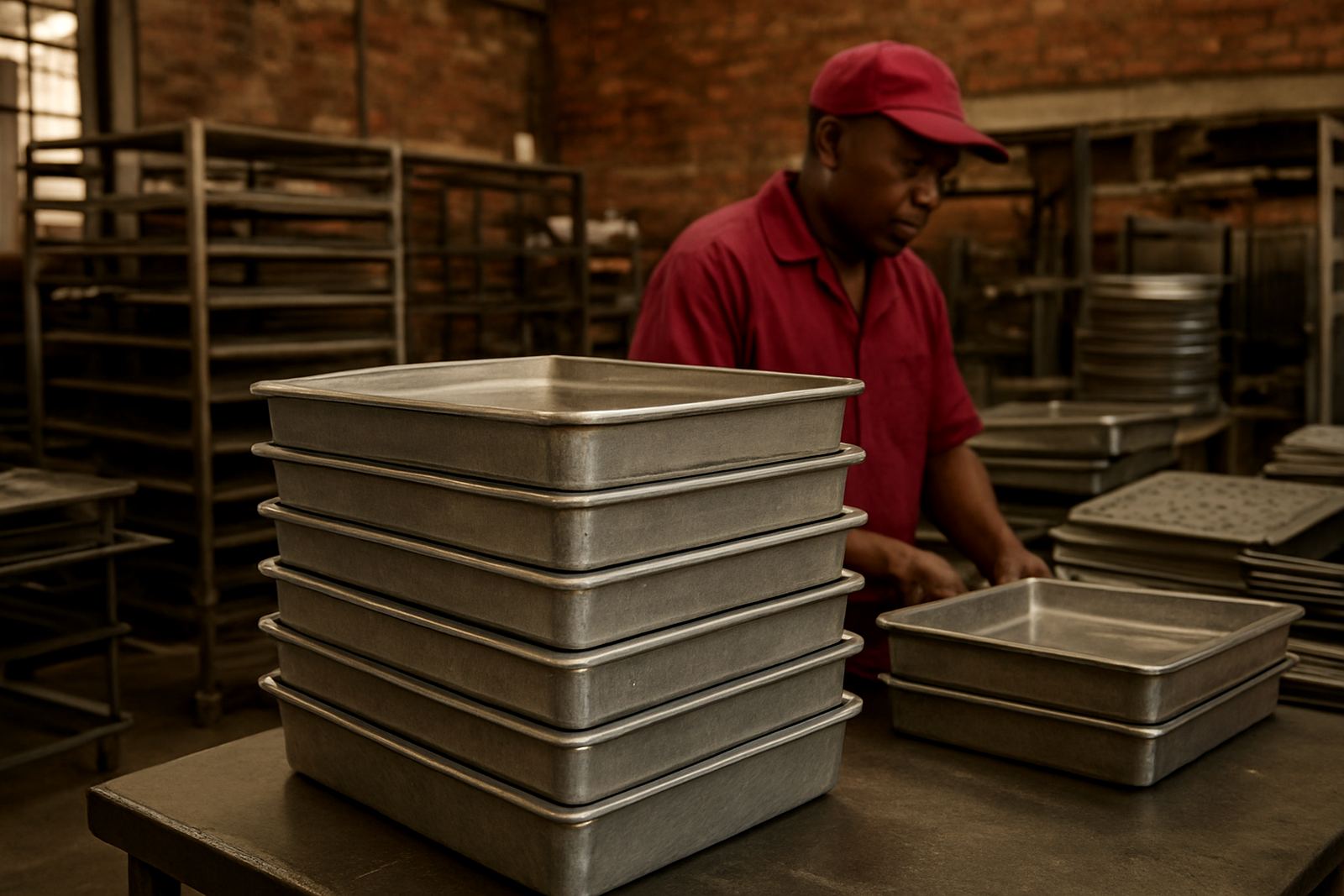
Too many trays in one pile leads to warped corners, stuck trays and scratched surfaces. Too few stacks, on the other hand, waste floor space. The trick is to choose a height that one person can lift safely without twisting. In a hot bakery, especially during load-shedding when lighting and airflow may be less comfortable, safe handling matters just as much as speed.
A good rule is to keep stacks low enough for fast count and easy removal. If trays are stored too high, staff pull from the middle and leave the rest leaning. That is how trays start to sag. It is also harder to spot damage when stacks are overbuilt. Keep similar items together and leave enough space for fingers to get under the edge.
- Limit stack height to what one person can move safely.
- Leave a small gap between stacks for inspection.
- Never mix bent trays into a straight stack.
Count trays the same way every time
Stock counts only work when the same method is used every day. Pick a count routine and stick to it. For example, count the top stack first, then the reserve stacks and then anything in wash-up or repair. If your staff count one pile in the morning and a different pile at close, the numbers will never line up.
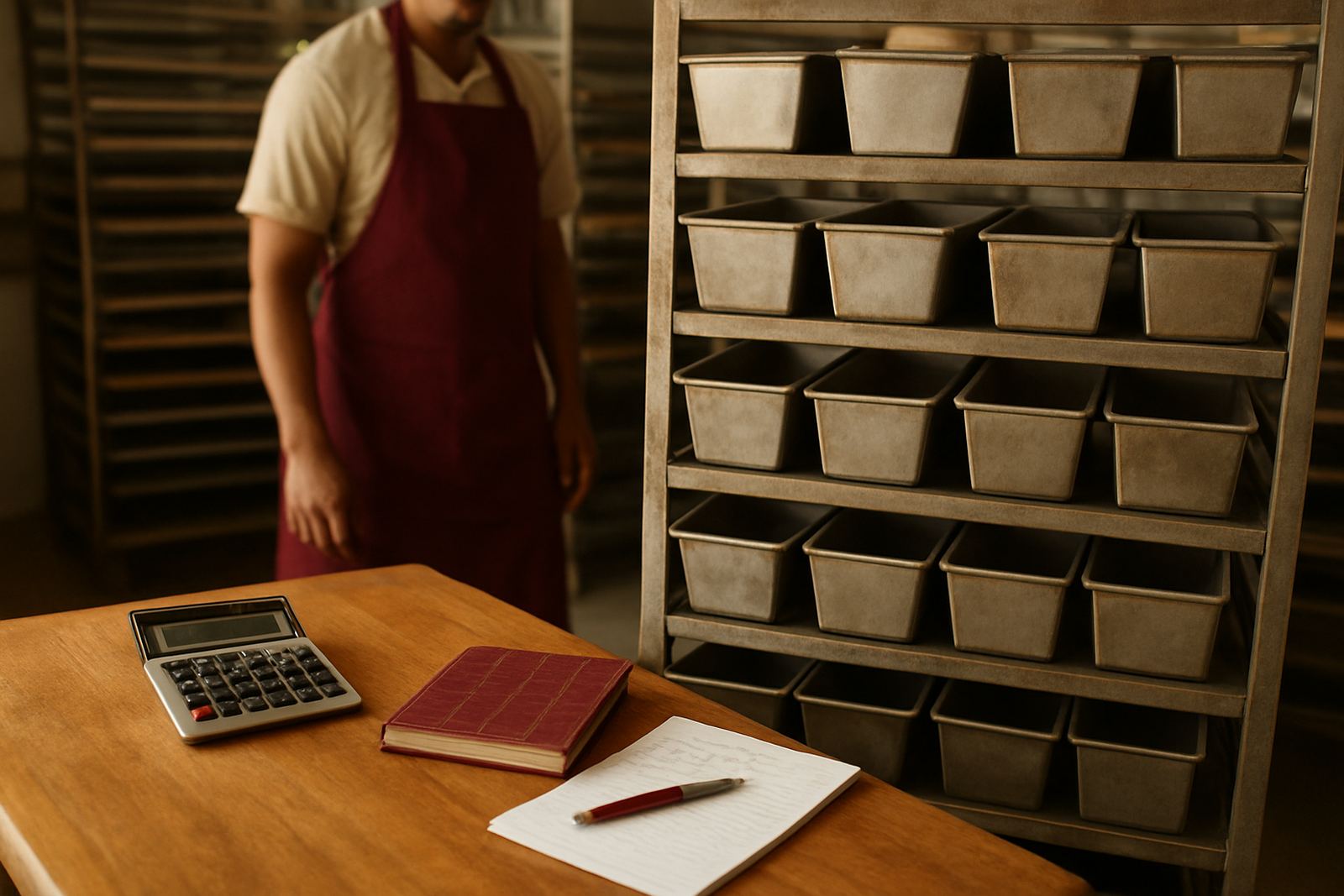
A simple sheet on a board near the storage area helps. Write down the tray type, size, the number in each stack and the total. Even a basic hand count works if everyone uses the same names. In our experience, businesses in Soweto or Midrand that keep tray counts tied to a single storage point order less often because shortages show up earlier, not after production is already delayed.
- Use the same tray names on every count sheet.
- Record damaged or bent trays separately.
- Update counts after cleaning, not before.
Keep clean and wet trays apart
Moisture is one of the quickest ways to spoil a storage system. A tray that goes onto a rack still wet from washing can stain, rust or stick to the tray underneath. This is a bigger concern in humid coastal areas, but even inland bakeries can struggle when trays are packed away before they are fully dry. If the stack smells damp, it is already too soon to close it up.
Make a separate drying space before trays go into storage. If floor space is tight, use a holding rack or a marked area where trays can stand until the last bit of water runs off. Do not slide wet trays straight into a closed stack because the trapped moisture makes the whole pile harder to manage. That extra few minutes saves a lot of cleaning later.
- Dry trays fully before stacking for storage.
- Keep washed trays apart from production-ready trays.
- Check for rust spots and wipe them off early.
Use the rack, trolley or shelf that suits the tray
Not every tray should be stored the same way. Some shops do better with wall racks, others with mobile trolleys that can be rolled from wash-up to the prep area. In a busy factory in Alrode, a trolley system can save time if dispatch and production share the same floor. In a smaller bakery, fixed shelves may be easier to count and keep straight.
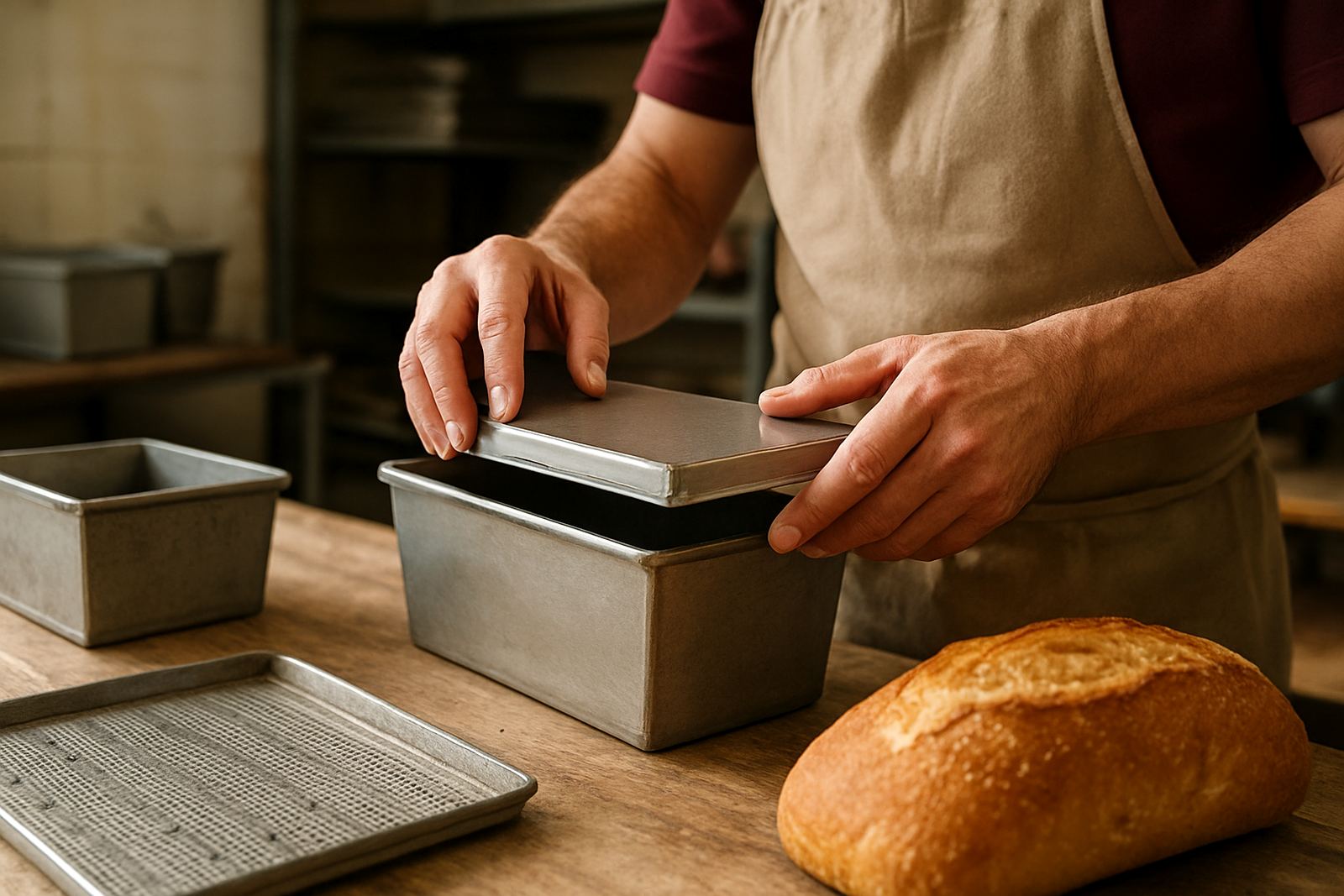
The point is to match storage to the tray shape. Long baguette trays need support so the ends do not bend. Perforated trays should not be wedged so tightly that the holes catch on the tray above. If you need divider inserts or special fittings, keep them stored with the trays they belong to. That way the team does not waste time hunting through mixed piles.
When the storage method suits the tray, the whole process becomes easier to manage, and counting at month end stops being a headache.
A practical Alrode example that keeps counts steady
A bakery in Alrode serving retail shops and small caterers can run the morning bake, pack orders, then bring trays back through a single wash-up point. If the team returns every tray to the same rack, the count at the end of the shift is quick. If trays are left near the ovens, prep tables and loading door, the count becomes guesswork. That is where shortages get hidden until the next rush.
The better habit is simple. One return point, one count point and one storage point. Label the rack, train the staff and check it each day before closing. When trays are stored properly, batch reorders are easier to plan and replacement work can be arranged before a stack starts causing trouble. It is a small routine, but it keeps the whole bakery moving more smoothly.