Why mild steel still works in busy bakery production
Mild steel is still one of the most useful materials for bread pans, lids, trays and forming pieces because it handles daily production without fuss. It is easy to press, cut, fold and weld into the sizes bakeries actually use, from standard loaf pans to custom tray sets for roll lines and wholesale bread runs.
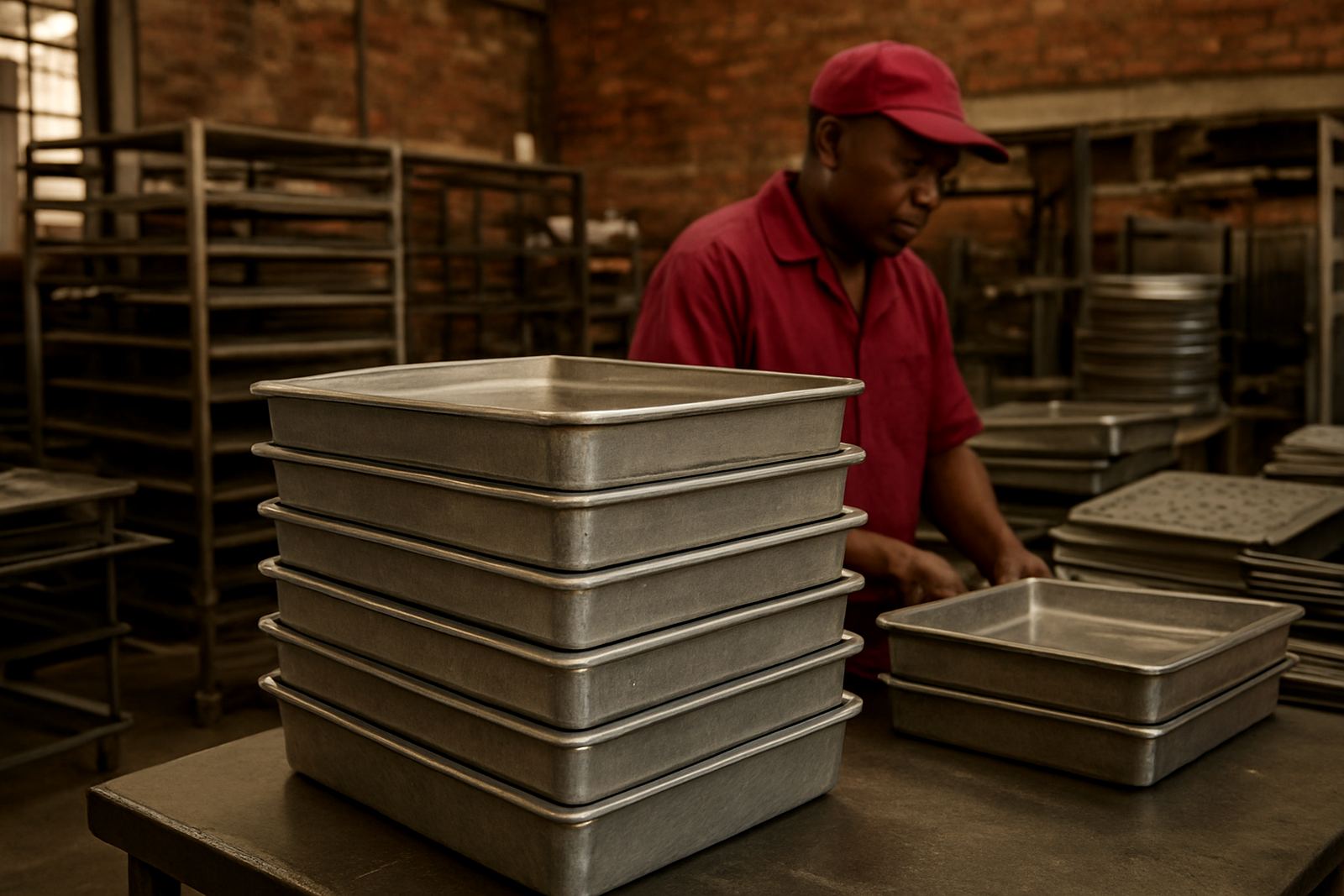
In a bakery, equipment has to cope with quick turnarounds, stacking, heat and regular handling by staff on early shifts. Mild steel gives a firm shape and predictable bake results, and when the dimensions are right it can stay in service for years. It is a practical choice for bakeries in Johannesburg South, Alberton and Germiston where production often runs from pre-dawn to late afternoon with little time for special handling.
Where mild steel outperforms lighter alternatives
For many bakeries, the real value is not the upfront price alone but how the bakeware behaves in a working plant. Mild steel has enough mass to sit flat in the oven, transfer heat evenly and keep its shape when trays are loaded and unloaded throughout the day.
It is especially useful where pans are copied from an existing sample, or where a bakery needs a batch of matching pieces for a new line. If a lid has to fit neatly over a BO3, BO4 or BO5 pan, or if tray edges need to align for stacking, mild steel is a straightforward material to work with. It also suits quick turnaround batch reorders, which helps when a pan set goes out of rotation unexpectedly.
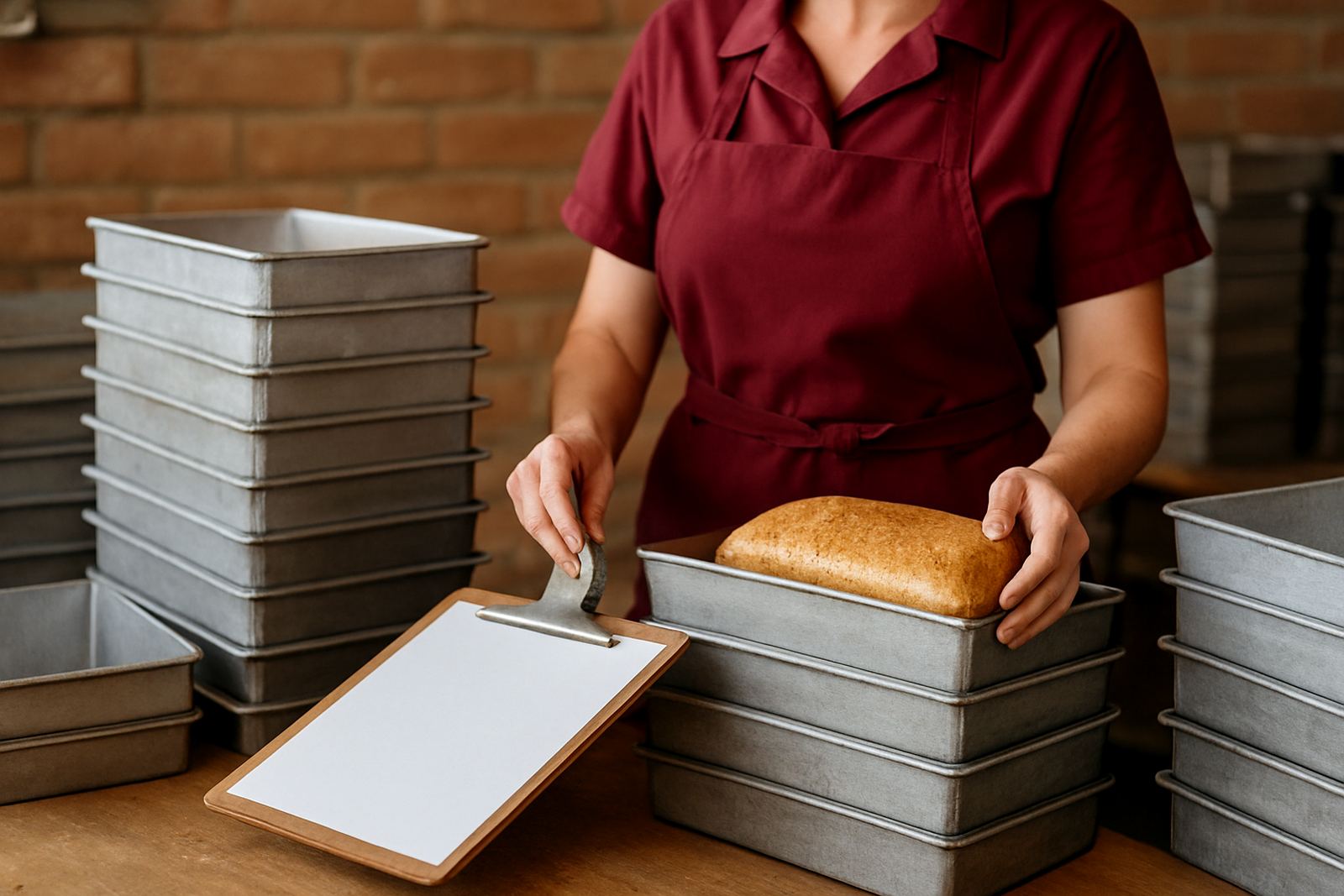
- Good for standard bread pans and loaf tins
- Suitable for lids, covers and fitted top pieces
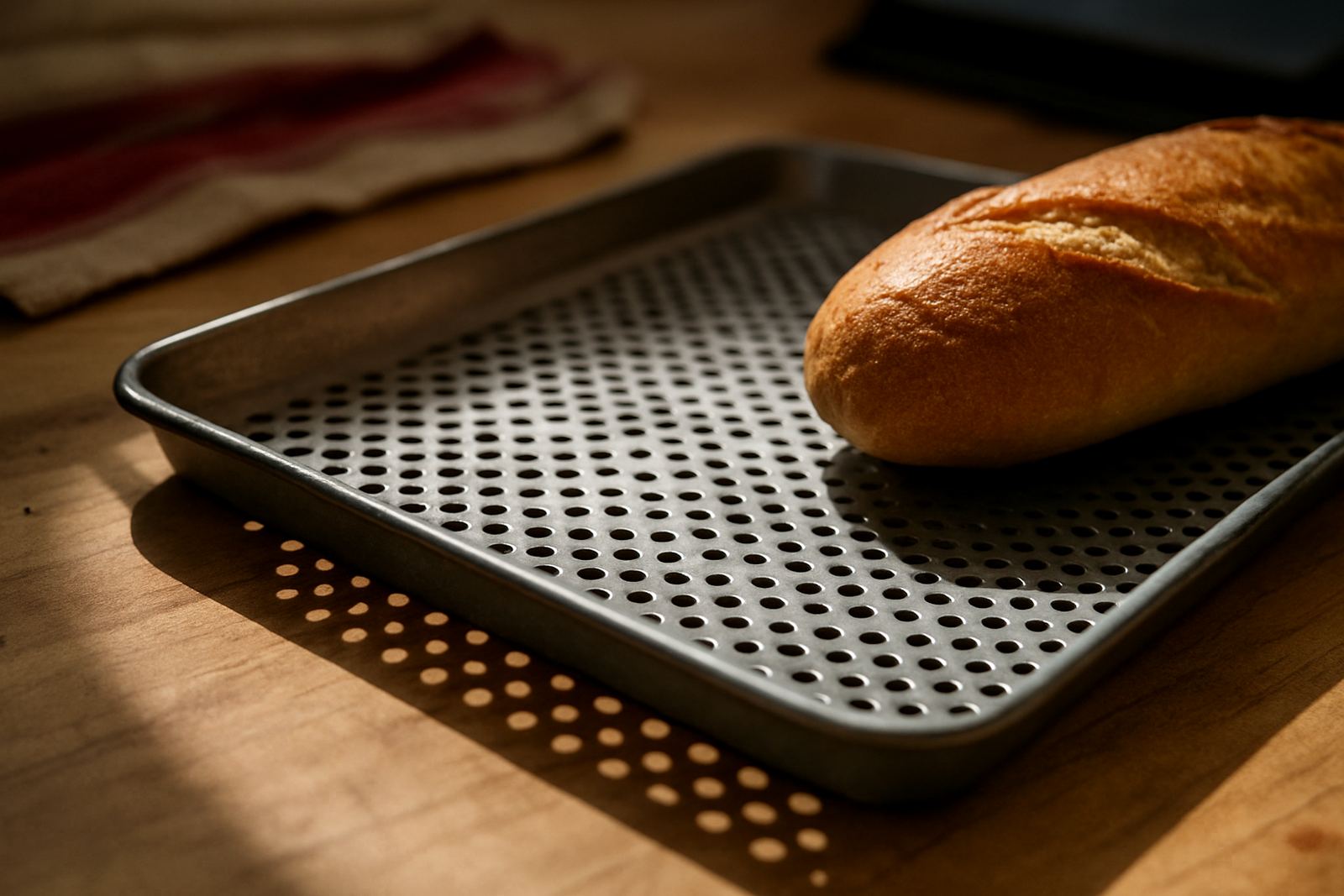
- Works well for perforated tray production
- Can be formed into baguette trays and divider inserts
- Useful for heavy gauge builds where extra stiffness is needed
Heat, seasoning and cleaning in a South African bakery
Mild steel bakeware needs the right handling, but that is not a drawback if the team knows the routine. A light seasoning layer helps protect the metal and improves release, while proper drying after washing reduces rust risk. In coastal humidity or in hot wash areas, that matters more than many owners expect.
Bakeries in Gauteng often run hard during load-shedding too, which means production windows can get tight and cleaning shifts become rushed. That is when simple equipment is useful. Mild steel does not ask for special detergents or complicated care, just consistent cleaning, drying and storage. If trays are stacked while still damp, the finish will suffer, so a basic drying rack and a clear end-of-shift process go a long way.
- Wash, dry and store the same day where possible
- Keep a light oil or seasoning layer where suitable
- Avoid long soaking in water or strong chemicals
- Check welded corners and folds for trapped moisture
Matching the pan to the loaf, tin or tray line
Good bakeware is about fit first, then finish. If the pan is too light, it can distort. If it is too deep or too narrow, the loaf profile changes and the oven space is wasted. That is why size matching matters so much for bakeries that want consistent slices and regular proofing results.
We often see bakeries in Alrode and Boksburg bringing in an old pan or a sample tray for copying, then asking for small changes in lip height, gauge or handle shape. Those small changes can make a big difference to handling on the line. For example, a slightly stronger rim can help when staff are moving trays quickly between prover and oven, while a fitted lid can help protect dough during transport inside the plant.
- Size matching for existing bread pans and lids
- Pan copying for worn or discontinued pieces
- Divider inserts for portion control
- Baguette forming for long loaves and roll production
When to choose heavier gauge mild steel
Not every bakery needs the same thickness. A small retail bakery in Soweto may want lighter pans for easier handling, while a bigger wholesale operation in Midrand may need heavier gauge pieces that can handle long runs and repeated stacking. The right gauge depends on the oven, output and how often the equipment moves around the bakery floor.
Heavier gauge mild steel is often worth it where the bakeware sees daily use on batch reorders and the team wants less flex under load. It can also help where pans are used on rougher surfaces or where trays are swapped fast during peak periods. In practical terms, a slightly heavier pan may cost more at the start but can reduce warping and early replacement. That is often the better trade over time.
A local example from Alrode production
A bakery in the Alrode and Germiston area may start with a few standard loaf pans, then add perforated trays for rolls and baguette trays as orders grow. Once production increases, the challenge is usually not oven space only, but keeping every piece the same size so the proofing racks, ovens and dispatch area all work together.
In a case like that, mild steel makes sense because it can be copied from the original pans, adjusted for lid fit and built in repeating batches. If a bakery changes the bread spec or needs a heavier tray for a new line, the same material can be used to keep the whole set consistent. That consistency matters when staff are working early mornings, the generator is running and dispatch timing is tight. A small mismatch can slow the whole line down.
What to ask before ordering mild steel bakeware
Before placing an order, it helps to ask the practical questions. What bread size is being baked, how many pans are needed per batch, and will the pans be handled by hand or on trolleys? These details affect gauge, lip design and whether the finish should prioritise easy release or longer wear.
For bakeries ordering across Alberton, Boksburg, Soweto or Midrand, it is also worth confirming transport and storage conditions. Moisture, heat and stacking habits all influence how mild steel performs. A clear brief saves time and avoids returns, especially where batch reorders or prototype runs are involved.
- Give the exact internal and external measurements
- Confirm whether a lid or divider insert is needed
- State the oven type and batch size
- Say how the pans will be cleaned and stored
- Ask for the gauge that suits the duty cycle, not just the cheapest option
When the brief is clear, mild steel bakeware stays one of the most practical choices for South African bakeries. It is straightforward to make, easy to match and suited to real production conditions where time, heat and handling all matter.