Why Lid Fit Matters Before the First Bake
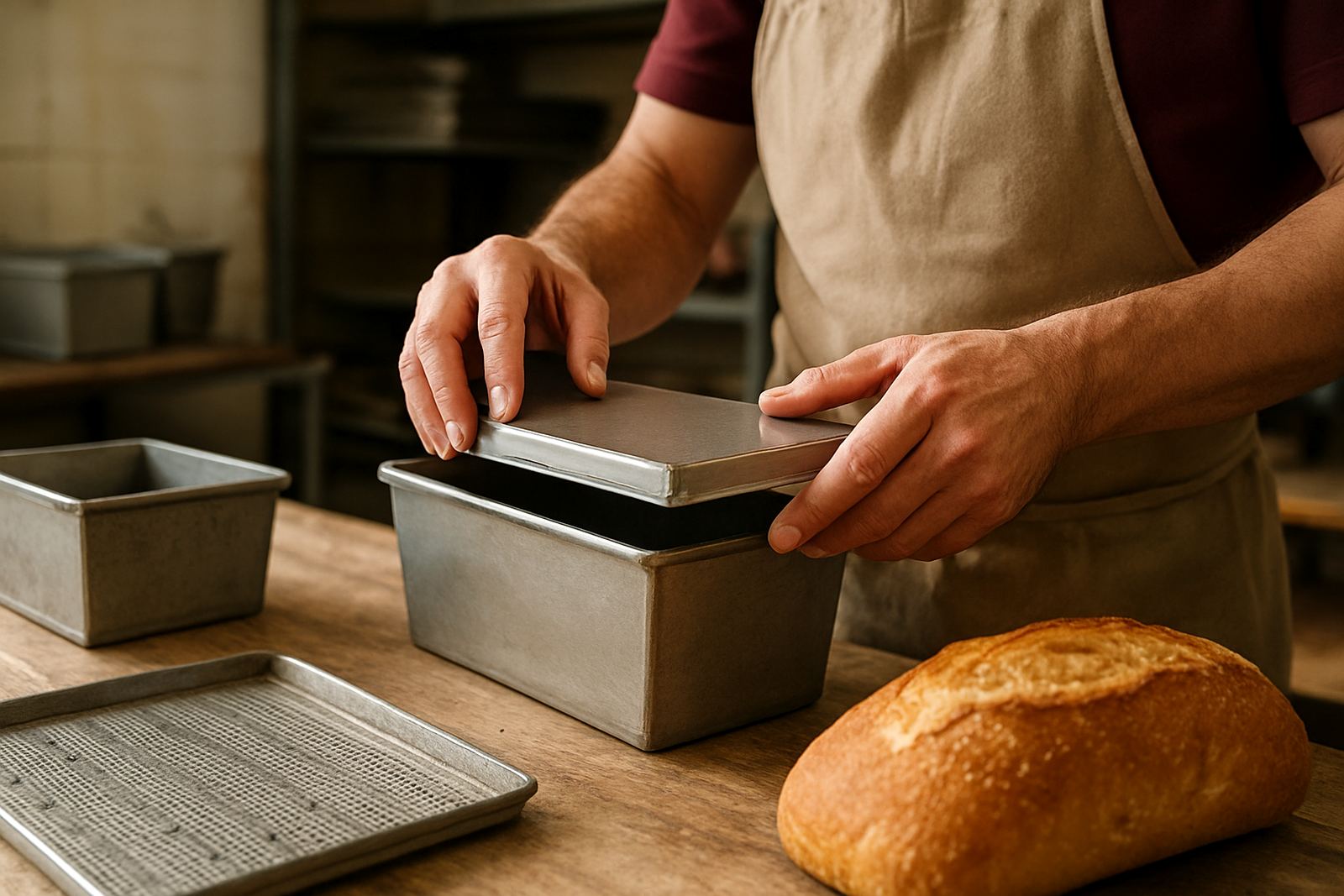
On a bread pan, the lid is not just a cover. It helps shape the loaf, controls the top crust, and keeps the pan safer to handle when you are moving full trays around the plant. A loose lid can shift during proving or baking, while a lid that bites too hard can slow production and damage the pan edge over time.
In Johannesburg South and the surrounding industrial areas, many bakeries run long shifts and turn pans through the same line again and again. That means lid fit has to work on day one and still work after repeated heating, washing, and stacking. If the lid is not right, the issue is not small. It affects product consistency, staff safety, and how cleanly the loaf releases after bake out.
- Loose lids can rattle, lift, or slide when pans are moved.
- Tight lids can jam after heat expansion or minor distortion.
- Poor fit can leave marks on the loaf top or lid edge.
- Repeated forcing can wear the pan faster than necessary.
Signs a Lid Is Too Tight or Too Loose
A quick check on the floor tells you a lot. If staff need two hands and a hard push to close the lid, the fit may be too tight. If the lid sits high, rocks from side to side, or can be lifted easily after closure, it is probably too loose. Both problems can happen on new pans and on older stock that has been bent by rough handling.
Look closely at the corners, the side walls, and the hinge or locking points if the pan has them. Small changes in shape matter. A lid that looks fine on the bench can open slightly once the metal heats up in the oven. That is why a test should be done under working conditions, not only in the workshop. In hot months, especially on the East Rand, steel can move just enough to show up the next morning.
- Check if the lid closes without forcing the frame.
- Lift the filled pan gently and listen for movement.
- Watch for steam leaks or uneven crust colour.
- Mark pans that need repair instead of sending them back into full production.
How to Test a Lid Fit on the Bakery Floor
Testing should be simple, repeatable, and done with the same process your staff uses every day. Start with a clean pan and lid. Check for dents, bent edges, weld marks, and any build-up from flour, oil, or burnt residue. Even a thin layer of grime can fool the eye and make a good lid seem faulty.
Then close the lid by hand and confirm that the edges meet evenly. A proper test also includes a filled pan and a normal proving cycle. If the pan goes through humid conditions in summer, or a long holding period during load-shedding, test it there as well. Heat and standing time can change the way the lid sits.
- Use the same fill level you use on production.
- Test after proving, not only when the pan is cold.
- Move the pan from bench to trolley to oven to see if the lid shifts.
- Record which batch, shift, and oven line gave the problem.
That record helps the production foreman and the customer care team spot whether the issue is the pan, the lid, or the way the line is handling it.
Local Conditions That Affect Fit in Gauteng Bakeries
Factories in Alrode, Germiston, Boksburg, Soweto, and Midrand all face the same basic problem with bakeware, but the working conditions differ. Dust, temperature swings, humidity, and repeated washing all influence how a lid performs. In some plants the pans are stacked before they are fully dry, which can leave a fine film of rust or residue on the contact points. That small change can make a lid feel wrong.
Municipal rules on food premises and waste water also matter. If wash-down areas are not managed properly, build-up around the cleaning station can end up back on the pan edges. In coastal areas the moisture is worse, but even inland, a hot day followed by a cold evening can shift the fit. It is worth checking lids after the pans have been cleaned and stored for a full cycle, not only right after fabrication.
For bakeries working through load-shedding, there is another point. When pans sit longer in a warm room, dough movement and metal expansion both change. A lid that seemed fine at 7 am may need checking again later in the day. That is why a batch that was approved in the morning should still be checked at the end of the shift.
What To Do When the Fit Is Not Right
If the lid does not sit properly, do not force it into the line and hope for the best. First separate the problem pans and inspect them for bends or damage. Sometimes the fix is simple, like cleaning the contact surfaces or straightening a light distortion. Other times the lid or pan needs to be remade to the correct size. A quick repair may save the shift, but it should not hide a bad size match.
For bakeries that reorder in batches, consistency matters just as much as the first sample. If one pan copies well and the next run does not, the issue needs to be traced back to the dimensions used, the material gauge, or the forming method. A clean prototype run and proper lid fitting check can prevent repeat complaints from the pack room and dispatch. It also helps reduce waste, because fewer loaves are rejected for top marks or uneven finish.
- Set aside any pan that needs pressure to close.
- Check whether the lid has twisted or the rim has bowed.
- Compare the bad pan with one from an older batch that still fits.
- Ask for a fresh size match if the whole batch is off.
A Simple Routine for Better Loaf Finish and Safer Handling
A practical lid-fit routine does not need to slow production. It just needs to be part of the normal check before the pans go back onto the floor. A short inspection at receiving, another after cleaning, and a third during the first bake of a new batch can prevent bigger trouble later. That is especially useful for bakeries that handle high volumes and cannot afford to stop the line for one bent lid.
In our experience, the best results come from regular checks, clear batch records, and proper fitting from the start. Thabo and the team have found that when a lid is matched to the pan properly, staff handle the trays with more confidence and the finished loaves look cleaner. It sounds small, but in a busy bakery small faults become daily losses quite fast. Get the fit right and the rest of the process runs with less fuss.
If you are running BO3, BO4, or BO5 pans, or you are testing a new tray pattern, it pays to check the lid before the full batch goes out. One lid that sits correctly can save a lot of man hours later on, and it keeps the bakery moving without avoidable delays.