What a 4 channel baguette tray does in daily baking
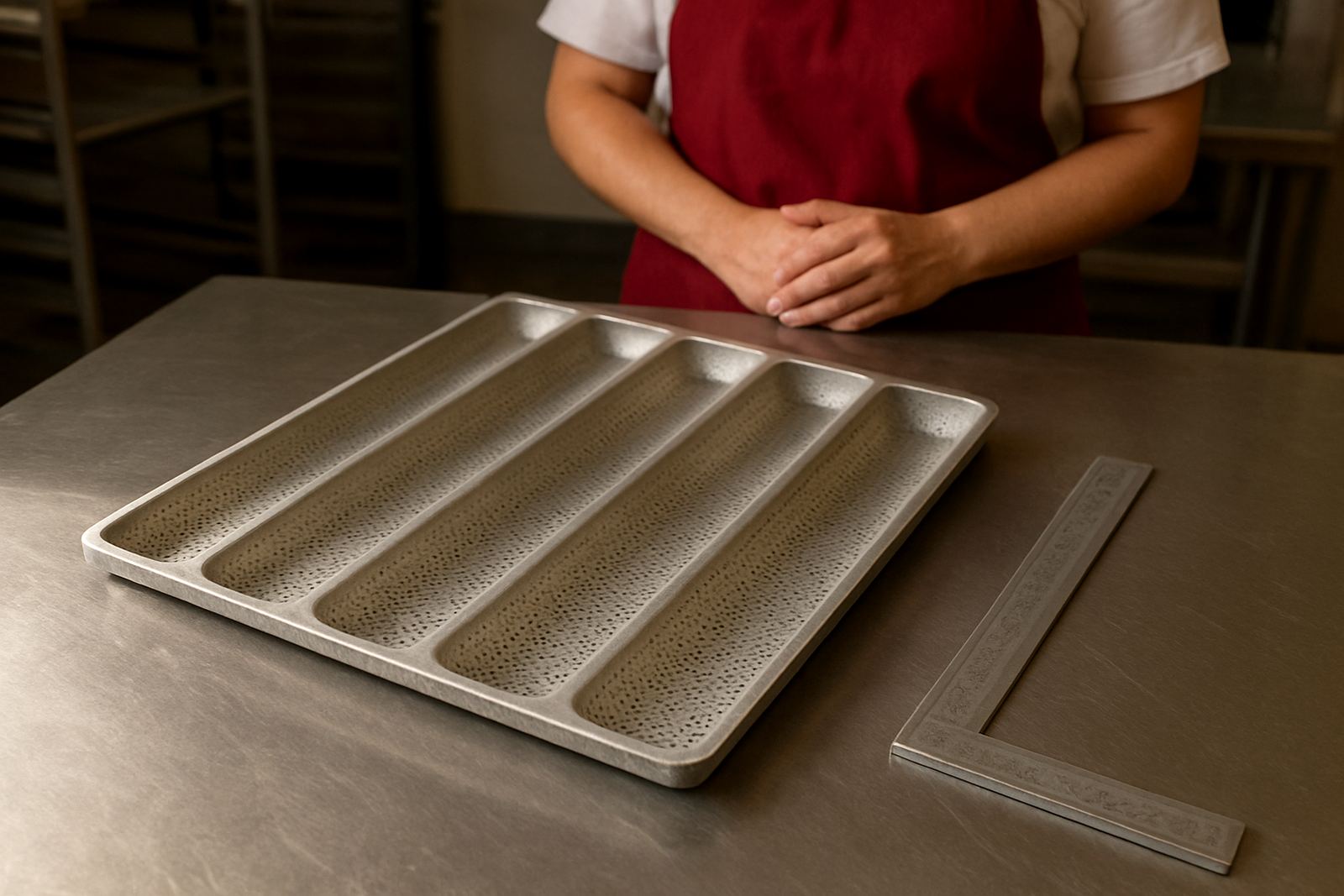
This tray is made to carry four baguette pieces in fixed shaped channels, helping the dough keep a cleaner form while it proofs and bakes. The channels guide the loaves so they bake with better side support than a flat tray, which is useful when you are running regular production and need the same size from tray to tray. For bakeries in Alrode, Germiston, Boksburg and Midrand, that consistency matters when orders move fast and staff rotate through the shift.
The 4 channel layout also helps you get more usable output from each oven load without wasting floor space or rack space. It is a practical choice where you want a neat baguette profile, controlled spread and less handling before loading. In humid coastal conditions, or in kitchens where dough softens quickly, the formed support can help reduce misshaping before the bake starts.
Tray sizes, channel styles and build options
We make baguette trays to suit common bakery oven and rack sizes, and we can match them to your current bake pattern. Typical tray length and width can be set to suit your oven shelf or trolley, with channel depth and spacing chosen to suit the dough weight you are running. If you need a tray copy from an older sample, we can work from that and keep the same external size, or adjust it where the old format no longer suits your line.
- 4 channel layout for increased output per tray
- Formed support channels for better loaf shape
- Perforated or solid base options depending on bake style
- Heavy gauge builds for repeated commercial use
- Custom length, width and channel spacing on request
We can also discuss divider inserts, batch reorders and prototype runs if you are setting up a new product line. Some bakeries want a lighter tray for quick movement, while others want a heavier gauge build for rough daily handling and longer life, especially where trays are stacked often or moved between prep and oven areas many times a day.
Where this tray suits best
The 4 channel baguette tray suits wholesale bakeries, supermarket suppliers, café bakeries and production kitchens making baked rolls or baguette style products in batches. It is a strong option where the oven is already working near capacity and the team needs a tray that supports speed as well as shape. If you are supplying schools, guest houses, canteens or retail counters around Johannesburg South, a tray like this can help keep portioning tidy and baking predictable.
It also suits businesses that need repeat orders and simple stock control. When the tray format stays fixed, staff can pack dough pieces the same way every time, which helps with bake timing and product weight. If your product line changes through the week, we can look at size matching so the tray works with your current moulding or shaping method, no need to redesign the whole process.
- Retail bakery production
- Wholesalers supplying local shops and cafés
- Institutional kitchens with fixed output schedules
- Production lines needing faster loading and unloading
Installation, oven fit and utility needs
This tray does not need gas or electrical connection. It is a passive bakeware item, so the main checks are oven clearance, rack spacing and handling access. Make sure your oven shelf or trolley can take the tray length with enough room for safe loading and removal, and check that the tray can be turned or lifted without catching on side rails. In tighter rooms, especially in older units around Germiston or Alrode, a few millimetres can make a big difference to loading speed.
If you are running on gas ovens, electric deck ovens or fan ovens, the tray itself stays the same but the bake result can change with heat flow and airflow. That means we ask what oven type you use, what loaf weight you are baking and whether you need perforation for extra base colour or a solid tray for softer support. For new setups, a factory consultation helps avoid buying trays that are right on paper but awkward in the real kitchen.
Care, cleaning and service life
Tray life depends on cleaning, storage and how hard the trays are handled. Keep them dry after washing, especially if you work in coastal humidity or store trays near wash-up areas. Mild steel and other metal bakeware should not be left wet overnight, as rust starts quicker than many teams expect. If the trays are coated or treated, avoid harsh scrubbing pads that can damage the surface and shorten service life.
For daily use, it helps to set a simple routine: brush out crumbs, wash with suitable detergent, dry properly and stack carefully. Bent corners, warping and rough welds should be checked early because small damage can turn into tray jamming or uneven baking. If a tray starts to lose shape, send it in for assessment before it affects the full batch. It saves money and keeps production steadier, which matters when load-shedding or tight dispatch windows already put pressure on the shift.
- Do not store trays while still damp
- Check channel shape and tray flatness regularly
- Keep stacks even to avoid twist and bending
- Report damage early for repair or replacement advice
What to check before placing an order
Before you order, please confirm the product length and width, channel width, channel depth and the dough weight you plan to bake. If you are replacing an old tray, send the sample size or the outside dimensions first so we can match it properly. It also helps to know whether you want perforated base sections, a heavier gauge for long service, or a standard build for lighter handling. If the tray must fit a particular oven rack, include that measurement too, not just the product size.
For repeat production, tell us how many trays you want per batch and whether you need spares for busy periods. Some bakeries order a small prototype run before committing to a larger set, and that is often the safer route when the loaf size or proofing time is still being tested. We can also assist with copy work from existing trays, which is useful when a line has been running for years and the current format still works, but the old stock is worn out.
- Outside tray dimensions
- Channel count and channel width
- Perforated or solid base requirement
- Oven type and rack spacing
- Order quantity and repeat schedule
Johannesburg production support and ordering
Bakery & Catering Equipment works from Alrode in Johannesburg South, serving bakeries in Alberton, Germiston, Boksburg, Soweto and Midrand as well as surrounding Gauteng areas. Our team handles size matching, pan copying, tray perforating, baguette forming and batch reorders, so you can keep your bakery running without chasing different suppliers for each job. For practical ordering and follow-up, contact orders@bakerycateringequipment.co.za with the tray size, quantity and any sample measurements you have.
If you are comparing tray options for a new product line, or replacing older bakeware that no longer holds shape, we can talk through the fit before production starts. That keeps the order simple and helps avoid delays at dispatch, especially when production is already planned around early-morning baking and next-day deliveries.
Key facts
| Product | 4 Channel Baguette Tray |
|---|---|
| Channels | 4 formed channels per tray |
| Material | Mild steel or specified heavy gauge build |
| Base Options | Solid or perforated |
| Custom Sizes | Made to match oven rack and product size |
| Use | Commercial baguette and shaped bread production |