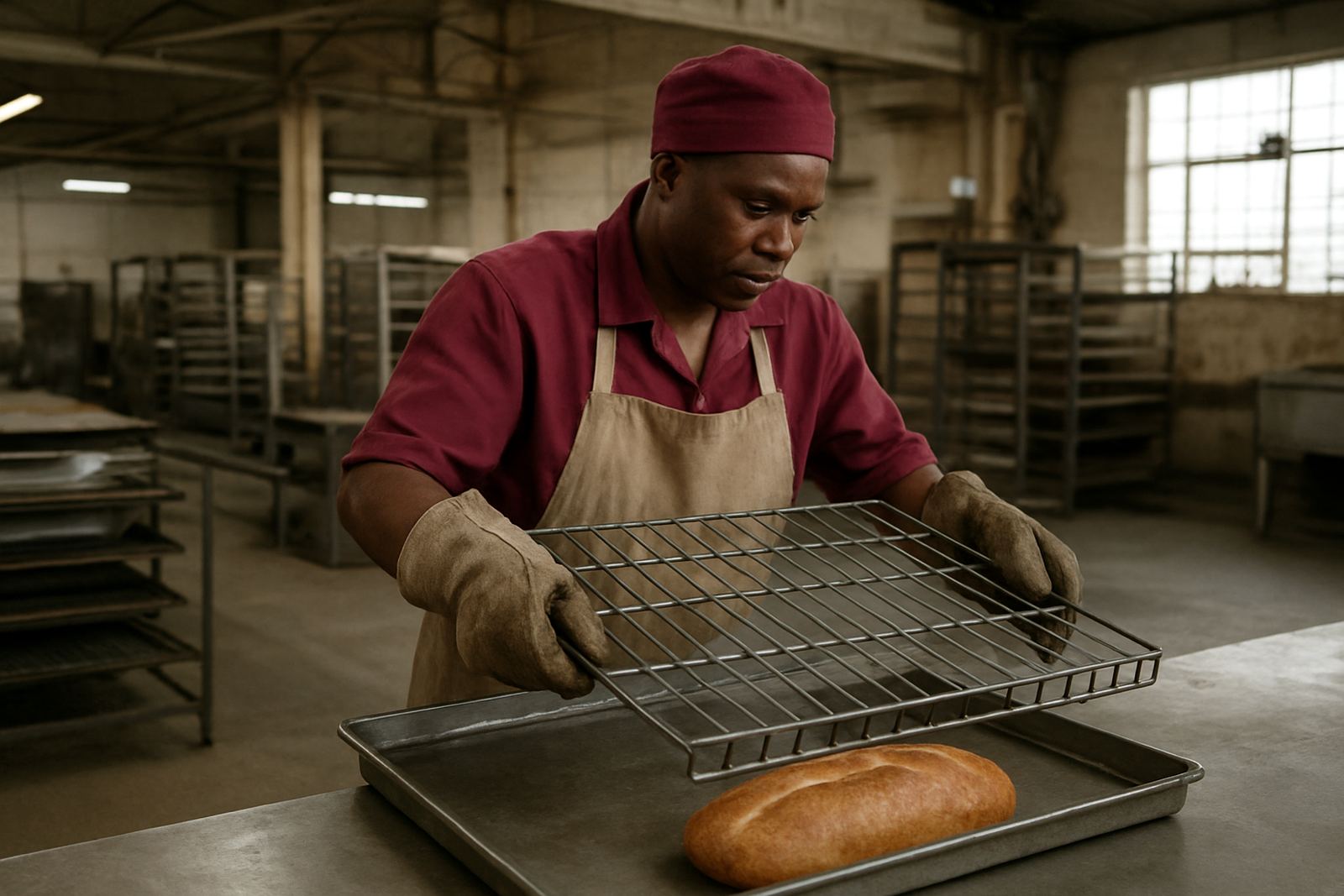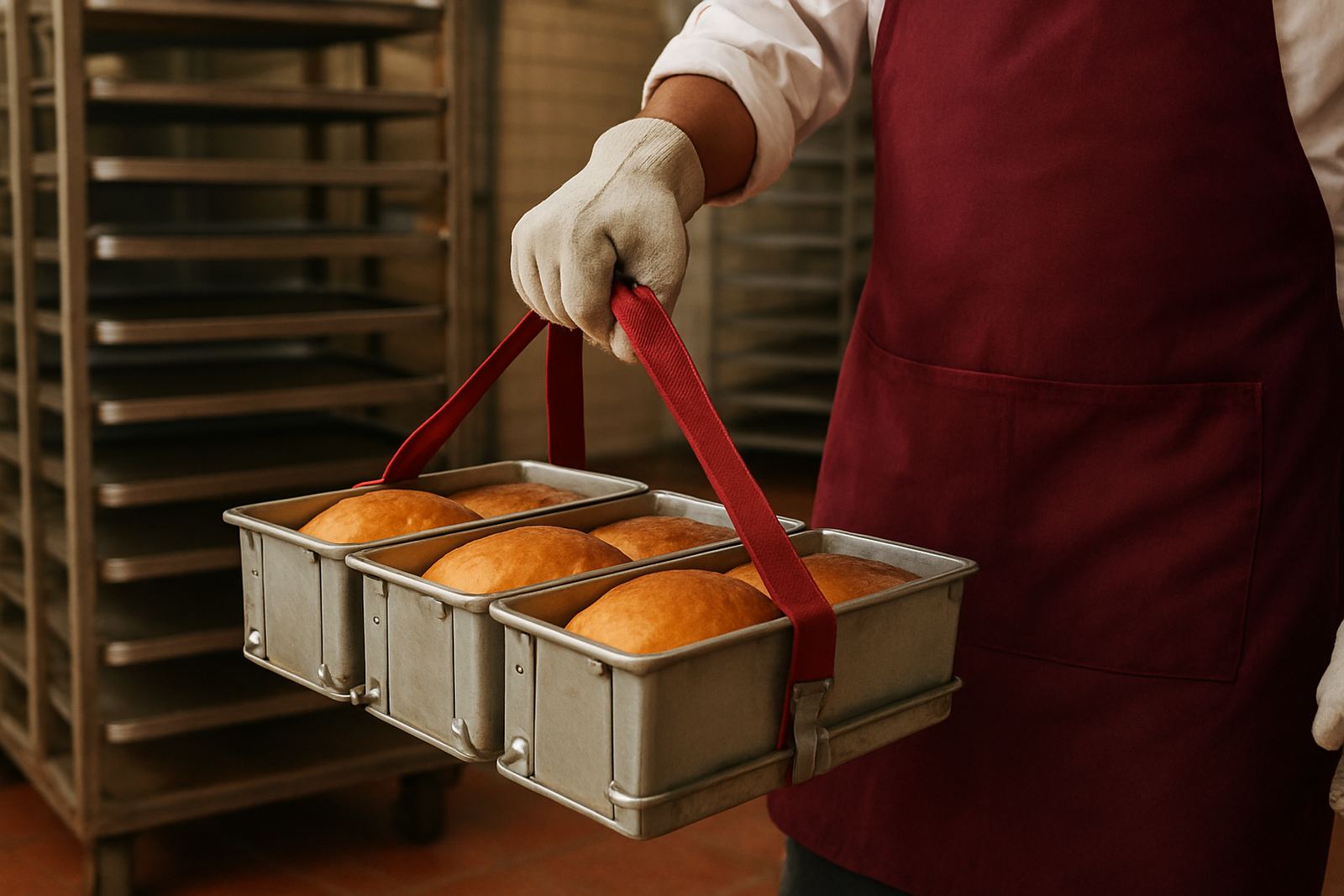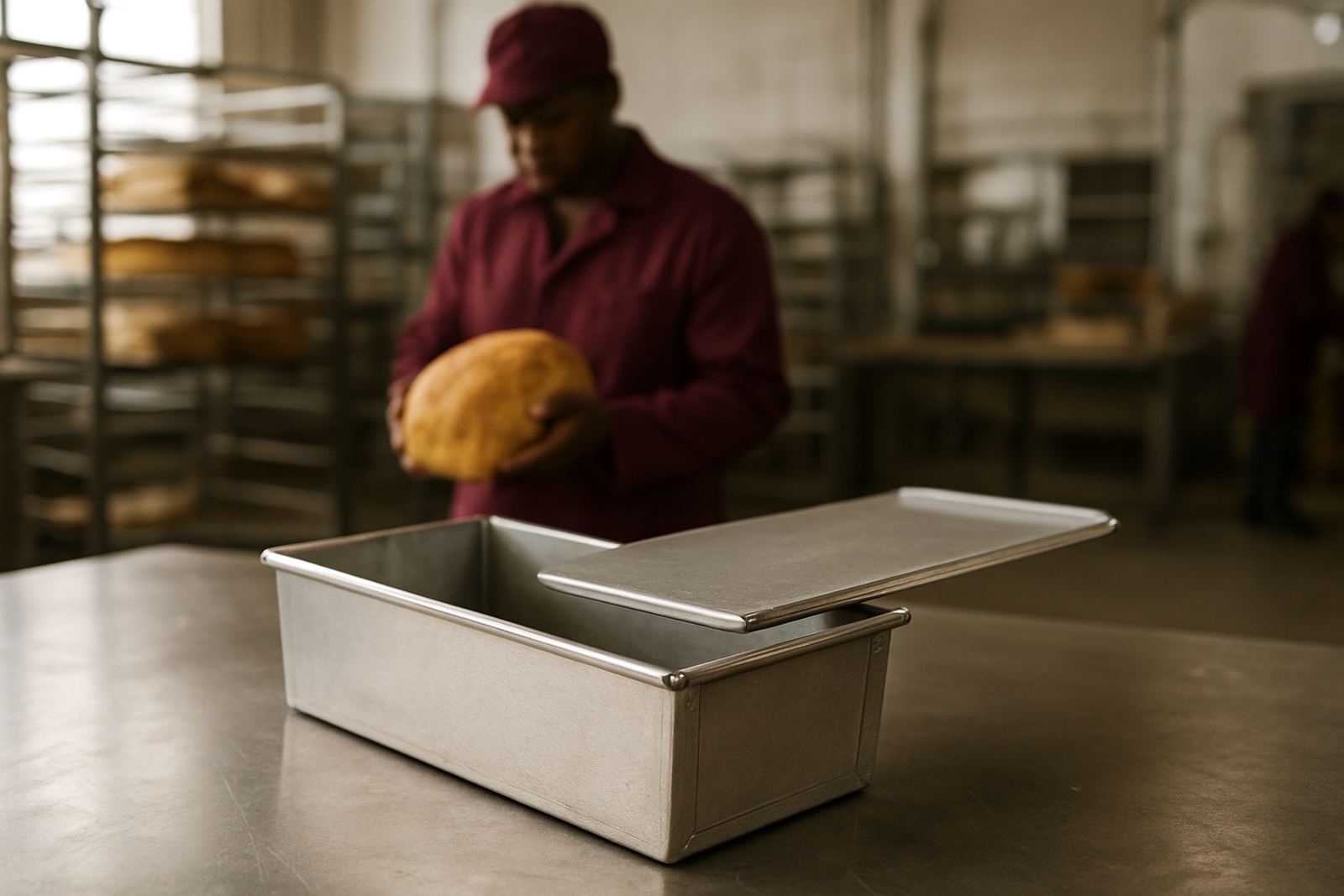
What a Pullman Pan Does in the Bakehouse
A Pullman pan is a closed or lidded loaf pan used for square bread, sandwich loaves and other breads that need a uniform shape. The cover helps the dough rise in a controlled way, so the loaf bakes with straighter sides and a flatter top. That makes slicing easier and gives a neater pack finish for shops, school orders and catering runs.
In busy bakehouses around Alrode, Germiston and Boksburg, the main value is consistency. A loaf that comes out the same size every batch is easier to slice, count and wrap. It also stacks better in crates and cooling racks, which saves space during peak production. For bakeries working during load-shedding or on generator power, that consistency matters because you do not want to waste a batch on uneven rise or poor pan fit.
Standard Sizes, Lid Options and Build Choices
We manufacture pullman pans in standard bakery sizes and can make pans to match your current tray line or divider setup. The pan body and lid are made for repeat use and can be supplied in mild steel for general bakery work. For special production runs, we can also copy an existing pan, adjust the depth, or fit a lid that closes correctly without crushing the dough.
- Standard square loaf profiles for sandwich bread and sliced bread
- Custom lengths and depths for your mix and batch size
- Lidded or covered style depending on your rise requirement
- Heavy gauge builds for high-volume production
- Batch reorders for bakeries with regular replacement cycles
If you already bake in BO pans and want a cleaner slice profile, we can check the dimensions against your current proofing baskets and oven space. A small mismatch can cause sticking or a loaf that overfills, so it is worth checking before you place the order.
Where Pullman Pans Work Best
These pans suit bakeries that produce sandwich loaves, school loaves, toasted bread and other sliced products where a square finish is useful. They are also practical for catering kitchens that want even slices for sandwiches, canapés or plated service. In Johannesburg South, many bakeries use them for wholesale bread orders where presentation and portion control matter.
Pullman pans are also a good fit for bakeries near the coast, including Durban routes and parts of the Eastern Cape, where humidity can affect proofing and handling. The covered pan helps keep the loaf shape controlled, though the dough still needs the right proof time. It is not a cure for poor dough handling, but it does help the bakery get a cleaner result.
- Wholesale bread production
- Sandwich loaf lines
- Catering and school contracts
- Retail loaves with neat slice edges
Oven Fit, Power Needs and Production Setup
A pullman pan itself does not need power or gas, but it must match the oven and production line around it. The pan height, lid clearance and tray spacing must suit your deck oven, rack oven or convection oven. If the pan is too tall for the oven cavity, the loaf may catch the top heat or the lid can interfere with loading. That becomes a problem when you are baking through a full shift and moving trays fast.
For bakeries using gas ovens or backup generators, the pan should be light enough to handle safely but strong enough for repeated use. We always check the dimensions against your oven shelves, proving room and cooling space. If you are in a municipality with strict ventilation or heat extraction requirements, it helps to plan the full line before ordering new pans.
Care, Cleaning and Servicing in Daily Use
Pullman pans should be cleaned and dried properly after each shift. In humid areas and coastal storage rooms, moisture left on mild steel can cause rust spots quickly. A light coating and dry storage helps extend the life of the pan, especially if you are baking every day. Avoid harsh scraping that bends the lid edges or distorts the body, because once the fit goes off the loaf will not bake square.
For bakeries that bake large volumes, regular servicing is mostly about checking the lid fit, side straightness and any hot spots from repeated oven use. If a pan starts warping, it can be repaired or replaced before it affects production. We often see this in bakeries that run batch after batch with no spare set, so it pays to keep one or two backup pans on hand.
- Wash and dry immediately after use
- Store in a dry place away from floor moisture
- Check lid movement and side alignment weekly
- Replace bent or warped pans before they affect loaf shape
What to Check Before You Order
Before ordering a pullman pan, measure the loaf size you want, the oven shelf space and the proofing volume you use. If you are copying an existing pan, send us the inside and outside measurements, lid type and metal thickness if you know it. Also tell us whether the pan is for hand-moulded dough, divider output or a specific recipe because that changes the finished loaf height.
It also helps to confirm how many pans you need per batch and whether you want one-off prototypes or a full production run. Bakeries in Alberton, Midrand and Soweto often order a small test batch first, then place a larger reorder once the loaf shape has been approved. That avoids waste and keeps the line moving.
- Internal length, width and depth
- Lid style and closing method
- Required gauge or strength
- Batch quantity and reorder plan
- Whether the pan must match an existing mould
Key facts
| Product type | Covered loaf pan for square bread |
|---|---|
| Material | Mild steel, heavy gauge on request |
| Finish | Plain bakery finish for regular use |
| Options | Standard sizes, custom copy, lid fitting |
| Use | Sandwich loaves, school loaves, catering bread |
| Supply area | Alrode, Gauteng and nationwide by order |