Why moisture is a problem on bakeware
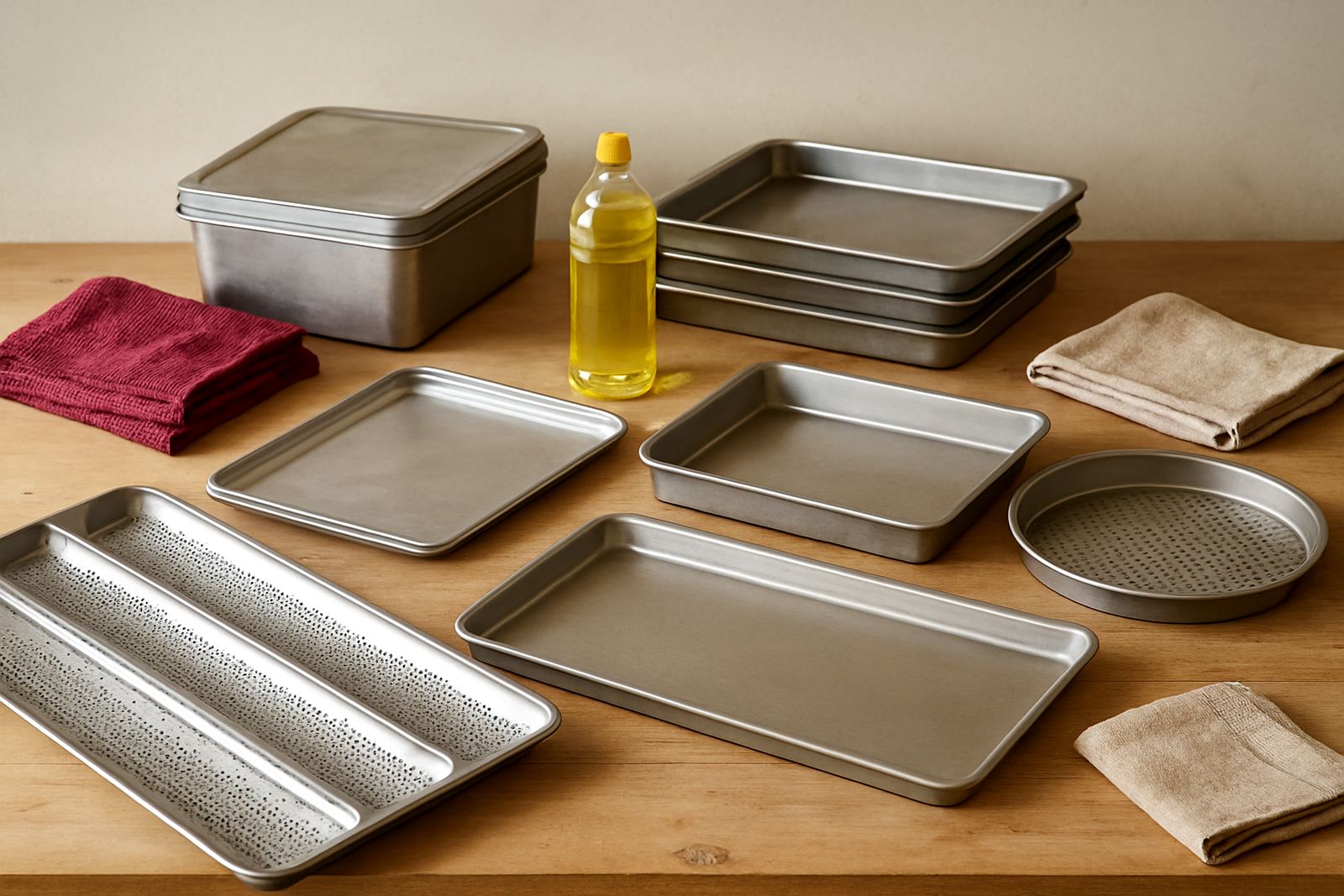
Water left on bread pans, lids, perforated trays and baguette trays does more than leave marks. It starts surface rust on mild steel, weakens any protective finish over time, and can leave a damp smell that transfers to dough proofing areas. In busy bakeries around Alrode, Germiston and Boksburg, trays often get stacked fast after washdown and that trapped moisture has nowhere to go.
If pans are put away still wet, the problem grows overnight. By the next shift you may find sticking on the first bake, dark spotting on corners, or trays that rattle with loose flakes. A dry surface also helps you spot damage early, such as bent rims, cracked corners or worn fittings on lids and divider inserts.
Start with drainage, not just wiping
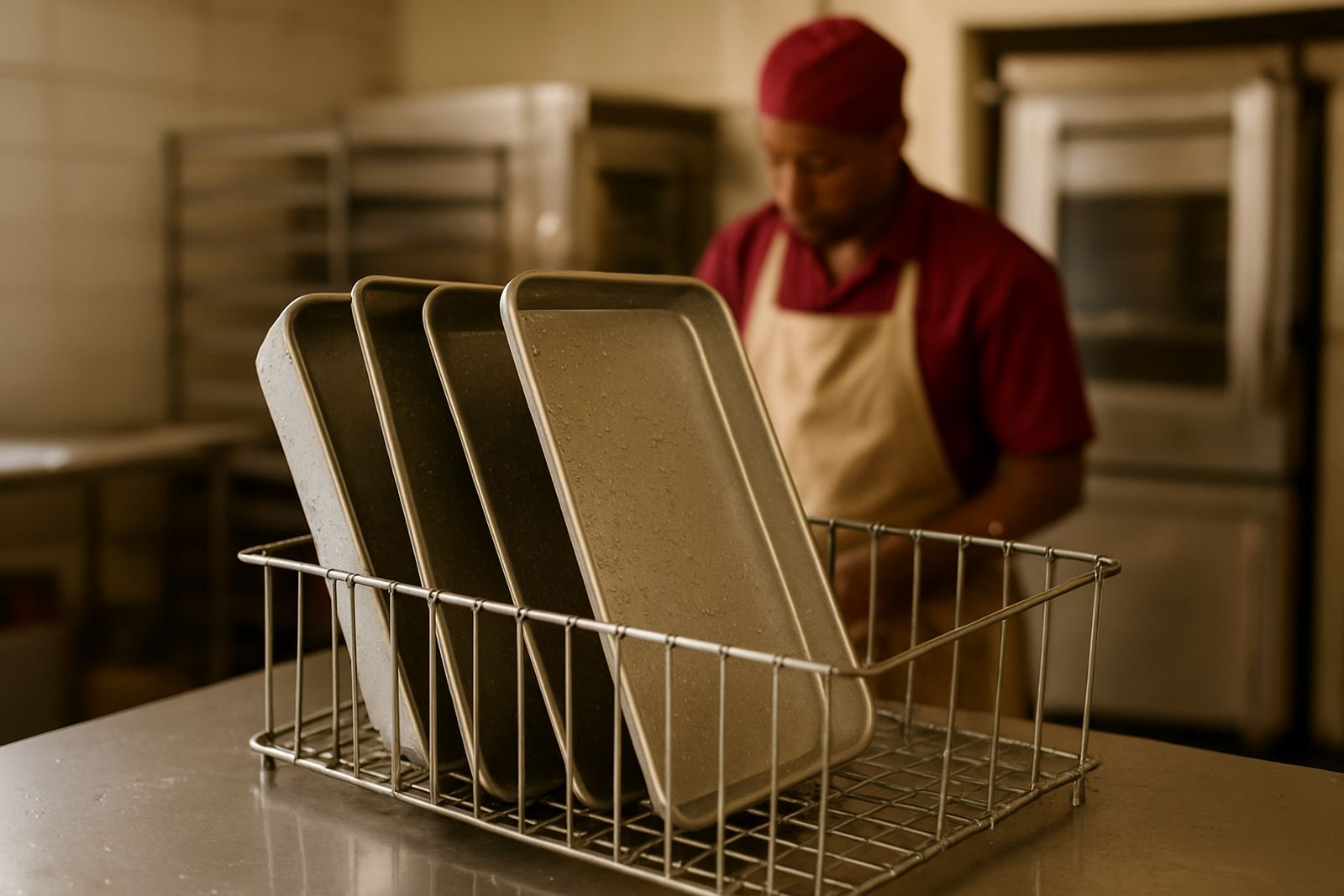
The first step is to let the water run off before any towel work starts. After washing, stand each item at an angle so water drains from the base, corners and rolled edges. Do not stack flat while the metal is still wet. That traps water between contact points and leaves a hidden damp patch even if the top looks dry.
For deep bread pans and heavy gauge builds, tip them so the longest edge is lower and the open face can breathe. Perforated trays need special attention because water sits in the holes and on the underside. A quick shake helps, then stand them on edge with space between each piece.
- Shake off excess water before the first wipe
- Stand pans and trays on racks, not on a flat table
- Keep air gaps between pieces so steam can escape
- Do not nest wet items together
The drying routine that works between shifts
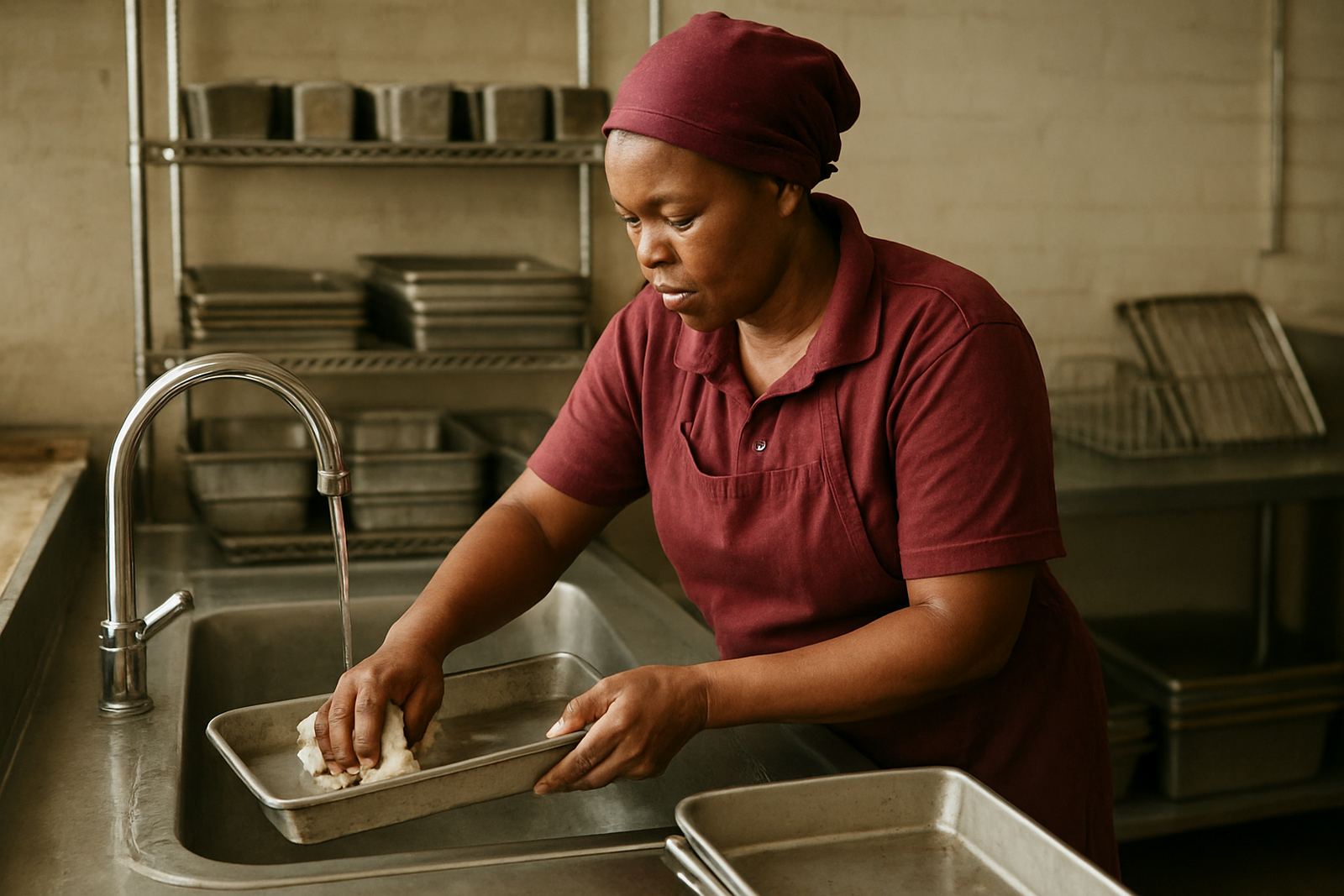
A simple routine is usually enough if it is done every time. First, rinse away detergent fully. Then dry with a clean lint free cloth, paying attention to seams, folded lips and corners. After that, leave the items in moving air for a short while before stacking. If the plant has a fan or an open dispatch area, use it. Even a modest breeze helps far more than hand wiping alone.
For bakeries running through load-shedding or power cuts, plan for no-electric drying as well. Keep a towel set and a few wire racks near the wash point. If the area gets cold and damp, extend the air dry time. Better to wait fifteen minutes longer than pack a wet tray into storage and deal with rust the next morning.
Pay extra attention to hidden water traps
Some parts stay wet long after the obvious surfaces look fine. Lid folds, tray rims, reinforced corners and perforation holes all hold water. Divider inserts can also keep moisture in their channels. These are the places where rust usually starts first. A quick visual check is not enough, run a finger along the edge and you will often feel the cool damp patch that your eye missed.
- Check inside rolled edges and folded hems
- Dry the underside of perforated trays hole by hole where needed
- Open lids fully so both faces can dry
- Separate matching pieces before packing
If you use copied pans or fitted lids, make sure each mating surface is dry before nesting. A little trapped water between matched parts can stain the contact area and make the fit feel tighter the next day.
How to store dry bakeware properly
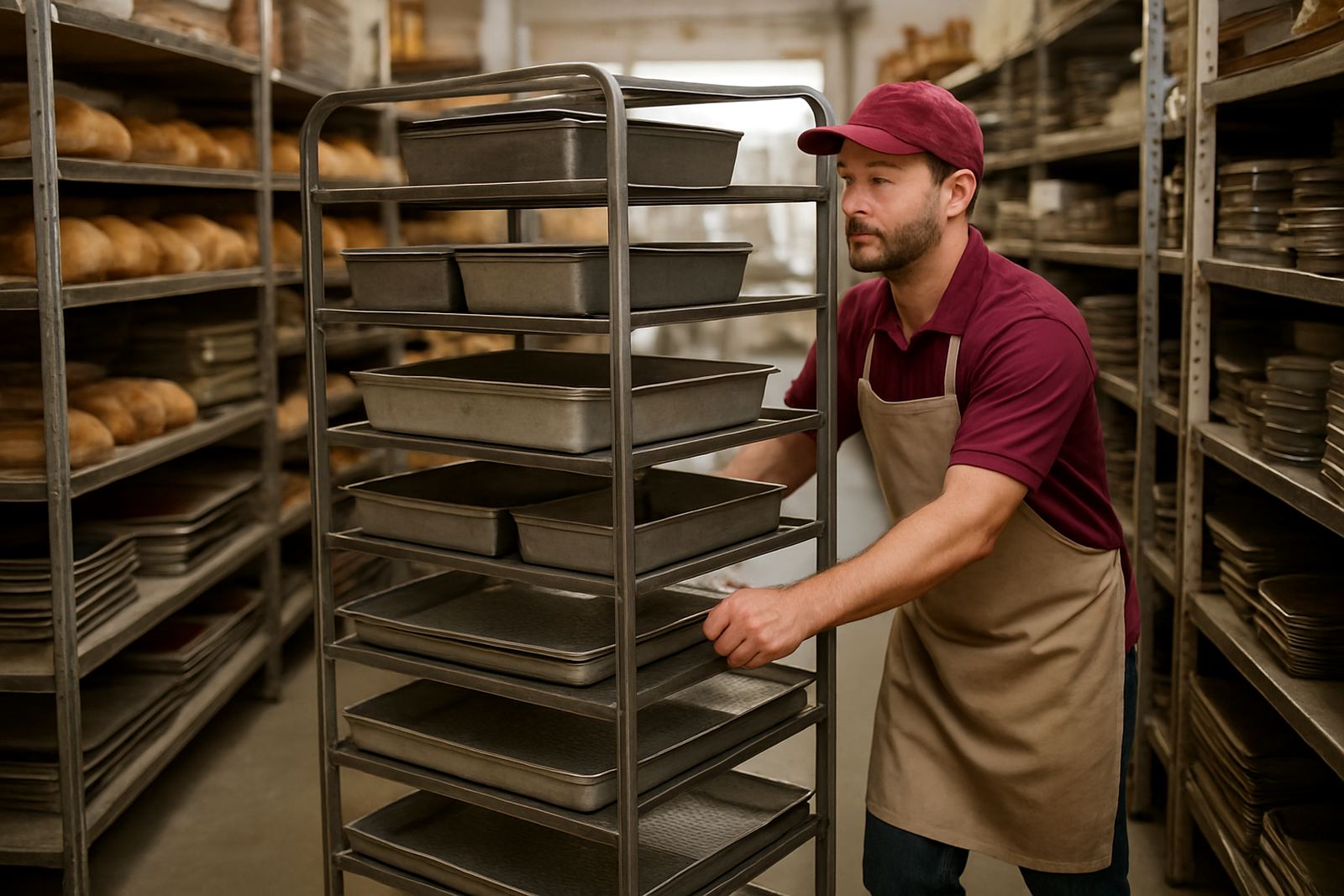
Once the pieces are dry, store them in a way that keeps them dry. Use clean pallet space, shelving or a covered trolley. Keep bakeware off the floor, especially in wash bays where splashes and mop water travel farther than expected. In humid areas and near coastal routes, a closed store room with some airflow is far better than leaving trays against a wall overnight.
Label stacks by size so staff do not keep shifting pieces around to find the right set. Every extra handling step adds chance of moisture, bending or scratches. If a tray has just been washed, do not wrap it in plastic unless it is already fully dry. Sealed plastic around a damp pan can create a wet pocket by morning.
Quick checklist before the shift ends
Use the same closing check each day and it becomes second nature. It saves time, reduces reject trays and keeps production cleaner. The supervisor or dispatch team can do a fast sign off while the last goods are moving through cooling and packing.
- All detergent rinsed off
- No visible standing water
- Edges, corners and holes checked by hand
- Items dried with cloth and air movement
- Stacks separated only after fully dry
- Store room or trolley clean and off the floor
If anything still feels cool or damp, leave it out for another round. That small delay is cheaper than replacing a set of pans or dealing with a rust complaint from the next batch.
When to replace instead of drying again
Drying helps, but it cannot fix metal that is already too worn. If pans keep showing rust after correct drying, or if the base has pitting, flaking or warped corners, the item may be near the end of its useful life. The same goes for lids that no longer sit square, or trays that have lost shape from repeated heat and handling.
For bakeries in Johannesburg South and surrounding areas, a practical review every few months is worth the time. It lets you decide which items still respond to good care and which ones need replacement, resizing or a new batch before they start slowing the line.