Set a fixed route for bakeware movement
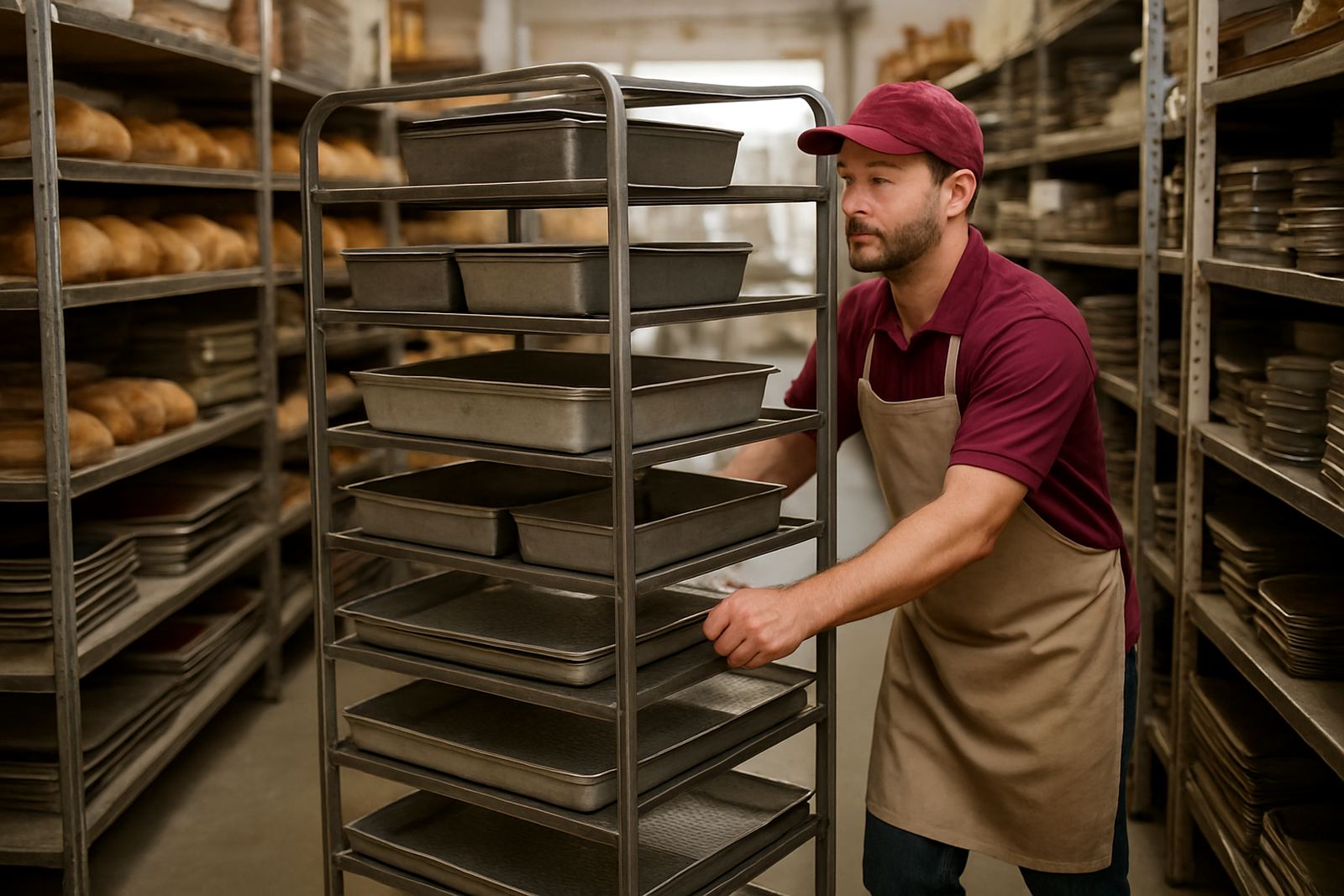
Every bakery should have a simple route for moving empty and filled items. Keep the path from storage to make-up, proofing, ovens and cooling areas as direct as possible, with enough space for trolleys, crates and staff to pass safely. In busy plants around Johannesburg South, Germiston and Boksburg, the biggest problems usually start when people cut across work bays and leave trays on the floor.
Mark the route clearly and keep it free of flour sacks, packaging offcuts and loose tools. If the route passes near doors or loading points, choose times that avoid delivery traffic and sudden gusts of wind. That matters on open yards and dock areas where dust can get into pans and lids, especially in dry months.
Use the right carrier for the job
Not every bakeware item should move the same way. Bread pans, baguette trays, perforated trays and lids each need support that suits their shape and weight. Long items should sit flat on a trolley with full contact under the base, while smaller items can be nested in crates only if the stack will not rub against the edges.
If you are moving heavy gauge trays or filled pans, choose a carrier with decent wheels, brakes and a handle height that suits the operator. A trolley that wobbles or drags puts strain on the tray corners and can make lids jump out of place. In humid coastal conditions, that also leaves wet marks and rust spots if items are put down on damp steel or concrete.
- Check wheel condition before each shift
- Use brakes on slopes and at oven doors
- Keep one carrier type for clean items and another for soiled returns
- Do not overload a trolley until the stack leans or flexes
Label, count and separate every batch
Mix-ups cost time and cause wrong orders to go out. Use batch cards, tray tags or coloured clips to separate product runs by size, customer or bake room. This is especially useful when the same line is handling standard pans, divider inserts and custom tray sizes on the same day. A clear count at the start and end of movement helps staff notice a missing item before it disappears into the next zone.
Write the product name, quantity, date and intended area on each batch card. If items are going for washdown, repair or copying, keep them in a marked return cage so they dont re-enter production by mistake. A short handover between shifts is worth more than a long search later.
Protect edges, corners and fitted lids
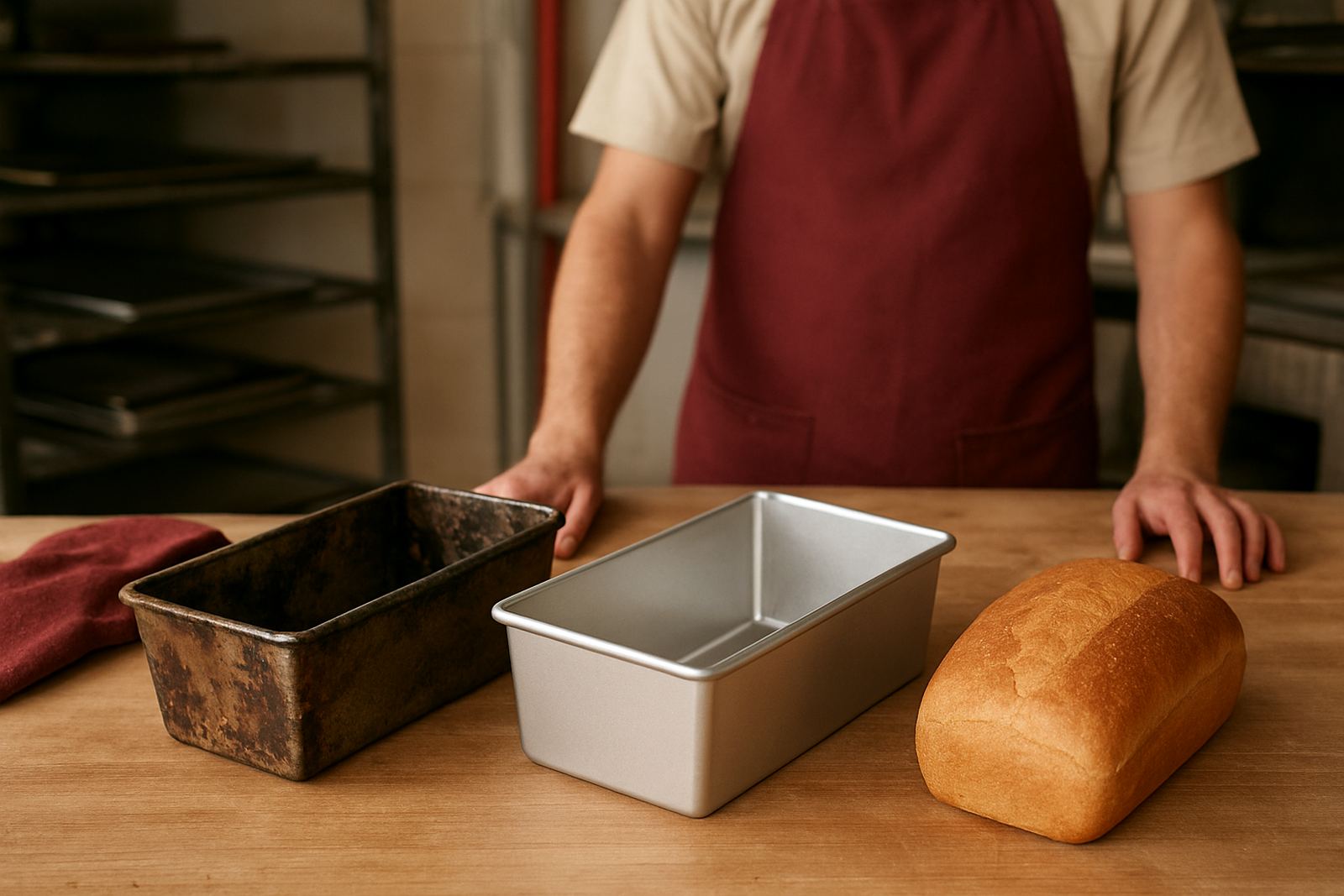
Most transport damage shows up on corners, rims and fit points. When bread pans are stacked inside one another, put a separator sheet or soft liner between metal surfaces if the stack is likely to move. For lids, keep the fit gentle and avoid forcing them down on a tray edge just to save space. That usually bends the lip and changes the closure.
During internal transport, use the lightest practical handling method. Two shorter lifts are often better than one long carry through a narrow passage. If a tray has been perforated, treat the holes carefully because repeated knocks can deform the pattern and affect baking results. Once a tray starts to twist, it does not sit right on the rack again.
- Never drag trays across concrete
- Lift from the base, not from the rim
- Keep lids separate from loose tools and cleaners
- Do a quick straightness check before the next use
Keep hot, cold and clean zones apart
Transport handling works best when hot items, cooling items and clean stock do not share the same holding space. Put a clear stop point between ovens and packing areas so workers are not dodging each other with loaded racks. In colder winter mornings around Gauteng, warm pans can collect condensation if they are moved straight into a cool room, so give them a short settling period where possible.
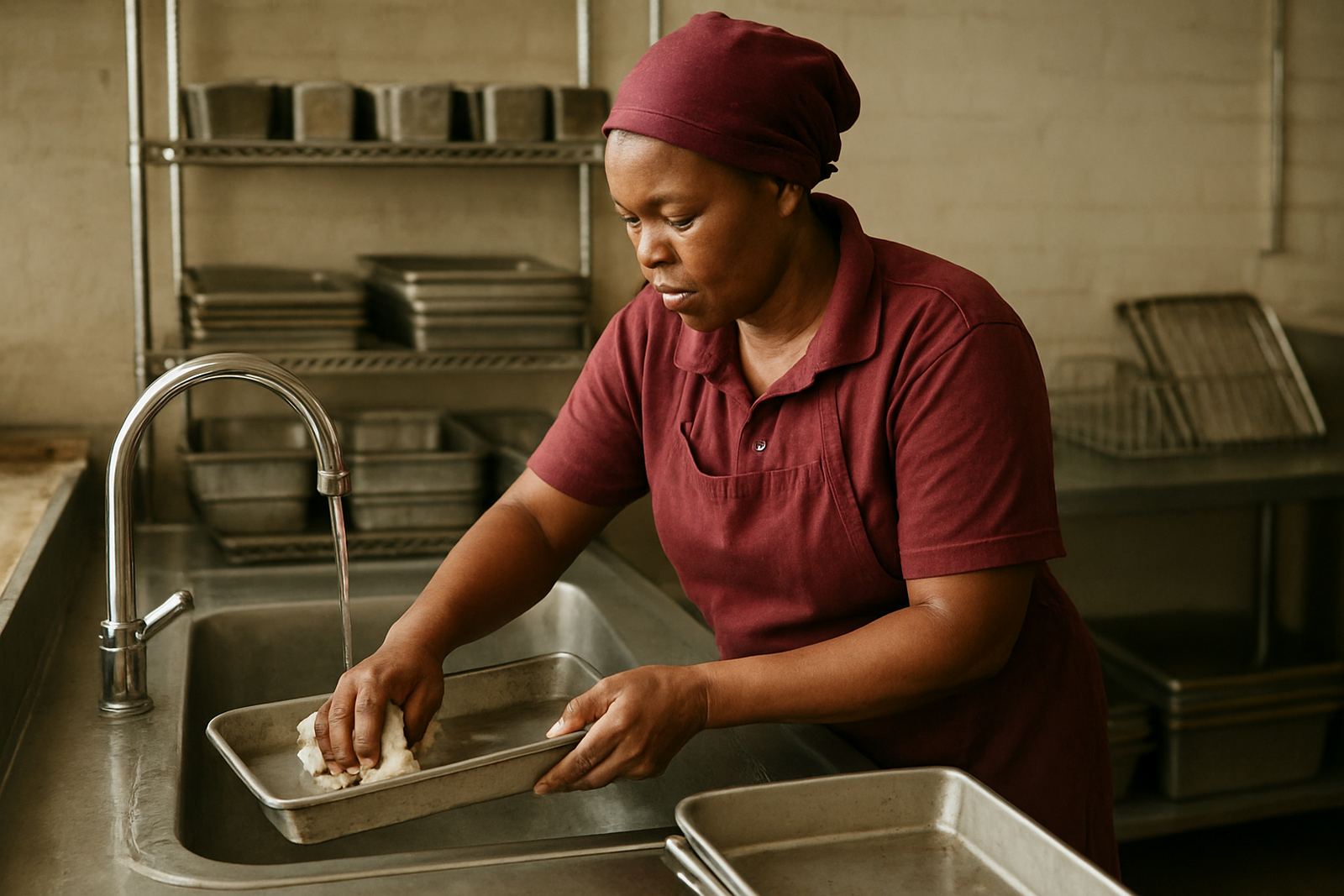
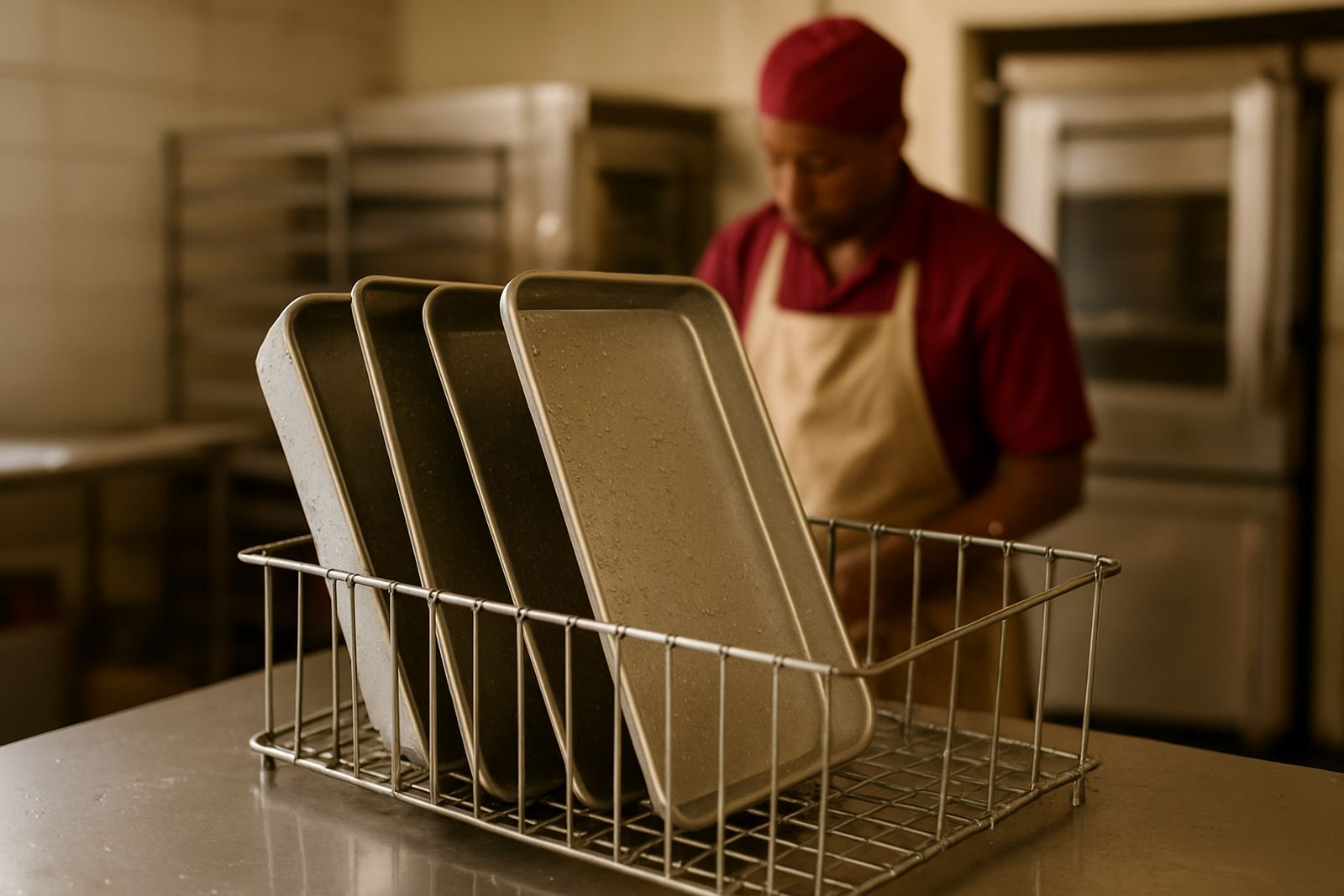
For wash areas, keep dirty returns moving in the opposite direction to clean stock. This is a basic control, but it prevents flour build up, oil transfer and mixed paperwork. If your site has limited power during load shedding, plan the route so manual movement stays safe when lights and extraction are reduced.
Build a simple checklist for each shift
A checklist makes transport handling repeatable. It also helps new staff follow the same standard as the rest of the team. Keep the list short enough to use on a busy morning, but specific enough to stop avoidable damage. For bakeries in Soweto, Midrand and Alberton, the best checklists are the ones that are pinned near the packing point and used every day, not only during audits.
- Route clear of boxes, dust and wet patches
- Correct trolley or crate ready
- Batch card attached and readable
- Item count matched before movement
- Edges, corners and lids checked after delivery
- Damaged items removed from circulation immediately
If you see repeat damage in the same spot, fix the route or carrier before you blame the staff. A small ramp, a tighter doorway or a bent wheel can cause more losses than a whole shift of careful work.
When to review handling with your supplier
Review transport handling when you change product sizes, add new ovens, or increase output. A tray that works well for one line may not suit a wider rack or a new proofing room. If pans are copying, fitted with lids or built in heavier gauge steel, ask how that changes weight, stack height and carrier choice before you place the first batch.
A short factory consultation can help you match the movement system to the bakeware itself. That saves time in dispatch and reduces wear on the items you use every day. It also makes batch reorders easier because the handling process stays consistent from one run to the next.