Start with the right handling after each bake
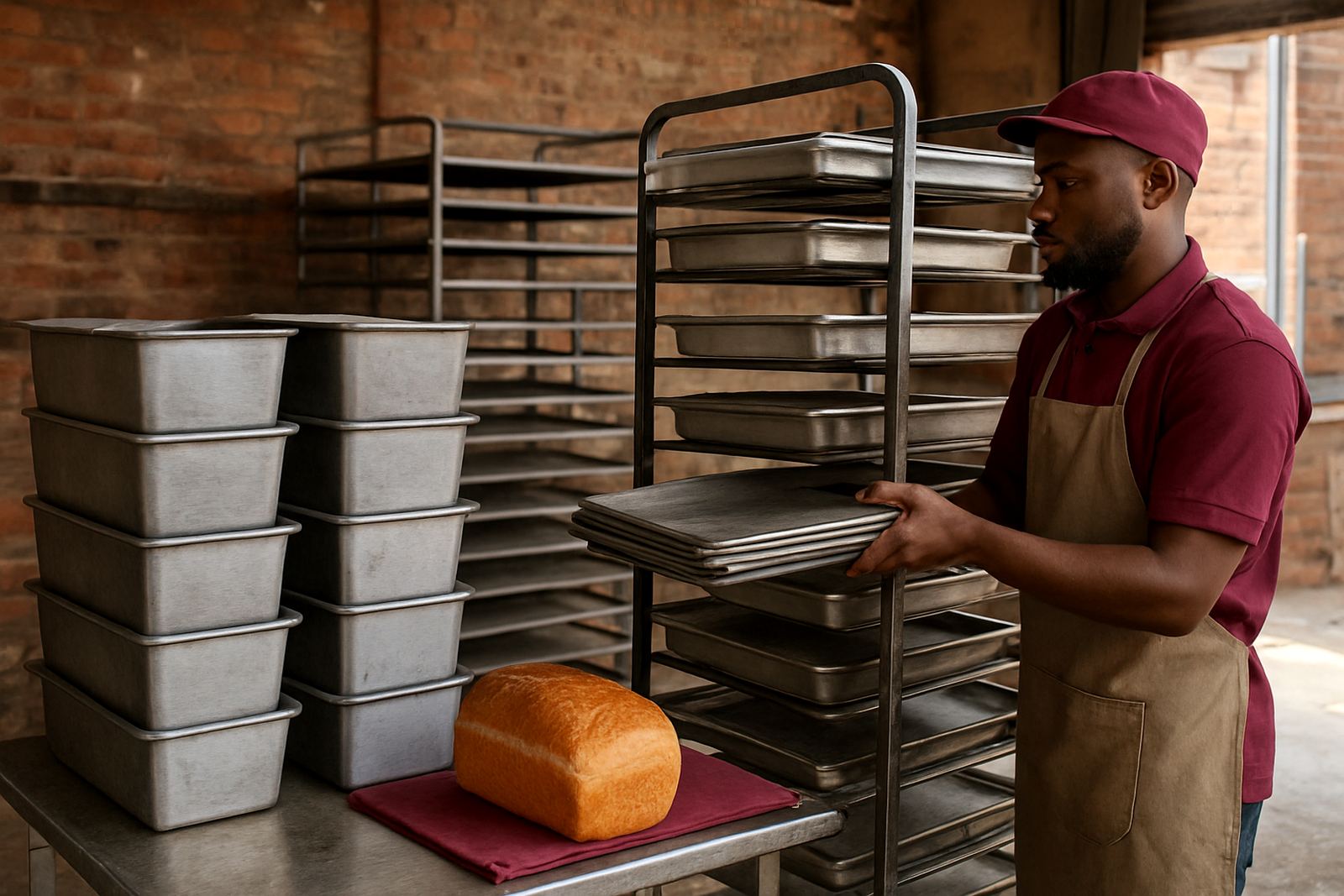
Most lid problems start with rough handling, not with the lid itself. When pans and lids are still warm, metal is more likely to flex if it is twisted, dropped or stacked badly. Lift lids straight off, then place them on a flat surface rather than leaning them against a wall or bin. If the lid has tabs or a folded edge, grip those points evenly so the lid does not bow in the middle.
In busy bakeries around Alrode, Germiston and Boksburg, the rush after a bake can make people stack gear fast. That is where dents happen. Train staff to separate lids by size and type, and to never use a lid as a scraper for dough or burnt residue. A few seconds of care saves a lot of rework later.
- Remove lids while they are still easy to lift, but not so hot that gloves slip.
- Place lids flat, not upright against other trays.
- Do not drop lids into sinks, crates or deep bins.
- Keep lid and pan sets together so they stay matched.
Clean lids gently so they stay true
Cleaning method matters. Use warm water, a mild detergent and a soft brush or cloth. Avoid harsh scouring pads unless there is heavy baked-on residue and even then, use light pressure. Deep scratching can affect the sealing edge and make the lid sit unevenly. On mild-steel bakeware, leaving detergent on the surface for too long can also encourage corrosion if the lid is not dried properly.
For bakeries working near the coast, moisture in the air can make drying even more important. In humid conditions, lids should be wiped dry as soon as they are rinsed. Do not leave them stacked wet in a wash bay or overnight in a sink. If your operation has load-shedding, plan a manual drying step so lids are not left with water trapped between layers.
- Wash with mild detergent, warm water and soft tools.
- Rinse well so soap residue does not stay in seams or folds.
- Dry both faces, edges and corners before stacking.
- Check for grease build-up around the rim and tabs.
Store lids flat and matched to the correct pans
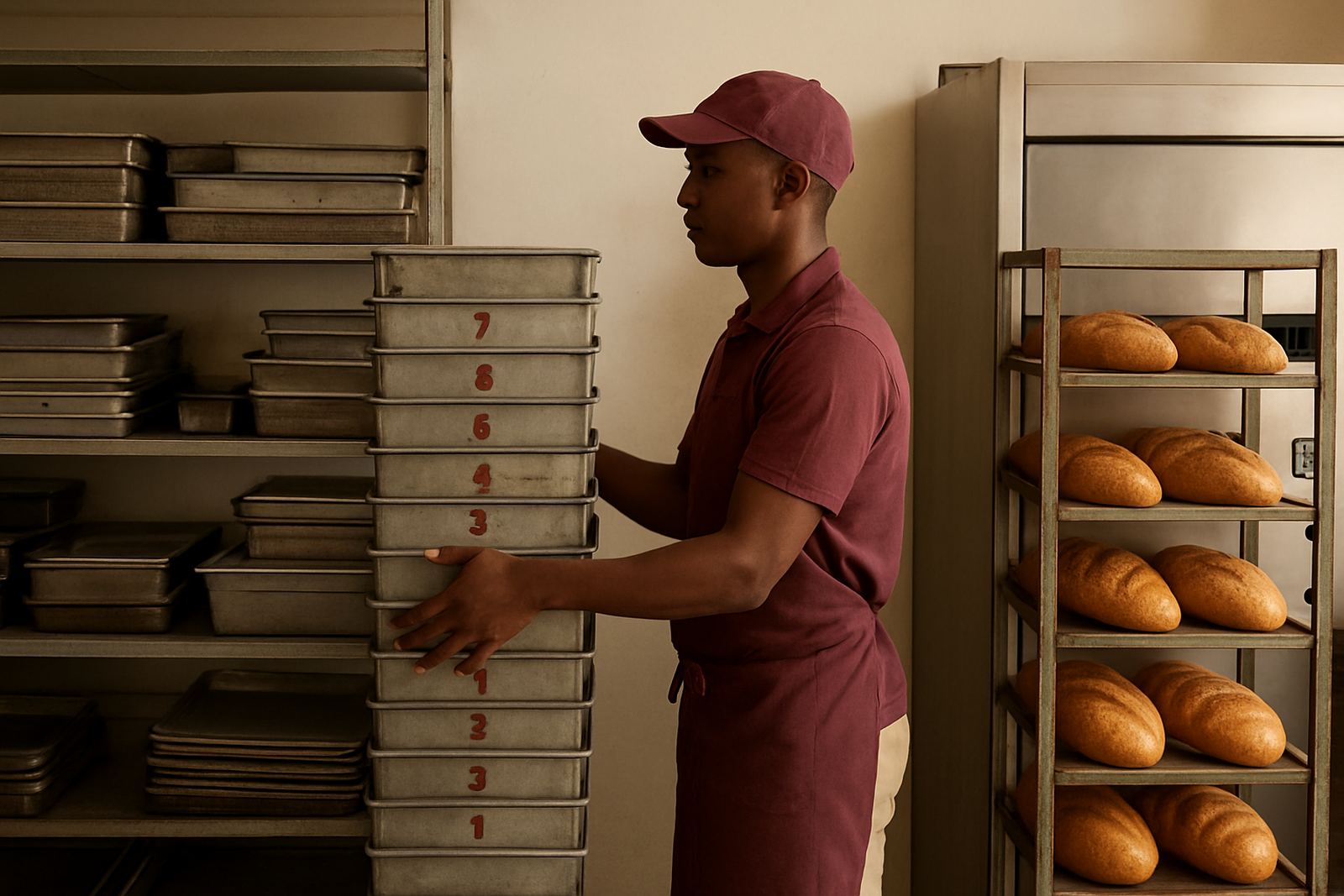
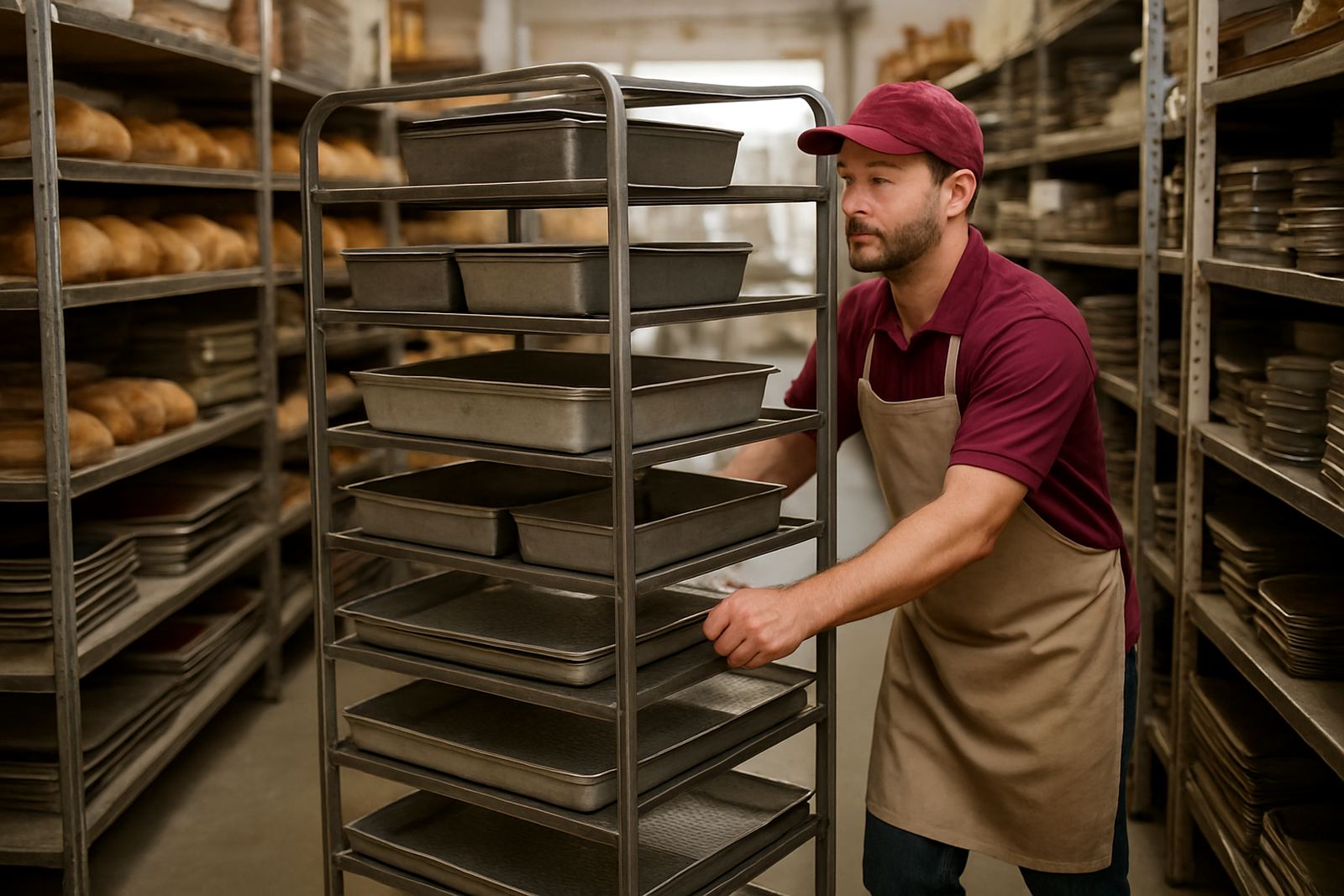
Storage is where many lids lose shape. A lid that sits under uneven weight can take on a slight twist, and then the fit becomes loose or tight in the wrong places. Store lids flat on shelving, on stillage frames, or inside the pan sets they belong to if that is how your bakery operates. Keep heavier trays from sitting on top of lighter lids. If you need to stack, make sure the stack is level and not leaning.
In smaller bake rooms and dispatch areas, it is tempting to save space by tucking lids into corners. That usually leads to bending. If a lid is part of a repeated production run, label the set clearly so staff can return it to the same group after cleaning. This helps with batch reorders and keeps your line moving without time wasted searching for the right sizes.
- Store on flat, level shelving or stillage.
- Keep lids away from floor moisture and cleaning chemicals.
- Separate different sizes with tags or simple labels.
- Do not trap lids under loaded trays or sacks.
Check the fit before a shift starts
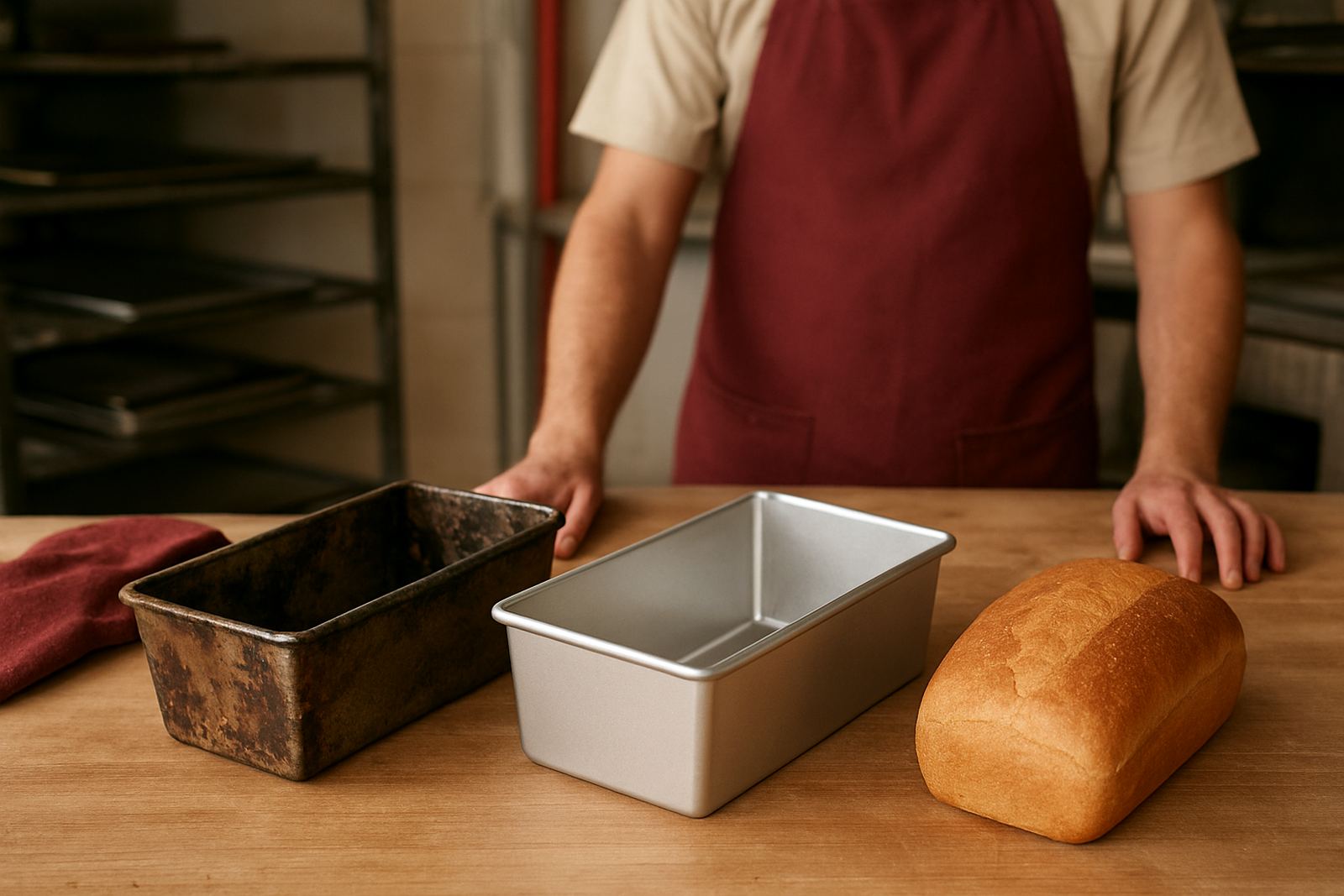
A quick fit check at the start of the shift can prevent poor baking results. Place the lid on the pan and look for even contact along the edges. If one side rocks or lifts, the lid may be bent, the pan rim may be damaged, or both. You should also check for gaps that could let steam escape too early. In bread production that can change crust, shape and oven spring.
If the lid is supposed to close firmly, test it by hand without forcing it. Forcing a lid down can worsen the bend. If you use divider inserts or special tray setups, make sure the lid still clears the internal parts properly. One small warp can affect a full batch, so it pays to spot issues early, before the first load goes into the oven.
- Look for rocking, lifting edges or uneven contact.
- Check whether the lid sits square on every corner.
- Make sure no dough build-up is sitting on the rim.
- Separate any doubtful lids for repair or review.
Handle repairs and replacement before damage spreads
A lid with a small bend often gets ignored until it starts marking every batch. That is usually the point where the pan below it also begins to suffer. If a lid is no longer sitting properly, set it aside and identify the cause. Sometimes the issue is a twisted edge from impact. Sometimes it is heat distortion from being handled roughly while very hot. In some cases the lid can be reworked, but it must be checked against the matching pan first.
For bakeries in Soweto, Midrand and Alberton running regular production, it helps to keep a small report of which sets are used most often. High-use lids need earlier attention than spare items. If you see repeated damage in the same batch, it may be worth asking for a heavier gauge build or a corrected fit on the next order. That is better than losing trays every few months.
A simple weekly lid care routine for busy bakeries
Keep lid care simple enough that staff will actually follow it. A short weekly routine works better than a long list that nobody finishes. Set one person to sign off on cleaning, one to check storage and one to flag damaged items. That way you know where the problem started if a set begins to misfit.
Use this checklist once a week, and after any rough handling or transport:
- Wash and dry all lids completely.
- Check every lid for bends, dents and cracked corners.
- Match lids with their correct pans and trays.
- Remove any item with sharp edges or loose fittings.
- Confirm shelves are level and dry.
- Log repeat damage so the cause can be fixed.
Good lid care is not complicated. Keep them clean, keep them flat and keep them matched. Do that consistently and they will fit better for longer, with fewer surprises on the production floor.