Start with bake quality, not the price tag
The first sign of a tired unit is usually in the loaf or tray load, not the steel itself. If bread starts sticking more often, shapes are uneven, or loaves bake with a darker edge on one side, the pan or tray may have moved out of spec. In a busy bakery, that shows up as waste, extra greasing, and more handling by staff.
Look for repeat problems over several days, not one bad shift. A single burned batch can be heat, oven loading or operator error. But if the same pan or lid gives you poor results each day, especially on the same position in the oven, the unit is probably past normal service. In humid coastal conditions, light rust and surface pitting can also begin faster, so keep an eye on pans stored overnight in open areas.
- Loaves sticking even after proper release method
- Uneven browning on the same side of the pan
- Trays bending when loaded and returned to the rack
- Visible marks transferring to product surfaces
Check the metal for wear, warping and damage
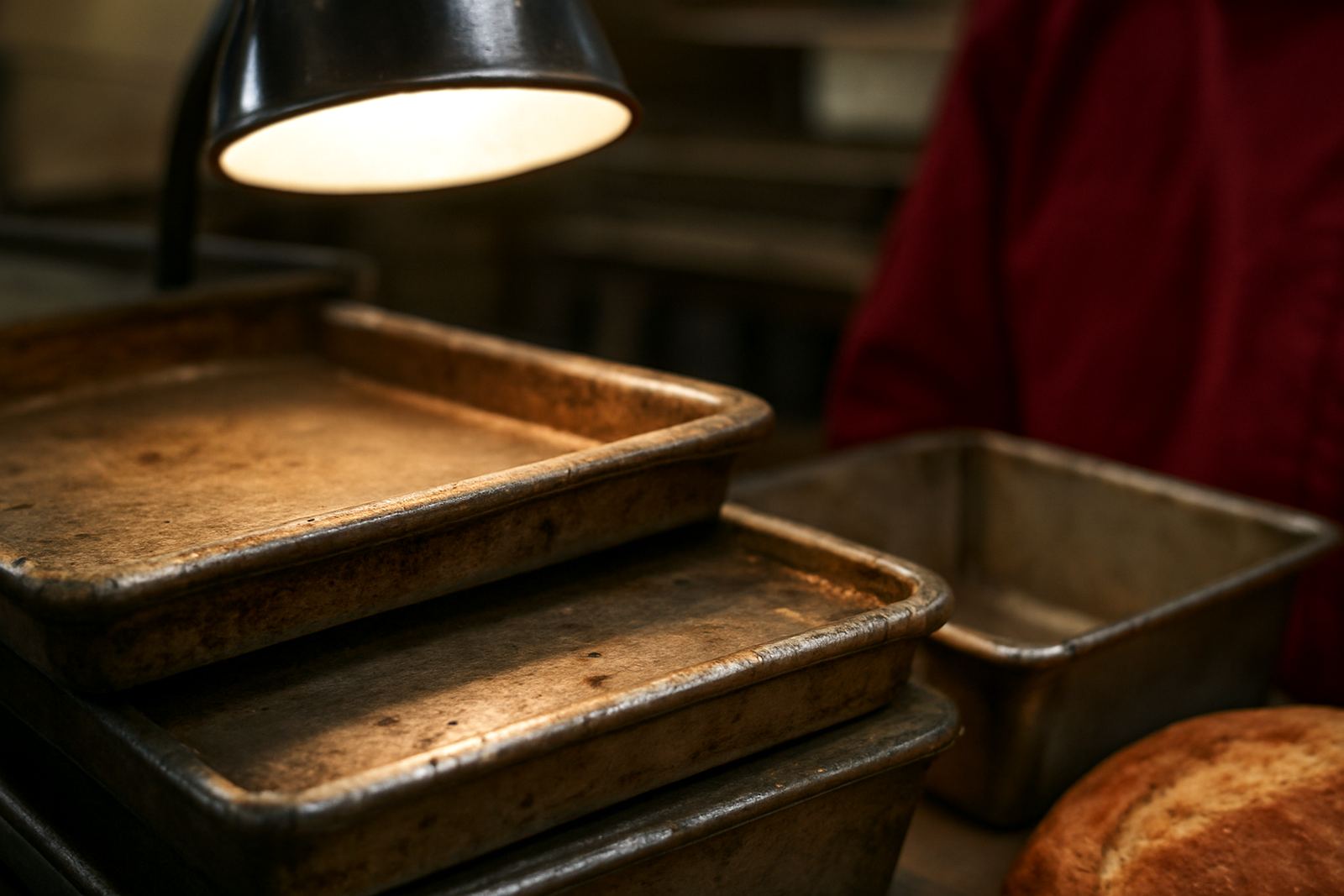
Physical wear tells you a lot. Mild steel pans and trays can give years of service, but once corners split, seams open, or base plates start oil-canning under heat, they become hard to trust. Lids that no longer sit flat can let dough rise unevenly, while bent trays can jam in racks or catch on oven rails.
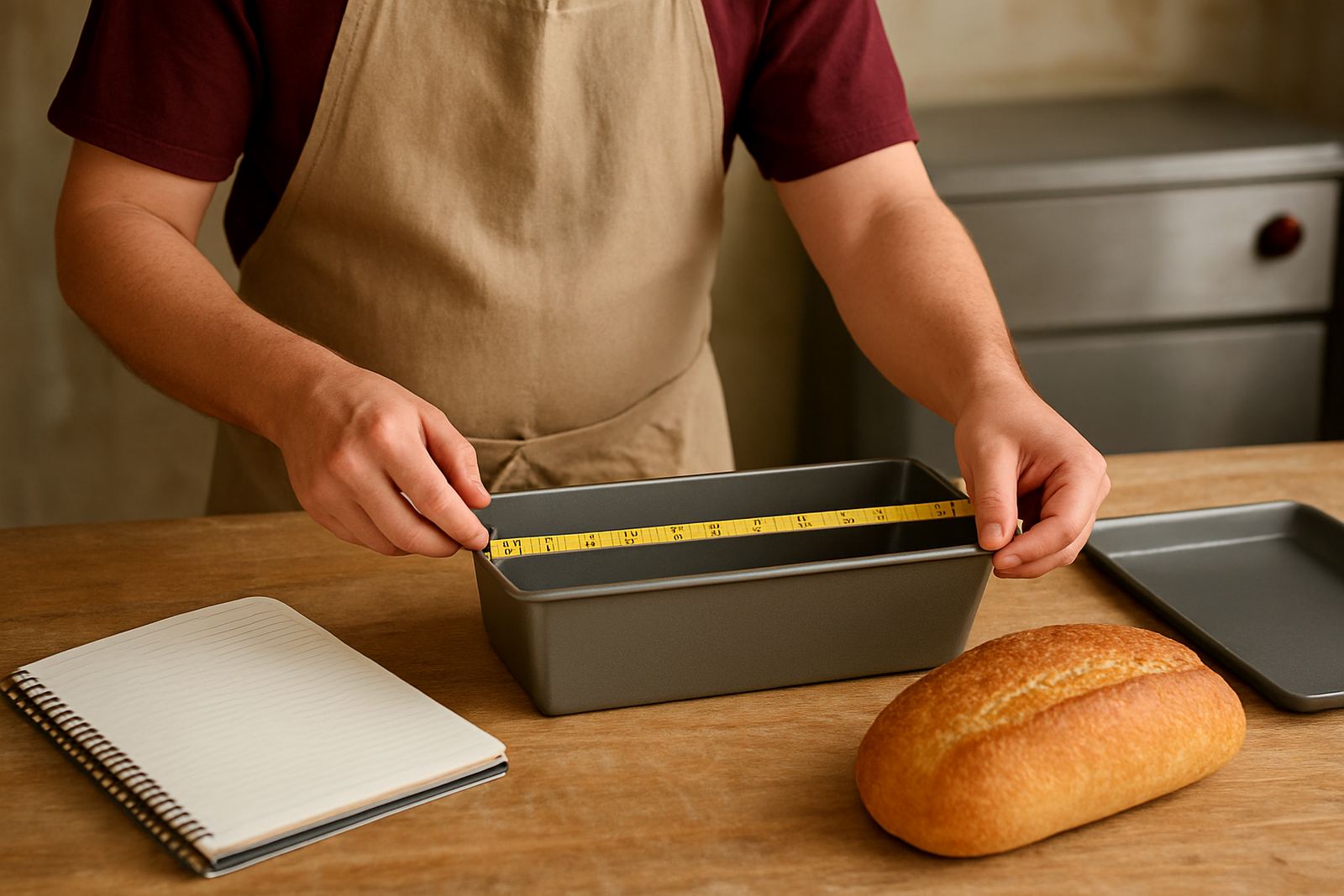
Run a quick inspection at the end of a shift. Place the pan or tray on a flat surface, sight along the edges, and check whether it rocks. Measure the deepest bend if needed. If the distortion is visible with the eye, it is usually enough to affect the bake. In Johannesburg factories that run long shifts, this kind of wear often builds gradually and gets missed until stock losses start showing up on the returns sheet.
- Rust that has gone beyond surface staining
- Cracks at welded joints or folded corners
- Twisted sides that no longer stack well
- Perforations blocked, torn or enlarged on perforated trays
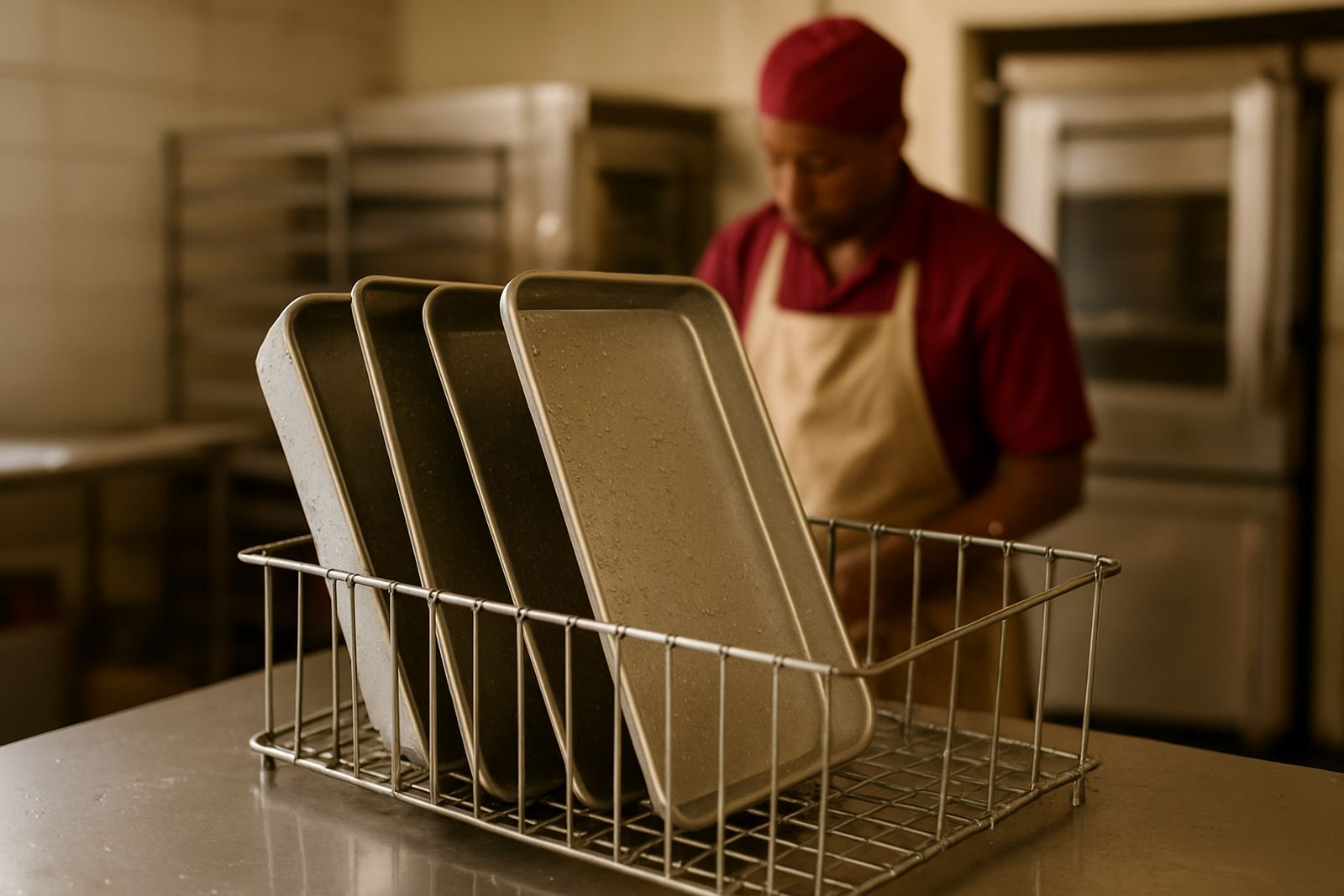
When cleaning takes too long, the unit is already costing you
Old bakeware can become a cleaning problem long before it fails structurally. If dough build-up is hard to remove, grease pools in dents, or the item needs soaking and scrubbing after every use, it is using labour that should be spent on production. That matters in smaller bakeries and take-away kitchens where one person may be handling prep, packing and wash-up all in the same rush.
Ask your team how often the item must be rewashed before it can go back into use. If the answer is every cycle, or if staff are avoiding certain pans because they are awkward to clean, replace them sooner rather than later. A pan that looks cheap to keep can become expensive over a month when you count labour and extra detergent.
- Build-up in seams that never comes off fully
- Grease stains returning after washing
- Bad odour after storage
- Scrub time rising compared with newer stock
Match the item to the job it still has to do
Not every worn unit needs to be thrown out immediately. Some can still be used for less demanding work, such as internal trials or backup shifts. But if the item is needed for daily retail production, wholesale supply, or a fixed tin size that must stay consistent, a tired pan is a risk. This is especially true for bakeries supplying schools, shops or canteens where portion weight and shape have to remain steady.
Think about production pressure. During month-end rushes, load-shedding catch-up shifts, or early morning dispatches, there is less tolerance for a pan that behaves badly. If you are relying on the item for standard bread pans, lids, perforated trays or baguette trays, and it is no longer producing the same result every day, then replacement is usually the safer route.
- Use backup only if the item still stacks, heats and releases properly
- Replace first when the item affects customer-facing product
- Keep worn stock only for non-critical testing or short-term overflow
A simple replacement checklist for bakery managers
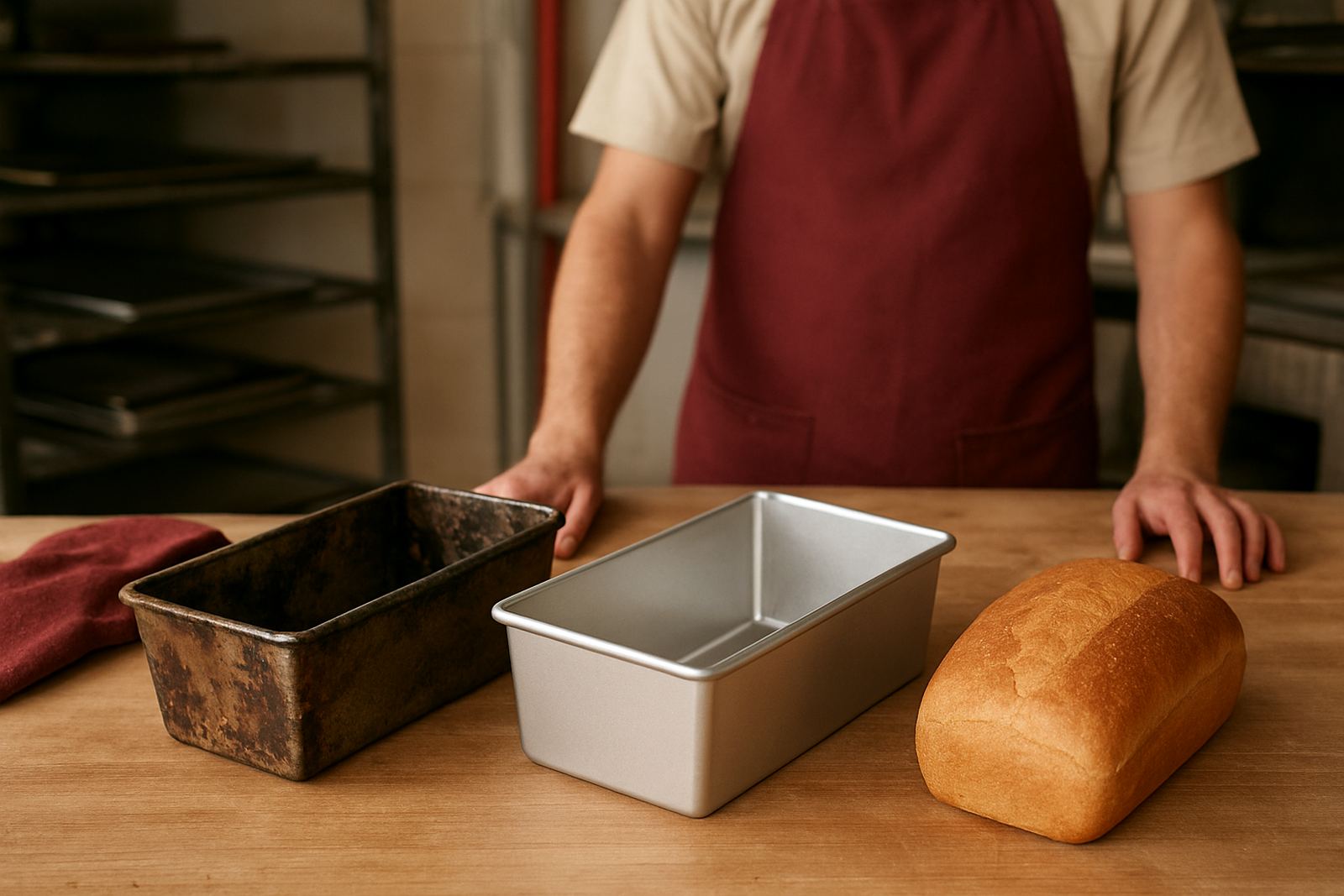
Use this checklist during weekly stock checks or before a big reorder. It helps you decide whether to keep, repair or replace. If you are uncertain, photograph the unit and compare it to your current working stock. In many cases the difference is obvious once the item is beside a good one.
Score each point. If two or more are a problem, start planning replacement. If four or more are present, the unit is usually past normal daily use and should come out of service.
- Does it sit flat on a table or rack?
- Does it release product without extra force?
- Are there cracks, holes or sharp edges?
- Does it still fit the oven, rack or lid properly?
- Is cleaning still practical within the shift?
- Has the product quality changed when using it?
Replace before the failure affects production
The best time to replace a pan or tray is before it starts slowing the line. If a unit is only used because there is no spare, that is usually a sign to reorder. Keeping spare stock matters for bakeries in Alberton, Germiston, Boksburg, Soweto and Midrand, where deliveries and production runs need to keep moving even when one item is pulled out for maintenance.
For teams that want a closer match, bring in the old unit for size matching, pan copying, lid fitting or tray perforating advice. Heavy gauge builds can help in higher-wear areas, while batch reorders make sense when several pans are failing at the same time. If you can still take a clean impression of the old item, even better, it makes planning much easier.
- Replace worn items in batches where possible
- Keep one spare for critical production sizes
- Retire damaged stock before it creates rejects or downtime