Why rust forms so quickly on working bakeware
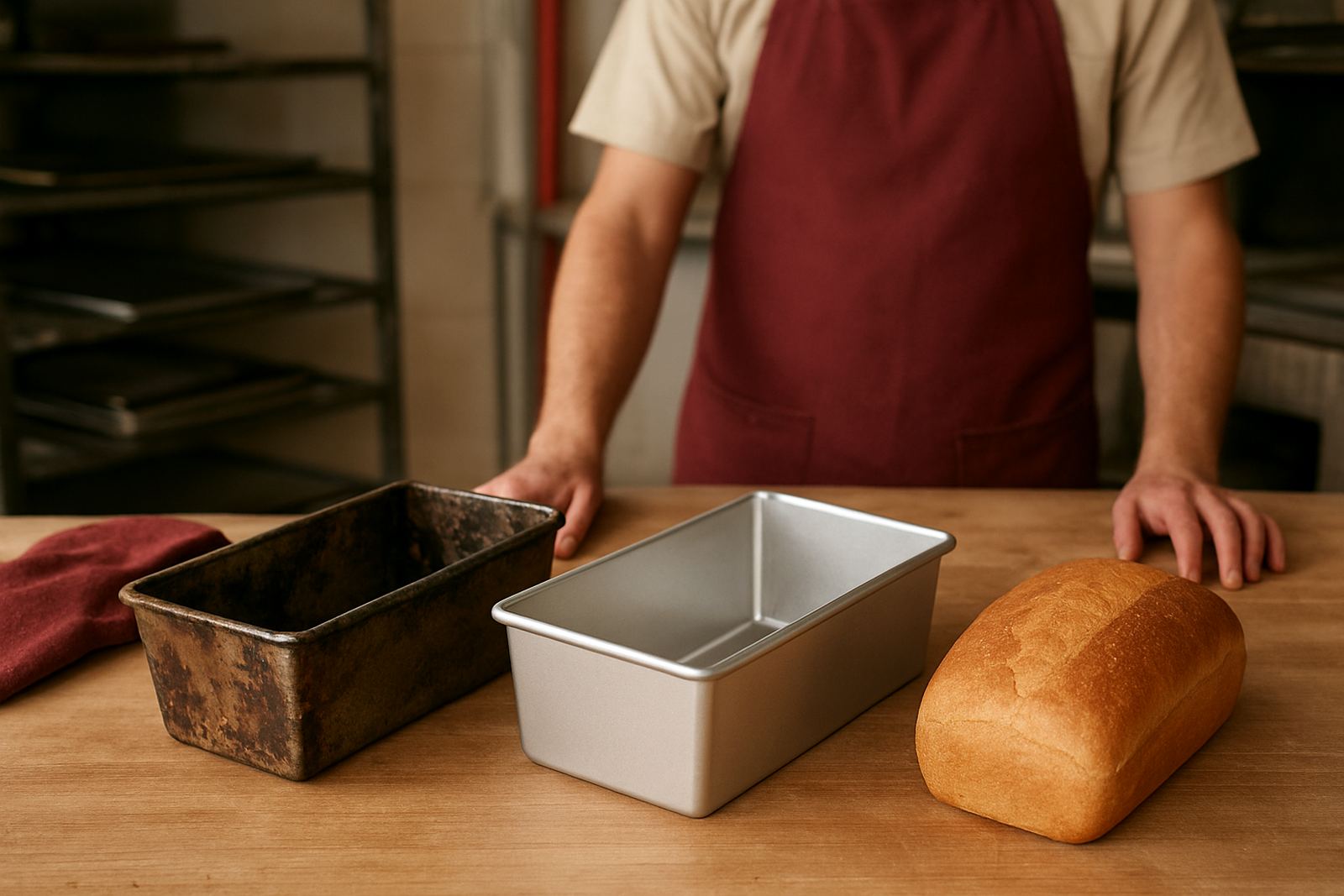
Most bread pans, lids and trays used in bakeries are mild-steel items, and mild steel will corrode when water sits on it for too long. That risk goes up when the kitchen is warm, the air is damp, or pans are stacked while still holding moisture in the corners. In places like Alrode, Germiston and Boksburg, a pan can look dry on top but still carry wet patches under the rim or in the folded seam.
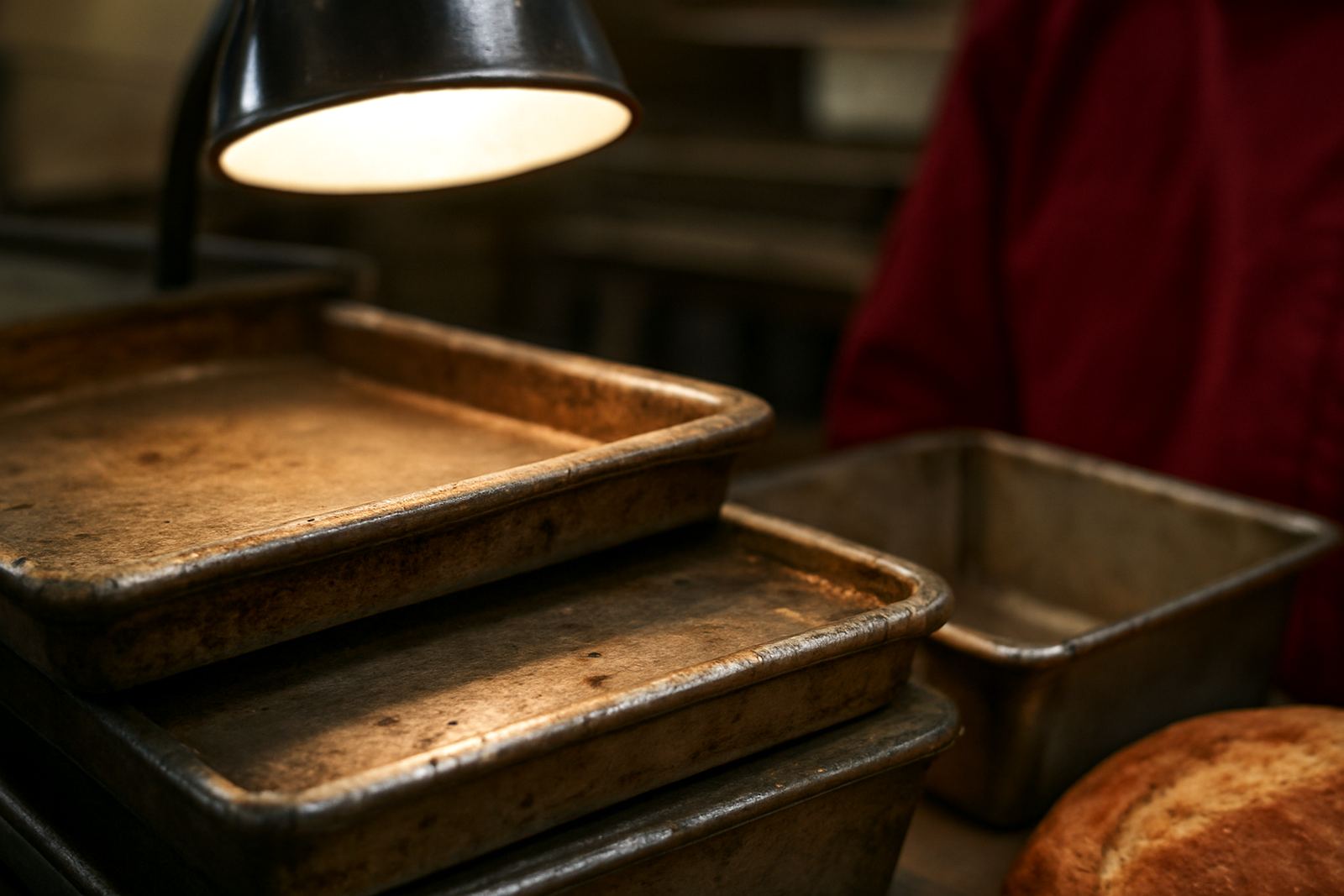
Rust often starts at the edges first. That is where the coating is thinnest, where trays get knocked against racks, and where detergent residue can remain after wash-up. If the pan has tiny scratches from scraping or stacking, the steel is exposed and the surface can bloom orange very quickly, sometimes in just a day or two.
Wash-up habits that reduce corrosion risk
Clean pans soon after use, but do not leave them to soak for long periods. Soaking is useful when baked-on dough needs loosening, yet overnight soaking can creep into joints and seams and invite rust. Use warm water, a mild cleaner and a soft brush. Avoid harsh scouring pads unless the tray has heavy residue that really needs lifting, because deep scratches can hold moisture and start corrosion.
- Empty crumbs, flour and burnt bits before they harden.
- Rinse off detergent completely. Leftover soap can hold moisture.
- Check folded corners, handles and lid edges for trapped water.
- Never stack wet pans straight after washing, even for a short while.
If you use a high-pressure rinse, keep it controlled. Too much pressure can force water into seams, then the pan may dry on the outside while the hidden areas stay damp. That is when rusting starts fast if pans are left wet over night.
Drying methods that work in South African bakery conditions
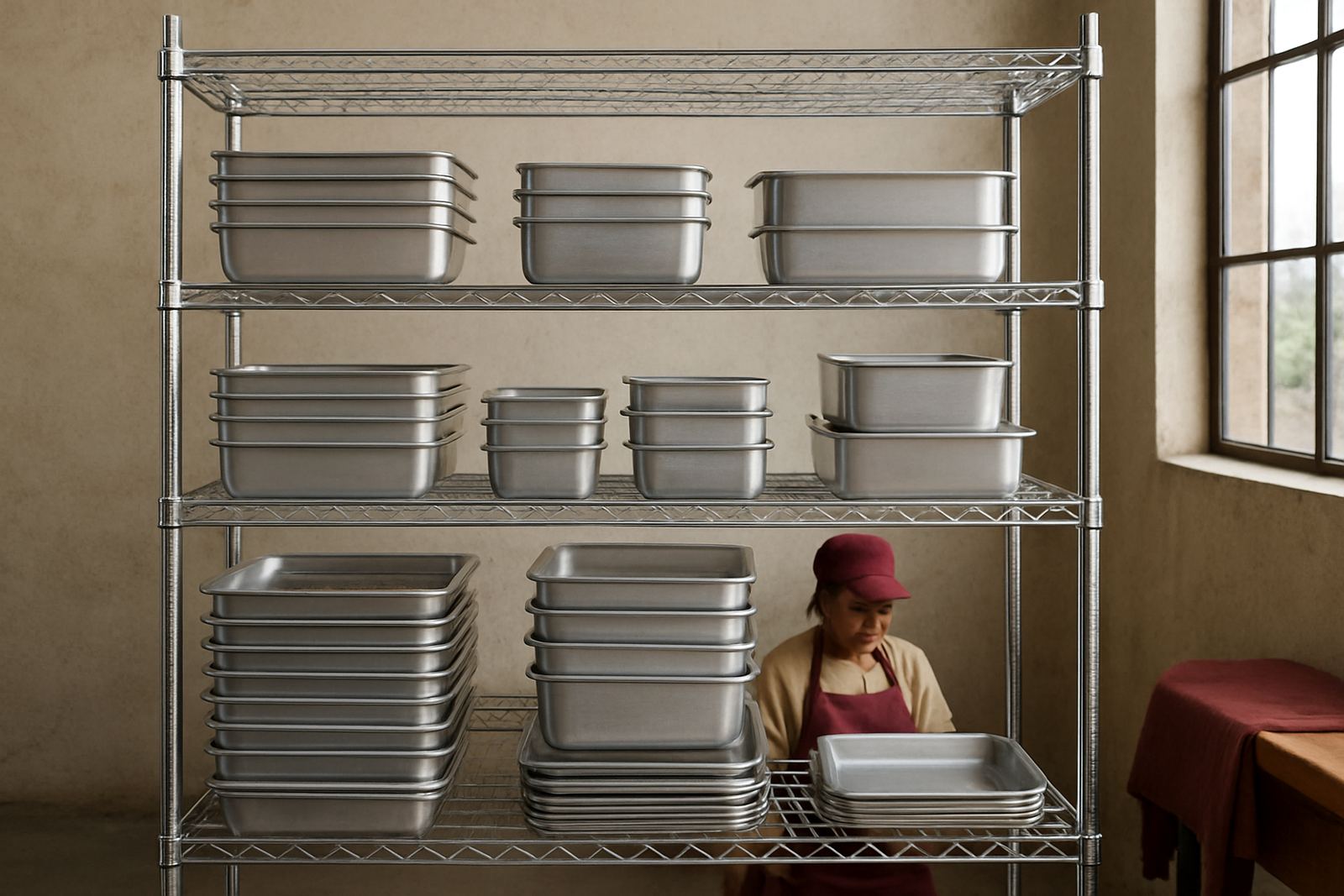
Drying is one of the simplest controls, yet it is often rushed between shifts. If you have load-shedding or a busy oven schedule, set aside a fixed drying zone so pans are not moved around while still damp. A wire rack, slatted trolley or open shelf lets air move around the tray and speeds up drying far better than a closed cupboard.
For bakeries near the coast or in humid weather, wipe pans with a clean dry cloth after air drying, especially around rolled edges and perforations. Perforated trays need more attention because each hole can keep a bead of water. Baguette trays also need care inside the channels where moisture sits quietly. Before storage, tilt each item and look for drips. If it still leaves a damp mark on a cloth, it is not ready.
- Air dry first, then hand check with a cloth.
- Use fans where possible to move air across the racks.
- Keep drying areas away from steam lines and dishwash runoff.
- Do a final touch check on corners, folds and perforations.
Storage and stacking rules that protect the steel
Once a pan is dry, store it where air can circulate. Tight stacks trap moisture between surfaces, especially if the bakery closes before everything is fully cooled. Put heavier items at the bottom and avoid wedging small trays inside bigger ones unless they are completely dry. If lids are used with bread pans, do not seal damp metal inside a closed stack, because condensation can form overnight.
Keep storage off concrete floors where cool damp can rise into the metal, particularly in winter mornings. Racks should be level so pans do not rub and peel at the edges. In municipal or factory settings where cleaning staff move equipment after hours, label the drying and storage areas clearly so wet items do not get mixed with clean stock. A simple painted line or shelf tag helps more than people think.
Protective routines for trays, lids and special builds
Some bakeries add a light food-safe protective film or seasoning routine to certain items, depending on the bakeware design and what product is being made. This can help on trays that are in constant use and washed many times a day. The aim is not to make the item oily, but to create a thin barrier that reduces direct contact with moisture. Always follow the cleaning and coating method that suits the pan type, because one routine does not fit every tray.
For custom builds, ask for heavier gauge material where the duty cycle is high. A thicker tray resists denting, and if the steel stays flatter, water is less likely to sit in low spots. Divider inserts and fitted lids should also be checked for tight contact points. If two metal surfaces grind together during handling, the finish wears away and rust can begin at the contact line.
- Re-check coating or seasoning after deep cleaning.
- Inspect welds, folds and cut edges for early spotting.
- Replace bent trays that no longer sit flat on the rack.
- Separate heavily used stock from reserve stock so wear is easier to manage.
A simple inspection checklist for every shift
A quick inspection at the end of shift can save many trays from early failure. Look for orange marks, black pitting, sticky detergent film and any water collecting under rolled edges. If you find a small rust patch, deal with it immediately. Light corrosion can often be cleaned back before it spreads, but once the surface pits deeply, the tray becomes harder to keep clean and may need replacement sooner.
End-of-shift checklist
- Are all pans fully dry before stacking?
- Are any lids trapped inside warm or damp containers?
- Do perforated trays have moisture in the holes?
- Are any items stored against wet floors or walls?
- Are scratched areas being used for the heaviest batches?
If the answer to any of these is yes, adjust the wash-up process that same day. Small corrections done daily are cheaper than replacing a batch of pans later.
When to copy, repair or replace a rusted item
Some rust can be managed, but not all of it. If the tray has only light surface spotting, it may be possible to clean it, dry it properly and return it to service. If the steel has started flaking, if a lid no longer fits well, or if a pan has warped from repeated heat and moisture stress, replacement becomes the better option. A poor fit allows steam and condensation to collect where they should not.
For bakeries in Alberton, Soweto, Midrand and nearby areas that run constant production, it helps to keep a repeat order schedule for the items that wear fastest. That way the shop floor is not forced to use tired stock for too long. If you need a size matched pan, a copied profile or a heavier gauge replacement, get the dimensions checked before the next production run so the new piece fits the way the old one did, only better.