Start with the exact item you are replacing
Do not measure by eye and do not assume the old sample matches the last invoice. Over time, pans can bend, lids can warp and tray edges can spread from heat, handling and stacking. If you are reordering for a bakery in Alrode, Germiston or Midrand, first confirm the item type, the quantity needed and whether the order is for standard stock or a made-to-size run.
Set the sample on a flat surface and check for dents, twisted corners or worn edges. If the pan sits unevenly, note that before you send measurements. A bent sample can lead to a poor copy, especially on divider inserts, lid fitments and baguette trays where spacing matters.
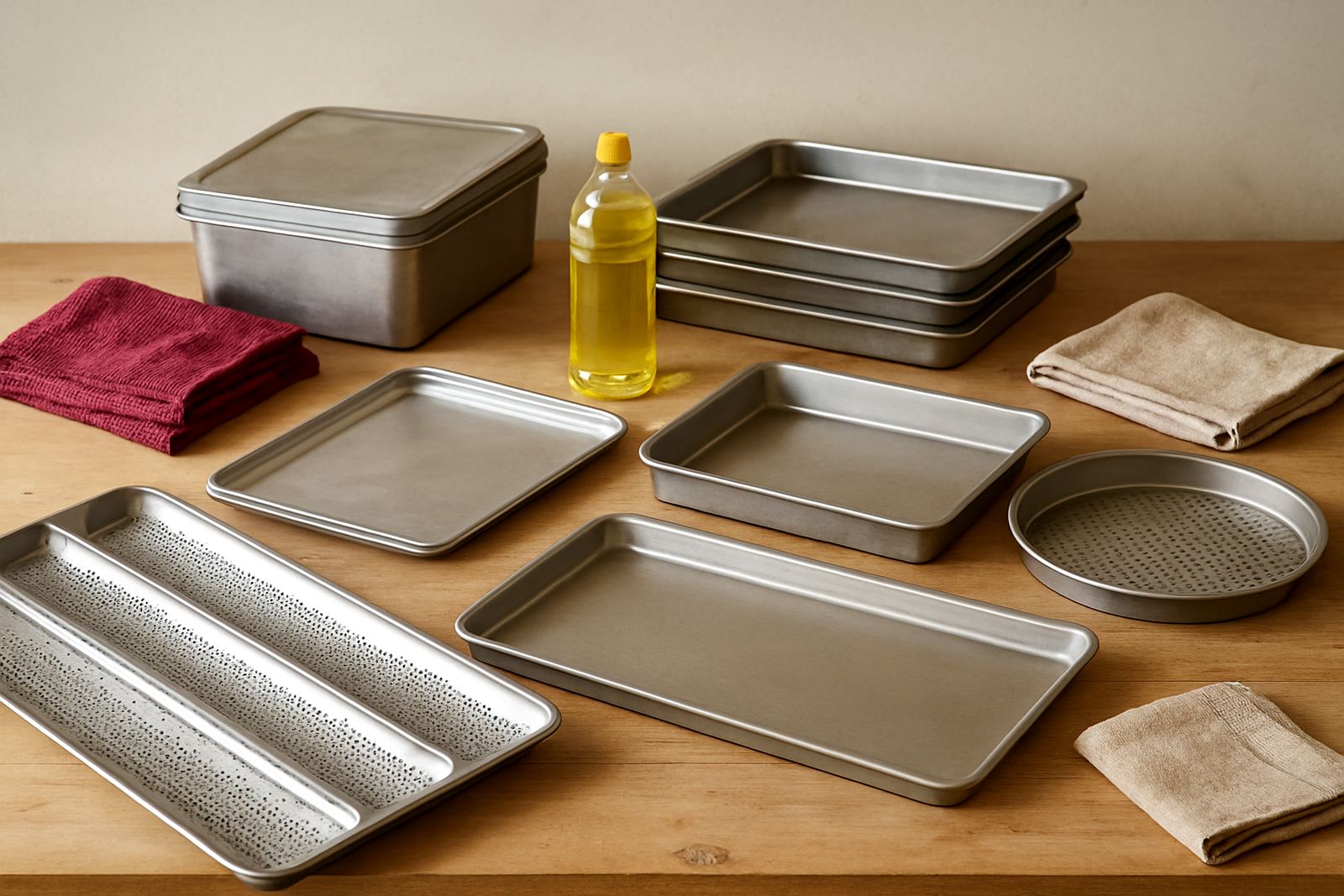
- Confirm whether it is a bread pan, lid, baking tray, perforated tray or baguette tray
- Check if the sample is still square and level
- Note any damage, dents or worn corners
- Match the item to the last order number if you have it
Measure the inside and outside dimensions separately
For repeat work, we normally need both the internal size and the external size. The inside measurement affects product volume and loaf size, while the outside measurement matters for oven rails, proofing racks and storage space. If you only give one figure, it may be enough for a rough match but not for a precise reorder.
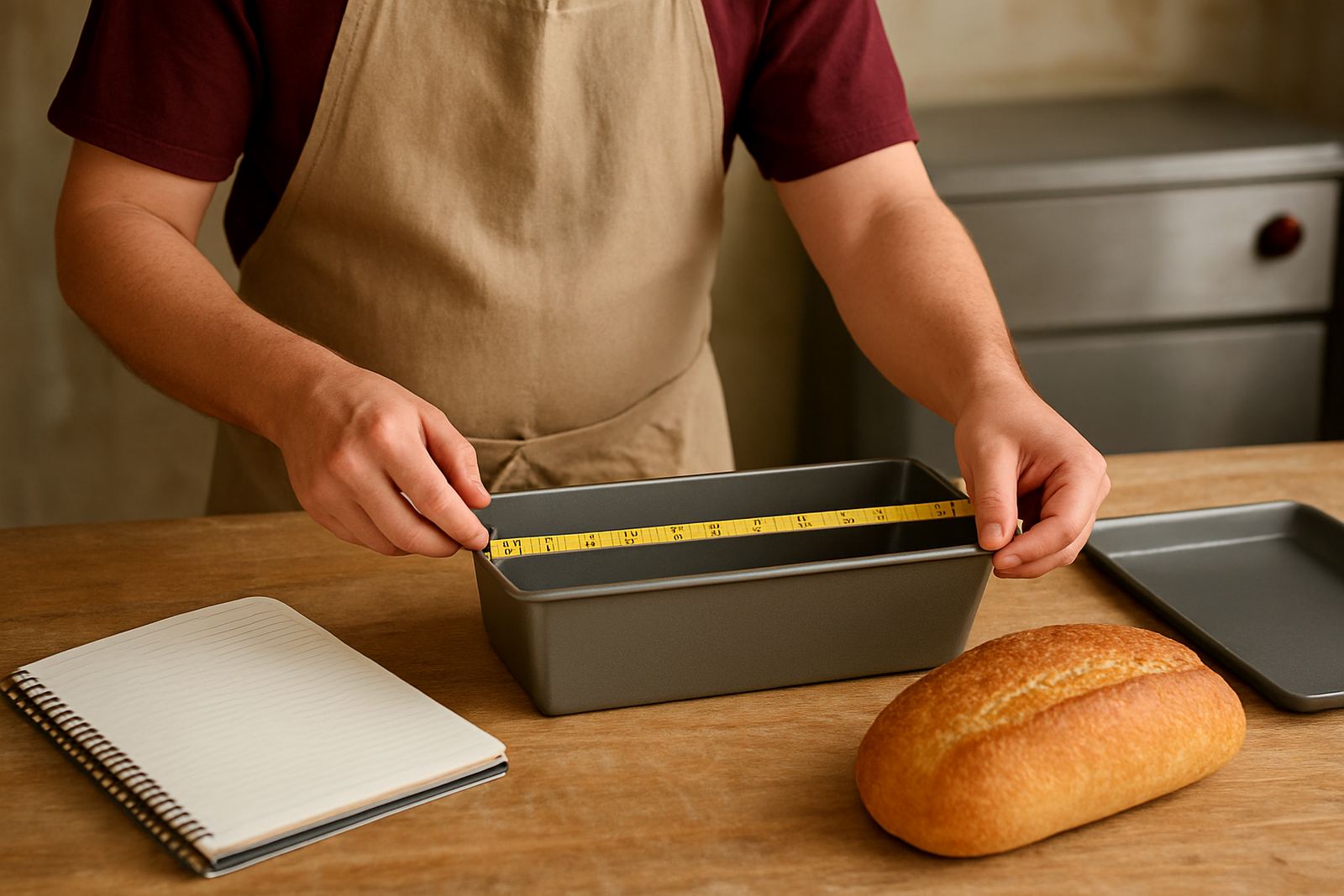
Use a steel tape measure or ruler with millimetre markings. Measure length, width and depth. On bread pans, measure from the inside base edge to edge, then from outer edge to outer edge. On trays, include the full rim if there is one. If the item has rolled edges or a lip, say so in your notes.
- Length, width and depth in millimetres
- Inside size and outside size
- Rim, lip or rolled edge thickness
- Any taper from top to base
Check the fit points that affect oven and rack use
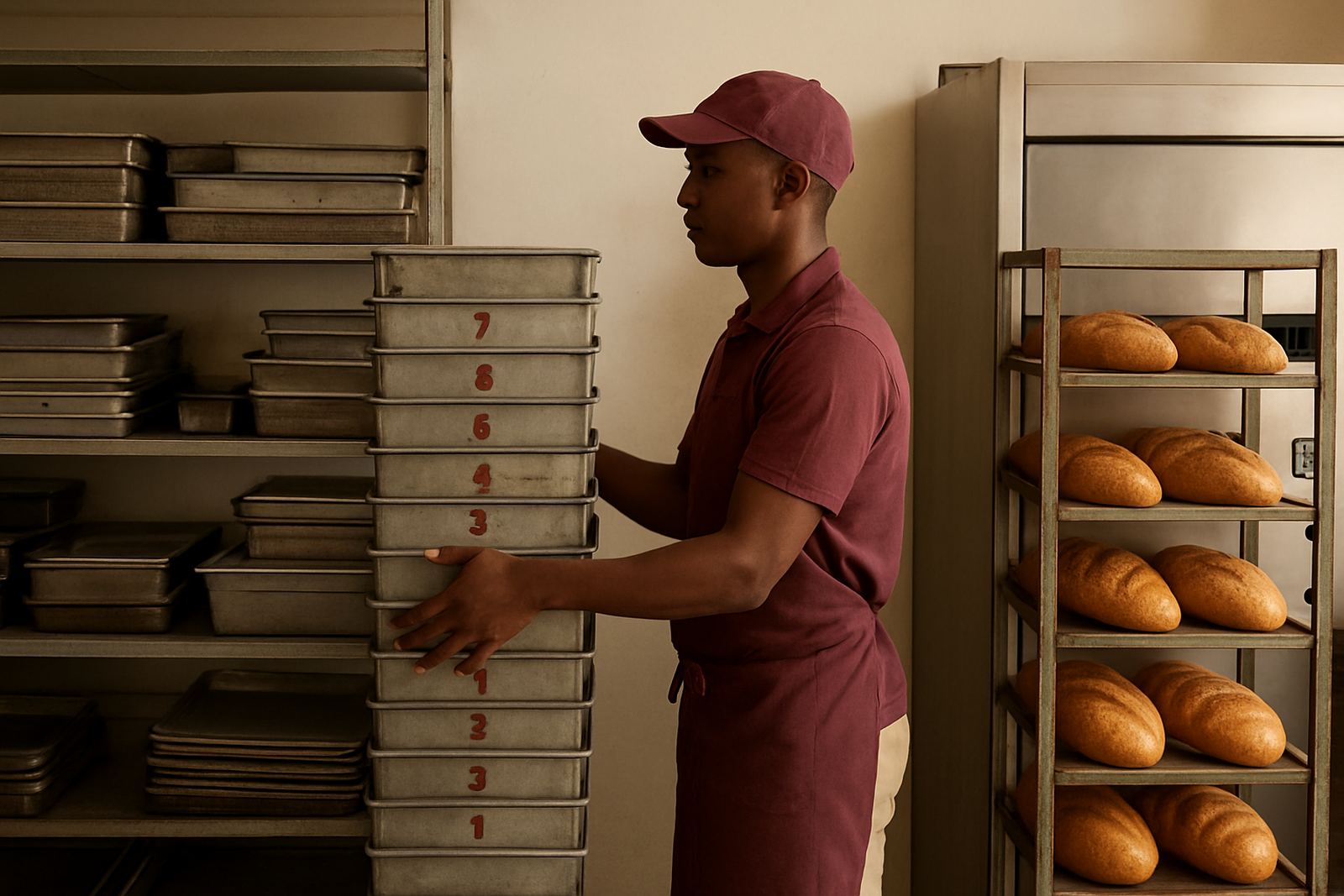
Many reorder issues come from fit, not from the pan itself. A tray might be the correct size on paper but still catch on an oven guide, sit too tight in a rack, or leave wasted space in a proofing trolley. This is especially common in busy bakeries where multiple staff handle the bakeware and a small change goes unnoticed.
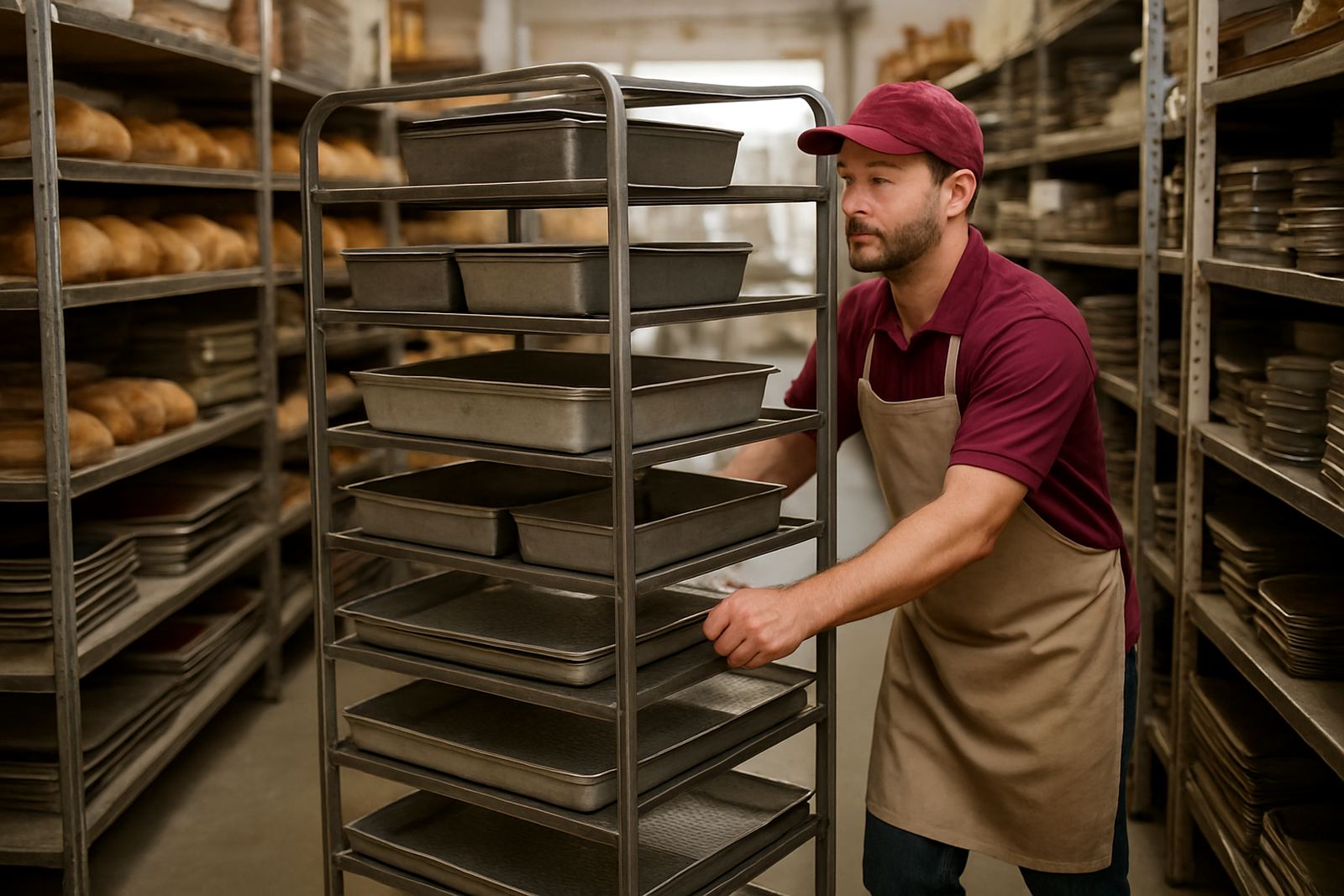
Measure the space it must sit in, not only the pan itself. If the pan stacks inside another, check the nesting depth and whether the handle points or corners interfere. In coastal areas like parts of Germiston or when supply runs to humid kitchens in Soweto and surrounding areas, also check for corrosion that can change the fit slightly over time.
- Oven opening and rail spacing
- Rack width, shelf depth and trolley clearance
- Stacking depth and nesting space
- Clearance for handles, lips and corner bends
Confirm hole pattern, perforation and baguette spacing
For perforated trays and baguette trays, the details matter as much as the outer size. Hole pattern, hole size, spacing and layout affect airflow, crust finish and dough support. If a tray is copied without these details, the result can look similar but perform differently in the oven.
Count the rows and columns of holes, and note the distance between centres. On baguette trays, measure the channel width and depth, plus the spacing between each channel. If you use divider inserts, confirm whether they are fixed or removable and whether the insert sits flush or raised. If the tray must match existing bakery equipment, send a clear sample and a written note with the measurements.
- Hole size and hole spacing on perforated trays
- Number of channels on baguette trays
- Channel width, depth and spacing
- Divider insert size and fixing points
State the material, gauge and finish you need
Measurements alone are not enough if the material spec changes. A pan that is the right size but too light may bend early, while a heavier gauge build may last longer in a high-volume bakehouse. Tell us whether the item is mild steel, whether it needs a plain finish or a coated finish, and if you want extra strength on corners, rims or handles.
For standard bread pans and lids, the gauge should suit your oven cycle and handling routine. If you are reordering from a bakery in Boksburg or Alberton that runs long shifts and frequent batch turns, a stronger build may be the better call. Mention whether the item needs to be food-safe, easy to clean, or suited to repeated washing and drying.
- Material type and gauge
- Plain, reinforced or heavier build
- Any coating or finish requested
- Special strengthening on corners, rims or seams
Use a simple checklist before you send the reorder
Before you email your measurements, do one final check. Compare the sample, the tape reading and the space it must fit into. If possible, have two people confirm the figures. A second set of eyes often catches a flipped length and width, or a depth measured from the wrong edge.
Send clear notes with your order so we can match the part properly and avoid delays. If you are working to a municipal delivery schedule or need staggered dispatch for different branches, add that too. It helps with planning, especially when a bakery in Soweto or Midrand needs partial replacement while production keeps moving.
- Item type and quantity
- Inside and outside measurements in mm
- Material, gauge and finish
- Fit notes, damage notes and photo references
- Delivery area and preferred timing
If you are unsure about a measurement, rather phone or email before placing the order. A short check at the start saves time later and helps keep your pans, lids and trays working as they should.