Why stack method matters in a working bakery
Bakeware gets handled more than most people think. It is lifted off trolleys, moved past mixers, set near ovens, counted for batch runs and then returned to store, often in a rush. If the stack is loose or too high, the first sign is usually a bent corner, a lid that no longer sits flat, or a tray that starts to rock on the shelf.
In Gauteng bakeries, and especially in busy areas like Alrode, Germiston and Boksburg, storage space is usually tight. That means every pan, lid and tray needs a fixed place and a repeatable method. Good stacking also helps when load-shedding interrupts production, because staff can clear benches quickly and get items back in order once the power returns.
Sort bakeware by type before you stack it
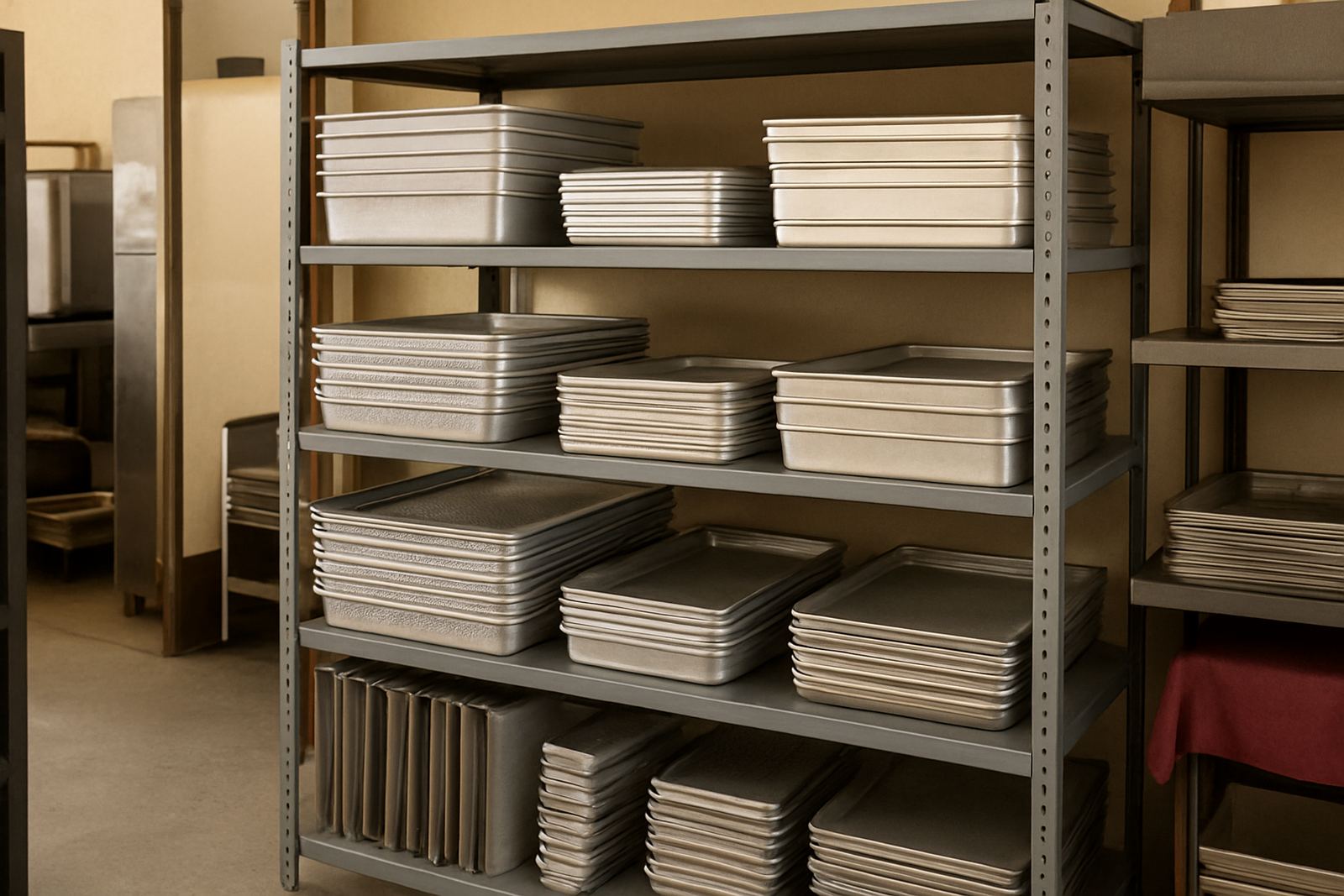
Do not keep every item in one mixed pile. Bread pans, lids, perforated trays and baguette trays all behave differently and should be stored separately. Mixing them leads to missed counts, damaged edges and a lot of time wasted during shift change.
A simple sorting rule works best. Keep each size together, then group by use and condition. Heavier-gauge items can sit lower down, while lighter trays and fitted lids should stay on top or in racking with support on both sides.
- Separate bread pans by size and loaf type
- Keep lids with the pans they fit, not in a loose heap
- Stack perforated trays flat, never at an angle
- Store baguette trays where the holes and supports will not catch on other items
- Mark damaged or warped items clearly so they do not go back into daily use
Use a stack height that staff can handle safely
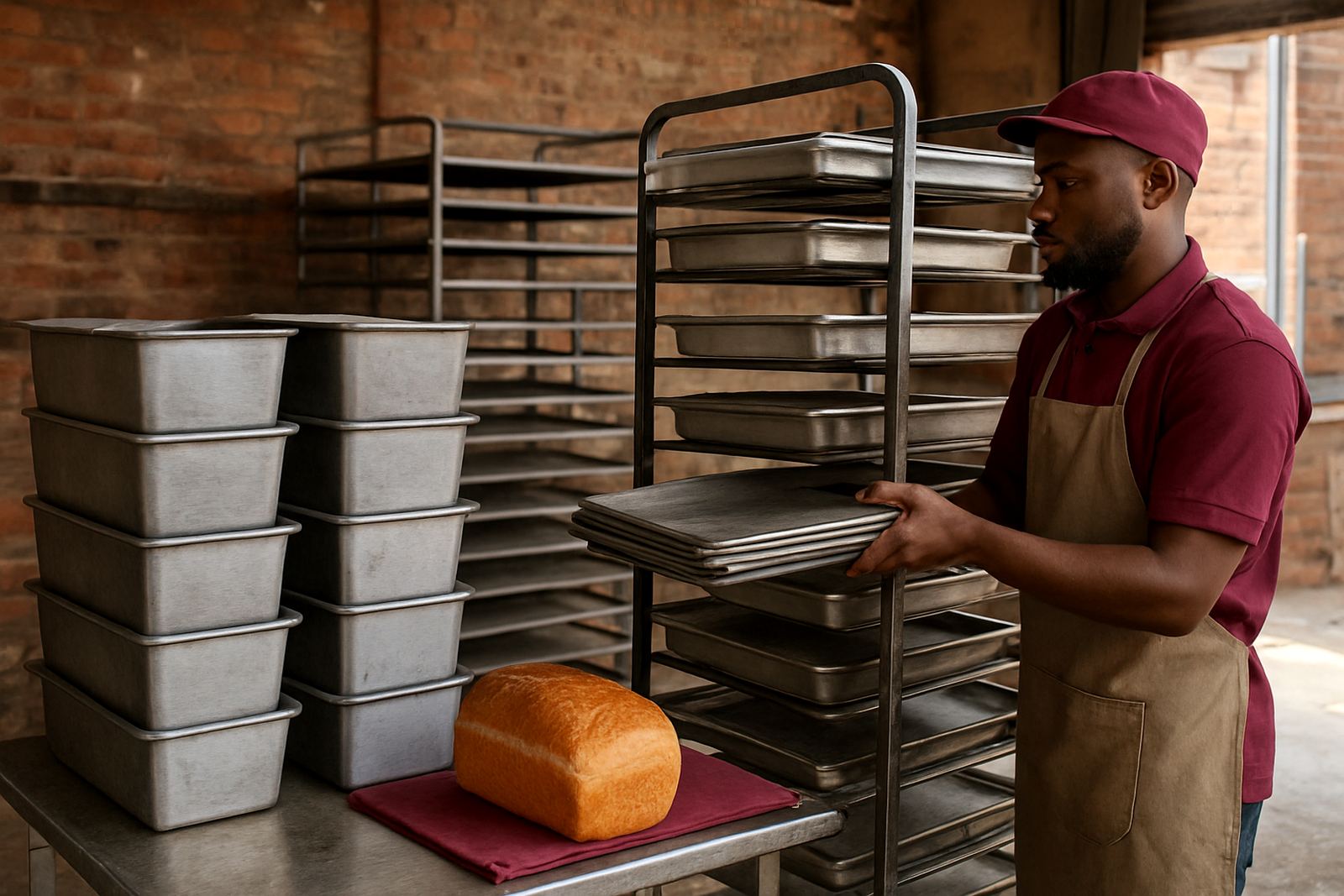
A stack should be tall enough to save space, but not so high that one person cannot move it safely. If staff need to stretch or twist to lift a pile, the stack is too high. That is where corners get bent and hands get pinched. In a bakery floor, a lower and neater stack is better than a high one that looks efficient but causes problems later.
For heavier bread pans and full trays, keep the stack to a height that allows stable lifting from waist level. Use trolleys for transport between prep, oven and store areas, and avoid resting stacks on uneven floors near drains or door thresholds. In coastal towns, humidity can also leave condensation on metal, so never stack damp items tightly after wash down.
- Keep the heaviest items at the bottom
- Do not stack so high that the top item moves when touched
- Make sure the floor or shelf is level and dry
- Use trolleys for long moves across the factory or shop floor
- Separate clean stock from returned stock until it has been checked
Protect edges and surfaces with simple spacing
Metal on metal contact is the main cause of scuffing and bent lips. Thin spacers, cardboard slips or purpose-made separators can reduce wear between layers. This is especially useful for trays and lids that need to keep their shape for a snug fit. If items are stacked too tightly, staff will pull them apart with force and that is when corners distort.
For tray sets that move in and out of production every day, keep a small inspection gap between stacks. That makes counting easier too. A quick look should show if one tray is missing, or if a fitted lid has slipped into the wrong pile. If the same item keeps jamming, it may need size matching or a small adjustment before it goes back into regular use.
Create clear stack labels and issue points
Confusion in store usually starts with poor labels. If teams handle different bread pan sizes, perforated trays and baguette trays on the same shift, every stack should be marked so staff can pull the correct item first time. Use labels that are easy to read in a warm prep room and place them where they are not covered by the stack.
Issue points should also be fixed. That means one place where clean items are counted out and one place where used items come back for checking. This cuts down on walkways cluttered with random trays, which is important in busy sites with narrow passage areas or shared loading bays.
- Label each stack with size, type and quantity
- Use one return point for used bakeware
- Keep a count sheet close to the store area
- Separate damaged items from usable stock immediately
- Update labels after batch reorders or new prototype runs
Daily checks that stop damage before it spreads
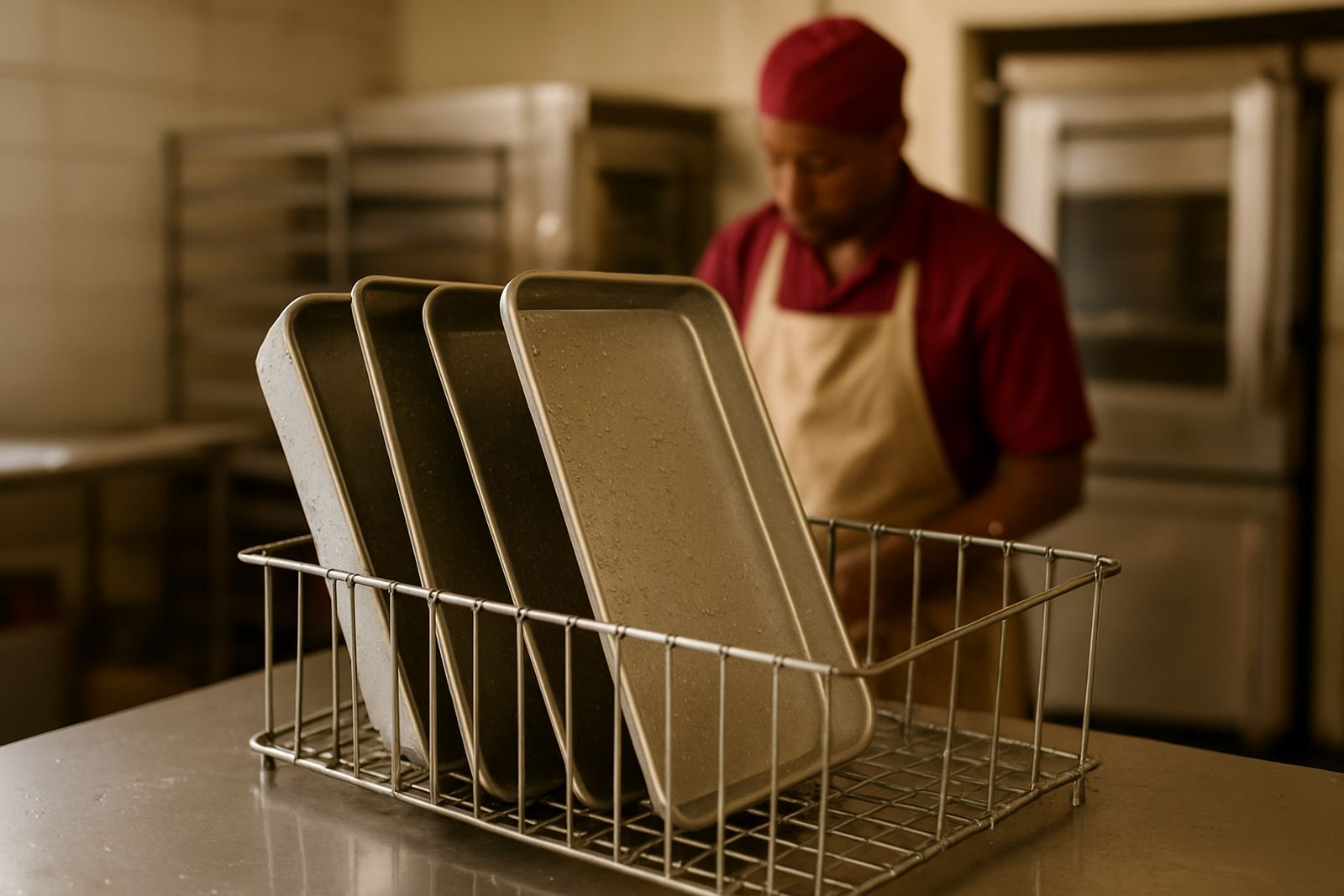
A short daily check saves far more time than a full rebuild of a messy store. Before the first run starts, look for bent rims, loose lids, warped trays, burnt-on residue and stacks that have shifted overnight. After washing, make sure every item is dry before it goes back into place. Trapped moisture can lead to spotting and sticking, and that gets worse in humid weather or when stores are closed for long periods over a weekend.
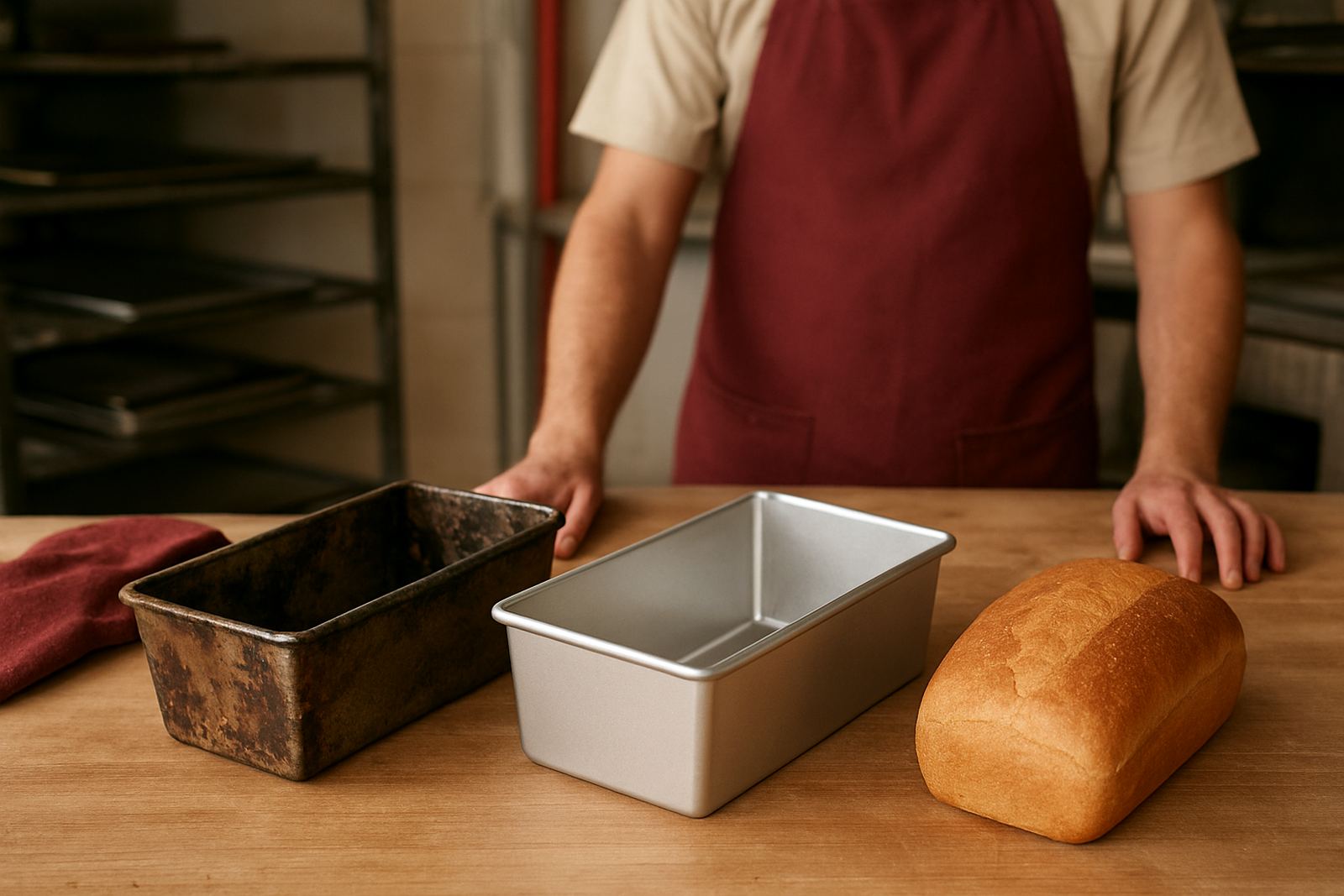
Keep a simple checklist by the store entrance. If the same pan keeps coming back with the same fault, send it for repair, replacement or a copy run. That is often cheaper than keeping a damaged item in circulation and losing product quality in the oven.
- Check for dents and warped edges at the start of each shift
- Make sure all items are dry before stacking
- Count stock after cleaning and again before dispatch
- Remove broken or unsafe items from service at once
- Review storage after any layout change, new oven line or staff handover
A practical stack checklist for busy bakeries
When storage is organised, staff work faster and the bakeware lasts longer. Use this checklist to keep the system simple and repeatable, whether you run a bakery in Soweto, Midrand or right here in Alrode. The aim is not fancy storage, just a method that works every day.
- Are pans, lids and trays sorted by type and size?
- Are heavy items stored low and light items stored above them?
- Are stacks easy to lift without twisting or overreaching?
- Are wet items kept out of the stack until fully dry?
- Are labels visible and counts up to date?
- Are damaged items removed before they affect the rest of the stock?
When the answer to any of these is no, the stack needs attention. Small changes now stop bigger losses later, and keep production moving when orders are due and the oven line is already full.