Start With A Proper Clean Down Before Packing
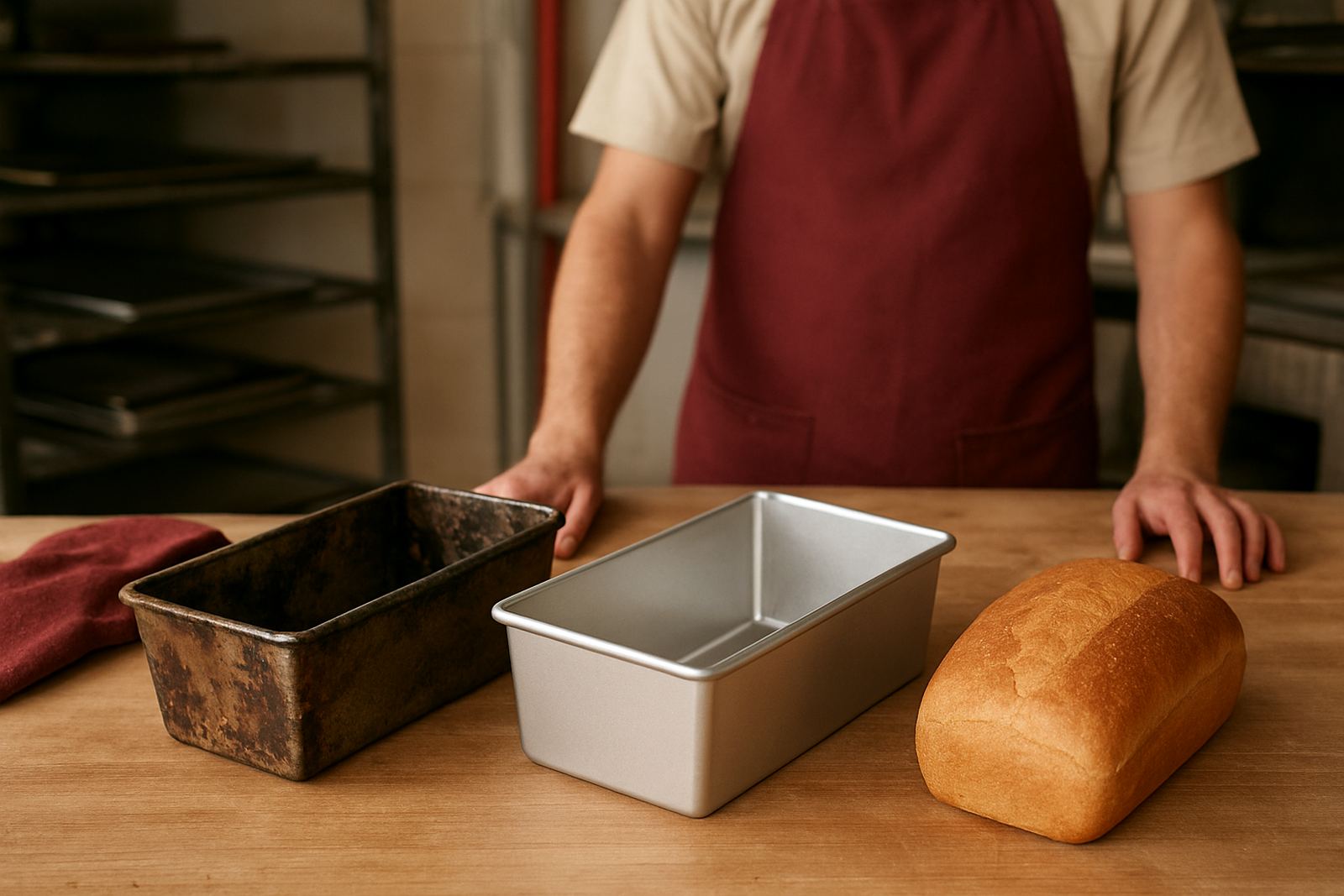
Never put away bakeware with flour dust, oil, crumbs or carbon build-up still on it. In Gauteng bakeries, warm rooms and dusty storage corners can turn a small bit of residue into a hard layer that takes extra labour to remove later. Wash each item as soon as it comes off the line, then dry it fully before stacking.
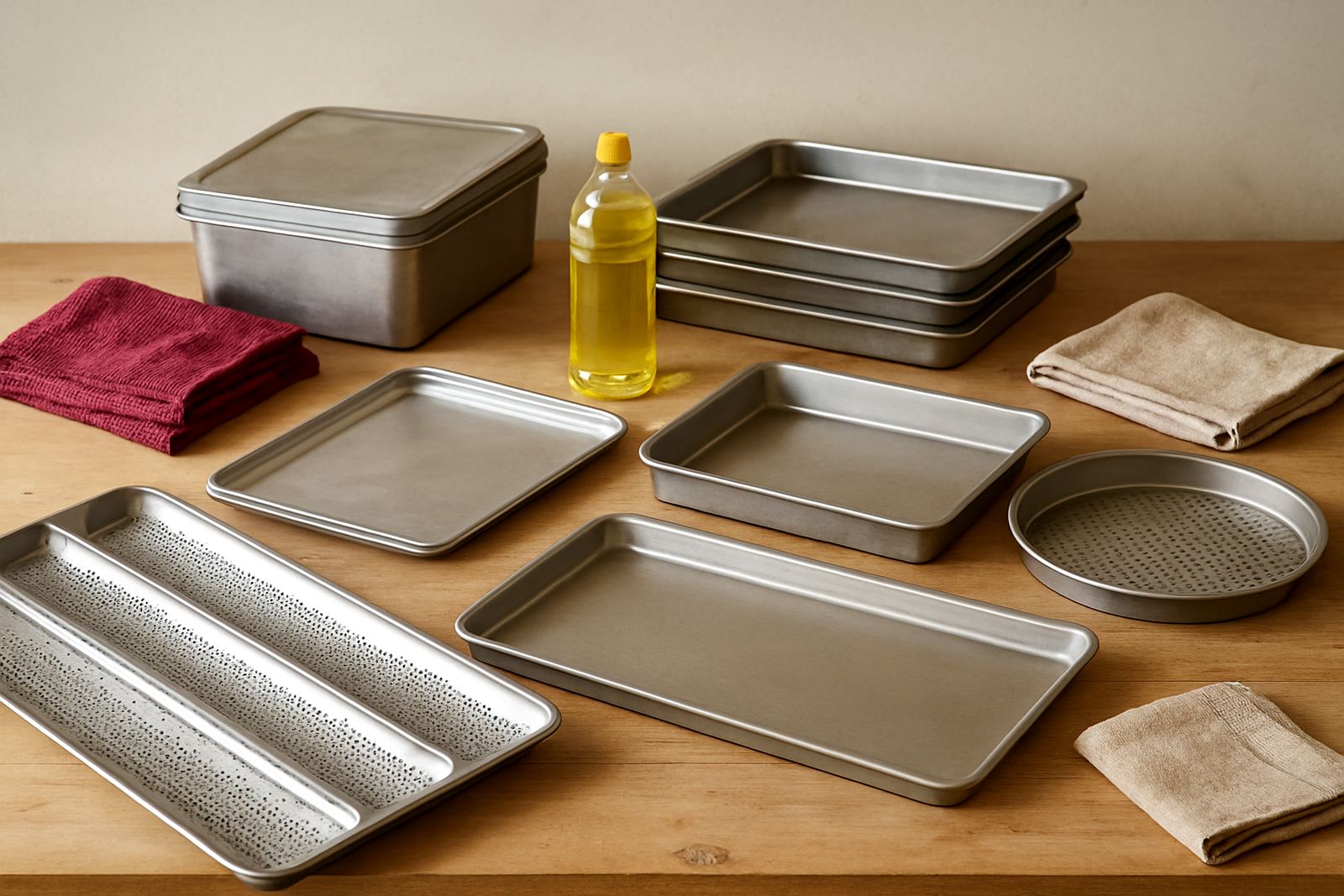
For mild-steel pans and trays, use warm water, a food-safe cleaner and a soft brush. Avoid harsh scouring that scratches the surface, because scratches hold moisture. If the item has stubborn baked-on residue, soak it first rather than forcing it off with a wire pad. A light wipe with cooking oil is not a storage method, it just hides dirt.
- Remove all crumbs from corners and folded edges.
- Check for grease in tray perforations and lid seams.
- Dry with clean cloths, then air-dry before packing.
- Make sure no item is put away while still warm.
Sort By Type, Size And Production Use
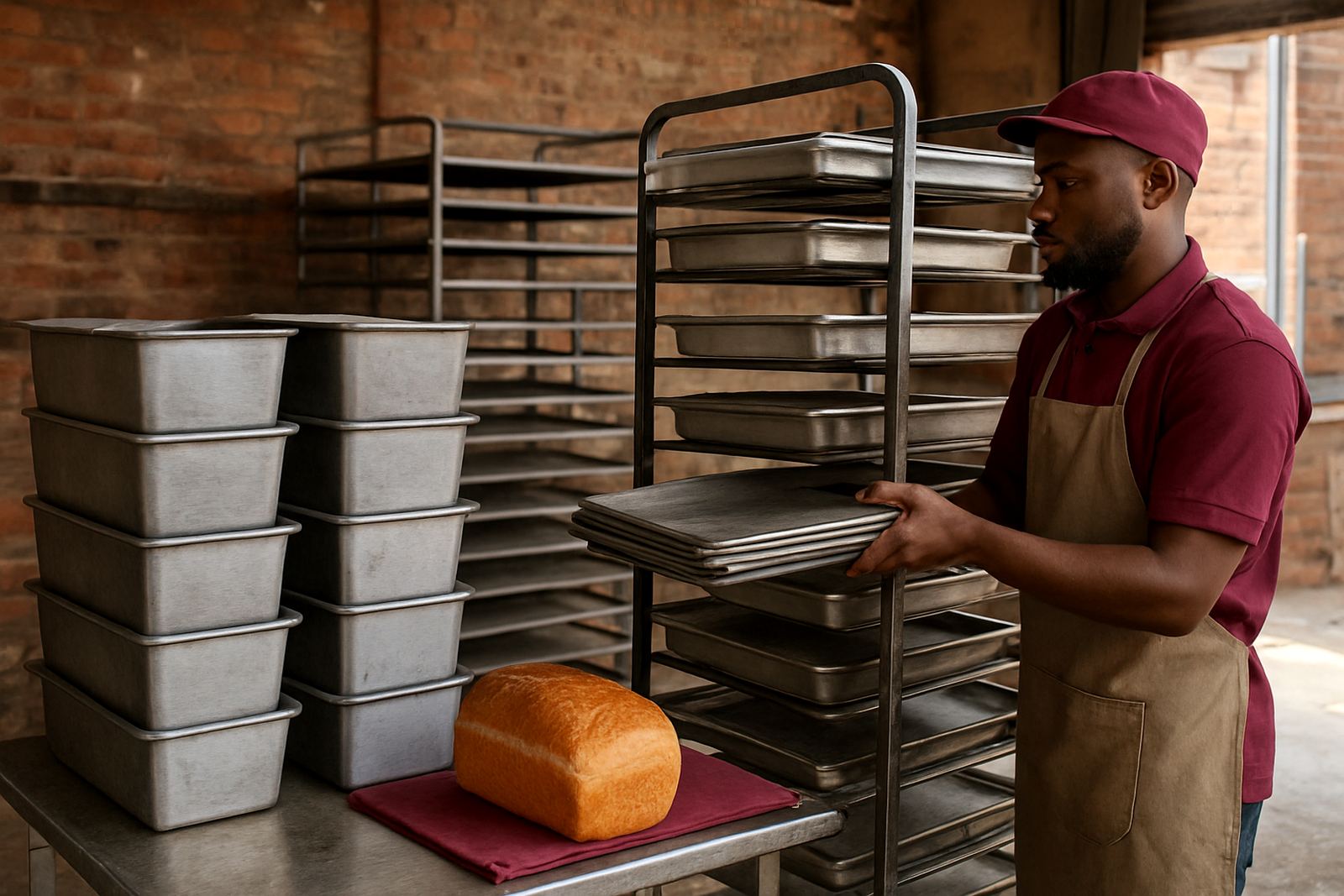
Seasonal storage works best when the spare stock is organised before it goes into the store room. Keep BO3, BO4 and BO5 bread pans separate, and group lids with the pans they fit. Baguette trays, perforated trays and divider inserts should each have their own section. This keeps the morning shift from wasting time searching through mixed piles.
Use simple labels on shelves, racks or bins. Include the item name, size, quantity and last cleaning date. If you run different loaf weights or special moulds for school contracts, mark those clearly too. In busy yards around Alberton, Germiston or Boksburg, a clear label saves arguments and stops the wrong tray being sent back into production. It also helps when there is a batch reorder later on.
- Keep fitted lids with their matching pans.
- Separate worn stock from ready-to-use stock.
- Group by size, then by shape, then by condition.
- Record any bent corners or weak welds before storage.
Stack Flat, Protect Edges And Stop Rust
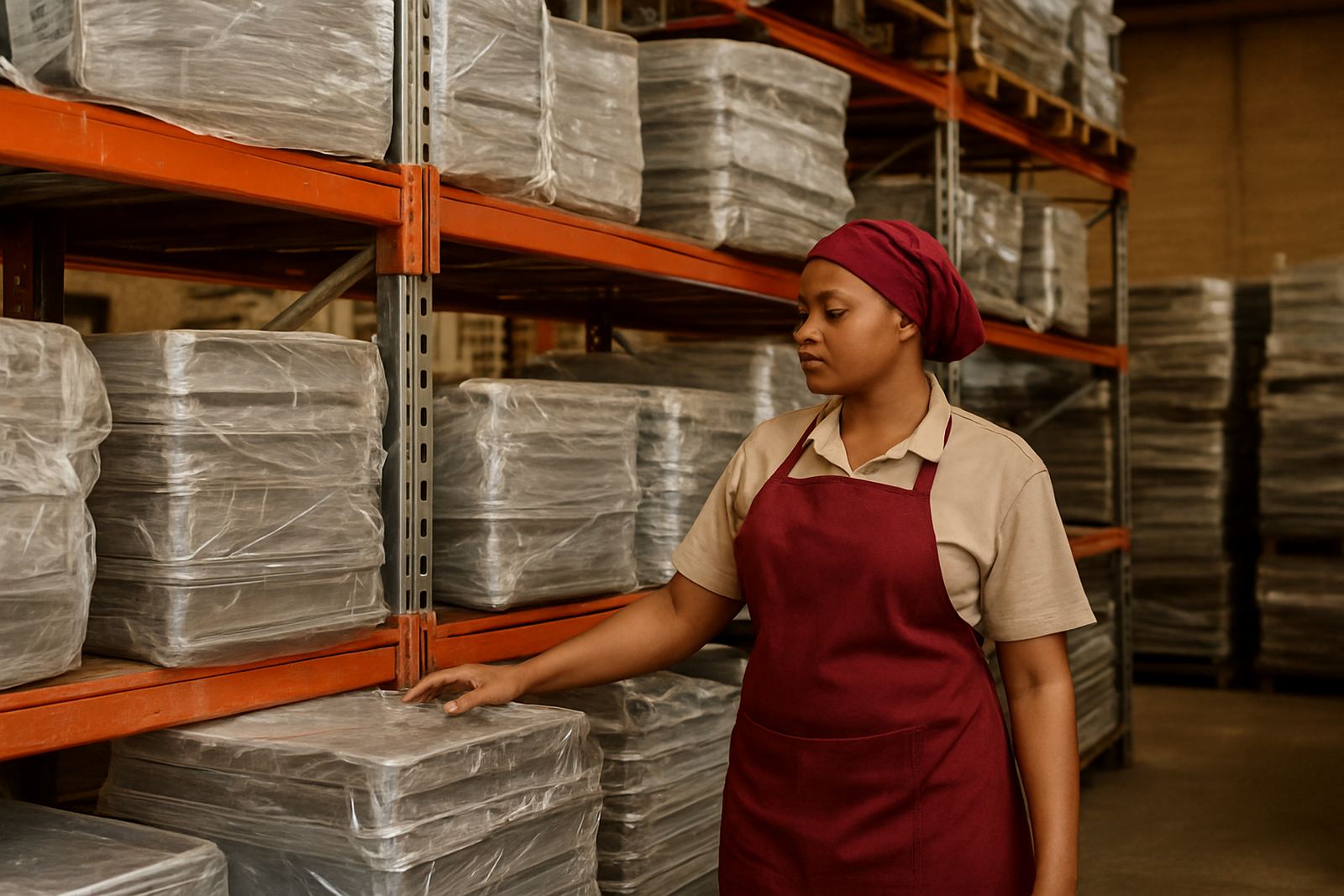
Bakeware stores best when it is stacked flat on clean racks, not thrown into piles on the floor. Put heavier items below lighter ones and leave a small gap for air movement. If trays are nested too tightly, trapped moisture can cause pitting and rust, especially in coastal humidity or in closed rooms where ventilation is poor.
Place cardboard sheets, clean cloths or plastic dividers between stacks where needed. Do not let sharp tray edges rub against pan surfaces. For mild-steel products, a dry storage room is better than a damp corner next to a washing area. If your site has load-shedding, avoid storing wet items near an area that stays dark and closed for long periods, because drying slows right down.
- Store on racks, not on bare floors.
- Keep stacks level so pans do not twist.
- Leave space for airflow between groups.
- Cover clean stock with breathable material, not sealed plastic.
Control Heat, Moisture And Dust In The Store Room
A spare bakeware store should be clean, dry and easy to inspect. Dust from nearby cutting, packaging or vehicle traffic can settle into perforations and corners, then end up back in the oven later. Fit shelves away from open doors, washing bays and chemical storage. If the room has no window ventilation, open it daily for a short while.
A simple thermometer and humidity check is worth having. If the room feels damp, use airflow, not chemicals, to fix it. Avoid stacking bakeware beside ingredients, cardboard with leak marks, or anything that attracts insects. Municipal inspectors can be strict about storage hygiene where food contact items are concerned, so keep the area neat and documented. A tidy store room also makes stock counts easier when orders rise again.
- Keep the floor swept and dry.
- Do not store near leaks, open windows or wet mops.
- Check for dust, rust spots and insect activity weekly.
- Keep cleaning chemicals in a separate cupboard.
Inspect Spare Stock Before The Next Peak Period
Before a busy season starts, pull out the stored items and inspect them one by one. Look for warping, open corners, dented rims, loose joints and worn non-stick surfaces if applicable. A pan that no longer sits square can affect loaf shape and oven loading, which slows production and causes avoidable rejects.
Match lids to pans and test the fit. If a lid sits too loose or too tight, set it aside for adjustment or replacement. Check the perforation pattern on trays too, because blocked holes or bent sections can affect bake colour and release. This is the best time to plan replacements, rather than discovering faults on a Monday morning when the orders are already waiting.
- Count every item against your storage list.
- Inspect welds, seams and folded edges.
- Test-fit lids, inserts and matching trays.
- Mark items for repair, reuse or scrap.
Set A Simple Rotation System For Reorders
Do not let the same few pans keep coming back while older stock sits in storage. Use a rotation system so the spare items are brought forward and put back in order. Write the storage date on the crate or shelf tag and keep a clear note of which items were used during the last peak run. This helps with batch reorders and stops hidden wear from going unnoticed.
If your bakery runs in shifts across Johannesburg South, Soweto or Midrand, assign one person to sign items in and out of storage. That one small habit cuts losses and makes stock control much easier. It also helps when factory consultations are needed, because you can show which sizes are working, which ones need adjustment and which pans should be copied again for future orders.
- Use first-in, first-out storage.
- Record issue and return dates.
- Separate repair stock from ready stock.
- Review storage every month during quiet periods.