Why a factory consultation saves time and rework
A proper factory consultation is where the order starts making sense on the floor, not only on paper. We look at what you are baking, how often the pans move through the plant, what your staff can lift comfortably, and whether the equipment must fit existing ovens, prover racks, trolleys or cooling tables. In a busy bakery, a few millimetres can mean trays catching on a rail, lids not seating squarely, or bread pans landing too close together during cooling.
For bakeries in Alrode, Germiston, Boksburg, Soweto and Midrand, we also factor in local handling conditions such as dispatch stacking, short delivery routes and storage space. If the equipment will be used in a hot bakehouse with regular wash-down, or in a coastal area later on, we can advise on material thickness, finish and maintenance so the pans last longer and keep their shape.
The goal is simple: get the measurments right first, then manufacture once, not twice. That saves steel, labour and time for everyone.
What we cover during the consultation
We use the consultation to confirm the practical details that affect production, use and cleaning. Some jobs only need a size match. Others need a full copy of an existing pan with small changes, or a stronger build for heavier dough loads and repeated handling.
- Inside and outside dimensions, including depth, flange width and lip detail
- Loaf weight, dough volume and expected batch output per shift
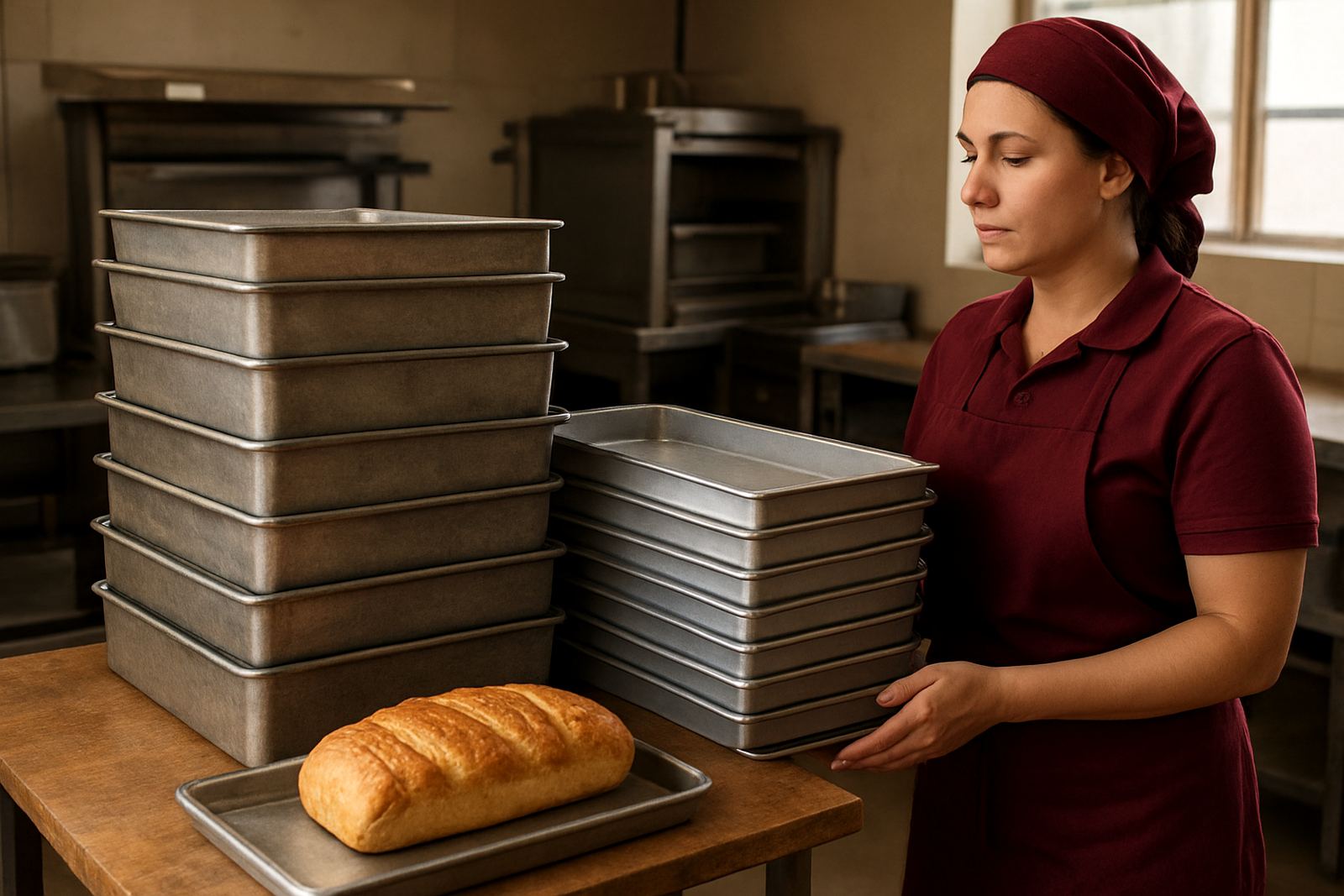
- Oven type, rack spacing and whether the pans must nest or stack
- Material choice, gauge and reinforcement points for high-wear areas
- Lid fit, hinge allowance and how tightly the lid should seat
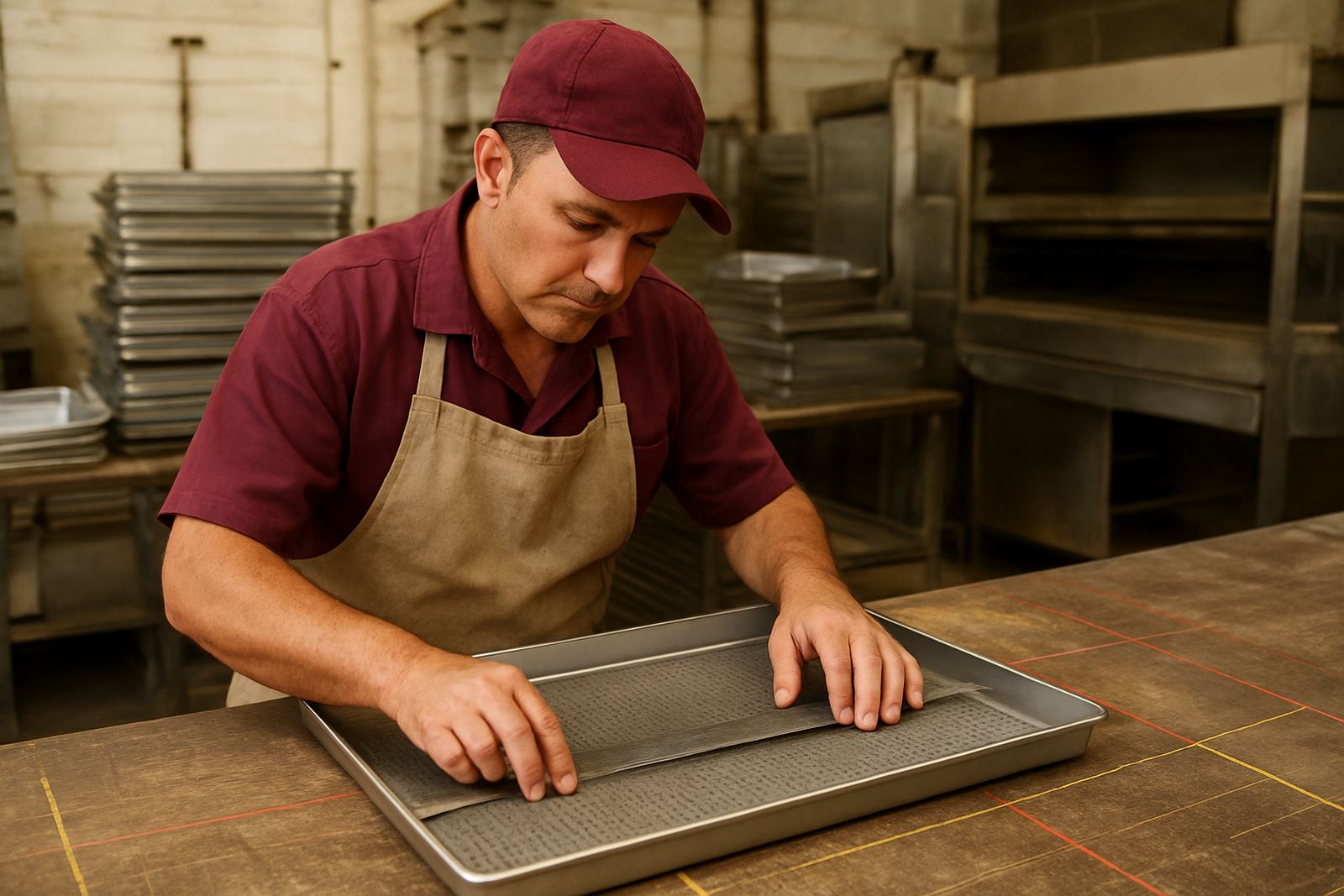
- Perforation pattern for airflow, crust control and release
- Baguette shaping, divider inserts and tray layout for portion control
We also check whether you need prototype runs before a full batch order. If your current pans are working but have one weak point, we can usually adjust only that part rather than changing the whole set.
How the process runs from first call to sign-off
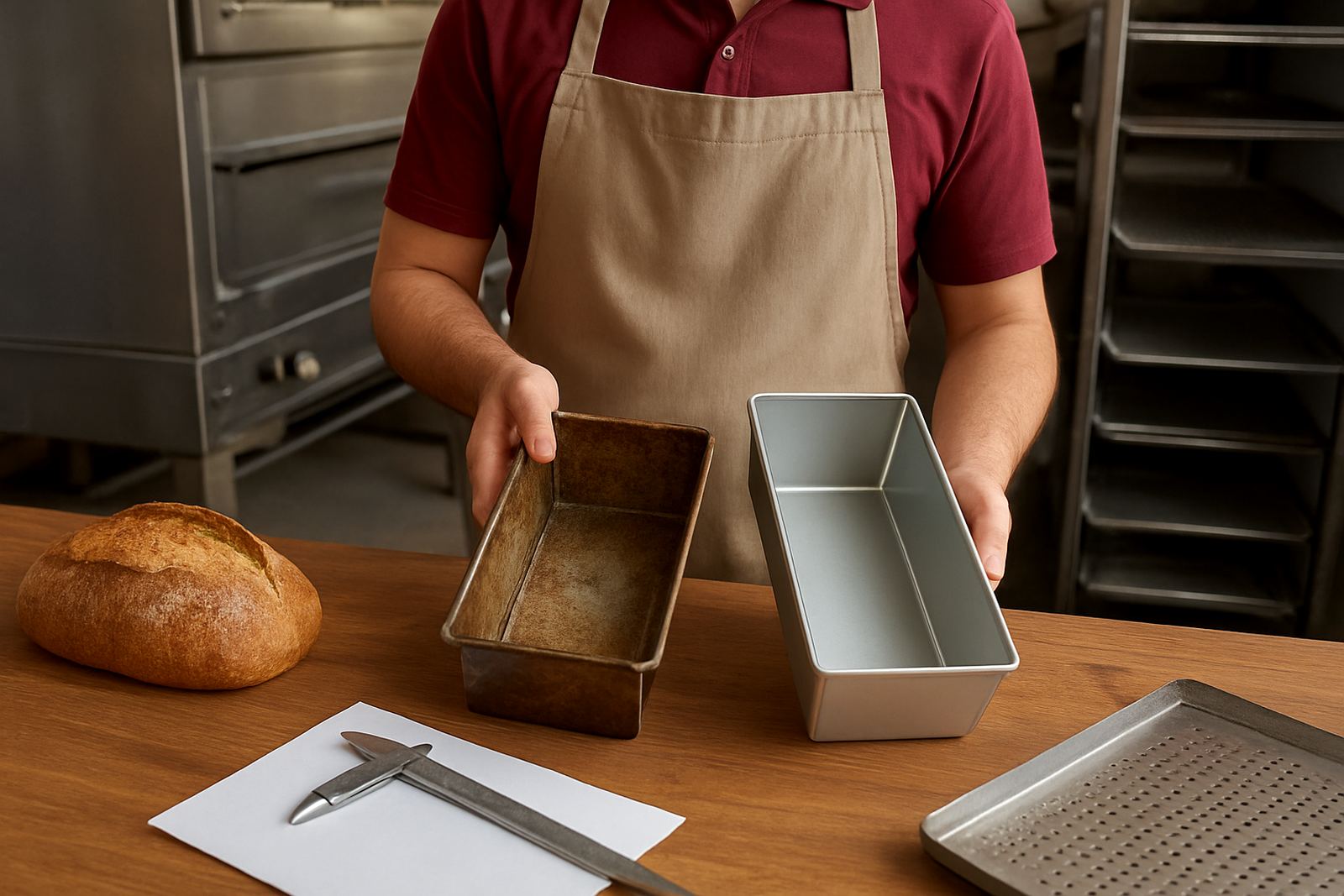
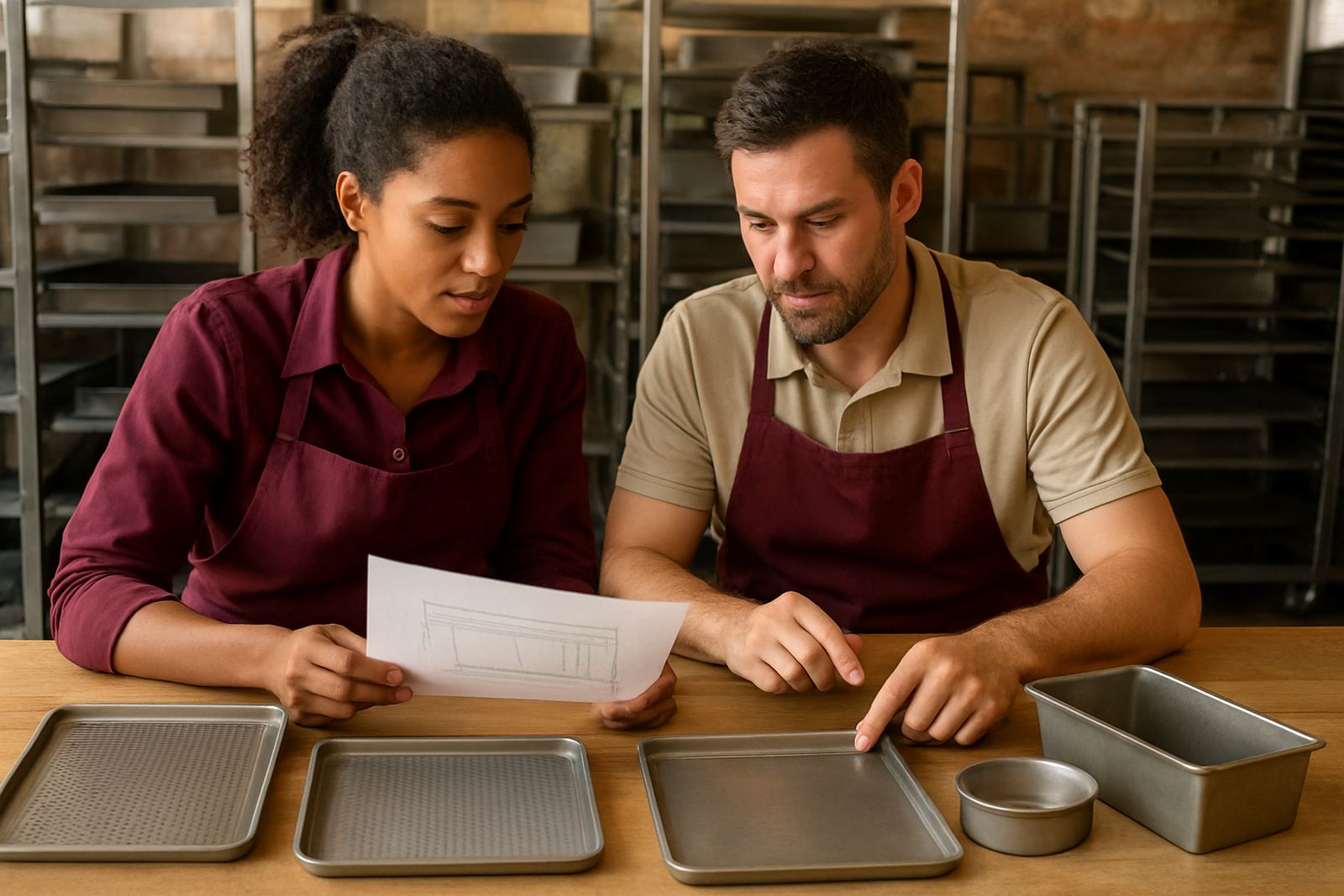
Most consultations begin with a call or email to orders@bakerycateringequipment.co.za. After that we set a time to inspect your sample pan, drawing, sketch or old tray. If you already have a worn unit, bring it in or send clear photos with measurements and a note on the issue, such as sticking, warping, loose lids or poor loaf release. We can work from a physical sample, a written spec or a combination of both.
Once we have the details, our team checks the build method, confirms material thickness and explains any limits before production begins. Where needed, we prepare a prototype or a small batch for testing. That gives you a chance to check fit in your own ovens and on your own trolleys before you commit to a larger run. If changes are needed, we note them and make the adjustment before full manufacture.
- Initial enquiry and job brief
- Sample review or site consultation
- Measurement confirmation and spec approval
- Prototype or trial run if required
- Batch manufacture and dispatch
Typical specifications we work with
We manufacture standard bread pans and special bakeware to suit bakery output across Gauteng. Common requests include BO3, BO4 and BO5 bread pans, matching lids, perforated trays and baguette trays. We also do heavier gauge builds where a bakery needs extra stiffness for daily handling and repeated oven cycles.
As a guide, bread pan depths, seam detail and handle style are selected according to the loaf size and the way the pans are moved. Perforated trays can be set up for improved air circulation and more even browning. Baguette trays are formed to match the required loaf count and spacing, with divider inserts where consistent shape is important. For high-volume sites, we can look at stacking tolerance so the trays do not bind when stored or returned from wash area.
When we inspect a sample, we check straightness, corner strength, weld lines and lip support. If the item has already distorted in service, we look at why it happened before we copy it. That is usually the difference between a quick replacement and a better lasting part.
Turnaround times and pricing approach
Turnaround depends on the complexity of the job, whether a prototype is needed and how many units are in the batch. A straightforward size match or repeat order is usually quicker than a new form, perforation pattern or fitted lid system. If the job is urgent, tell us early so we can plan material and production time around it.
Pricing is based on the material used, gauge, cutting and forming time, any perforation or special tooling, and the number of units ordered. Larger batch reorders generally reduce the per-unit cost, while one-off prototypes are priced separately because they take extra checking and adjustment. We keep the pricing clear so you know what is included before work starts.
We do not pad the job with extras you do not need. If a tray can be made to spec without overbuilding it, we will say so. If the application needs heavier steel for better service life, we will explain why before you approve the quote.
Care, cleaning and service intervals
Good maintenance matters as much as good manufacture, especially in bakeries running long shifts or working through load-shedding. We advise on cleaning frequency, storage and inspection intervals so the pans keep their shape and do not fail early. A quick check after every wash cycle and a fuller inspection on a set schedule can prevent small bends from turning into unusable stock.
- Check for warping, sharp edges and loose joints after washing
- Dry thoroughly before stacking to avoid rust spots and staining
- Store on level racks so trays do not twist under their own weight
- Inspect lids, corners and flange lines weekly on high-use sets
- Plan rework or replacement before a busy production period, not after failure
If your site is humid, near the coast or using more aggressive cleaning routines, we can recommend a shorter inspection interval and a finish that suits the conditions better. Proper care extends service life and keeps the handling predictable for your staff.
Key facts
| Consultation format | In-person, sample-based or by drawing and photos |
|---|---|
| Common products | Bread pans, lids, perforated trays, baguette trays |
| Typical bread pan sizes | BO3, BO4 and BO5 |
| Material options | Mild steel with standard or heavier gauge builds |
| Output planning | Batch sizing, prototype runs and batch reorders |
| Service area | Alrode, Alberton, Germiston, Boksburg, Soweto and Midrand |