Germiston pastry line brief
The order came from a pastry operation in Germiston that was running a busy daily bake schedule and wanted better airflow under the product. Their team was seeing uneven colour on the underside of certain items, with some trays holding heat longer than they wanted, especially during longer shifts and on warmer days when the room temperature climbs and the ovens already work hard.
The brief was practical. They needed perforated trays that would fit an existing baking line, stack properly for dispatch, and stand up to repeated use in a commercial bakery environment. The trays had to work with standard handling, fit through the normal cleaning process, and stay within a size pattern that would not force the team to change the way they loaded or rotated product.
The client also asked for a build that would suit load-shedding routines and stop-start production, because when power comes back on a bakery still needs trays that are easy to move quickly and safely. No fancy extras, just trays that do the job day after day.
What the bakery needed us to work around
There were a few constraints from the start. The first was the tray footprint, because the line already used a fixed oven and rack arrangement. The second was airflow, which meant the perforation pattern had to be open enough to help with heat movement but not so open that smaller pastry pieces would mark or sag. The third was handling, since the trays had to be strong enough for daily use without becoming too heavy for staff to lift in volume.
- Existing oven spacing had to be respected.
- Tray edges needed to stay true for easy stacking.
- The perforation layout had to suit pastry, not bread rolls or loaves.
- The finish needed to be practical for bakery cleaning and regular handling.
Because the site was in Germiston, transport timing also mattered. Orders in and out of the East Rand can be tight when dispatch windows are short, so the tray quantity and batch plan had to be accurate. A small delay in size matching can upset a whole production shift, and nobody wants that when orders are already lined up for the morning run.
Tray build and perforation pattern
We supplied perforated mild-steel trays built for the client's pastry line, with sizing matched to their existing use pattern. The trays were made with a perforation layout that allowed better airflow through the base, helping reduce soggy bottoms and giving the product more even exposure in the oven. The tray borders were formed to keep the sheet stable and to prevent flex during loading.
Key specs were set around the bakery's own process. The team wanted a tray that could be moved between prep, proofing and baking areas without catching on racking, and the perforation size had to be suitable for small pastry items without causing unnecessary product marking. We also kept the gauge practical for repeated service, so the trays would not distort after a few cycles, or after a few hundred.
- Material: mild steel.
- Format: perforated baking trays for airflow.
- Use: pastry line production.
- Build aim: repeat handling with stable tray shape.
- Finish: suitable for commercial bakery use.
Production, checking and dispatch from Alrode
The job moved through our Alrode workshop in a standard production sequence, starting with size confirmation, then cutting, forming, perforating and final checking. We worked to the agreed measurements and checked the tray corners and edges so the batch would stack properly. For a line like this, one tray sitting slightly out can cause nuisance all the way down the chain, from loading to cooling.
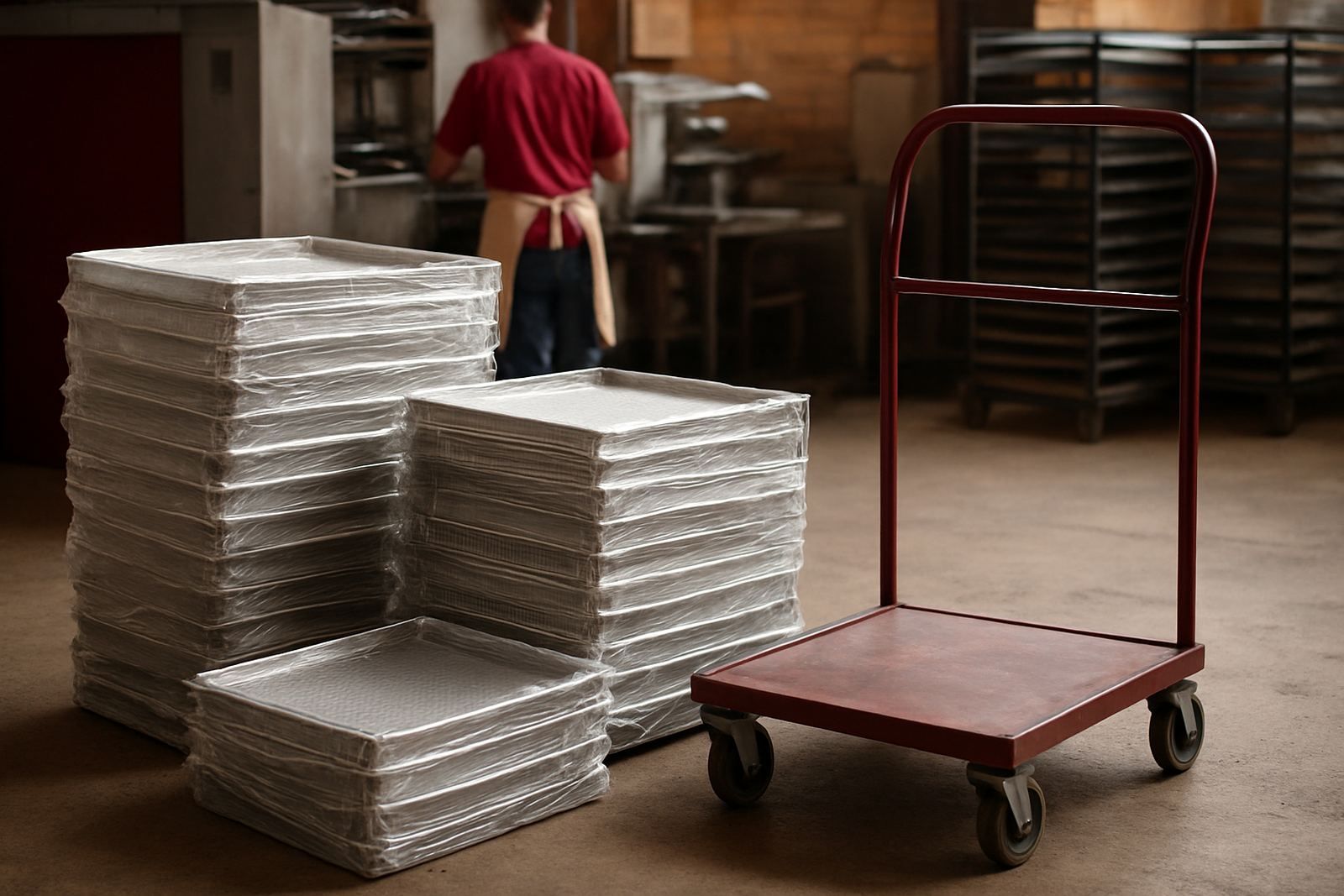
During the build we checked the fit against the client's handling requirements and made sure the batch count lined up with what they needed for rotation. The production period ran over three weeks from confirmation to ready-for-dispatch, which gave enough time for checking without dragging the job out. Once the trays were approved, dispatch was arranged for Germiston with the batch packed to reduce movement in transit.
Our team also kept the customer updated through the order process, because bakery schedules do not wait. If a line is down or a tray count is short, someone needs a clear answer quickly, not the next day.
Results on the baking line
After the trays were introduced, the bakery had better airflow under the pastry and more consistent base colour across the batch. That made the baking process easier to manage and reduced the need for repeat adjustment on the oven side. The trays also handled the load better than the client expected, with good stacking behaviour in the prep area and less hassle when moving between shifts.
The team reported that the line felt more predictable. That matters in a production bakery because once the tray format is right, staff can work faster without second guessing the bake. It also helps on hotter days and during power interruptions, when the line has to restart cleanly and keep moving.
- Improved airflow across the pastry base.
- More even baking and colour consistency.
- Cleaner stacking for storage and dispatch.
- Better fit with the existing line layout.
What we would repeat on the next order
If we were doing the job again, we would follow the same approach, starting with the line measurements and the product type before setting the perforation pattern. That first step saves time later. It also helps to confirm the tray handling method early, because what works for one bakery in Germiston may not suit another site in Soweto, Midrand or Boksburg.
For a repeat order, we would keep the same practical priorities: accurate sizing, steady tray edges, a perforation layout that supports airflow without weakening the sheet, and a batch plan that suits the customer's dispatch rhythm. That way the bakery gets a tray that can slot into routine production without extra training or process changes.
For bakeries and catering operations around Gauteng, that is often the difference between a tray that merely fits and a tray that actually helps the shift run better.
Local service for Gauteng bakeries
We continue to support tray orders, bread pan work, lid fitting and custom bakeware from Alrode for customers in Germiston and the surrounding East Rand. The work is usually straightforward, but the details matter. Accurate sizes, sensible material choice, and a clear idea of how the bakery handles product all make a difference to the final result.
For this Germiston order, the result was a practical perforated tray set that matched the line, supported airflow and held up in daily use. That is what most bakery teams want, and it is what we aim to supply every time.
Key facts
| Project | Germiston Tray Order |
|---|---|
| Client type | Pastry bakery operation |
| Town | Germiston, Gauteng |
| Product supplied | Perforated mild-steel baking trays |
| Timeline | 3 weeks from confirmation to dispatch |
| Main benefit | Improved airflow and more even pastry baking |