Project brief from a growing Soweto bakery
The client was a family-run bakery in Soweto that had built a strong trade in loaves and vetkoek, then added muffins for school runs, office packs and weekend orders. They needed trays that would suit their existing oven layout, keep each cup consistent and let the team move faster from mixing to baking without manual fuss.
The brief was practical. They wanted muffin trays for regular production, not a once-off event tray, and the pieces had to cope with daily use, a warm kitchen and quick turnarounds when orders came in before midday. The bakery asked us to look at cup size, sheet size, edge strength and how the trays would sit on their racks and cooling tables.
What had to be considered before we started
Soweto kitchens often run with tight space and changing power availability, so the trays needed to support batch baking and quick changeovers. The bakery also washes equipment often because sweet products show every crumb and sugar mark. That meant we had to think about drainage, cleaning access and how the trays would behave after repeated use.
- Tray size had to match the oven shelves already on site.
- The cup depth had to suit standard muffin fills without overflow.
- Edges needed enough stiffness to reduce flex when moving a full tray.
- The finish had to be easy to clean after butter, batter and light oil use.
- The bakery wanted repeatability for future batch orders, not a one-off sample only.
Tray build and key specs we supplied
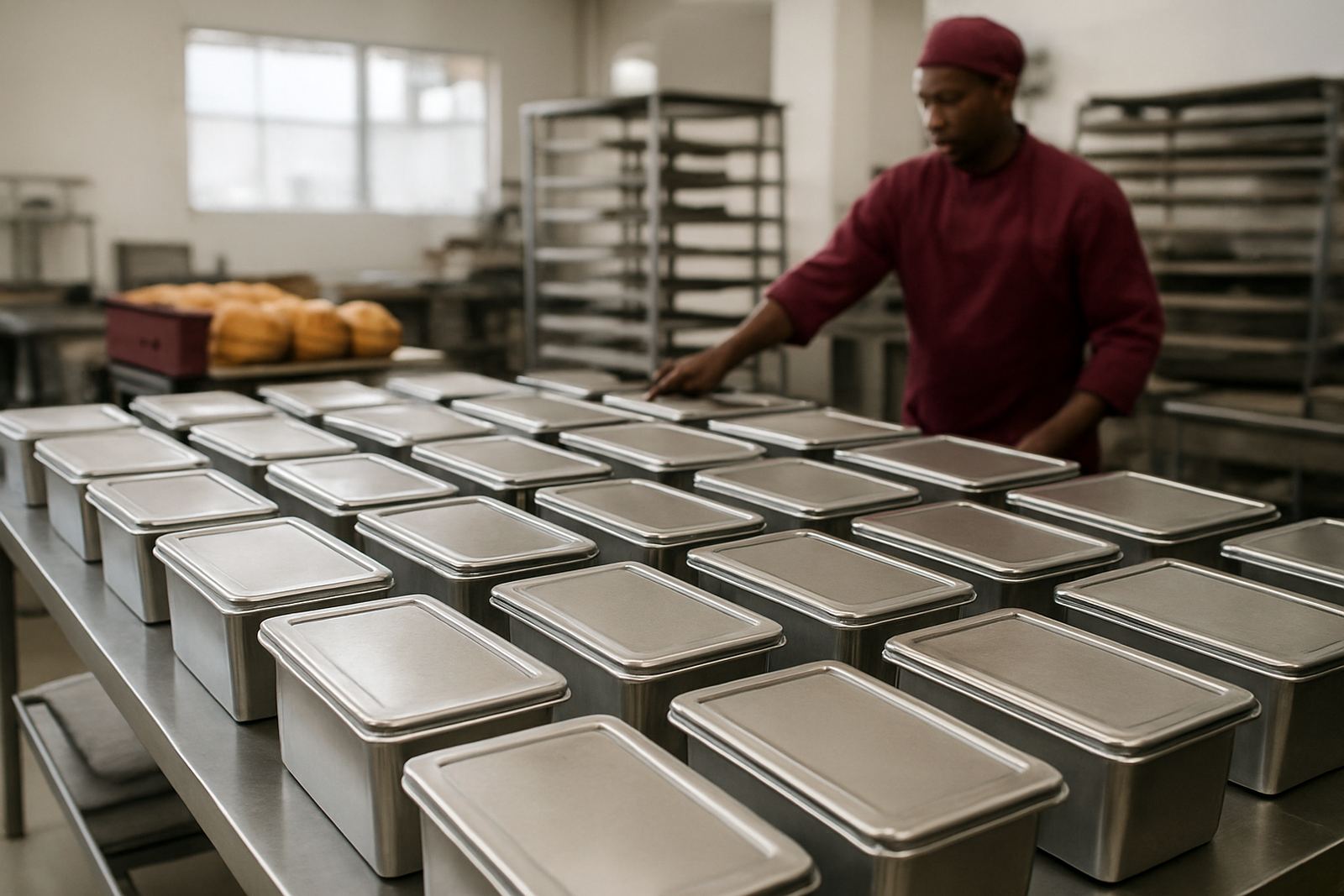
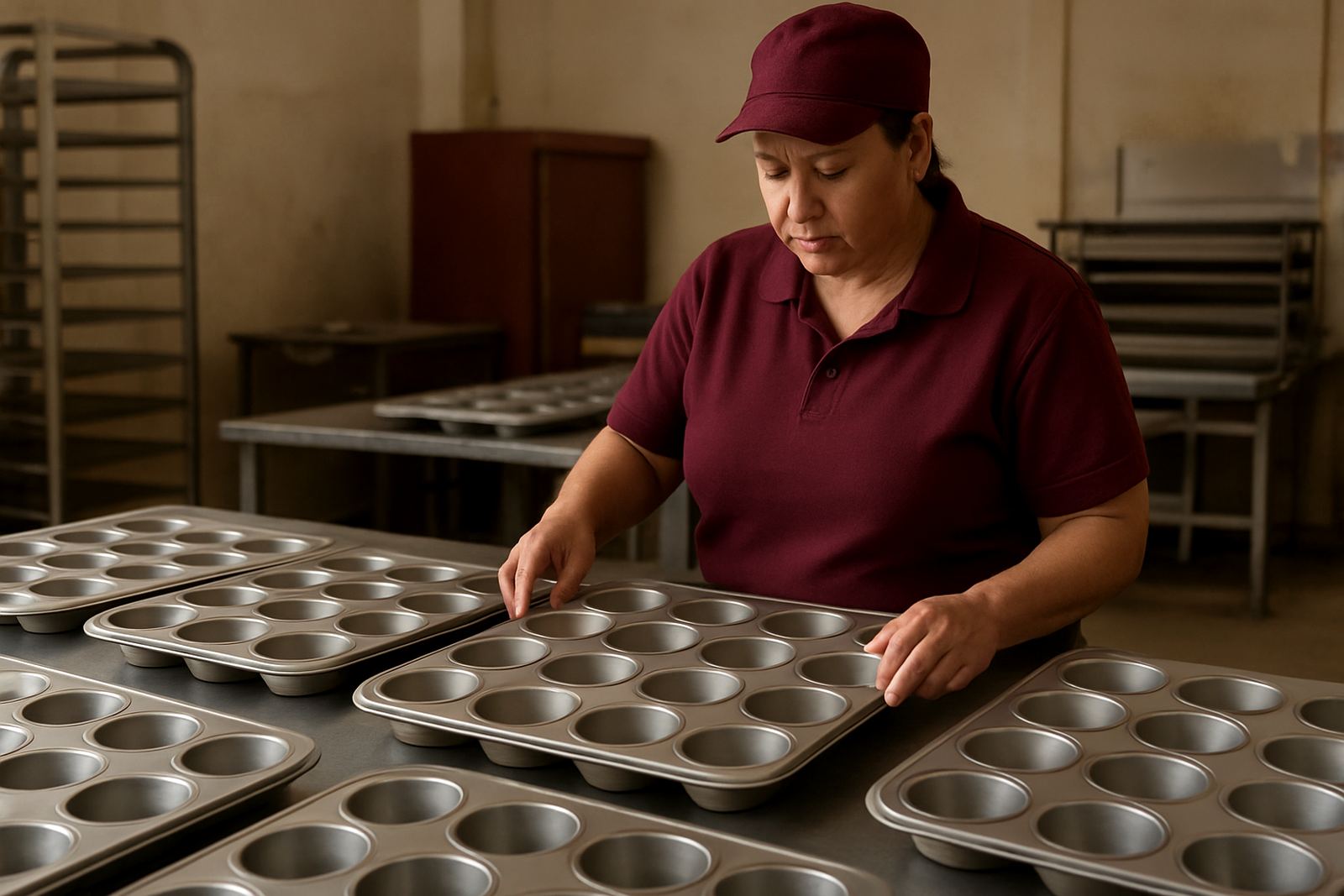
We supplied muffin trays made for production use, with a layout that helped the bakery keep portions even from tray to tray. The form was set up for standard bakery handling, so the team could fill, bake, cool and stack without the cups distorting or the sheet wobbling under load. We kept the build simple and solid, because that is what works best in a working bakery.
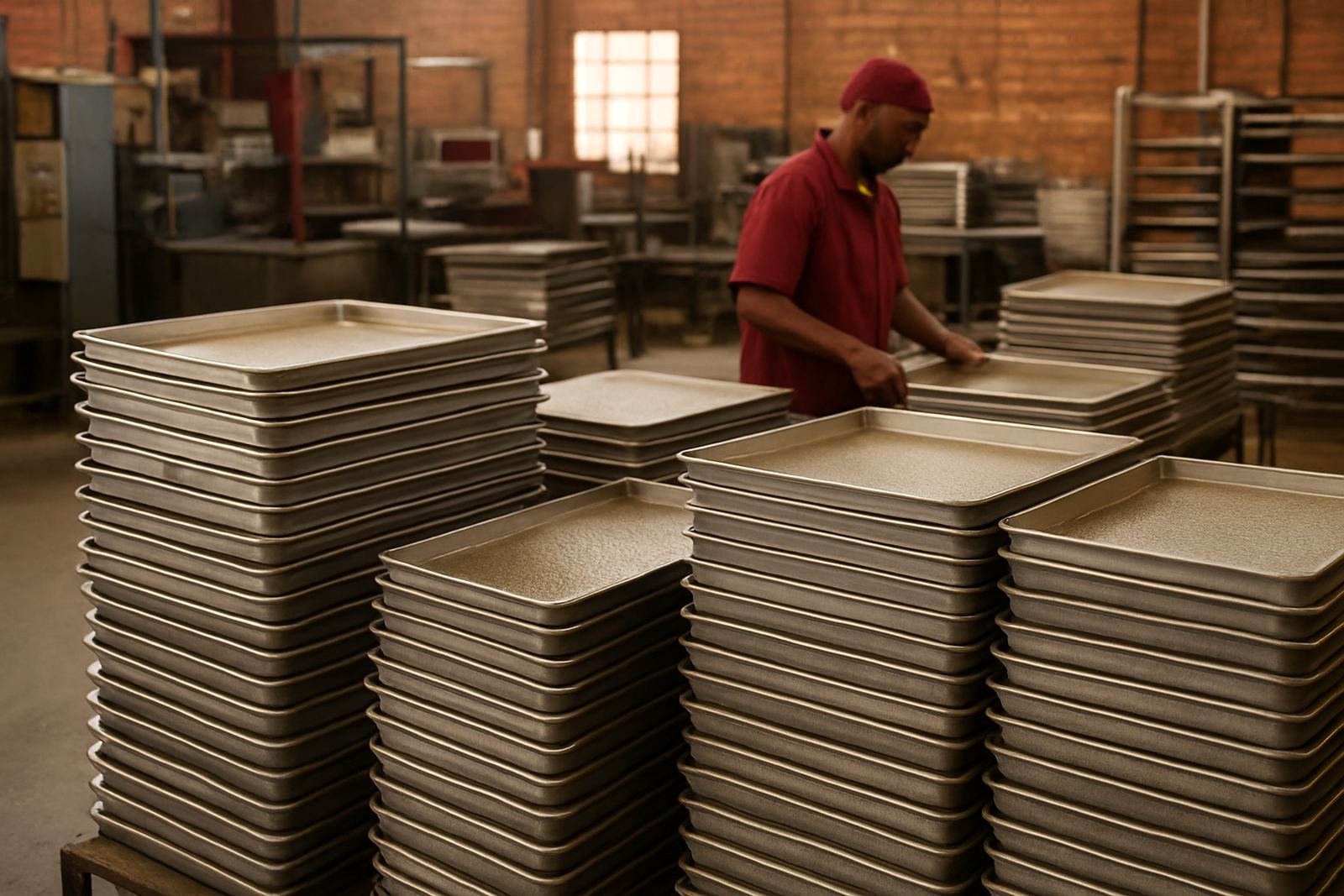
Each tray was made to suit their oven compartment and rack spacing, with a practical cup count that balanced output and handling weight. The depth was set for a good rise on muffins without spillover, and the sheet profile was reinforced so the trays stayed flatter after repeated heating and washing. On a busy morning, that matters more than fancy features.
- Material: mild-steel bakeware for daily bakery use
- Format: muffin tray layout matched to site measurements
- Cup depth: set for standard muffin fills and clean release
- Edge detail: reinforced for handling and stack stability
- Use case: batch baking for sweet product lines
- Finish: practical surface for routine cleaning and maintenance
Measuring, copying and fitting the trays
We began with measurements from the client’s oven shelves and the rack spacing used in their prep room. In bakery work, a few millimetres can decide whether a tray sits properly or jams when a worker is moving fast. We checked tray width, overall length, lip height and cup spacing, then set the pattern to suit their day-to-day handling.
Because the bakery already had an order rhythm for bread and rolls, we also looked at how the muffin trays would be loaded alongside other bakeware. The team wanted a clean fit with their cooling space and storage shelves, not trays that needed to be forced in sideways. That saved time and reduced damage during handling.
We did one sample run first, then adjusted the spacing slightly after feedback from the kitchen. A small change in cup layout can make a big difference to filling speed and even baking, especially when the same team is also answering customers and packing orders. The second run matched the brief and went into full production.
Timeline, production and handover in Soweto
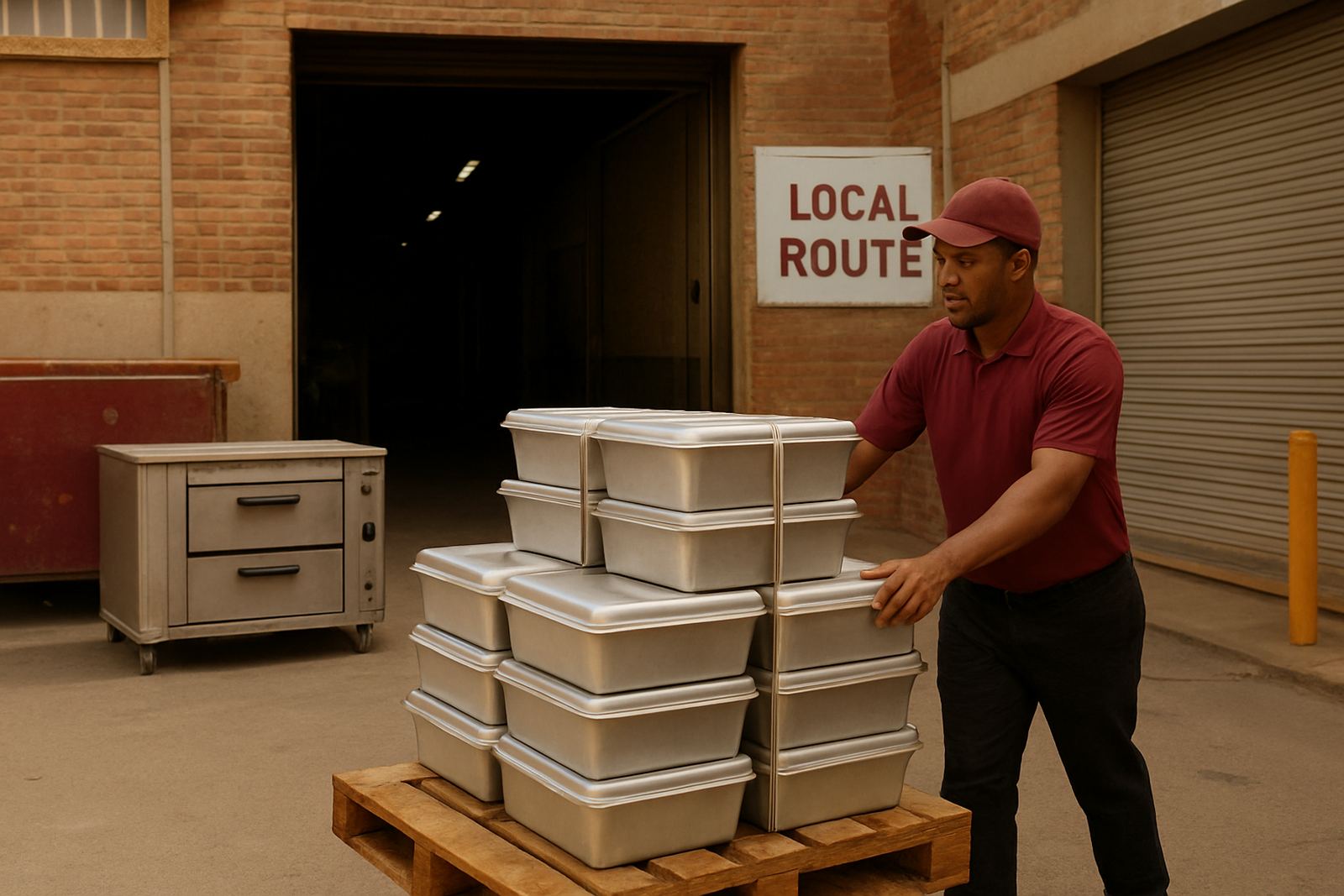
The full job ran over three weeks from first contact to final handover. Week one covered measurements, sample discussion and confirmation of tray layout. Week two was fabrication and checking the first batch against the oven fit. Week three covered final supply, packing and dispatch to Soweto.
The bakery received the trays in time for their next production cycle, which let them launch the expanded muffin range without waiting for another round of adjustments. We kept the handover simple and gave the team the measurements again for future reorder reference, so they can request the same format later without starting from zero.
- Week 1: site measurements and tray layout confirmation
- Week 2: fabrication and fit check against the sample pattern
- Week 3: final supply and dispatch to the bakery
Results after the first production run
The bakery reported cleaner portion control and less time spent correcting uneven fills. Their oven loading also became easier because the trays sat properly on the racks and did not need shifting during insertion. That helped during load-shedding days too, when every bake window has to be used properly.
The new trays supported a steady sweet range that included standard muffins for retail counter sales and larger mixed orders for local functions. The client found that the trays stacked better in storage and held their shape after repeated use, which reduced the small annoyances that slow a production line down. It is simple work, but it saves hours over a month.
- More consistent portions across each tray
- Better fit on existing racks and oven shelves
- Faster loading and unloading during busy shifts
- Improved storage because the trays stacked neatly
What we would do again for a similar Soweto order
For another bakery in Soweto or anywhere in Gauteng, we would follow the same approach: measure the oven space, confirm the fill volume, check the handling route from mixer to oven to cooling rack, then build to that pattern. That keeps the tray useful in real kitchen conditions rather than only looking right on paper.
We would also keep the first sample stage in the process, because it helps pick up small issues like lip height, cup spacing or awkward rack fit before the full order is made. For bakeries that grow in stages, that is usually the safest way to spend money. If the customer later wants a larger batch, we can repeat the same spec and keep the production line consistent.
Key facts
| Client type | Local bakery expanding its sweet product range |
|---|---|
| Town | Soweto, Gauteng |
| Product supplied | Custom muffin trays for batch baking |
| Build material | Mild-steel bakeware |
| Timeline | 3 weeks from measurements to dispatch |
| Key service used | Size matching, tray copying and prototype run |