What the Krugersdorp bakery needed from the tray set
The client was a busy bakery operation in Krugersdorp supplying fresh loaves and rolls for local shops, cafés and takeaway counters. Their existing trays were a mixed set, with different heights and a few damaged bases, so staff were losing time during loading, proofing and return handling. Some trays were too shallow for softer dough pieces, while others trapped flour and moisture at the corners.
The brief was to standardise the tray sizes, improve dough flow through the production line, and keep the set simple enough for staff to stack quickly during peak runs. We also had to account for warm proofing rooms, frequent washing and a storage area where trays were moved on trolleys several times a day. In a bakery like this, if the tray edges catch or the stack is awkward, the whole line slows down.
- Town: Krugersdorp, Gauteng
- Use: proofing, handling and internal dough movement
- Main concern: cleaner tray-to-tray transfer with less sticking
- Operating conditions: daily wash-downs and warm room use
Tray specification and build details
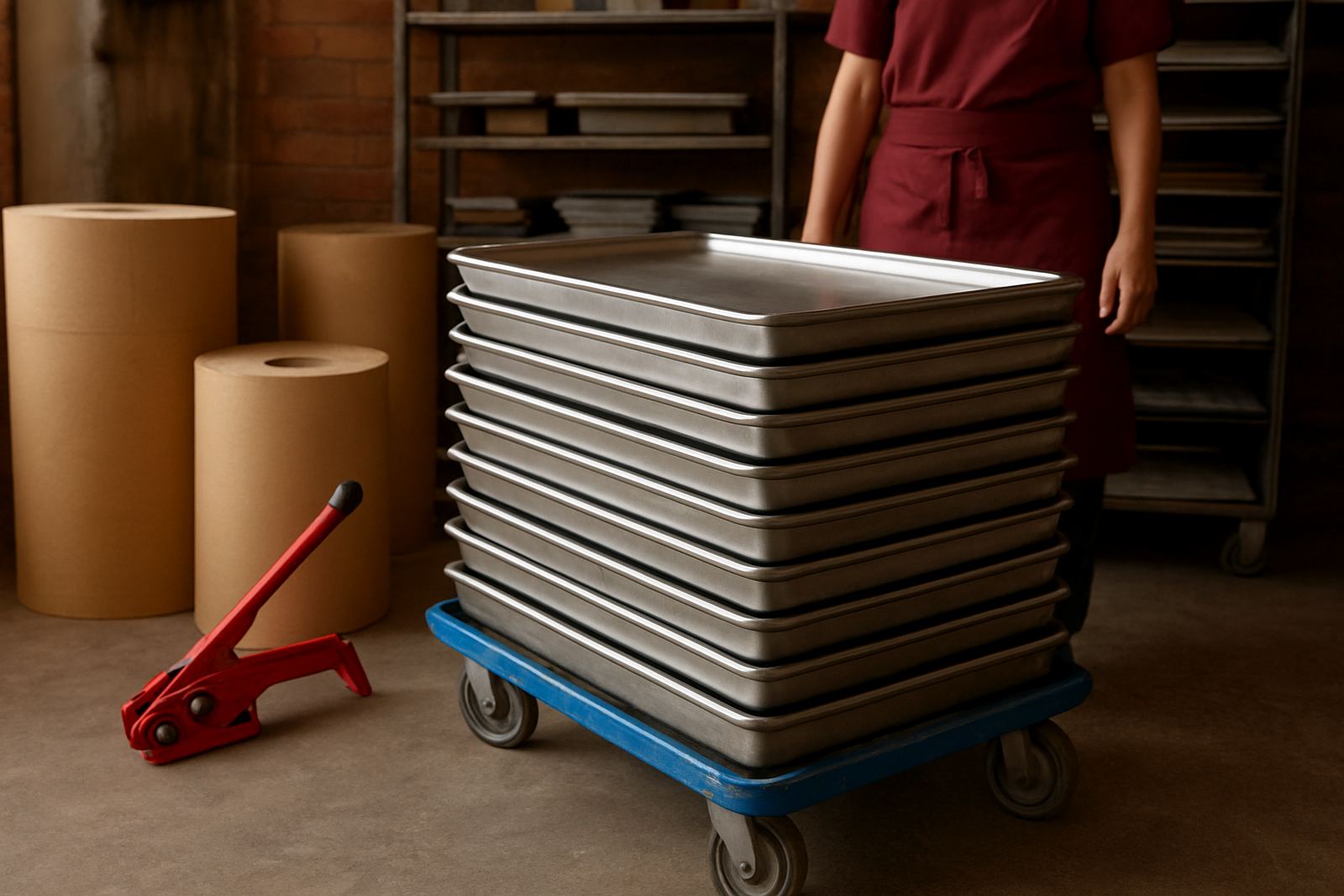
We supplied a matched set of proof trays and handling trays with repeat dimensions so the bakery could rotate stock without staff having to sort trays by eye. The proof trays were made with smooth internal surfaces and rounded edge work to reduce snagging during loading and tipping. The handling trays were kept slightly stiffer to hold shape during movement on racks and trolleys.
Because the bakery was running regular shifts, the set needed to handle dough weight without flexing too much. We used a practical gauge suited to production work, not light retail handling. The tray depth was chosen to suit proofed dough pieces that expand in the tray, while still allowing good air movement. Lid use was not part of this project, but the stack height had to remain manageable for store room access and dispatch.
- Standardised tray sizes for quicker sorting
- Smooth edges to reduce dough damage
- Production gauge sheet for better rigidity
- Stackable form for trolley movement and storage
How we handled the brief and the plant constraints
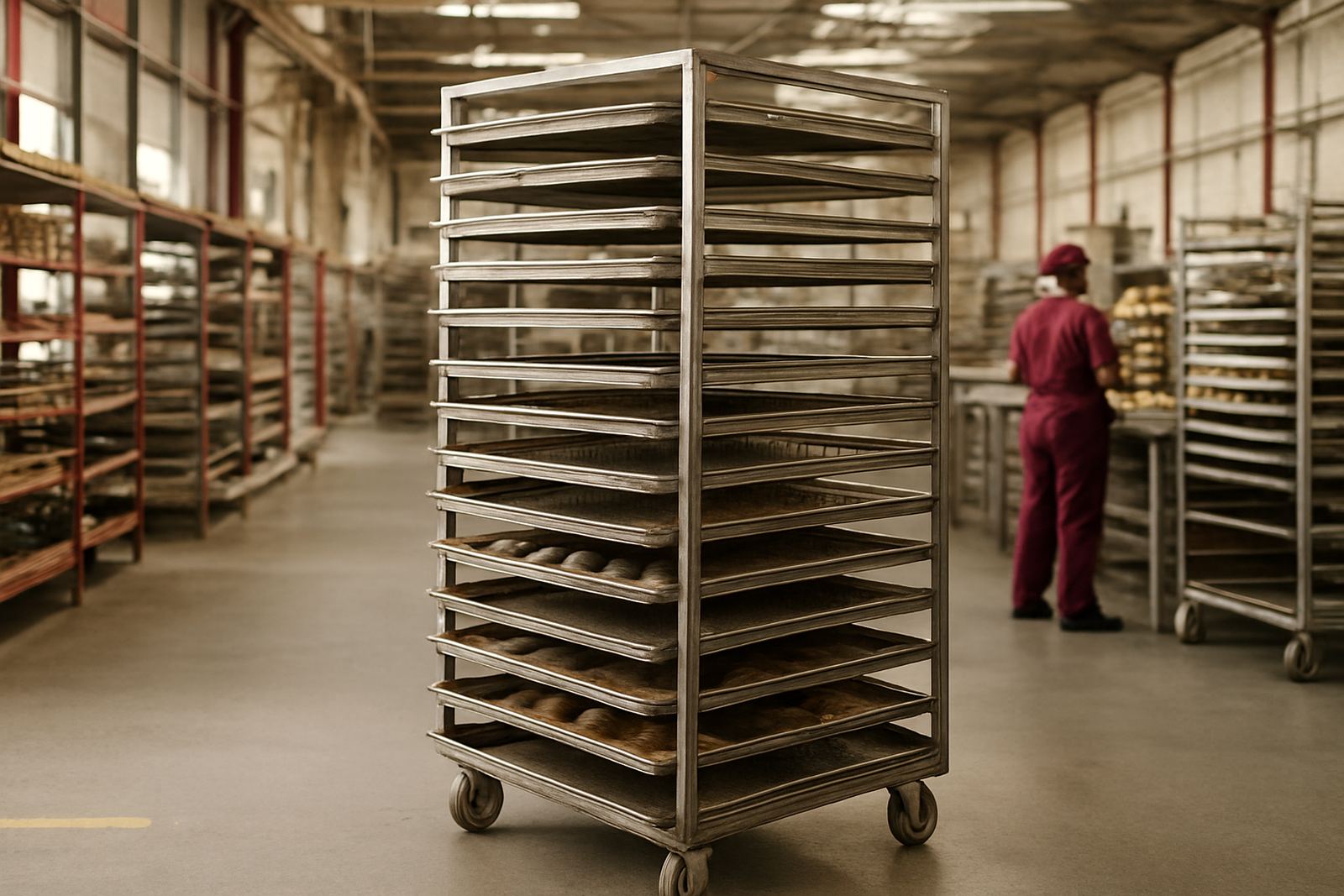
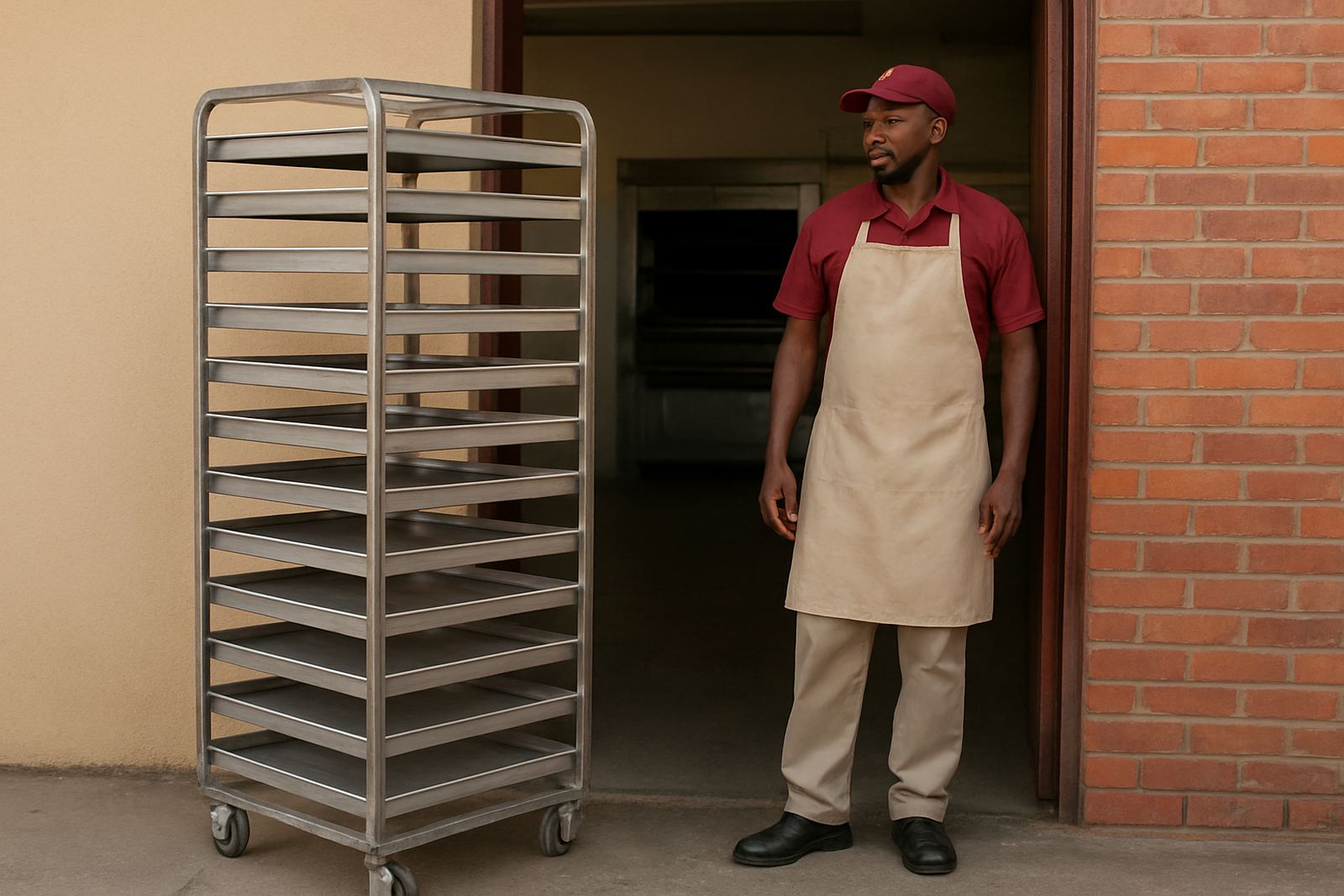
We started with a site discussion around tray counts, product sizes and the room available on their racks. The bakery needed trays that would fit existing trolleys and shelving, so the first step was matching the footprint to what was already in use. That saved them from changing a working part of the plant just to suit new trays.
Krugersdorp conditions can vary, and the bakery wanted something practical for everyday use in a warm room with routine cleaning. We allowed for corrosion resistance where possible and kept the finish easy to wipe down. The team also wanted less handling damage during peak periods, when trays move from bench to bench fast and small bends become a daily irritation. We also checked that the tray edges would not catch on the guide rails in their proof area, which was a problem with a few of the older trays.
- Measured against existing racks and trolley rails
- Checked tray movement through the proof room
- Adjusted edge formation for safer handling
- Kept the footprint compatible with current storage
What we supplied and what was done on the floor
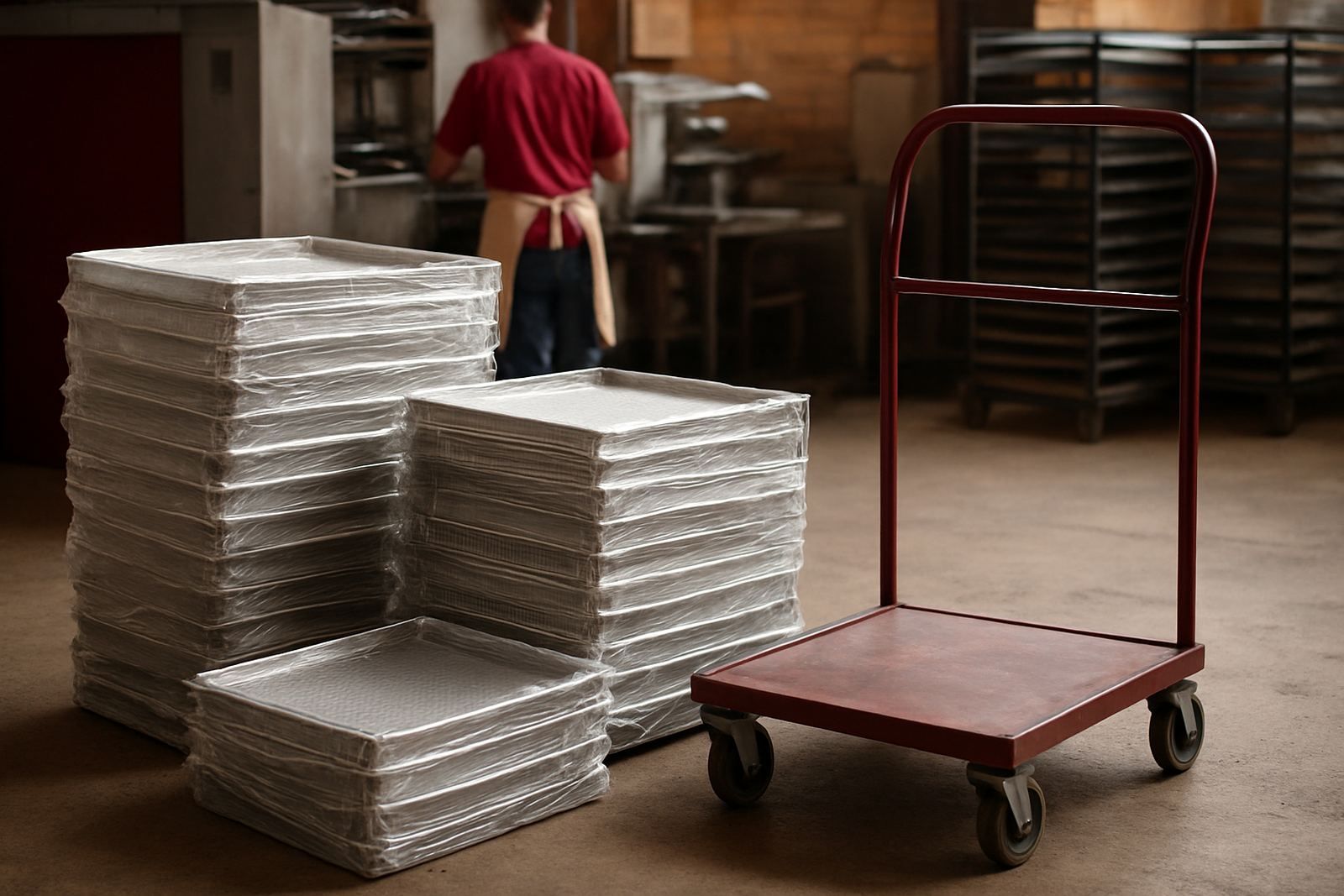
We supplied the proofing and handling trays in matched batches so the bakery could put them straight into production without a long changeover. The work included size matching, tray forming and final fit checks before dispatch. Where needed, tray corners were finished to sit square on the racks, which helps prevent rocking when the trays are loaded unevenly.
The factory team also looked at how the trays would be used during batch reorders, because the bakery did not want to repeat the exercise every few months. By keeping the dimensions fixed and the build method consistent, future orders can be matched to the first set. That matters when a bakery has a set rotation and needs the same tray to perform the same way every time.
- Proof trays supplied in matched batches
- Handling trays made for regular trolley movement
- Forming and fit checks completed before dispatch
- Dimensions recorded for future reorders
Timeline from first call to delivery
The full project ran over three weeks. Week one covered measurements, tray counts and the discussion around proofing room space. Week two was for fabrication and first checks. Week three covered the last fit review, packing and dispatch to Krugersdorp. The client needed a short lead time because their old trays were already being rotated out of service.
We kept the process tight because bakery production cannot stop for long. The client could continue running with the best of their existing trays while the new set was being finished, then swap over in stages. That made the change easier on the floor team and reduced the chance of a bottleneck on the first day.
Results in daily bakery use
Once the trays were in use, the bakery had a cleaner flow from bench to proof room and back into the bake cycle. Staff spent less time separating bent trays or fighting with mismatched stacks, and the dough pieces sat more evenly during proofing. The handling trays also made it easier to move product without squeezing the sides or disturbing the set pieces.
The main gain was consistency. When trays stack the same, fit the same and carry the same load, the whole line becomes easier to manage. The bakery reported fewer delays during peak order times and better housekeeping because the new trays did not hold old buildup in the same way as the damaged set they were replacing. It also helped that the new trays were easier to return to the same position on the rack, which cut down on mixed stacks at the end of a shift.
- Less tray sorting during busy periods
- Cleaner proofing and handling movement
- Improved stack control on trolleys and shelves
- Reduced handling wear on the tray set
What we would repeat on the next run
If we were doing this project again, we would keep the same approach: measure the existing plant first, match the tray footprint to the rack system, and keep the spec simple enough for fast reordering. For a bakery in Gauteng, that is usually the best route because it avoids unnecessary downtime and keeps the factory team working with gear they already understand.
We would also keep the proof and handling trays grouped by use, rather than mixing functions in one batch. That makes stock control easier and helps the client replace only what is worn, not the full set every time. It is a practical way to manage a bakery that works early hours, shifts stock quickly and needs trays that hold their shape through repeated use.
- Keep the same footprint for future compatibility
- Hold separate counts for proof and handling use
- Record all dimensions for quicker batch reorders
- Plan replacements around production breaks where possible
Key facts
| Project location | Krugersdorp, Gauteng |
|---|---|
| Client type | Commercial bakery supplying retail and takeaway channels |
| Product supplied | Proof trays and handling trays |
| Main purpose | Improve dough flow through production and reduce tray handling delays |
| Build detail | Standardised sizes with smooth edge formation and production gauge sheet |
| Timeline | 3 weeks from measurement to dispatch |