Why Pan Mixups Happen On Busy Shifts
Most pan mixups do not start with carelessness. They start when the same trolley carries different sizes, old and new stock gets mixed, and someone is rushing to keep ovens fed before the next load-shedding slot. In a plant that handles BO3, BO4 and BO5 bread pans, plus lids and trays, the small differences between sizes are easy to miss once the floor gets loud.
In Alrode and the wider Gauteng belt, many bakeries work with a mixed fleet of pans. One department may be doing white loaves, another lunch rolls, and another specialty tray work. If those items are not seperated from the start, the result is wasted prep time, poor lid fit, bent edges and product that does not bake evenly.
A local example is a bakery in Germiston that kept its repaired pans next to its active stock. During the morning rush, a BO4 pan with a slight side repair was put into a BO3 line by mistake. The loaf came out uneven and the pack team had to stop and sort the batch. It was a small issue, but it cost them time and ingredients.
Mark Every Pan By Size Before It Hits The Floor
The easiest control is a simple marking system that everyone can read at a glance. Mark pans by size, type and use. A good system should still be clear after washing, stacking and transport on a bumpy yard trolley.
- Use large stamped or painted size marks on the side wall.
- Separate bread pans, lids, perforated trays and baguette trays by colour band or number series.
- Mark repaired or special-order items so they do not get put back into normal rotation.
- Keep a written register for batch reorders and prototype runs.
If your team is handling heavy gauge builds or copy-made pans, ask for a marking system that stays visible through daily use. In a humid coastal branch or a hot inland bakery, labels that peel off are not good enough. Stamped identification is usually better than stickers, especially where steam and wash-down are part of the routine.
Store Matching Sizes Together, Not By Whoever Arrived First
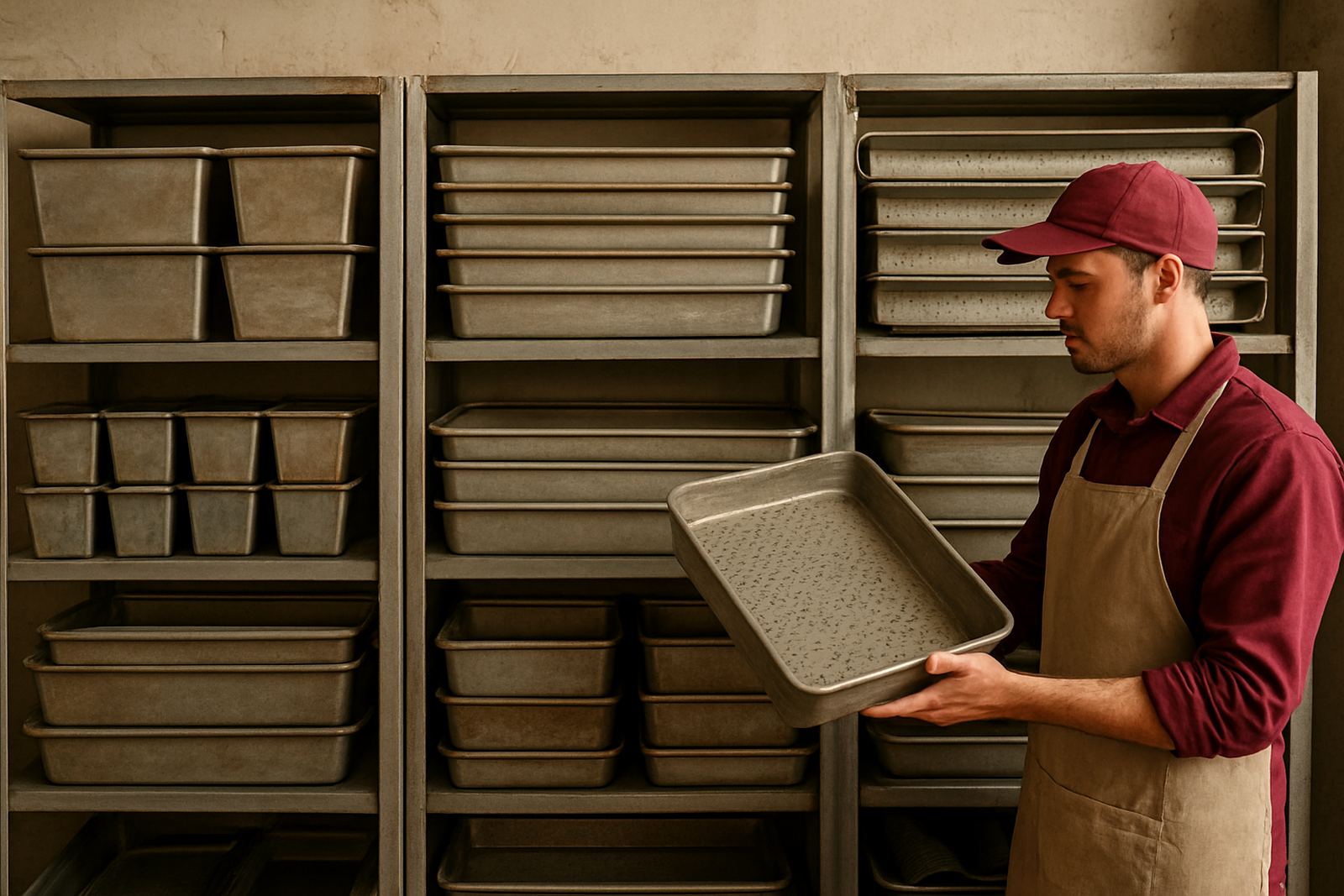
Storage discipline matters more than people think. If pans are stored by delivery date instead of by size and product line, the store becomes a guessing game. Use fixed bays for each size and keep the same layout from receiving to production. That way the team in Soweto or Midrand can work from the same logic, even if different shifts are on duty.
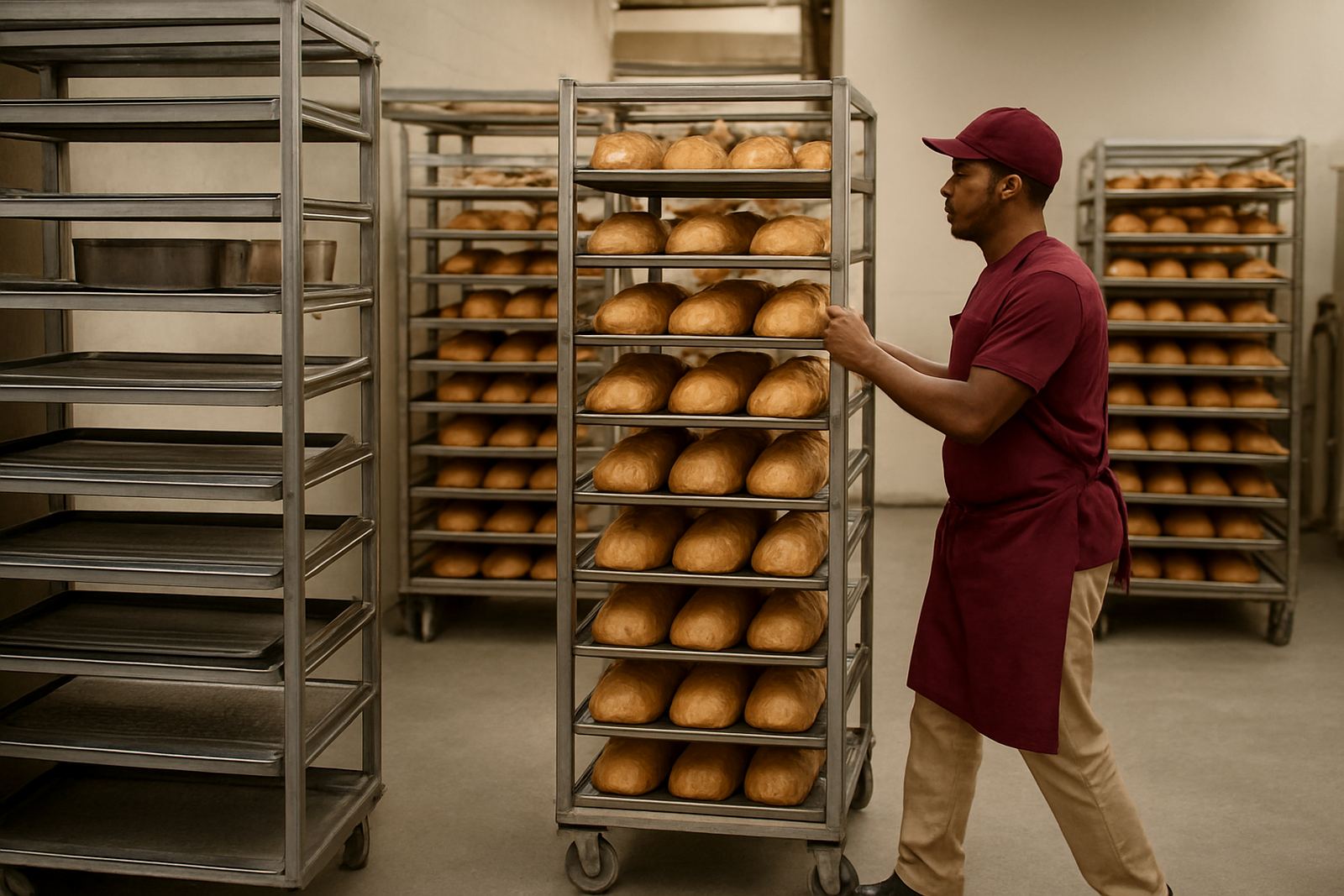
Racks should be clear and tall enough for safe stacking, but not so deep that staff need to pull out half a pile to reach the right item. Lids should be kept with their matching pans where possible. If lids are loose, put them in a marked bin or on a dedicated shelf so they do not get bent under heavier trays.
- Keep one bay for current production sizes only.
- Store spare pans in a separate area from active stock.
- Do not mix perforated trays with standard baking trays.
- Return damaged items to inspection, not back to the floor.
A simple floor plan taped inside the store room can save time every day. When the team knows exactly where the BO3 stack sits, there is less chance of grabbing a similar looking pan by accident. It is basic, but it works.
Build A Return Point For Damaged Or Off-Size Items
One of the biggest causes of mixups is an item coming back from production with no clear destination. A bent pan, a lid that no longer fits or a tray with a changed profile should not be dropped onto the nearest pile. Set up one return point for inspection and sorting, preferably near the maintenance area or dispatch bench.
At that point, assign one person to confirm whether the item goes back into service, needs repair or must be removed from regular use. This is where factory consultations help, because the team can compare the item against a sample, measure it and decide if it still matches the production standard. A few millimetres off may not look like much, but on a tight fit it makes a difference.
For bakeries with batch reorders, keep one master sample for each size. It should be clean, tagged and stored away from daily traffic. If the sample is missing, the whole system becomes weaker because people start working from memory instead of from a standard.
Train The Floor To Check Fit Before Loading
Most mixups can be caught in under a minute if the team is trained to check fit before loading. That means looking at the pan mark, checking the lid line and confirming the tray profile before product is added. It sounds slow, but it is quicker than stopping an entire bake after the first tray goes in wrong.
Make fit checks part of the normal start-up. The production foreman should confirm the first set of pans, and the line should only move once the fit is right. If a bakery has different teams on mornings and afternoons, the handover note must include any unusual pans in use, any repairs, and any items that are out for copying or replacement.
- Check the size mark before filling.
- Confirm the lid sits square and does not rock.
- Match trays to the correct loaf or baguette line.
- Flag anything that feels tight, loose or uneven.
Small habits like this reduce waste and keep the line moving. It also gives new staff a simple routine they can follow without guessing.
Use Standard Reorders And Copies To Keep The Set Tight
When a bakery has one original pan, one repair and three close copies, confusion is almost guaranteed unless there is a standard reorder process. Keep the spec on file for each item, including dimensions, depth, gauge and finish. That way new orders match the working stock instead of coming in slightly different every time.
This matters for bakeries in Alberton, Boksburg and the rest of Gauteng where production volume can change quickly. If the replacement pan is too loose, the loaf shape changes. If it is too tight, the dough sticks or the lid press becomes uneven. On the other hand, a good copy lets the team keep using the same rack layout and the same loading pattern with no adjustment.
It helps to order in matched batches rather than as single pieces. That keeps the floor cleaner, because all the pans in one run behave the same. For a factory running bread, trays and lid fitting side by side, consistency beats improvisation every time.
What A Good Pan Control System Looks Like In Practice
A good system does not need expensive hardware. It needs order. Each size has its place, each item has its mark and each return has a destination. Staff know where to pick, where to park and where to report a problem. Once that routine is in place, pan mixups drop sharply and the shift runs calmer.
In a busy Johannesburg South bakery, that can be the difference between clearing the morning run and chasing mistakes until closing time. When the stock room is clear, the ovens load faster, the pack area has fewer rejects and the dispatch team does not waste time sorting out mixed sizes at the end of the day.
Good pan control is not fancy. It is practical floor control, and it pays back in fewer stoppages, less rework and better baking consistency.