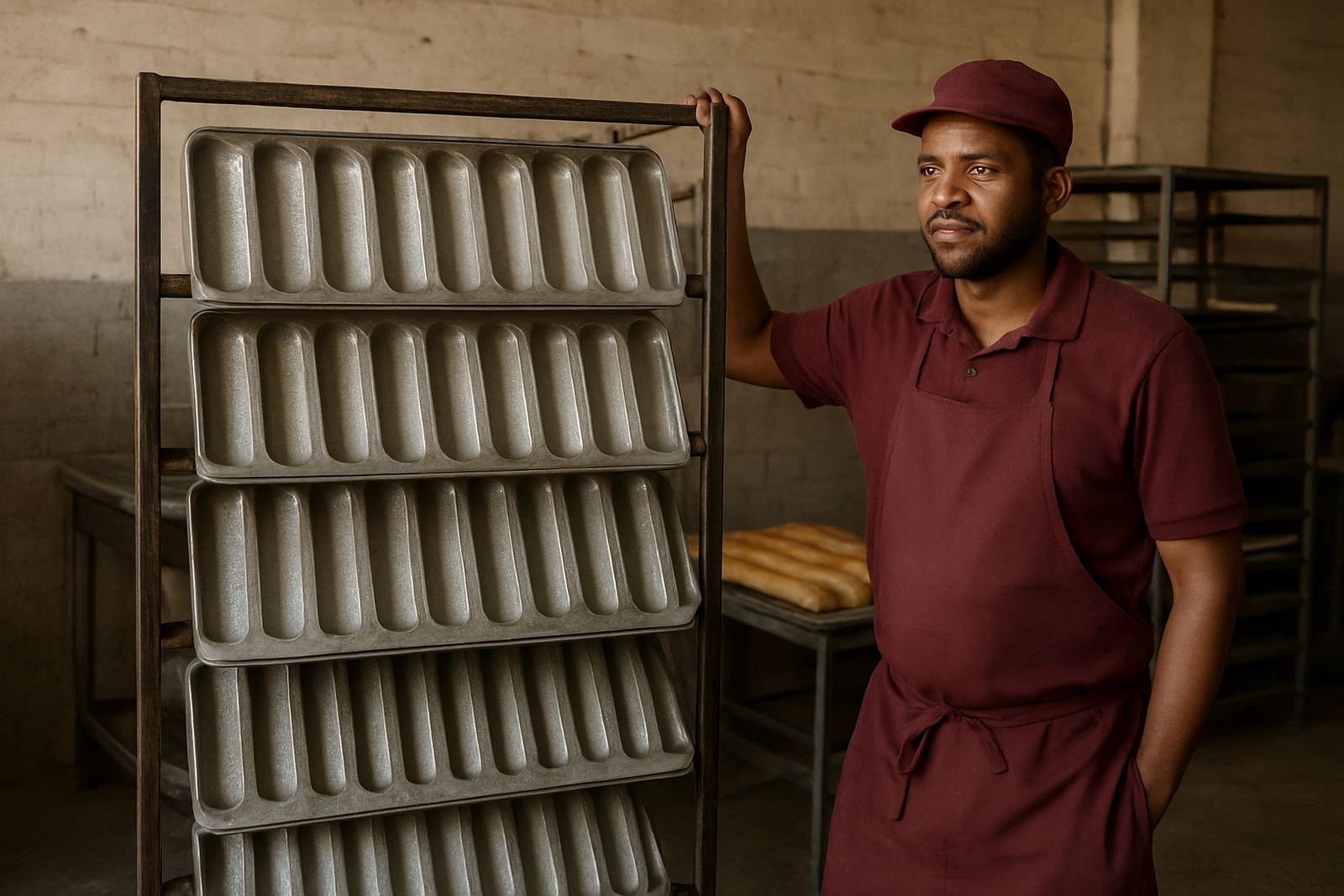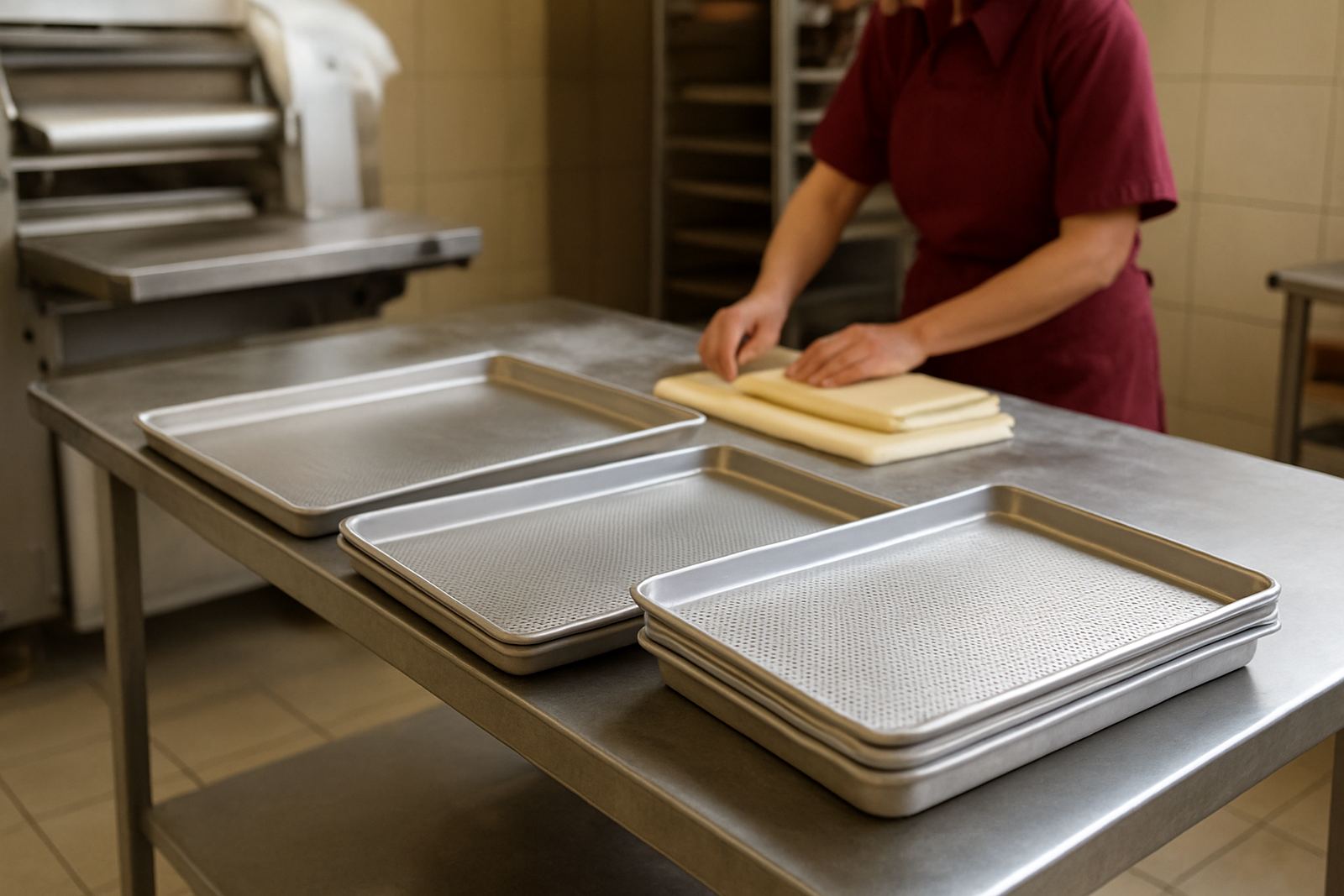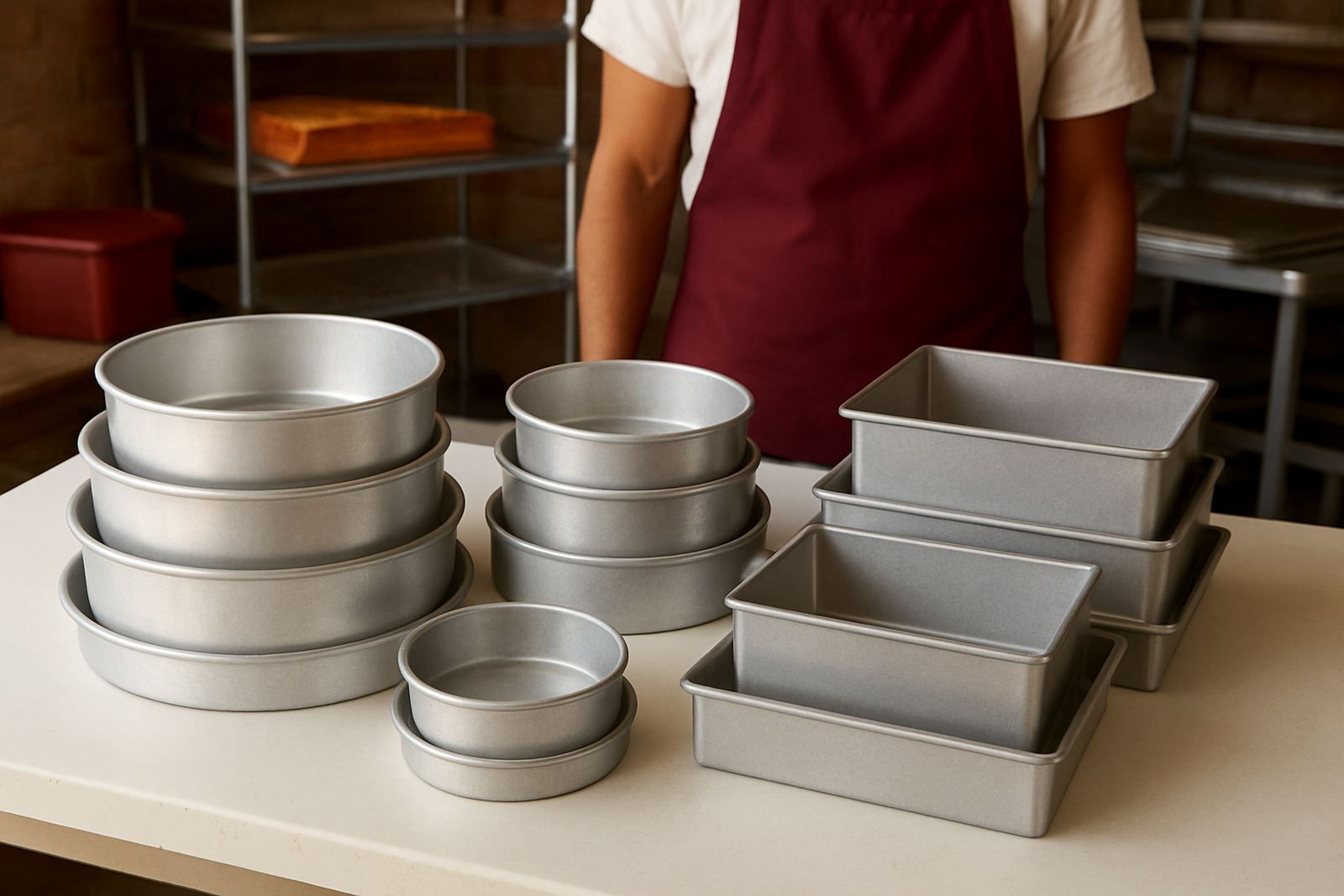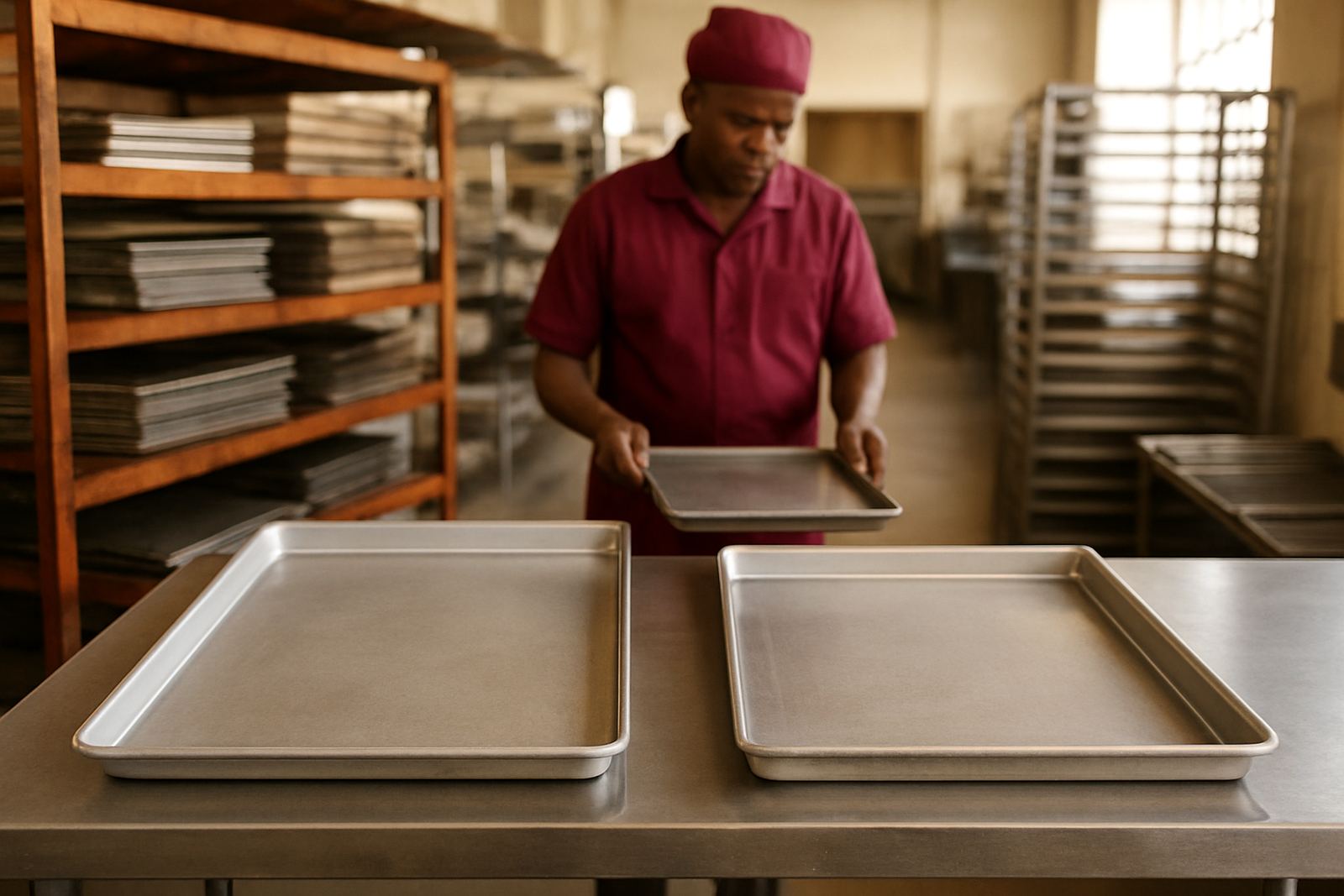
What a flat tray does well in daily bakery work
A flat tray gives you a clean open surface, so product heats evenly and lifts off quickly. For rusks, buns, rolls, swiss rolls, cut slices and some biscuit work, that open edge can make a real difference during a busy shift. There is less to catch on peelers, racks or gloved hands, and less to trap flour, crumbs or syrup after the tray has been washed.
In a production bakery, speed matters. Flat trays are easy to load in rows, easy to stack after cleaning, and they suit ovens where you want steady air movement around the product. If your team is baking from early morning in Alrode or Germiston and turning around batches through load-shedding windows, the faster handling of a flat tray can save time on every cycle.
- Good for products that need open airflow and fast release
- Simple to wipe down after sugar, dough or flour build-up
- Easier to stack tightly for transport and storage
- Often preferred where trays are used many times a day
Where a lip tray earns its keep
A raised-edge tray, sometimes called a lip tray, keeps product and grease better contained. That matters for items with batter, glaze, fat or loose toppings. It also helps when trays are being moved quickly between prep tables, proving areas and ovens, because the edge gives a bit of control. If you have staff carrying hot trays through a busy kitchen in Soweto or Midrand, that edge can reduce spills and burnt fingers.
Lip trays are also useful where the product tends to slide. Think roasted items, tray bakes, savoury pies, filled pastries or items that may shift during transport. A 10 mm or 20 mm lip may not sound like much, but it can stop product from slipping when the tray is tilted. In factories and school kitchens, that small feature can protect yield and cut cleaning time.
- Better for wet, oily or loose products
- Helps prevent product movement during carrying
- Useful for controlled oven loading and unloading
- Can reduce mess in prep and dispatch areas
Heat, airflow and the bake itself
Tray shape changes how heat moves around the product. Flat trays usually allow better airflow from underneath and around the sides, so they suit items where even browning and quick release matter. Lip trays can slightly reduce airflow at the edge, though the difference depends on the depth of the lip, the tray thickness and the oven setup. In a tunnel oven or a fan oven, that small change may be enough to affect colour on delicate product.
If you are baking bread products, tray choice also links to crust formation. A flatter base can help with a drier finish and cleaner bottom colour, while a tray with a lip may hold a little more moisture around the edge. That can be useful for some savoury bakes, but not always for crisp biscuit lines or tray items that need a firm base. It helps to test a prototype run before ordering in quantity.
- Flat trays often give quicker heat contact on the base
- Lip trays can suit wetter products and richer mixtures
- Tray thickness also affects heat transfer, not just the edge shape
- Oven type, loading pattern and product weight all matter
Handling, stacking and cleaning on a working floor
In a bakery, the tray is not only about baking. It is carried, stacked, washed, packed and sent back into circulation. A flat tray stacks neatly and takes up less space in a rack or dispatch cage. That can make a difference if you are short on floor space or trying to keep a tighter rotation during a rush. A lip tray gives more grip when carried, but it can also catch on neighbouring trays if your team stacks them carelessly.
Cleaning is another practical point. Flat trays are easier to brush down, especially where flour and dry crumbs are the main residue. Lip trays take a bit longer if the edge has caught glaze, oil or burnt sugars. In coastal towns the air carries more moisture, so a tray left wet can stain or pit faster, even if the steel is decent. Drying racks and proper storage matter just as much as the tray shape.
- Flat trays usually stack tighter and faster
- Lip trays need a little more care when nesting
- Cleaning time can rise when syrup or fat gets under the edge
- Good drying is important in humid areas and near the coast
Choosing by product type, not by habit
Many bakeries keep using the same tray style because that is what they started with. That is understandable, but product changes over time. A line that once baked plain rolls may later move into seeded rolls, savoury items or premium sliced products. Once that happens, the tray can become part of the bottleneck. The best choice is the one matched to the item, the oven and the way your team moves it through production.
If you are unsure, split the decision into three questions: does the product run, does it need airflow, and will staff carry it often? If the answer is yes to airflow and no to spills, flat trays usually make sense. If the answer is yes to spills or movement, a lip tray is safer. For some customers we make both in matching sizes so the bakery can use one standard footprint across several lines.
- Use flat trays for dry, quick-release items
- Use lip trays for wet mixtures, fillings and loose toppings
- Keep tray sizes standard so they fit your racks and ovens
- Match the tray to staff handling, not just the oven spec
A local example from a Johannesburg South production floor
One Gauteng bakery we worked with in the south of Johannesburg was using the same raised-edge tray for almost everything, from rolls to savoury bakes. It worked, but the team was losing time on cleaning and product release. After checking the actual range, we set them up with flat trays for the dry line and kept lip trays for the wetter items. They also asked for heavier gauge builds where the trays were being moved across a long floor run. That small change improved handling and reduced bent corners after a few months.
That kind of adjustment is common in Alrode, Alberton and Germiston where bakeries often run hard from early shifts, with deliveries going out before traffic builds up. If your trays are copied from an old sample, or you need lid fitting, divider inserts or perforation for airflow, the shape should be based on how the product behaves in your bakery today, not on what was ordered years ago. The right tray saves mess, time and rework.
- Review old tray patterns when product lines change
- Ask for size matching before replacing a whole batch
- Use prototype runs for new tray formats
- Check rack fit, oven clearance and carry weight before bulk order
What to check before you place a tray order
Before you order flat or lip trays, measure the oven deck, rack width and the space your staff actually uses to turn, lift and store trays. A tray that is perfect on paper can still be awkward in a narrow aisle or too heavy for repeated handling. Also confirm whether the tray needs perforation, a thicker gauge, folded corners or a specific lip height. Those details matter more than people think.
For bakeries in Gauteng, practical service matters as much as the tray itself. If you are in Boksburg, Midrand or Soweto and need batch reorders, pan copying or factory consultations, it helps to work from the actual tray in your hand. That way the next run fits the same racks, the same oven and the same team. A good tray should make the shift easier, not harder.
- Measure oven, rack and storage space first
- Confirm lip height, gauge and finish
- Check if perforation is needed for your product
- Use one standard footprint where possible to simplify stock