Start with the route, not the recipe
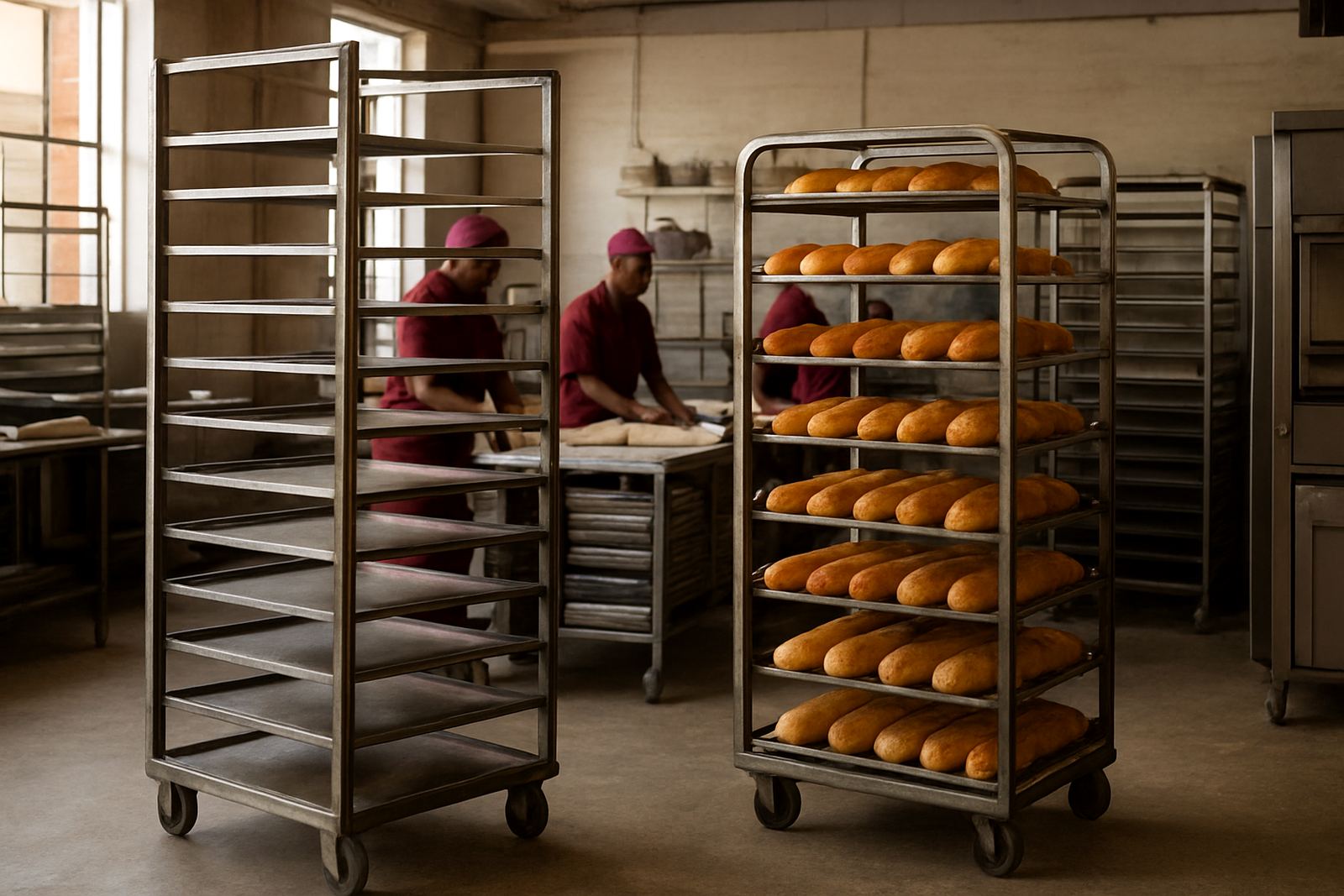
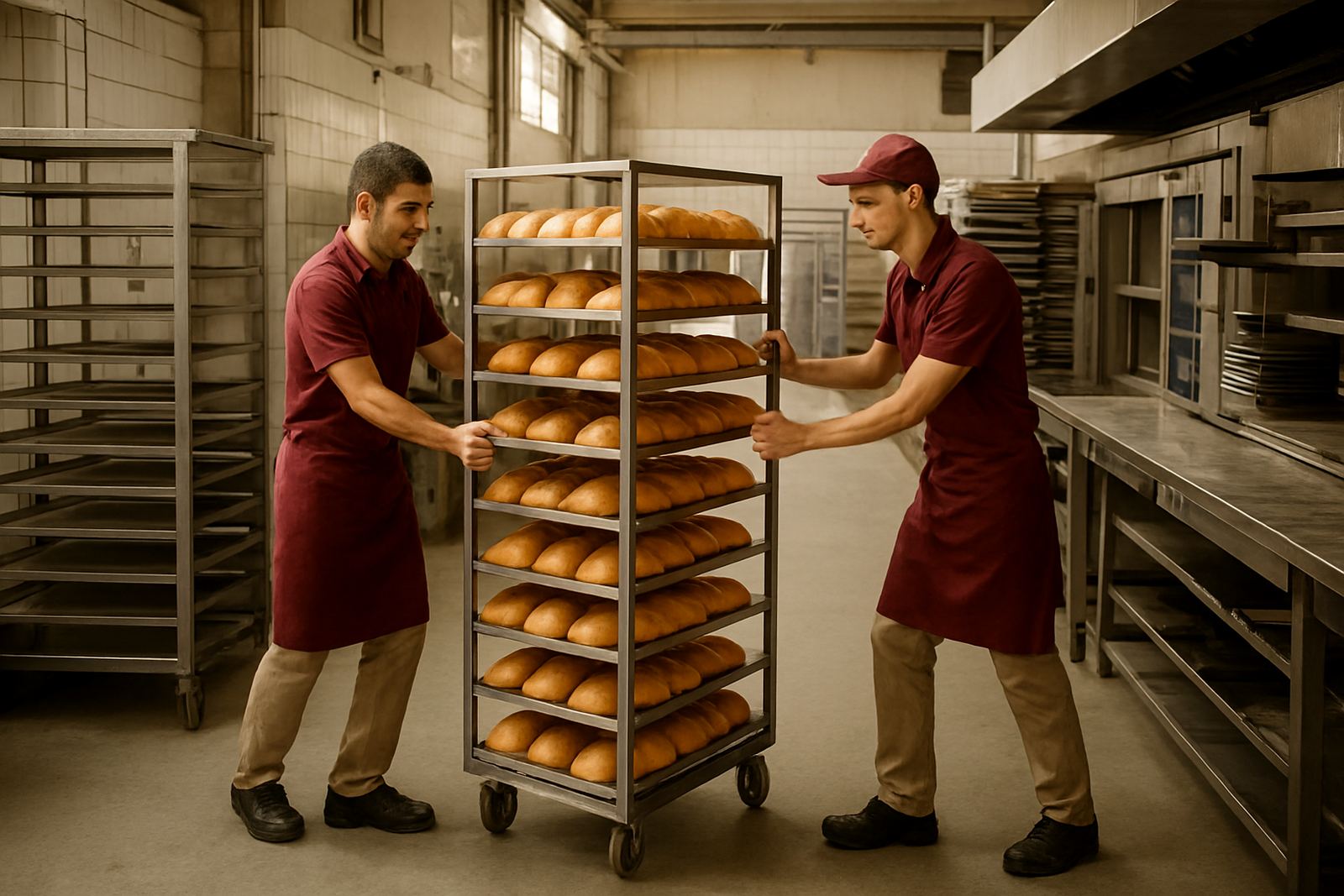
In a busy bakery, dough does not just need a good formula, it needs a clear path from mixing to proofing, baking, cooling and dispatch. When that path has tight corners or mismatched tray sizes, people end up lifting too much, turning trolleys by hand and re-stacking product more often than they should.
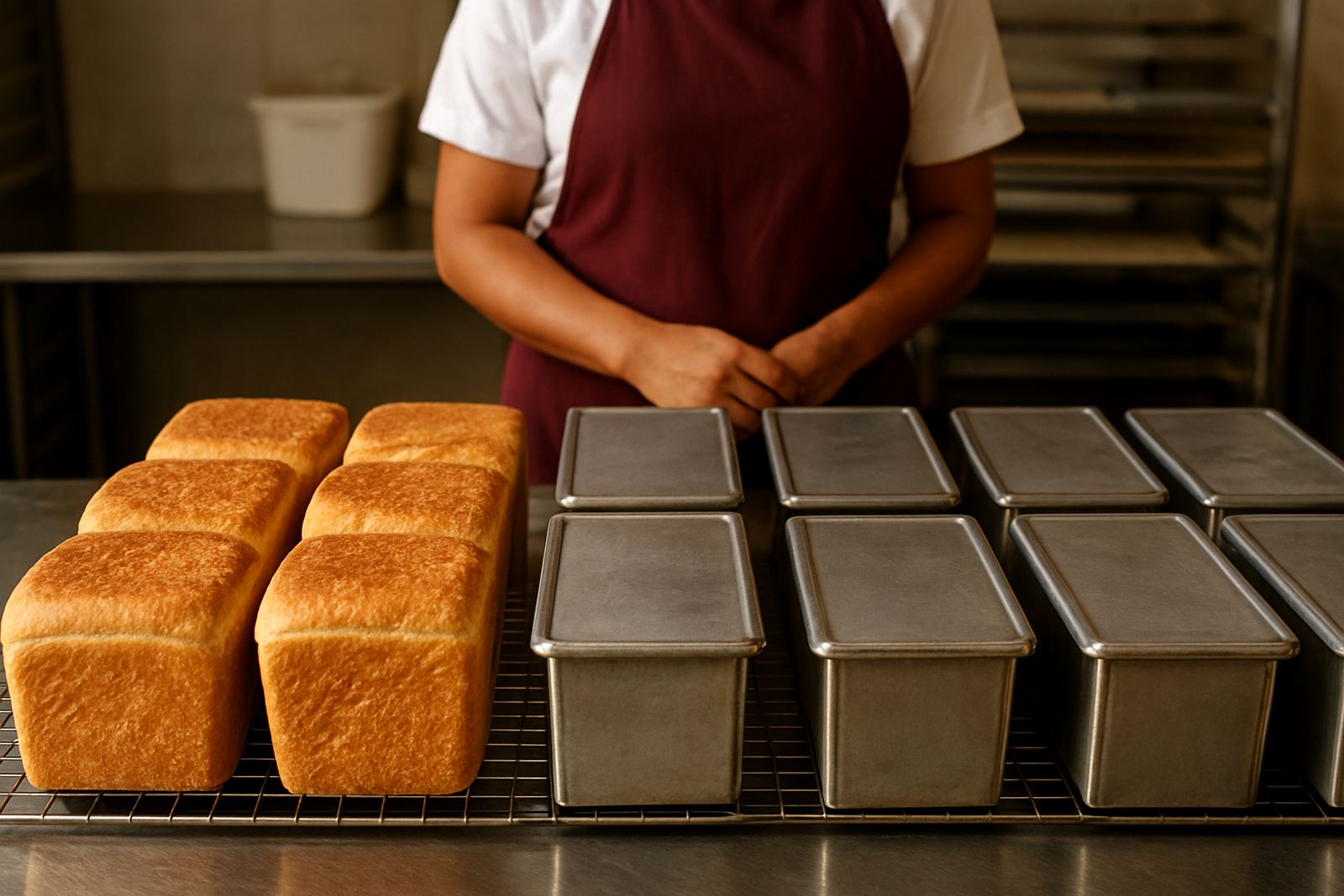
That is where format matters. A bread pan that fits the oven rail properly, or a tray that loads evenly on a standard trolley, can save minutes on every batch. Over a full shift those minutes add up, especially where one team is covering baking, packing and dispatch at the same time.
Match pans and trays to the equipment you already run
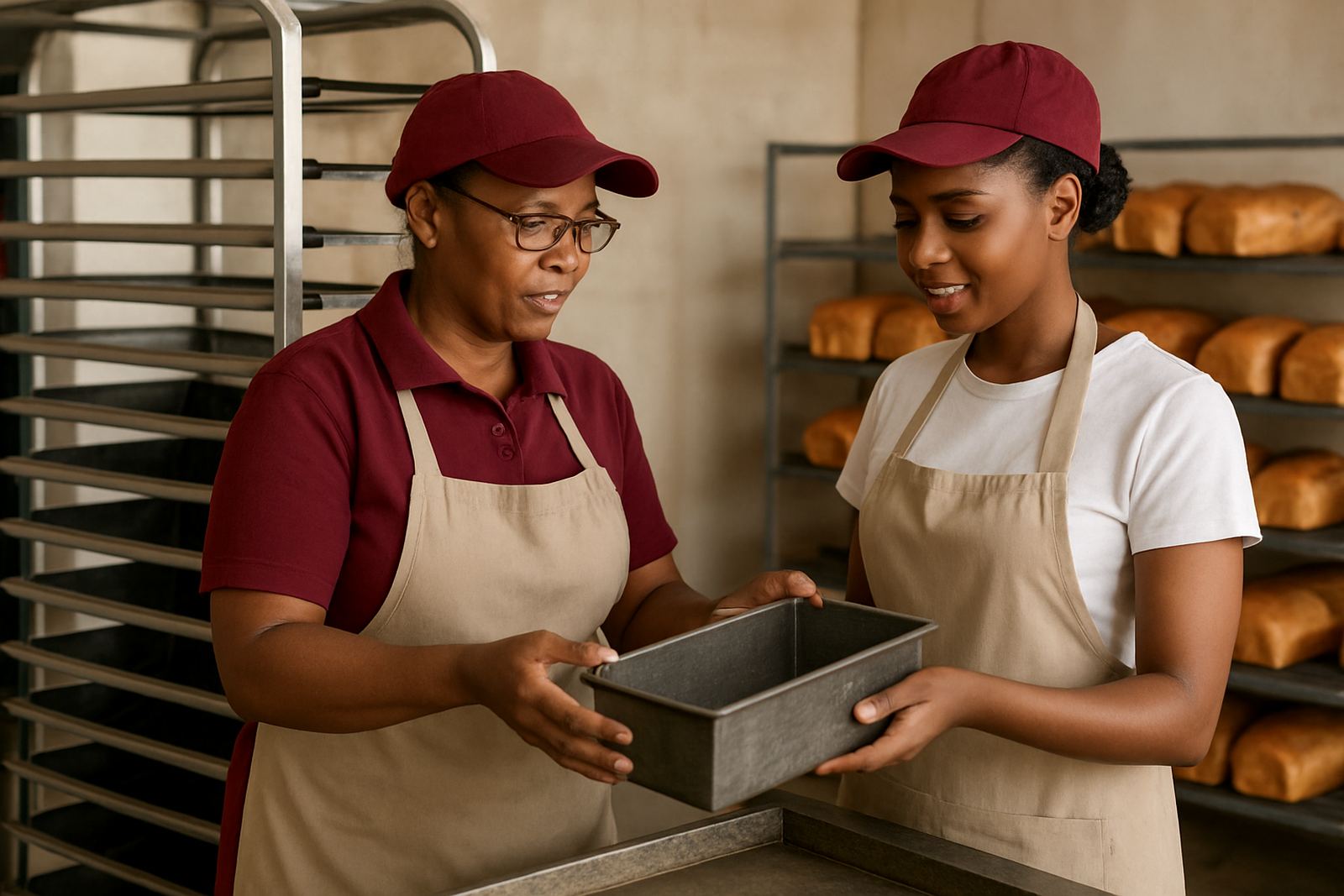
Before ordering new bakeware, measure the real working space in millimetres. Check oven internal width, rack spacing, trolley shelf height and the clearance at doorways. A pan that is 5 mm too wide may still look usable on paper but becomes a nuisance once it is loaded and hot.
- Measure oven rail centres and confirm pan footprint
- Check trolley shelf spacing for loaded tray height
- Allow space for gloves, lids and quick turns
- Keep one standard format where possible for easier stacking
In Alrode and Germiston we often see older ovens running alongside newer mixers and proofers. That mixed setup can work well, but only if the trays and pans are sized to move through the whole line without snagging. A clean fit is worth more than a fancy spec sheet.
Choose materials that suit heat, moisture and cleaning
South African bakeries deal with heat, wash-downs, coastal humidity in some areas and dust in others. Mild steel pans are common because they are practical and easy to work with, but the finish and handling matter. If pans are stored damp or stacked while still warm, they can mark, warp or start showing corrosion sooner than expected.
For tray handling, think about how often the items are washed, dried and returned to service. Perforated trays need neat edges and even hole patterns so they bake consistently and do not catch dough during unloading. Lids should sit square, especially where product is moved between proofing and baking. That small fit issue can slow the whole line down.
Where bakeries work long shifts, a heavier gauge can help the tray or pan keep its shape, though it may add a little weight. The right choice depends on how the item is lifted, whether staff use trolleys, and how many times it is handled before it reaches the oven.
Keep the same sizes across batches and reorders
One of the biggest causes of floor frustration is variety for its own sake. Different pan sizes for the same loaf can make packing, counting and storage harder. If a bakery in Boksburg uses one size on weekdays and another on weekends, staff have to keep checking labels and stacking patterns and that slows everything down.
Standardising sizes helps with batch reorders, spare stock and training new staff. It also makes it easier to copy a successful pan or lid arrangement when production grows. If the bakery layout changes later, a standard footprint gives you more options for rearranging racks and shelves without replacing everything.
- Use one label system for all tray and pan formats
- Store similar items together by width and depth
- Keep a written list of approved dimensions
- Set aside a small spare stock for breakages and peak weeks
Make loading and unloading faster at peak times
When the first batch comes out and the queue is already forming, every extra movement matters. Trays that are easy to grip, pans that release well and lids that do not jam all help the team keep pace. If the bakehouse is serving retail customers or wholesale runs from Midrand to Soweto, the loading pattern needs to stay consistent from start to finish.
Simple details help here. Rounded corners can make handling easier. Matching tray depths can reduce wobble on trolleys. If your team uses divider inserts for different product counts, those inserts should sit firmly and not need constant adjustment. A bakery floor works best when staff are not busy fighting the equipment.
Local example: a Johannesburg South bread line under pressure
A bakery in Johannesburg South was running standard bread pans, but the mix of old and new trays meant each rack needed sorting before use. Staff were spending time swapping pans between trolleys and the ovens were not being loaded evenly. During hot weather and load-shedding planning, that extra handling made the shift feel longer than it needed to be.
After checking sizes, the bakery moved to a more consistent pan format and added matching lids for storage between stages. The result was not dramatic on paper, but on the floor it was clear: less lifting, quicker loading and fewer damaged loaves at unpacking. The team could keep product moving with less pressure on dispatch at the end of the day.
What to ask before you place the order
If you are ordering new bakeware or replacing worn items, go in with measurements and a clear usage plan. Tell the supplier what you bake, how often the items run through the line, and whether you need copies of an existing pan or a new size for a changed recipe. That makes size matching much easier and reduces back-and-forth.
Useful information to have ready:
- Internal oven and rack dimensions
- Current pan or tray sample for copying
- Required quantity for daily use and spares
- Any special need for perforation, lid fitting or heavy gauge builds
For bakeries around Alberton, Germiston, Boksburg, Soweto and Midrand, good floor flow usually comes down to the same thing: equipment that fits the space and the work. When the pans and trays move properly, the bakery does too.