Why covered pans suit square loaf production
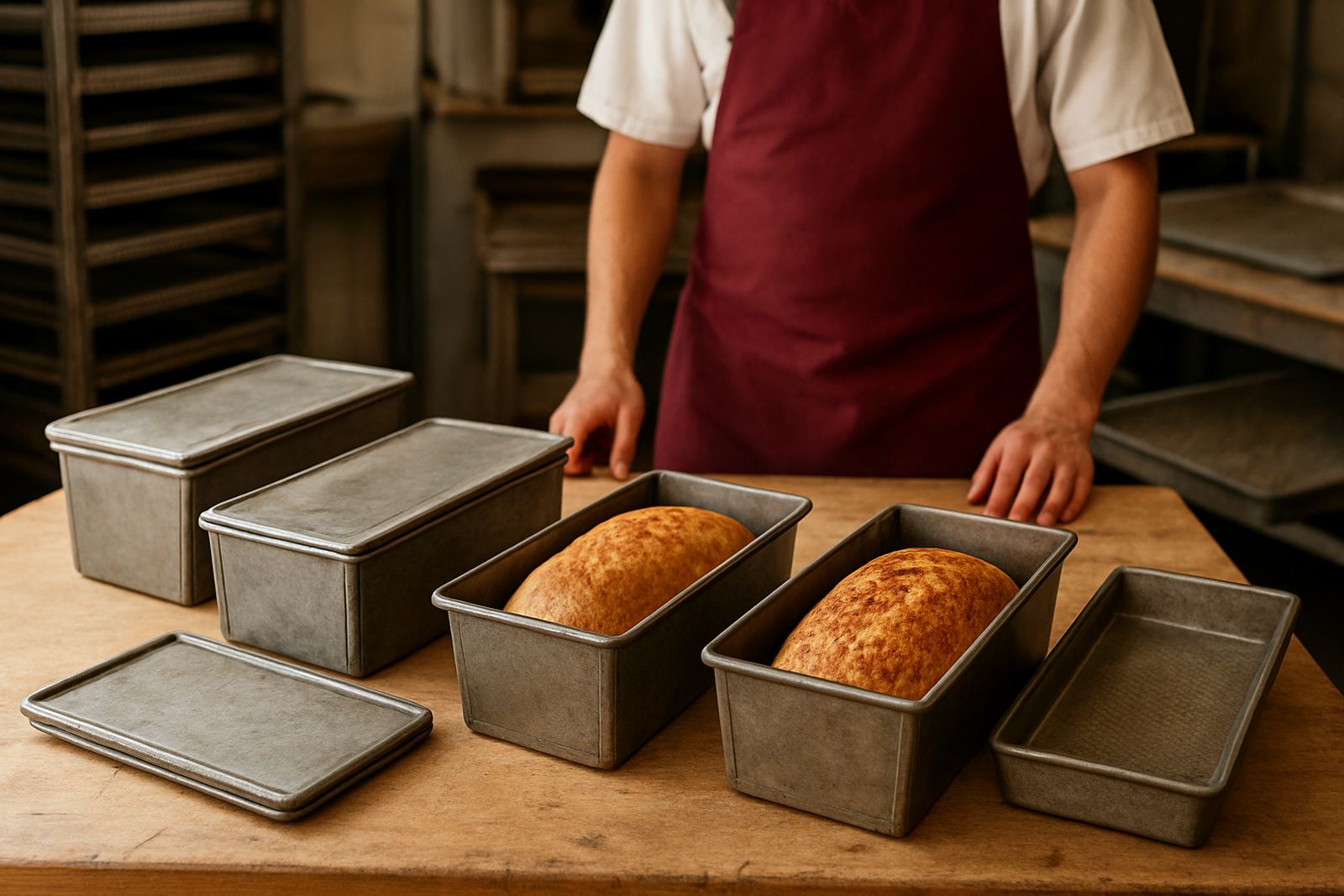
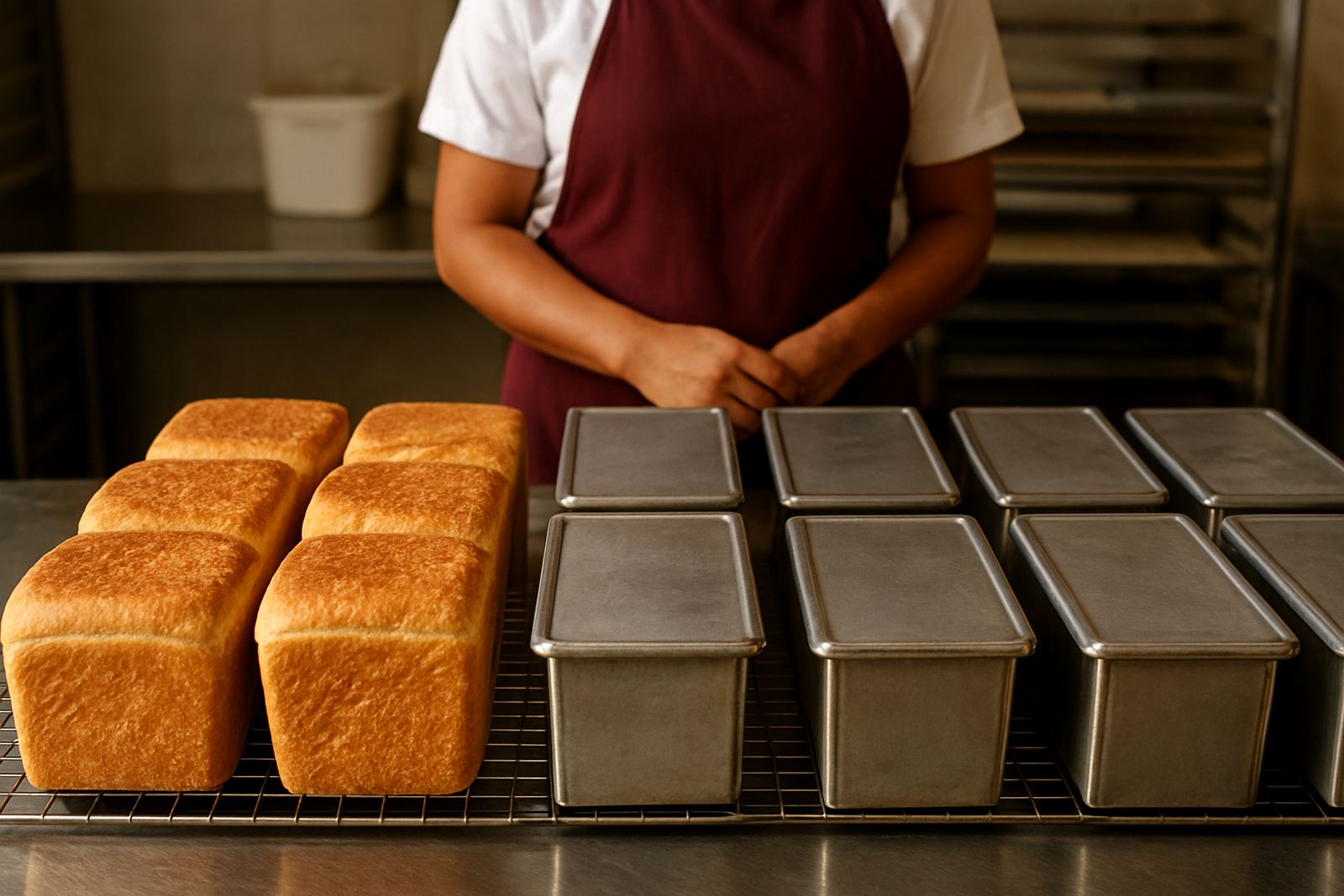
Some bakeries need a loaf that sits straight in the bag, slices evenly for sandwiches and holds its shape from oven to shelf. Covered pans help because the lid controls the top rise, so the loaf bakes into a tidy square rather than doming over the side. That matters when you are producing at volume and every millimetre affects packing, slicing and customer presentation.
In a busy bakery, square loaves are often chosen for breakfast packs, school orders and catering work where neat portions matter. The lid also helps keep the bake more uniform, which is useful when your team is working through early shifts and trying to keep output consistent during load-shedding windows or short production runs.
What the lid changes in the bake
A lid does more than keep the top flat. It changes the way steam builds in the pan, how the crumb sets and how the crust forms. That gives the baker more control over final size and density, especially when the dough is mixed for a soft eating loaf with fine crumb. If the pan and lid are matched properly, the result is a loaf that lifts well without blowing out at the sides.
- Cleaner top line for slicing and packing
- Less spreading in the oven
- More consistent loaf height from batch to batch
- Better use of rack space for tray handling
For bakeries in humid areas near the coast or in damp storerooms, a covered pan can also help limit surface skinning before baking. That makes proofing a bit more forgiving, especially when the room temperature shifts through the day.
Getting the size right before you place an order
Square loaf production only works well if the pan dimensions suit the dough weight and the bread style you are making. A pan that is too small will force the loaf up too much, while a pan that is too large can leave the loaf looking flat and under-filled. This is why size matching is worth doing before a batch reorder.
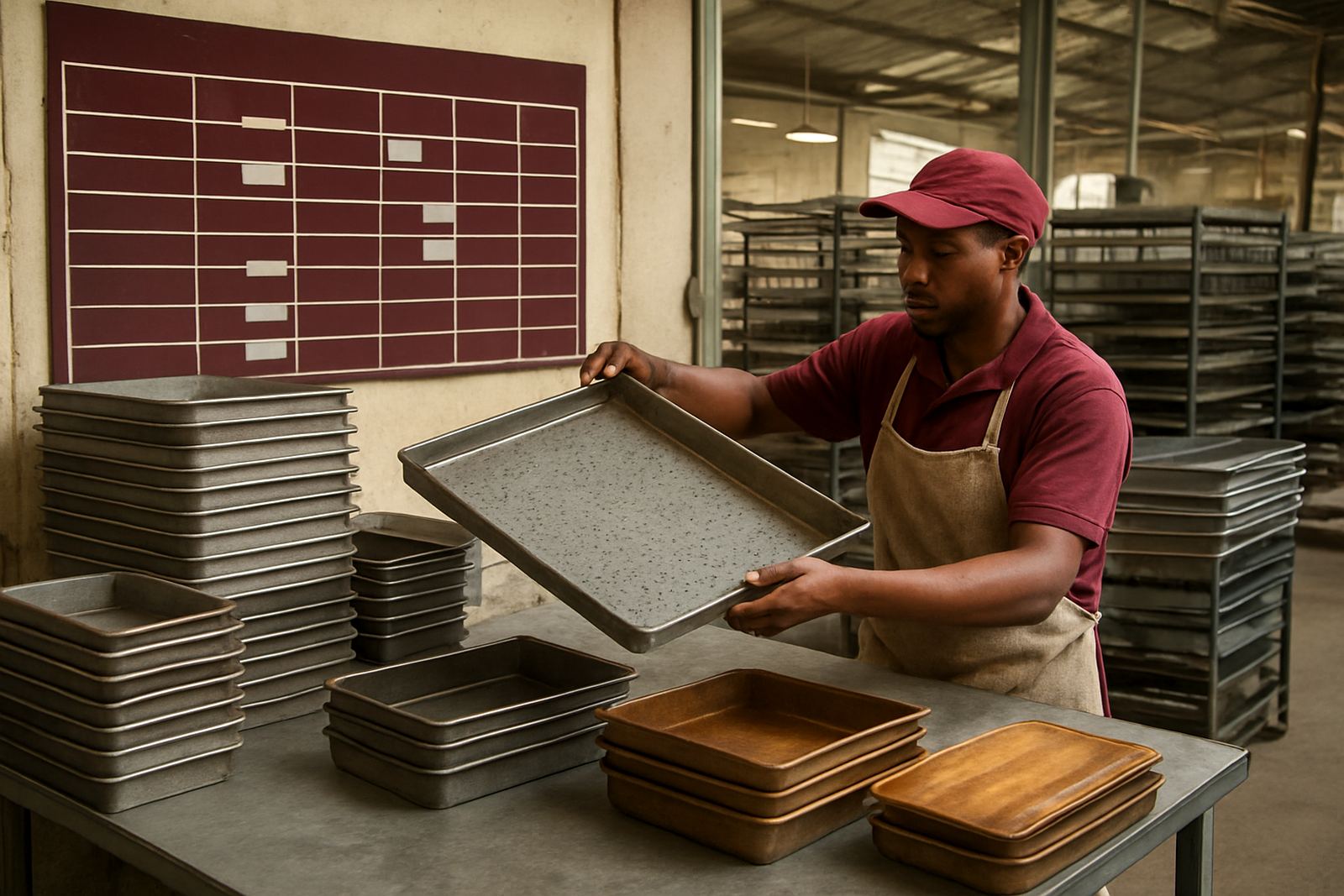
We often advise bakeries to check the full setup, not just the pan length. Lid fit, rim depth, handle clearance and stacking space all matter when pans move from the make-up table to the oven and then onto the cooling racks. In Alrode and nearby industrial areas, many bakeries run mixed product lines so one wrong size can slow the whole shift.
- Measure the internal pan size, not just the outside edge
- Confirm the dough weight per loaf
- Check if the lid needs a tight fit or a little breathing room
- Ask how the pans will stack on your current racks
Materials and build choices that hold up in real production
Square loaf pans and lids take daily wear. They need to cope with heat, scraping, frequent washing and constant movement between prep, proofing and baking. Mild-steel pans remain a practical choice for many South African bakeries because they are straightforward to work with and can be made to suit repeat production. For heavier use, thicker gauge builds can help the pans keep their shape longer.
In bakery settings where trays are handled quickly, strong corners and neat folding are important. A lid that does not sit square will change the loaf line and cause trouble during packing. That is why production teams often ask for prototype runs first, especially when they are switching from open pans to covered pans for the first time.
A Johannesburg South example: tidy loaves for a school bread contract
A bakery in the Johannesburg South area serving school canteens needed loaves that cut cleanly and packed flat into polybags. Their open pans were giving good volume, but the tops were too uneven for easy slicing. They moved to covered pans with matched lids, and the change helped them keep the loaf profile more regular across the full morning bake.
Because the bakery was working around split shifts and municipal water interruptions, they also wanted pans that could be cleaned quickly and stacked without wasting floor space. The team found that once the pan size was sorted, the batch flow improved and the packing line moved faster, with less trimming at the slicing stage.
- Better slice consistency for sandwich use
- Cleaner packing for school distribution
- Less waste from uneven tops
- Faster tray handling between shifts
When to choose covered pans, and when not to
Covered pans are a good fit if your priority is a square loaf with a controlled profile, neat slicing and better batch repeatability. They are also useful where shelf presentation matters, or where the loaf must fit tightly into packaging or delivery crates. But they are not the best answer for every product. If you want a high domed top, a rustic finish or a softer top crust, open pans may suit the recipe better.
For bakeries in Gauteng, the decision often comes down to product mix and production speed. If you bake for wholesale, catering or contract work, covered pans can simplify the final stage of the line. If you bake a range of speciality loaves, it may be worth keeping both options in circulation so the team can match the pan to the order.
Working with a factory that knows bakery production
When square loaf production is part of your daily output, you need pans and lids that match your recipes, your oven space and your dispatch routine. That is where size matching, lid fitting and batch reorders save time. A good factory consultation can prevent costly trial and error, especially when you are planning heavier gauge builds or looking at a new tray layout.
Bakery & Catering Equipment in Alrode works with bakeries across Alberton, Germiston, Boksburg, Soweto and Midrand, so the advice stays practical. The aim is simple: make pans that fit the loaf, fit the oven and fit the way your team works day to day. If a square loaf needs to leave the bakery looking tidy, the equipment must do its part from the start.