When a bread pan starts costing more than it earns
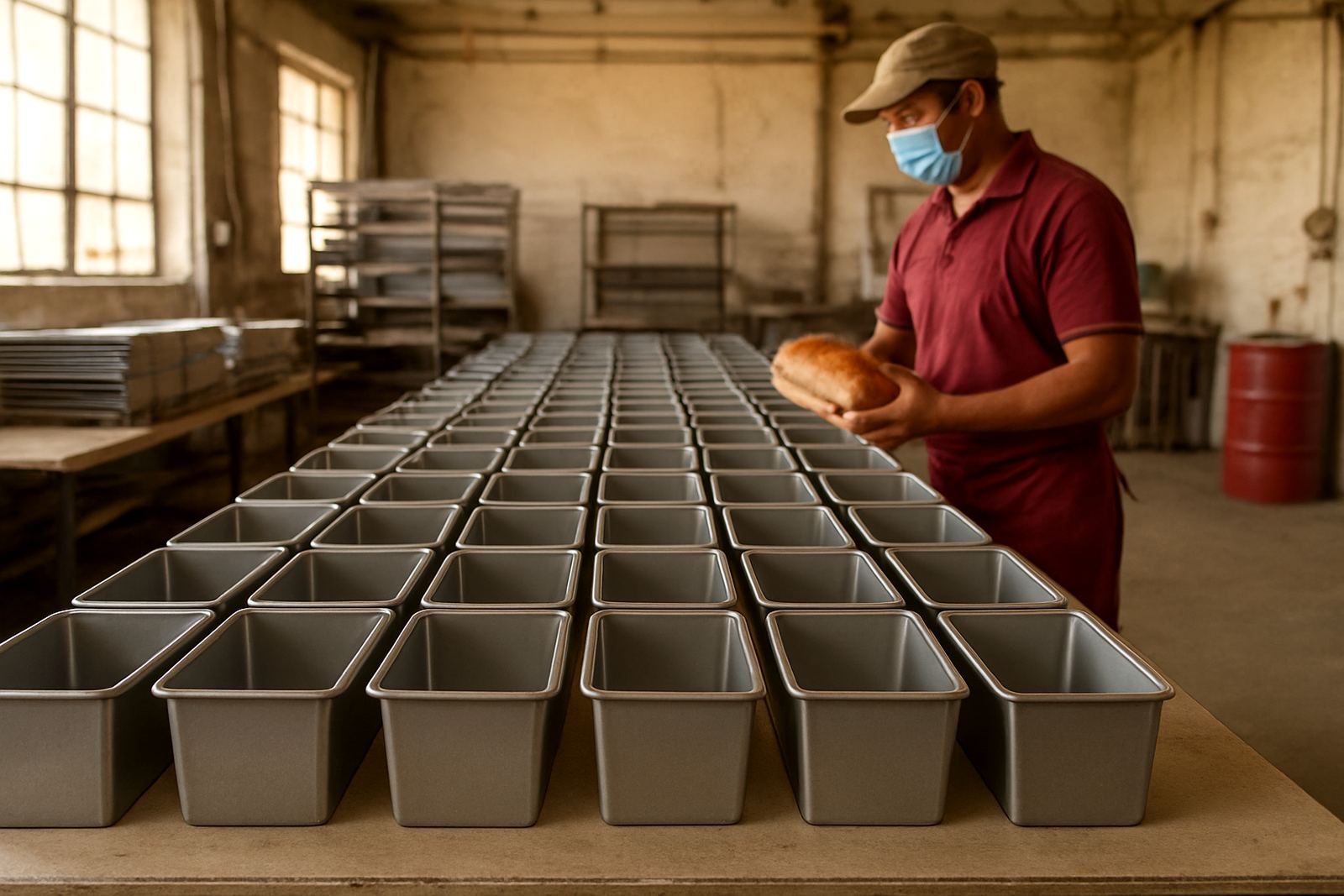
A worn bread pan rarely fails all at once. It starts with a slight twist, a softer corner or a base that does not sit flat on the rack. Then the loaf shape changes, the release becomes inconsistent, and staff spend extra time lining up fills, tapping pans or chasing a stubborn batch that should have gone straight through.
That extra handling adds cost in three places. First, labour goes up because the team is correcting the same issue on every bake. Second, fuel or electricity use rises when an oven stays open longer than planned. Third, product loss creeps in through damaged crusts, split sides and loaves that do not meet weight or shape expectations. If a pan is only a few millimetres out, the loss may look small, but over a full week it becomes very real.
In our experience, bakeries often replace flour, yeast and staff far sooner than they replace tired pans. Yet the pan can be the part that makes the rest of the system work poorly.
The hidden cost of mismatch between pans, lids and trays
Production slows down when the bakeware set is no longer matched. A lid that sits too tight can cause drag during loading and unloading, while a lid that is too loose can leave the dough exposed and affect the final rise. Tray openings that differ from one batch to the next can also create uneven spacing on trolleys and in proofing areas.
For bakeries running more than one shift, mismatch often begins with small add-ons over time. A replacement lid arrives later than the pan. A tray copy is made from an older sample that has already warped. Or a batch of mixed equipment gets pushed into service because orders are busy and there is no time to sort it out. Then the team starts working around the equipment instead of with it.
- Uneven bake colour and shape from tray to tray
- More sticking, scraping and rework at packing
- Slower loading in busy periods and during load-shedding changeovers
- Higher breakage when pans are stacked or moved under pressure
It is not always the big failures that hurt. Sometimes it is the daily mismatch that trims profit one trolley at a time.
How to count the losses without guesswork
The easiest way to count production losses is to look at a normal day and write down what changes when the bakeware is not right. Measure the extra minutes spent on loading, releasing, cleaning and sorting. Then add the value of any damaged product, rejected loaves or trays set aside for repair. Keep the figures simple and use a full week, not a single shift, because one bad hour can hide what happens every day.
A practical method is to track four items:
- Number of loaves or trays affected per shift
- Minutes lost per affected batch
- Product that must be reworked, downgraded or binned
- Extra power use from longer oven time or repeated heating
Once you have that, even a basic Rand amount will show whether replacement, copying or repair is cheaper than carrying on with the current stock. This is where many operations get a surprise, because the yearly loss is often more than the cost of several new pans.
Why Gauteng bakeries feel the problem first
In Johannesburg South and the wider Gauteng market, bakeries are often running under pressure from early starts, tight delivery windows and mixed equipment age. In Alrode, Germiston and Boksburg, many operations also have to work around dust, handling wear and stop-start power conditions. That makes weak bakeware age faster than expected, especially where trolleys are moved hard and cooling space is limited.
At the coast, humidity brings its own trouble, but inland yards face a different kind of strain. Steel trays stored near open doors or damp floors can start showing surface wear sooner, and once the shape goes out, the problem does not stay small for long. A pan that has been copied from a worn sample may look close enough on day one, yet it can still cause a neat row of production issues by the end of the month.
For busy sites in Midrand, Soweto and Alberton, the best control is not to wait until failure. It is to compare working pans against a known size, then decide what can be corrected before the next big run.
What to check before the next batch goes out
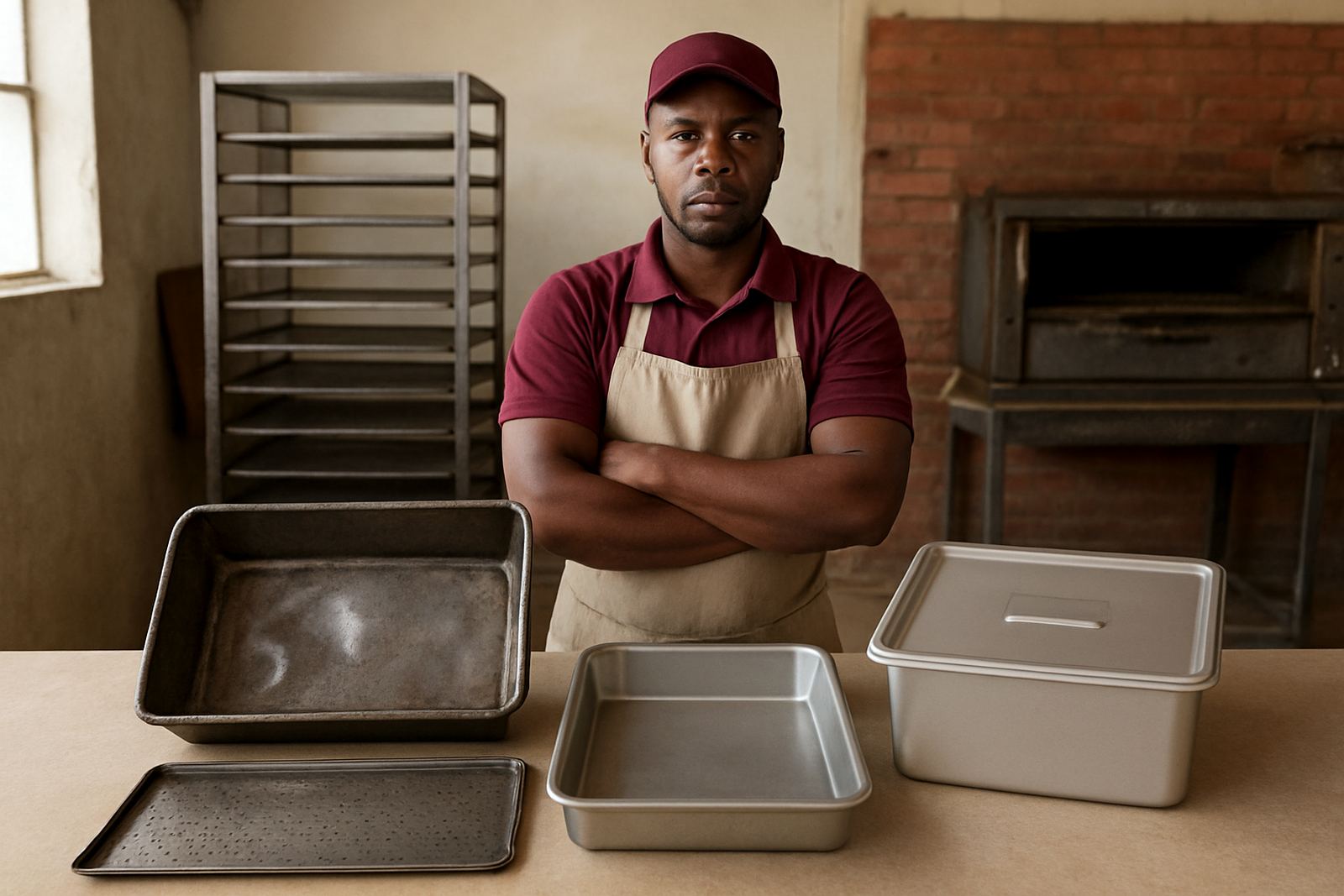
Before a production week starts, do a simple inspection of the bakeware in use. Check corners, base flatness, lid fit, weld points and any signs of twisting after heating. You do not need a lab report to spot trouble. A straight edge, a known sample and a careful eye will already show which items are pulling the line off balance.
Ask the team these questions:
- Which pans stick more than others?
- Do certain trays give a darker or lighter bake?
- Are some lids loose, noisy or hard to seat?
- Which pieces keep coming back for the same repair?
If the same answer comes up again and again, that is usually the item causing the hidden loss. It is better to replace or remake it than to keep paying for the same problem in labour and waste.
When copying or remaking the pan makes sense
Sometimes a bakery does not need a full change in layout, only a better made version of what already works. That is where size matching, pan copying and lid fitting save time. If the old piece still suits the process, a copy can keep the line moving without forcing staff to relearn spacing, loading order or proofing habits.
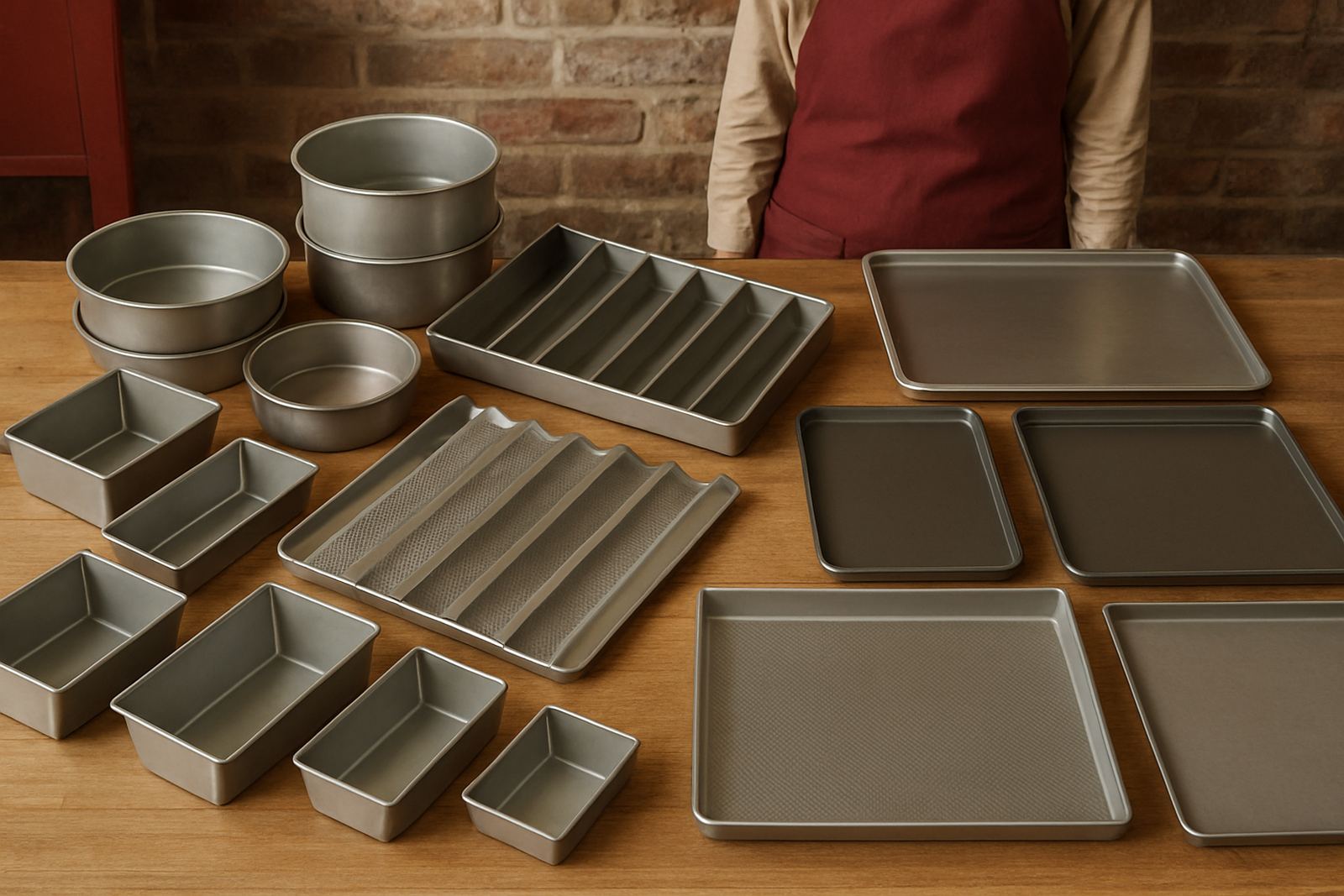
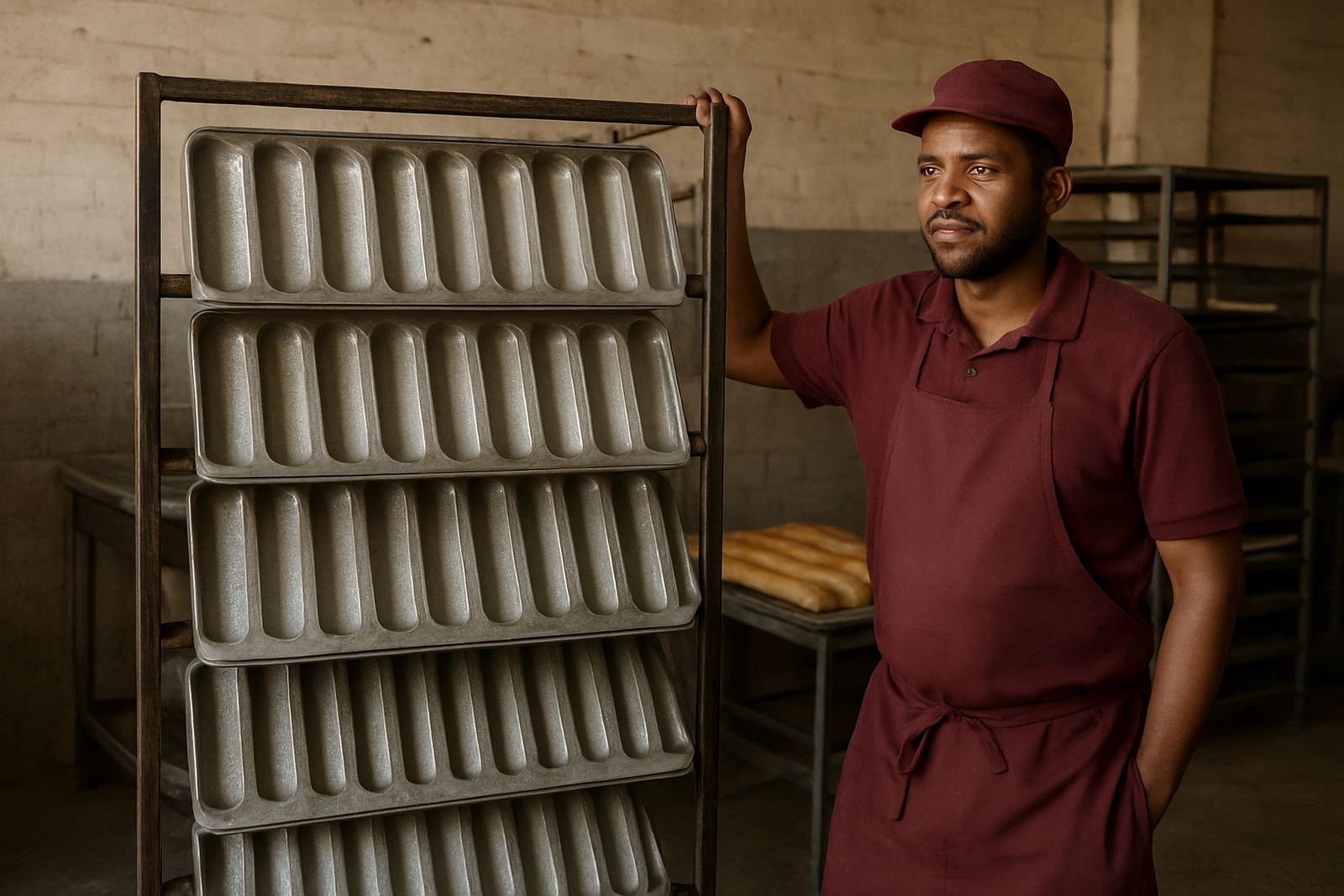
Heavy gauge builds can help where pans are being used hard every day, especially on larger production runs. Tray perforating may suit products that need better airflow, while baguette forming needs the right profile to hold shape through proofing and baking. Divider inserts can also help when one tray needs to handle more than one product size. The point is to fit the equipment to the job, not the other way around.
For batch reorders and prototype runs, accurate samples matter. If the original was already bent or worn, that needs to be accounted for at the start so the new piece solves the problem rather than repeats it. That small step can save a lot of frustration later on.