Start with the loaves you will sell every week
Most new bakeries do best by choosing one or two bread sizes and repeating them well. In practical terms, that usually means standard BO3, BO4 or BO5 bread pans with matching lids if you are baking sandwich loaves, tin breads or similar daily lines. A new shop in Alrode or Germiston does not need every shape under the sun before opening, it needs the right pans for the first 50 to 200 loaves a day.
When you keep the range tight, you can price flour, yeast, tins and labour more accurately. It also makes proofing and oven loading easier, especially if you are working with a small deck oven or a compact rack oven and your team is still finding its feet.
- Choose pan sizes that match your slice count and selling price.
- Check whether you need lids for a softer crust or a closed-top loaf.
- Ask for size matching before ordering, because a few millimetres can matter more than people think.
Bread pans that hold shape and clean up properly
For a small bakery, bread pans take a beating. They get hot, scraped, stacked, filled and washed every day. A mild-steel pan can work well if it is made to the right gauge and looked after properly. If the pan is too thin, it twists in heat and the loaf shape goes off. Too heavy and it can be harder to handle when you are running a tight shift with only a few staff on the floor.
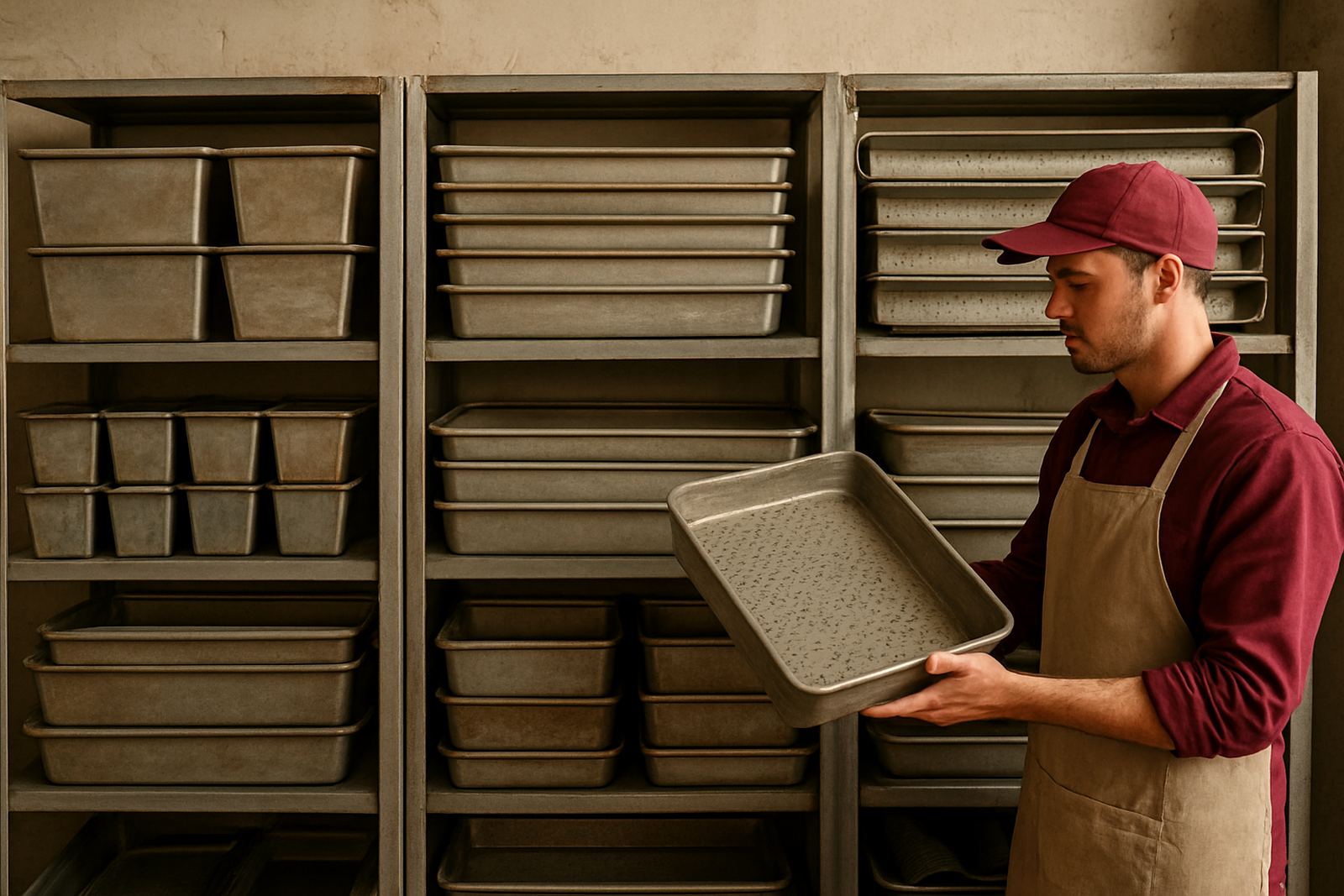
Coastal humidity, steam and washing routines also play a part. In places like Durban or the South Coast, oxidation can show up quickly if pans are left wet. In Gauteng, the challenge is often speed and handling, especially during load-shedding when production gets compressed into shorter windows. Good pan storage and clear cleaning routines are worth as much as the steel itself.
- Keep a drying rack or ventilated storage area near the wash zone.
- Label pans by size so staff do not mix stock during a busy run.
- Inspect corners and seams early, before small bends become repeated leaks or uneven bakes.
Perforated trays for rolls, buns and airier crusts
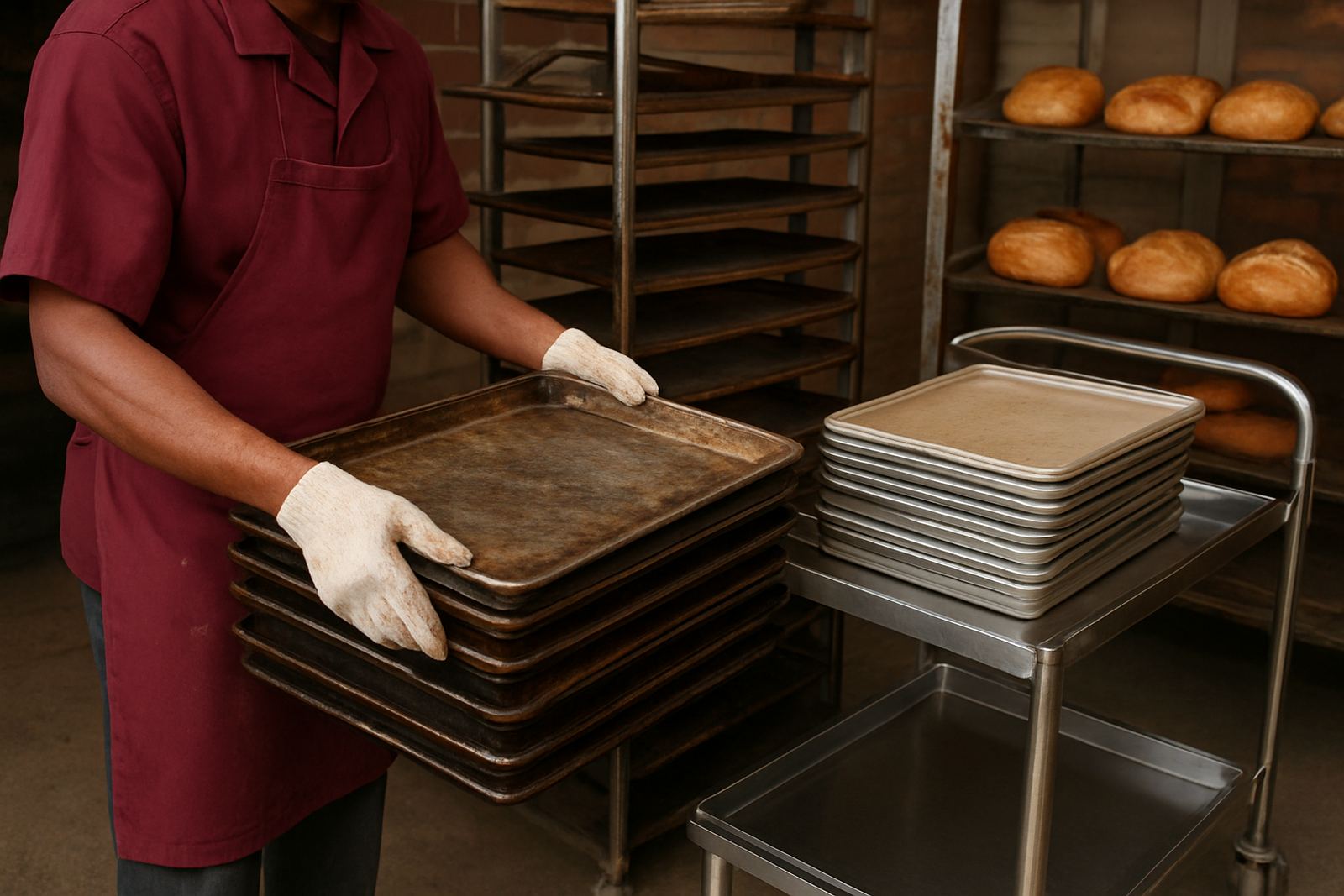
Many start-up bakeries need more than loaf pans. Perforated trays are ideal when you are baking rolls, burger buns, French-style rolls or lighter doughs that need airflow underneath. The holes help heat move through the tray and reduce soggy bottoms, which is especially useful if your oven runs unevenly from left to right. That is a common issue in older premises around Johannesburg South and parts of Soweto where equipment may not be brand new.
If you plan to sell buns for cafés, takeaways or school tuck shops, perforated trays can speed up a production line. They also make cooling more manageable because the product is less likely to trap steam straight off the oven floor. Just make sure the hole pattern suits the dough you use, since very soft doughs may need a finer layout than firmer rolls.
- Use perforated trays for products that need a drier base and more even browning.
- Match tray size to your oven rack and your cooling shelves.
- Keep a few spare trays on hand for peak days and batch reorders.
Baguette trays and shaped bakeware for speciality lines
Even a small bakery may need one speciality item to stand out. Baguette trays, divider inserts and shaped pans are useful when you want to offer longer loaves, seed loaves, filled breads or portioned lines for deli counters. A bakery in Midrand, for example, may start with sandwich loaves for local offices then add baguettes for weekday lunch trade. That is a sensible path, because you do not overbuy upfront but still leave room to grow.
Speciality bakeware should be chosen after you know your oven size, your dough weight and how your staff load each batch. A tray that is too long for the rack slows production. A tray that is too shallow can affect the rise and the finish. Factory consultation and prototype runs help here, because it is better to test one idea properly than order twenty pieces and find out the fit is off.
- Test one pattern first if you are adding a new product line.
- Check whether divider inserts will help portioning before final baking.
- Plan storage space for trays that are not used every day.
Ordering the right quantity without tying up cash
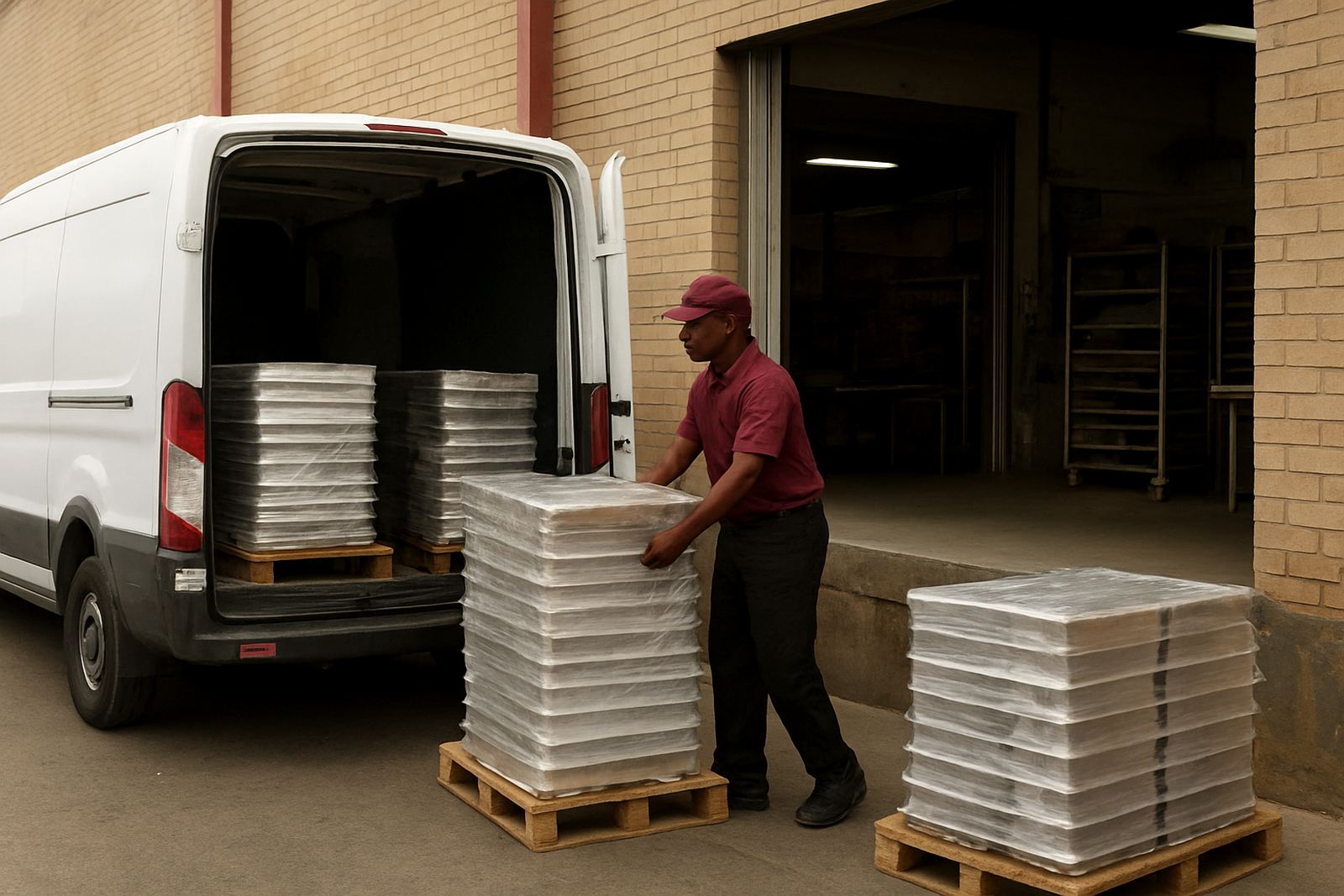
Small bakery owners often overestimate how much stock they need in the first month. The safer route is to buy the core items, then add more after your daily volume settles. If you are baking from a shop in Boksburg or Alberton, you may find weekday trade is steady but weekends spike hard. That means your first order should cover your normal run plus a small buffer for breakages, not a warehouse full of pans.
Batch reorders are useful once your process is stable. They keep your equipment matching and reduce the time spent swapping around odd pieces from different batches. It also helps with budgeting, because you can plan purchases in Rand around turnover instead of guessing. A clean schedule for reordering is just good business, even if the bank account is still under pressure.
- Start with core bread pans, lids and the most used trays.
- Add speciality items only once sales support them.
- Keep a simple stock list so replacements are quick when pans wear out.
A practical Gauteng starter set for opening day
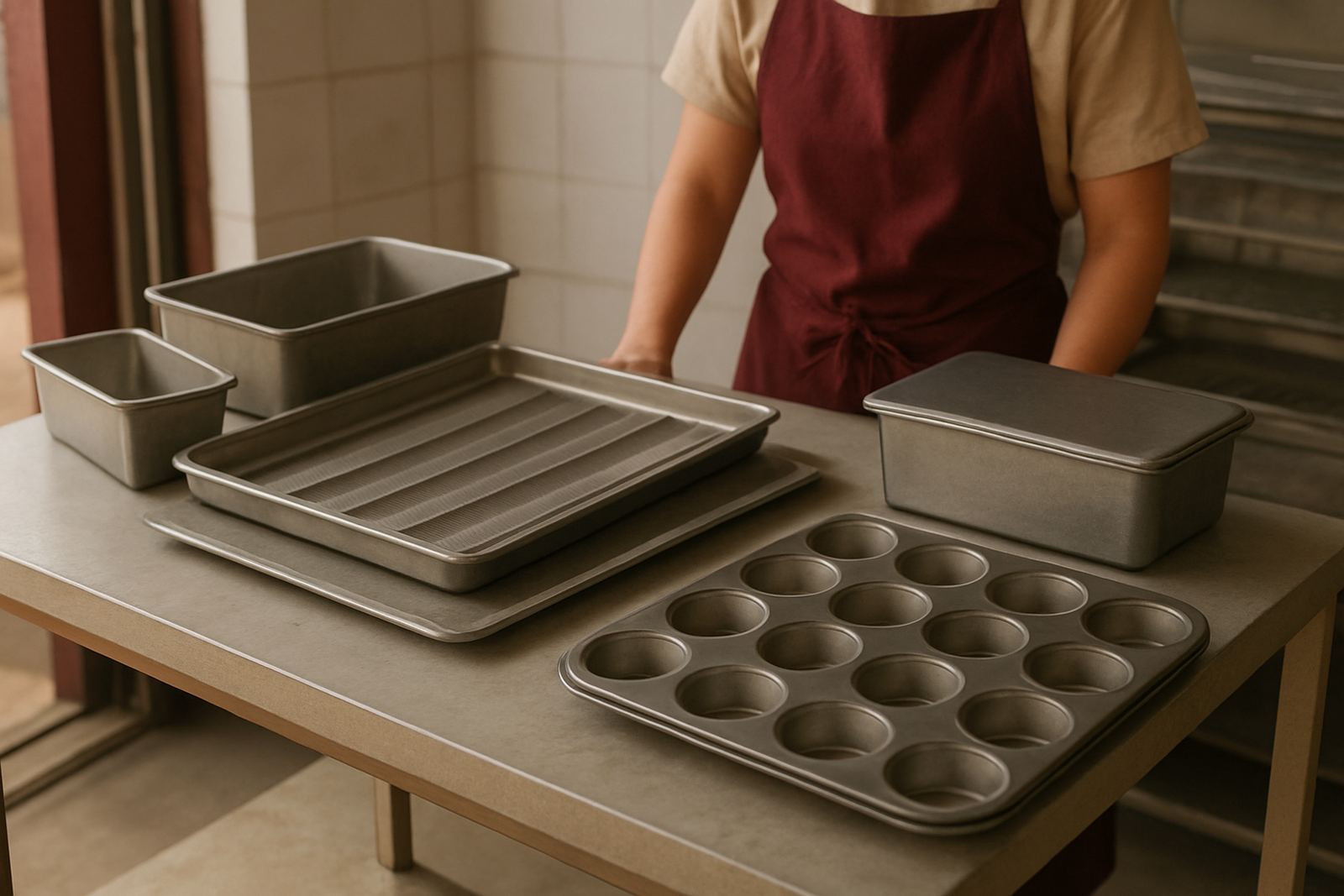
A new bakery in Gauteng usually needs a mix of loaf pans, a few lidded pans, perforated trays and at least one speciality tray type. That covers sandwich bread, rolls, buns and a small test range for higher-margin products. If you are opening in Alrode, Germiston, Boksburg, Soweto or Midrand, the best starter set is the one that fits your oven, your staff and your delivery plan, not the one that looks biggest on paper.
In one typical opening setup, a small team might begin with standard bread pans for the main loaf line, two or three perforated trays for rolls, and a short batch of baguette trays once the bakery has enough repeat orders. That gives you room to learn oven behaviour, portion control and cleaning routines before scaling up. For many businesses, that is the difference between a busy first month and a messy one.
The aim is simple: buy the pieces you will use every day, test the extras in a controlled way, and keep your bakeware matched to your actual production. That way your kitchen stays faster, your product stays more consistent and your cash stays in the business where it belongs.