Use lids when the loaf shape must stay square and even
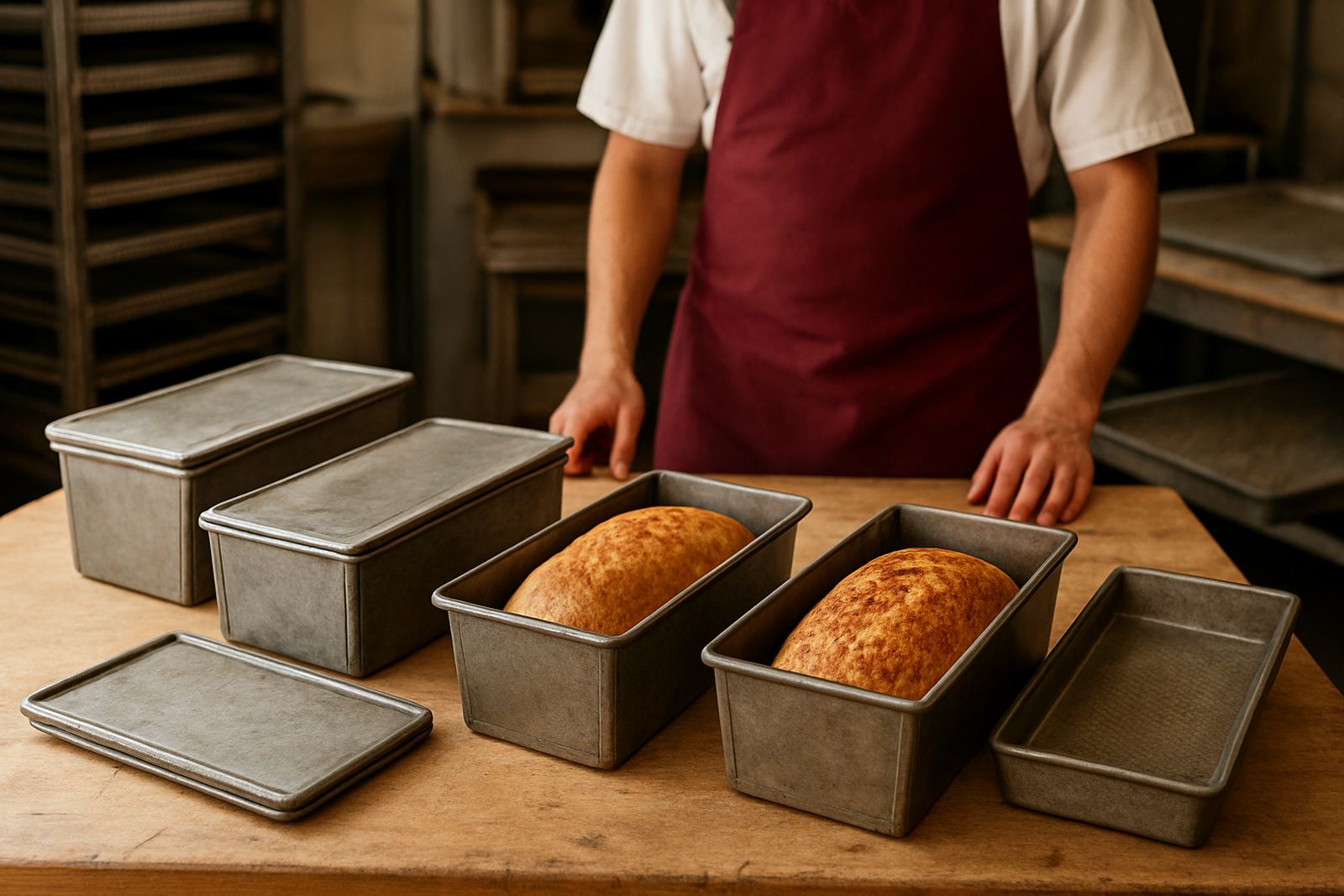
If your customer wants a neat sandwich loaf with straight sides and a flat top, a lid is the easiest way to hold that shape. The dough expands in the pan, but the lid stops the top from doming too much, so the loaf comes out with a clean profile and more even slices. That matters in production bakeries where bread is packed for schools, cafés and canteens.
Lids are especially useful when you need the same finish from one batch to the next. In Alrode or Germiston, where bakeries may be running early mornings and late afternoons, consistency is what keeps the slicing room moving. If a loaf varies too much in height it can slow down packing and give you more offcuts than you planned for.
Choose covered baking for soft crust products
Covered baking is a good choice when the brief calls for a soft crust rather than a hard one. The lid helps trap moisture at the start of the bake, which gives a gentler finish and can improve the eating quality for white loaves, brown sandwich bread and some milk-based doughs. It is also useful where the bread must hold up well after cooling and bagging.
- Better for sandwich bread that needs a soft bite
- Useful when you want less browning on the top crust
- Helps reduce drying in hot ovens and dry winter air
- Can improve shelf presentation for sliced loaves
In a bakery near Midrand, for example, a soft crust loaf may be a better fit for retail shelves than a crusty pan bread. If the product is going straight into a plastic bag, the covered finish often keeps it looking fresher for longer, especialy on a busy day.
Use lids to keep dough under control in heavy production
Some doughs are very active and can mushroom over the pan if left open. That is when a lid earns its keep. It keeps the dough in the right footprint and reduces the chance of a loaf that spills over the edges or bakes unevenly. That helps on bulk runs where the team is working with repeat batches and tight timing.
Factories and bakeries in Soweto, Boksburg and Johannesburg South often work with load-shedding interruptions and staggered shifts. When the bake window is short, you do not want to gamble on loose shape or collapsed tops. A covered pan gives the production team more control over the final size and makes packing and cutting more predictable.
- Good for high-rising doughs that need shape control
- Useful where oven space is tight and every pan must perform the same
- Helps reduce product loss from overflow or split tops
- Supports repeat orders with the same loaf weight and size
Think about lids when the customer wants a specific slice profile
Some buyers care less about the crust and more about the slice. School kitchens, burger operations and contract caterers often want loaf bread that cuts cleanly and stacks well. A lid helps produce a straighter slice profile, which can make portioning easier and keep the crumb structure more uniform from end to end.
If your bread is being made for sandwiches, toast or toasted specials, that even profile matters. A loaf that domes too much can give you wider centre slices and narrow end pieces, which is not ideal for standard portions. Lidded pans are a simple way to keep the loaf in spec without extra trimming later.
Match the lid to the pan and the recipe before you order in bulk
Not every pan needs the same lid. The fit has to suit the pan size, steel thickness and the way your dough behaves in the oven. If the lid sits too loose you lose control. If it is too tight, you can affect the rise and finish. That is why size matching and lid fitting matter before you place a batch order.
We often see bakeries wanting to switch from open baking to covered baking after a product change, but the pan must still suit the oven deck, the rack spacing and the handling system. In a busy bakery, a small mismatch can turn into wasted time every morning.
- Check the pan depth and top lip before fitting a lid
- Confirm the loaf weight and dough expansion pattern
- Allow for handling space in trays, racks and cooling areas
- Test one prototype run before placing a full reorder
When lids are not the best option
Lids are useful, but they are not right for every bake. If you want a browned crust, a domed top or a rustic look, an open pan may be the better fit. Some recipes also need more steam escape than a lid allows, especially if the crust must set firmly for a particular product style. The point is to match the bake to the end use, not force every loaf into the same mould.
For bakeries around Alberton and Germiston serving different customers from the same line, it can help to keep both lid and open-pan options available. That way you can use covered baking for sandwich loaves and open pans for other items without reworking the whole production plan.
When the finish matters, the lid is not just an accessory. It is part of the product spec and if the fit is right, the loaf comes out the way you planned it.
A local example from sandwich bread production
A bakery in the south of Johannesburg may be making plain loaves for school lunches in the morning and larger sandwich loaves for cafés later in the day. On the school order, the bakery might use lidded pans to keep the top flat and the slices even. On the café order, the same team may want a slightly different pan size or a heavier gauge build to suit longer runs and repeated heating. The right lid choice helps both products keep their shape in the same plant.
That kind of planning saves time, especially when dispatch is already juggling early collections and hot summer transport. A covered loaf that holds its form is easier to cool, bag and stack for delivery into surrounding areas without extra handling.